

Addressing Severe Osteoarthritis with UC-MSCs and Growth Factors via Stem Cell Therapy in Thailand
Cartilage and joints around the world suffer from an irreversible disease termed Osteoarthritis. The disease leaves patients with severe pain and the inability to move. They experience a significant decline in their overall quality of life. The chronic pain and loss of mobility from this disease causes patients to be disabled from performing the simplest tasks and activities of daily living. The vast majority of the traditional medical approach focuses on alleviating the pain and symptom(s) and does not treat the underlying issue. Therefore, there is a desperate need for new methods to prevent the disease from worsening. One of the most advanced and promising branches of medicine is the innovative use of UC-MSCs in Regenerative Medicine. The combination of this technology with individualized Growth Factor Therapy is likely to offer a first time and long-lasting solution to Osteoarthritis. Due to the sensitive nature of the biological therapies, many patients are traveling to Thailand to receive Stem Cell Therapy as a result of the rapid and drastic changes in the concentration of biological therapies.
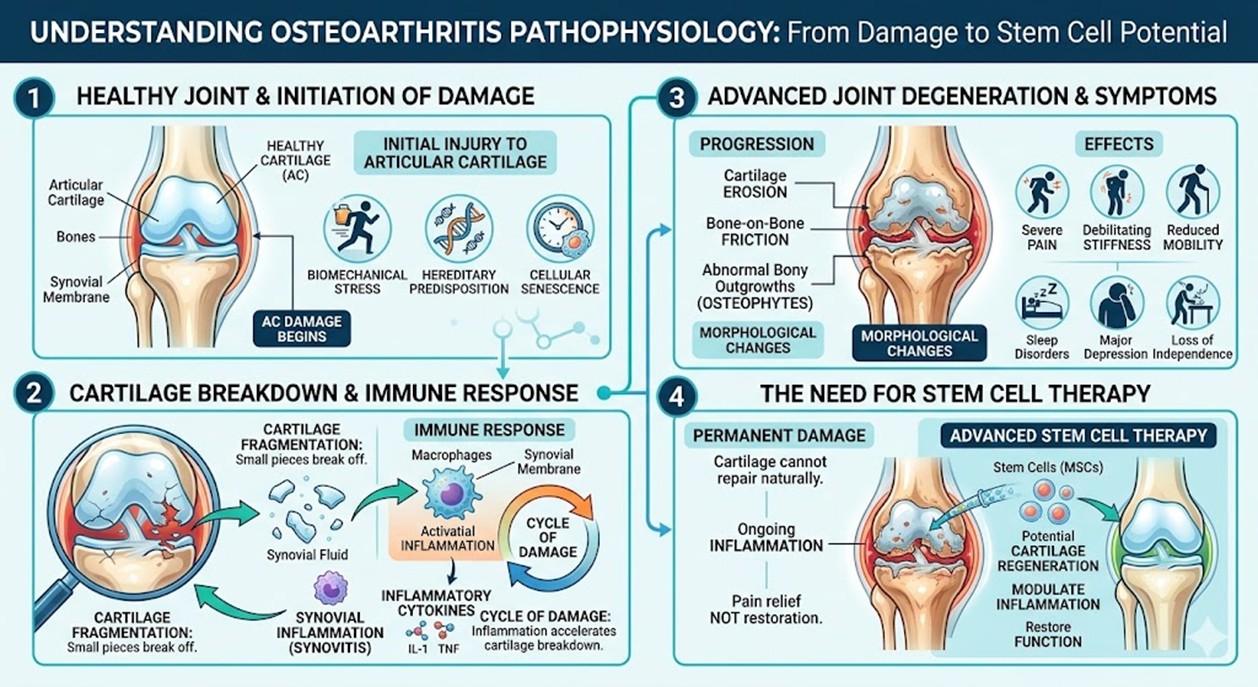
A complete and basic understanding of the pathophysiological mechanisms involved in Osteoarthritis is essential for the appreciation of advanced therapeutic Stem Cell Therapy. End Osteoarthritis, and understand that it begins with injury to the articular cartilage, the covering of cartilage that sustains the joints that encompass the varying and moving underlying bones. Injuries may be sustained from ongoing biomechanical stress, hereditary predisposition, or the natural process of cellular senescence. Disintegration of cartilage yields small fragments that prompt an immune response against the synovial membrane. Local macrophages cause the production of several inflammatory cytokines, which continue the cycle of tissue damage.
As the main protective layer is eroded, the adjacent bones begin to articulate with one another. This friction creates intense, debilitating pain, extreme joint stiffness, the formation of abnormal bony outgrowths, and can result in gross morphological changes. Chronic pain often leads to additional health problems, such as sleep disorders, major depression, and a complete loss of independence. Without specific, cellular-level problems, damage to the joint tissue is permanent. This widespread issue, combined with ongoing inflammation, explains why pain relief doesn’t restore normal function.
The Shortcomings of Current Treatment Osteoarthritis Methods
The only current Osteoarthritis treatment options for degenerative joint disease that are generally accepted in the medical field are those which provide relief in the short term. Prescribing high doses of non-steroidal anti-inflammatory drugs is a common way for doctors to manage pain on a daily basis, and in addition to that, they may offer synthetic analgesics. While these medications are effective in providing relief in the short term, prolonged use can lead to serious issues, such as gastrointestinal bleeding and renal failure. Corticosteroid injections in to the joint are a common method that is used to treat pain associated with acute joint swelling. Unfortunately, the localized steroid injections have actually been shown to cause an increase in the destruction of cartilage at the site of the injection and worsen the problem. Orthopedic surgeons tend to take the more invasive option of total joint replacement when conservative options fail to safely address the pain associated with a joint. Even though joint implants may help regain some range of motion, the associated surgical risks, prolonged recovery period, and potential failure of the artificial joint remain. Current options still do not address the underlying issues of the joint’s capsule or the injured cartilage. The existing treatment options highlight the need for new and innovative treatments, particularly the use of UC-MSCs Stem Cell Therapy, to address the fundamental pathology of the injured and impaired anatomical structures.
Cellular Mechanisms of Regenerative Therapies
The umbilical cord tissue has initiated a new paradigm of regenerative orthopedics Stem Cell Therapy. When injected into the inflamed joint, UC-MSCs have been shown to safely reduce inflammation. Additionally, these unique umbilical cord-derived cells can migrate to injured tissue, known as “homing” to the injured tissue. UC-MSCs contribute to the injured tissue by secreting a wide range of bioactive agents, particularly Growth Factors, that heighten the proliferation of the body’s own chondrocytes and reduce the activity of inflammatory enzymes that degrade the extracellular matrix. In addition, UC-MSCs enhance the regeneration of synovial fluid, and the volume and quality of synovial fluid, cartilage, and the overall joint, as a result by decreasing the inflammatory microenvironment and restoring a regenerative environment to the joint. In Thailand, a small number of stem cell clients enjoy the benefit of what has been described as genuine biological restoration and the artificial relief of joint pain.
Recent medical developments in Southeast Asia
International medical experts have started to regard Southeast Asia as a pioneer in the development of modern Stem Cell Therapy. Thai healthcare is among the best in the world with very advanced biogenetic laboratories. The Thai government also puts a lot of effort in the creation of medical regulations which assures the safety of new medical treatments. The combination of government investments in medical tourism and the disease-centered application of UC-MSCs in orthopedics is a demonstrably successful situation. Research is being conducted on the separation of treatment to the specific needs of the patient. This adaptive therapy increases the efficiency of the body’s natural healing mechanisms. The cost of medical services in Thailand is significantly lower than in other Western countries. The region’s potential for developing applications for regenerative medicine is vast.
The powerful regenerative ability of cartilage and the inflammatory control ability of Concentrated Growth Factor in Osteoarthritis allow for the predetermination of regenerative and inflammatory control. Therefore, a cellular and bodily holistic restoration is achieved, accompanied by the restoration of natural mobility and the alleviation of persistent joint discomfort with no requirement for artificial medication.