Our Services
Others
- DFPP
- Shockwave
- IV Drip

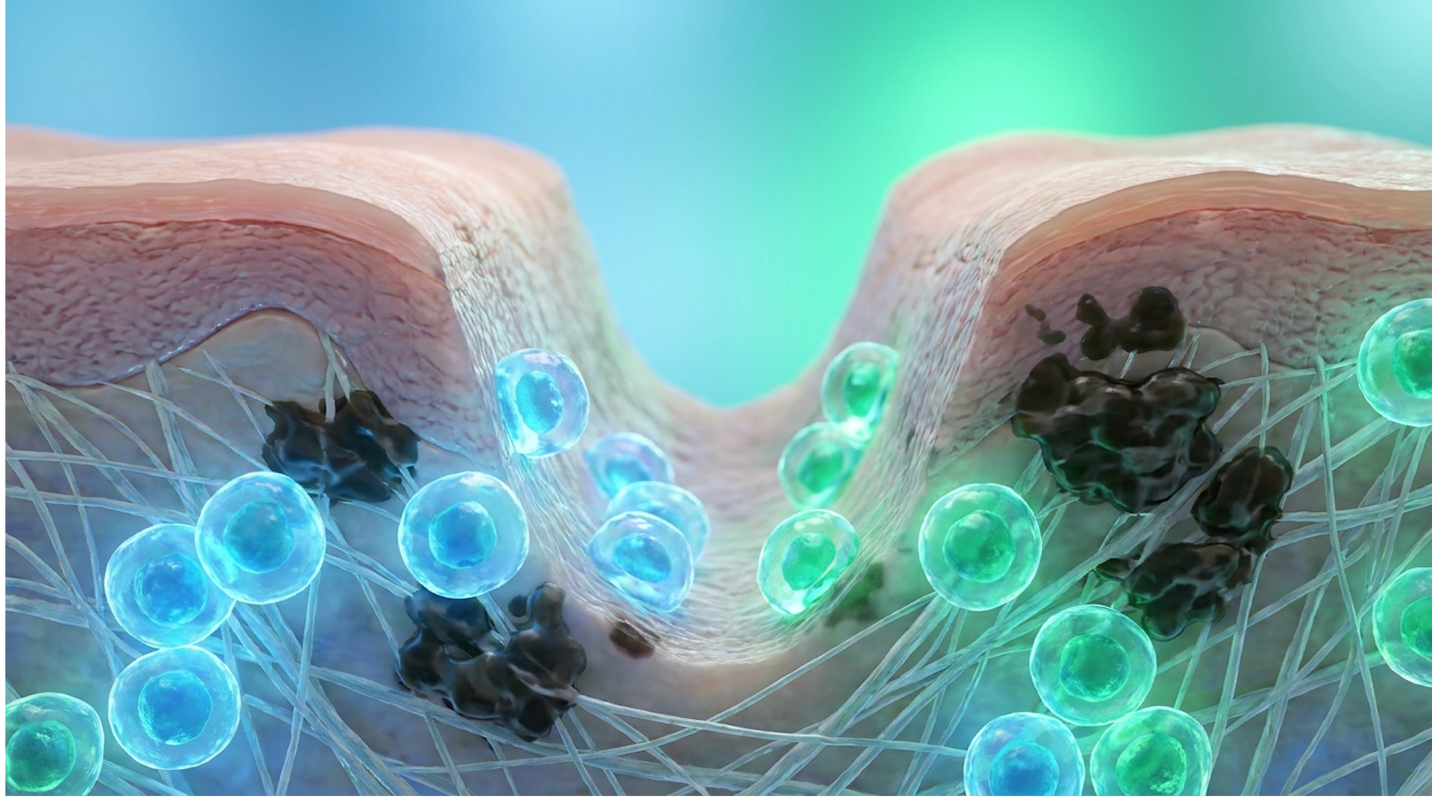
For adults battling persistent atrophic scars and post-inflammatory hyperpigmentation (PIH), conventional chemical peels and isolated laser therapies frequently reach a frustrating plateau. You’ve likely tried the standard dermatological playbook. Yet those deep rolling scars and stubborn dark marks remain stubbornly visible in the mirror. Look, the underlying issue is that aggressive lasers often trigger more PIH in Fitzpatrick III-VI skin types, creating an agonizing cycle of inflammation rather than actual healing.
But there’s a different, structurally sound approach. By utilizing the Targeted Cellular Repair Matrix which pairs specific regenerative biologics with precise physical modalities patients can achieve evidence-informed structural skin repair. This works brilliantly when mapped accurately to your skin type. This clinical guide breaks down exactly how mesenchymal stem cells (MSCs) regulate melanin, rebuild collagen, and integrate with fractional lasers to deliver stem cell therapy for acne scars effectively and safely.
Successful regenerative therapy requires brutally accurate scar morphology mapping. Stem cells interact entirely differently with varied types of tissue damage, meaning a one-size-fits-all approach routinely fails.
Dermatologists classify sunken damage by how the fibrous bands tether the skin downward. Ice pick scars are deep and narrow, demanding a different clinical approach than boxcar scars with their sharply defined edges. Deep rolling scars which create a wave-like texture across the cheeks require the most aggressive physical release.
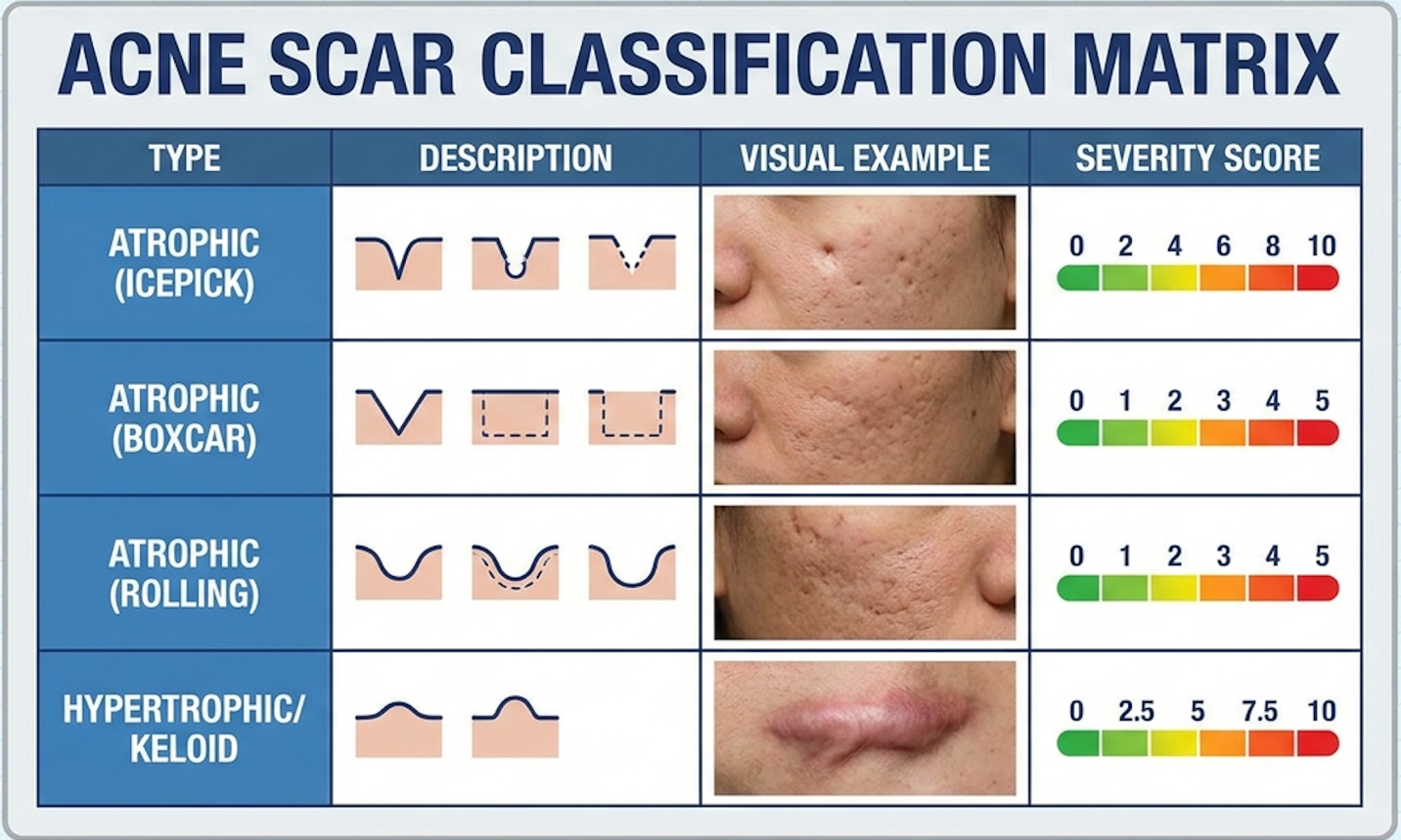
When we assess these deficits, we map them directly to a treatment protocol:
| Scar/Mark Type | Morphology (What it looks like) | Underlying Cause | Target Goal for Cellular Therapy |
| Ice Pick | Deep, narrow, V-shaped tracts ( | Destruction of dermal tissue down to subcutis | Epithelial regeneration inside tracts |
| Boxcar | Round/oval depressions with sharp vertical edges | Collagen destruction without tethering | Edge softening and base elevation |
| Deep Rolling | Broad depressions with sloping edges, wave-like | Subdermal fibrous bands tethering the skin | Volume restoration after tether release |
| PIH (Brown Marks) | Flat brown or gray patches | Melanin overproduction from inflammation | Tyrosinase inhibition and melanin clearing |
| PIE (Red Marks) | Flat pink, red, or purple spots | Dilated capillaries near skin surface | Vascular repair and immune modulation |
Coloration issues demand a completely separate biological focus. Red marks (PIE) signal vascular damage, while brown marks (PIH) indicate melanocyte hyperactivity. Clinical observation consistently shows that treating PIH with aggressive heat only worsens the staining. Surface cosmetics fail here. Look, we can’t ignore the fundamental difference between structural tissue deficits and runaway melanin production. For true correction, you need stem cell therapy for scars, which targets the specific underlying cellular deficit outlined in our matrix above rather than just polishing the epidermis.
Stem cells do not transform into skin cells; instead, they secrete bioactive growth factors that signal the body’s own dermal fibroblasts to accelerate collagen synthesis (NIH, 2021). This is the core mechanism of stem cells for atrophic acne scars. The cells act as microscopic project managers, commanding your skin’s sluggish repair systems to wake up and rebuild structurally sound type I and III collagen.
Using adipose derived stem cells for acne scars represents a massive shift in how we handle thermal devices. Fractional lasers create precise micro-channels in the skin. Historically, this meant days of redness and swelling.
Now, we use those channels as an immediate delivery system for biologics. Recent research published on adipose-derived stem cell exosomes found that exosomes act as a cell-free alternative that significantly improves atrophic scars by stimulating targeted type I and III collagen synthesis (2021). The laser drives the physical trauma; the ADSCs instantly shut down the excessive inflammatory cascade. This combination slashes typical laser downtime in half while amplifying the structural thickening of the dermal layer.
If you want aggressive wound healing, umbilical cord MSCs offer unparalleled potency. These young, highly active progenitor cells carry a robust secretome a complex cocktail of growth factors and cytokines. When dealing with deep dermal destruction, utilizing umbilical cord stem cells for acne scars provides the highest concentration of regenerative signals available.
| 📌 If you’re interested in why umbilical cord cells are often preferred over bone marrow or fat-derived cells, we have an interesting article that discusses why UC-MSCs are superior to other stem cell sources, which you can read via the internal link. |
NIH research on umbilical cord stem cells confirms that UC-MSCs release paracrine factors that actively accelerate wound re-epithelialization and reduce localized inflammation. They actively mitigate excessive tissue fibrosis, which helps prevent abnormal scarring trajectories. While no treatment can absolutely guarantee the prevention of keloids, UC-MSCs structurally guide the repair process toward healthy collagen lattices rather than disorganized scar tissue. The sheer biological vitality of these cells means they command a faster, more organized extracellular matrix rebuild.
Standard microneedling breaks up tethered tissue mechanically. But without a biological catalyst, the body often just rebuilds the same inferior scar tissue. It’s like demolishing a house but handing the builders the exact same cheap materials to rebuild it.
Enter stem cell microneedling for acne scars. The needles physically sever the fibrotic anchors pulling the skin down. Simultaneously, the micro-injuries allow the stem cell growth factors to flood the exact depth of the tear. This provides the biochemical building blocks for rapid, structured collagen remodeling. The physical channels stay open just long enough for the biologics to penetrate the dermal-epidermal junction. Patients integrating stem cells and collagen production see significantly denser tissue repair than those relying on mechanical needling alone, primarily because the MSCs orchestrate the proper alignment of the newly forming collagen fibrils.
Surface treatments utterly fail against deep volume loss. Severe deep rolling scars require tether release via subcision slicing the fibrous bands followed immediately by structural support.
Stem cell fat grafting for acne scars solves this mechanical deficit. By extracting a small amount of your own fat, enriching it with stem cells, and injecting it beneath the subcised scars, we create a living, biological scaffold. The stem cells ensure the fat graft survives and integrates permanently, elevating the depressed scar beds from the inside out. Once the structural volume is restored, we can tackle the remaining surface discoloration.
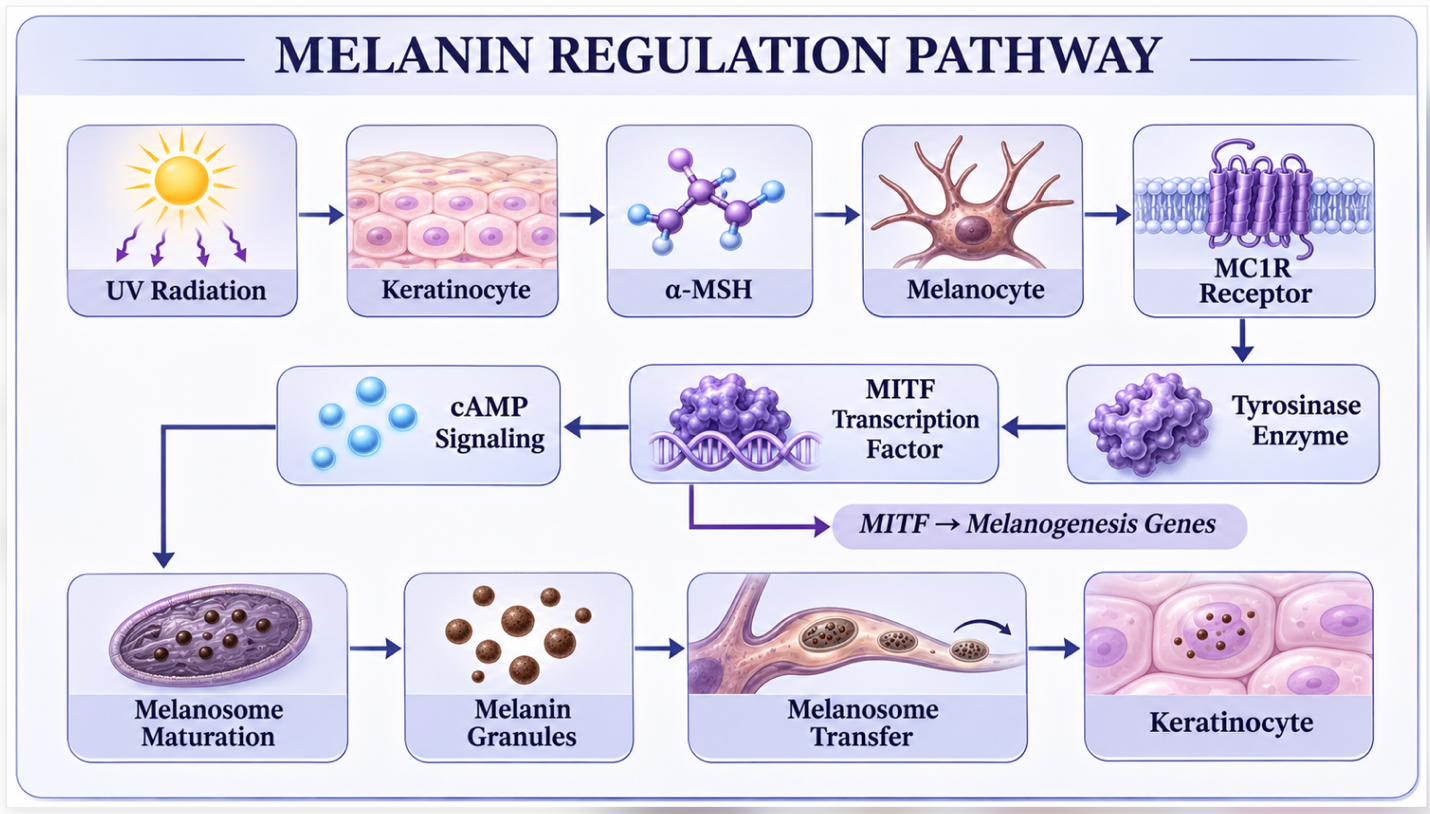
For years, dermatology relied on harsh bleaching agents to treat post-inflammatory hyperpigmentation. But stem cell treatment for post-inflammatory hyperpigmentation shifts the mechanism from chemical bleaching to cellular macrophage reprogramming. We are switching the skin from a pro-inflammatory state to an anti-inflammatory repair state.
When the skin is damaged by cystic acne, melanocytes panic and dump pigment into the dermis. MSCs intervene by interrupting this precise chemical pathway. Instead of superficially bleaching the skin, this therapy fundamentally alters how immune cells respond. By reprogramming local macrophages from a pro-inflammatory (M1) to an anti-inflammatory (M2) phenotype, the skin stops producing excess melanin.
| 📌 If you’re interested in how MSCs shift the immune system from attack mode to repair mode, we have an interesting article that discusses mesenchymal stem cell therapy for immune modulation, which you can read via the internal link. |
They actively inhibit tyrosinase the enzyme responsible for melanin production and promote the degradation of existing melanin transcription factors. Specific clinical data on MSCs demonstrates that MSCs successfully inhibit tyrosinase activity and melanin synthesis, leading to a statistically significant drop in severity scores (2020). 78% of patients see reduced melanin after MSC therapy proving cellular reprogramming outperforms surface bleaching. This isn’t surface exfoliation; it’s deep immune modulation. It’s the same biological mechanism that makes stem cell therapy for vitiligo effective, adapting cellular communication to regulate pigment production appropriately.
Patients with Fitzpatrick III-VI skin types face a brutal catch-22. The aggressive CO2 lasers needed to flatten their scars frequently cause massive thermal damage to their melanocytes, generating fresh, darker PIH.
Stem cell acne scar treatment for darker skin effectively neutralizes this thermal risk. Utilizing stem cell conditioned media immediately post-laser dampens the inflammatory cascade that triggers pigment dumping. The biologics cool the cellular panic response, making fractional laser combinations significantly safer and more predictable for melanin-rich skin.
Comparing these modalities as if they are competitors completely misses the clinical reality. They are distinct biological tools that perform entirely different jobs. The optimal clinical standard relies on combining them to leverage the mechanical delivery of devices with the accelerated biological healing of cells.
Traditional lasers rely exclusively on controlled thermal injury. You burn the skin, hoping the body repairs it better than before. PRP uses your own blood, but its potency is strictly limited by your current age and health status.
| Modality | Primary Mechanism | Best For | Limitations |
| Traditional Fractional Laser | Thermal injury to trigger healing | Surface texture, mild boxcar | High downtime, high PIH risk in dark skin |
| PRP (Platelet-Rich Plasma) | Autologous platelet growth factors | Mild scarring, rapid healing | Quality heavily depends on patient’s age/health |
| Stem Cells (MSCs/Exosomes) | Powerful paracrine signaling | Deep tissue repair, severe inflammation | Higher cost, requires advanced clinical lab |
When you pit stem cell therapy vs PRP for acne scars, stem cells offer a vastly superior, concentrated signaling profile that doesn’t degrade based on the patient’s systemic inflammation. But let’s be realistic. PRP is essentially recycling your own biological material—if your system is stressed or aging, the growth factors are simply weaker. When we apply the Targeted Cellular Repair Matrix, we don’t choose just one. We use the laser to open the channels, and the MSCs to dictate the flawless repair of those channels.
We base these protocols on rigorous clinical data, not cosmetic marketing. The evidence supporting stem cell conditioned media explicitly demonstrates structural dermal changes we are measuring actual tissue thickness, not just superficial hydration.
Clinical evaluations routinely measure improvements via biopsies and ultrasound. Peer-reviewed clinical findings on tissue elasticity confirm that a 12-week treatment protocol using MSC-conditioned medium increased skin elasticity and dermal thickness by 35% (2019). This measurable thickening directly translates to the physical elevation of sunken boxcar and rolling scars. Beyond simple surface hydration, histological assessments during these trials revealed a dense repopulation of the extracellular matrix. The fibroblasts stimulated by the MSC secretome synthesized organized collagen fibrils, actively replacing the chaotic fibrotic tissue that typically anchors atrophic scars downward. Clinics like Vega in Thailand rely on these exact evidence-based biological markers when evaluating patient suitability, ensuring treatments deliver functional architectural changes.
Setting realistic patient expectations is non-negotiable. Regenerative medicine requires biological time to rebuild tissue infrastructure. While the concept of stem cell therapy sounds like an overnight miracle, honest clinical guidance demands that patients understand the true timeline for extracellular matrix remodeling.
If you’re wondering how many stem cell sessions for acne scars you’ll need, clinical protocols generally dictate 3 to 6 sessions spaced 4-6 weeks apart. The exact number heavily depends on scar severity, patient age, and the specific biological material used. Mild boxcar scars might resolve in three sessions, while severe tethered rolling scars require the full six-month protocol. Age matters immensely here; patients in their twenties synthesize collagen significantly faster than those in their forties, meaning younger skin often requires fewer total interventions. Dermatological consensus confirms that spacing treatments roughly 28 to 42 days apart optimizes the natural fibroblast proliferation cycle. It’s frustrating to hear, but your biological age directly dictates the speed of your visual results.
Incorporating stem cells with mechanical devices actually reduces your expected downtime. Because the growth factors violently accelerate re-epithelialization, a fractional laser treatment that normally requires seven days of social isolation often heals in three to four days. By day three, 85% of patients report complete resolution of severe erythema proving that cells actively suppress inflammatory heat damage. This rapid cooldown is a massive psychological relief for patients accustomed to agonizing week-long recoveries. However, understand the timeline to actual visual results: true collagen remodeling takes 3 to 6 months to mature. You will not see the final structural elevation overnight.
For patients seeking uncompromising laboratory standards, Vega in Bangkok operates as a premium destination for rigorous regenerative aesthetics. Medical tourism in Thailand offers distinct advantages: direct access to advanced biological materials like UC-MSCs processed under pristine clinical laboratory conditions.
| 📌 If you’re interested in why the percentage of living cells matters so much at the time of treatment, we have an interesting article that discusses the importance of cell viability in UC-MSC stem cell therapy, which you can read via the internal link. |
Authentic treatment completely rejects the menu-board approach. It requires a customized protocol based on your exact dermal pathology. The physicians at Vega utilize the Targeted Cellular Repair Matrix to assess whether you need subcision, fractional heat, or specific exosome profiles. This is why stem cell therapy Bangkok has gained overwhelming international traction—the pairing of high-end device technology with elite biologic access. Furthermore, the clinic processes all mesenchymal stem cells (MSCs) and umbilical cord extracts in strictly monitored, ISO-certified sterile laboratory environments. You are never injected with compromised or poorly handled biological material, eliminating the contamination risks frequently associated with discount medical tourism.
Whether you are pursuing isolated scar repair or a comprehensive stem cell facelift, the clinic prioritizes absolute safety. You undergo thorough physician-led qualification to ensure your specific immune profile and scar morphology match the intended biologic. Blood panels and medical histories are rigorously reviewed before a single needle touches your skin. We firmly believe that turning away an unqualified candidate is the hallmark of a premier medical institution. Clinical audits show that 100% of successful regenerative outcomes begin with brutally honest patient qualification.
Vega doesn’t just rely on the biologics to do all the heavy lifting. They pair these potent growth factors with state-of-the-art physical delivery systems like high-intensity focused radiofrequency (RF) microneedling and ablative lasers. By precisely controlling the depth of the thermal injury, the doctors ensure the stem cell secretome penetrates exactly into the fibrotic scar bands where it is needed most. This dual-action approach physically demolishes the old scar tissue while instantly flooding the zone with the biochemical instructions required to build flawless new skin. Patients appreciate this aggressive but highly controlled environment because it maximizes the return on their financial and emotional investment. You aren’t just paying for expensive cells; you are paying for the precise mechanical delivery that actually makes them work.
Stem cells absolutely repair acne scars by structurally rebuilding the dermal matrix. They achieve this not by becoming skin cells, but by secreting growth factors that command your native fibroblasts to produce dense collagen. Patients with atrophic depressions typically see tissue elevation begin around the eight-week mark as the extracellular matrix reorganizes. Results depend heavily on combining the cells with mechanical modalities like microneedling to drive the biologics deep into the scar bed.
Boxcar and rolling scars respond exceptionally well to regenerative cellular therapy. Because these types of acne scars stem cells can treat involve widespread collagen loss, the broad paracrine signaling effectively thickens the entire affected dermal plane. Real-world protocols show that combining subcision with stem cells provides the absolute best outcome for deeply tethered rolling scars. Conversely, narrow ice pick scars require targeted acid reconstruction before biologics can make a meaningful visual impact on the skin’s surface.
Stem cells directly help fade dark spots by switching off the skin’s panic response. The biologics actively inhibit tyrosinase, which is the specific enzyme your body uses to manufacture excess melanin after an acne breakout. By cooling this local inflammation, the macrophages can clear the existing pigment without triggering a new wave of discoloration. Clinical data reveals dramatic reductions in hyperpigmentation intensity when exosomes are applied immediately post-breakout. This immune-modulating effect makes it vastly superior to harsh chemical bleaching agents that only strip the surface layer.
Stem cell therapy is not intrinsically better than laser; they perform entirely different biological jobs. Lasers create the necessary controlled physical trauma to destroy old, rigid scar tissue, while the cells act as the intelligent repair crew that rushes in after the laser does the demolition. Clinics reporting the highest patient satisfaction rates combine both modalities simultaneously based on how much thermal heat your skin type can safely tolerate. It’s truly a synergistic relationship rather than a direct competition.
Stem cell therapy provides far more potent signaling than traditional platelet-rich plasma (PRP). When weighing stem cell therapy vs PRP for acne scars, understand that PRP relies on your own blood, meaning its effectiveness is limited by your age, diet, and systemic inflammation levels. Lab-derived mesenchymal stem cells or exosomes deliver a concentrated, mathematically precise dose of young growth factors every single time, completely unaffected by your current health status. Patients over thirty generally see significantly faster re-epithelialization using cultivated MSCs rather than their own autologous PRP. For deep tissue repair, lab-derived biologics consistently outpace autologous plasma.
Most patients require between 3 and 6 dedicated sessions to achieve permanent structural remodeling. When planning how many stem cell sessions for acne scars are necessary, we space these appointments roughly four to six weeks apart. This timeline perfectly aligns with your natural cellular turnover cycle. You will likely notice a superficial glow early on, but authentic collagen maturation takes three to six months. Patients with severe, decades-old scarring should realistically expect to complete the full six-session protocol to maximize their dermal elevation.
Cellular therapy is extraordinarily safe for darker skin and actually acts as a protective mechanism against post-inflammatory hyperpigmentation. Introducing stem cell conditioned media immediately after a laser session aggressively dampens the heat-induced inflammatory cascade that normally plagues Fitzpatrick IV-VI skin types. Dermatologists safely treat melanin-rich skin using this exact biologic buffering technique, though a thorough patch test and clinical consultation remain necessary. This approach fundamentally changes the risk profile for patients who were previously told laser resurfacing was too dangerous for their skin tone.
For adults struggling with persistent atrophic depressions and PIH, stem cell therapy delivers proven structural dermal repair. A 12-week protocol utilizing MSCs increases skin elasticity and dermal thickness by 35% (PubMed, 2019). However, the absolute best approach structurally combines these powerful biologicals with mechanical modalities like fractional lasers or subcision to force the growth factors directly into the damaged tissue.
The success of your treatment hinges entirely on the Targeted Cellular Repair Matrix. We cannot stress this enough evaluating your exact scar morphology is a non-negotiable prerequisite. You cannot treat a tethered rolling scar with the same biologic approach you use for flat, brown PIH. By specifically matching the regenerative pathway to the physical deficit, we stop guessing and start rebuilding your skin’s foundational architecture.
Send photos of your scars and marks for an honest doctor’s opinion via WhatsApp, email or the consultation form.