Our Services
Others
- DFPP
- Shockwave
- IV Drip

Understanding The Neurodegenerative Crisis
There are well over a hundred different types of neurodegenerative diseases, and they bring with them considerable, serious crises of public health to many countries around the world. One of these, which has effects on many millions of families, is the Stem Cell-treatable disease of Alzheimer’s. There is acceleration of a decline in the ability to think which helps to form the memories of one’s life, makes cruel patients into burdensome and painfully unhelpful family companions. Escalating research is needed, as currently existing therapies do little to relieve the growing demands of this crisis. One combined solution in this area is the use of regenerative medicine. Repairing the damaged networks of the central nervous system with the use of regenerative therapy focused on UC-MSCs provides hope where there has previously been little to no hope. The establishment of regenerative medicine and the use of Stem Cell therapy in Thailand offers hope, especially as this therapy treats the cause of Alzheimer’s disease rather than the symptoms.
Limitations Plaguing Conventional Pharmacological Approaches
With regard to Alzheimer’s, the focus has been on therapies to relieve symptoms rather than curative Stem Cell treatments. There is a range of drugs which are used to try to relieve some of the symptoms of the disease, control the speed of the decline of learning and memory functions, and in some cases, try to prevent decline for a short while. However, the drugs are not able to prevent the ongoing damage to the brain. There are a number of other problems which have been encountered by patients who have suffered continued decline. The disease worsens while the limited therapies are rendered ineffective as they are not able to prevent the effects of toxic proteins which continue to spread. There is little hope of relieving the patient’s suffering through the limited therapies which are symptomatic at best and do nothing to modify the disease like UC-MSCs can. That gap prompts the imperative pursuit of Stem Cell regenerative strategies using UC-MSCs that are actually able to penetrate the structural damage within the Alzheimer’s brain and addresses the shortcomings of existing approaches.
Cellular Pathology Triggering Cognitive Decline
Pathological features of Alzheimer’s elucidate why regenerative Stem Cell options are mandatory. The process begins with the abnormal deposition of amyloid beta and tau protein aggregates. These plaques and tangles wreak havoc on cellular communication and induce a chronic state of neuroinflammation. Microglia, the brain’s innate immune cells, become overactive and secrete a plethora of pro-inflammatory cytokines, resulting in the death of neurons. Current pharmacological approaches are impotent against these plaques and the inflammation spiral. The aforementioned barriers to treatment options underscore the importance of cellular therapies and the need to replace older therapies. Mesenchymal cellular therapies utilizing UC-MSCs directly target these microenvironmental spaces. These cells have the capacity to regulate the immune system and diminish inflammation. Change the environment of the brain from hostile and toxic to supportive and healing, and regenerative approaches can truly heal. This represents a radical shift from existing approaches.
Paracrine Signaling Plus Immunomodulation Driving Recovery
The depth of the Stem Cell therapeutic approach reveals just how special UC-MSCs are for Alzheimer’s. Umbilical cord-derived cells are a superior option due to their rapid proliferation and their impressive capacity to regulate the immune system and inflammation. Once injected into a patient, these cells migrate to the site of injury signaling neurotoxic and damaged cells. At the site of injury, UC-MSCs primarily exert their therapeutic effects through the secretion of paracrine factors. The signaling that directs these cells is truly remarkable. They release a complex mixture of neurotrophic factors that contain brain-derived neurotrophic factor (BDNF). In Alzheimer’s, the released neurotrophic factors from this Stem Cell treatment help existing neurons survive and stimulate the formation of new neuronal pathways via UC-MSCs. Meanwhile, UC-MSCs deal with the characteristic protein aggregates of Alzheimer’s on multiple fronts as an advanced Stem Cell tool. They modulate the phagocytic activity of endogenous microglia and reconcile the inflammatory state of neuroglial cells, facilitating the clearance of amyloid beta plaques while reducing neuroinflammation and more actively promoting tissue repair. Furthermore, UC-MSCs transfer their healthy mitochondria to neuroglial cells, thereby improving cellular bioenergetics and leading to the prevention of neuroglial cell apoptosis. The various mechanisms described above demonstrate their potential for the first time in the field of neurodegenerative recovery.
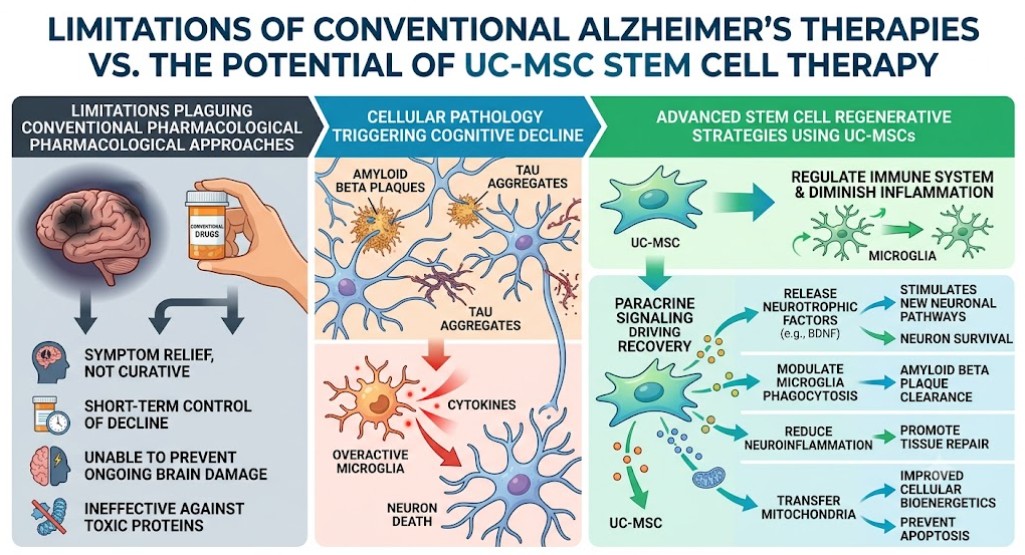
Figure 1: Limitations Plaguing Conventional Pharmacological Approaches compared with UC-MSCs stem cell therapy
Regional Advancements Pioneering Tomorrow
As the shift in medical innovation continues for Alzheimer’s, Southeast Asia is at the center. Thailand is rapidly building the first Stem Cell and regenerative medicine center in Southeast Asia. These advancements stem from the combination of improved medical infrastructure and stable, improving, and flexible medical laws. Teachers, researchers, and clinicians are improving their collaborations to improve the quality of regenerative medicine. These collaborations translate scientific discoveries from labs to clinical practice more effectively. Choosing to develop higher quality Stem Cell therapies and UC-MSCs locally provides multiple benefits from improving medical and scientific practices. Patients around the world appreciate the high standards of local medical professionals working with Alzheimer’s patients. It is estimated that there will be an enormous growth of personalized Stem Cell treatments utilizing UC-MSCs for neurodegenerative diseases here in the near future. Expanding clinical trials will determine the ideal protocols for optimal therapeutic cell dose and route of administration. This ongoing innovation places the region on the cutting edge of the world’s efforts to eliminate neurodegenerative diseases.
Future Outlook for Patient Recoveries
The use of UC-MSCs as a Stem Cell therapy will change our understanding of severe cognitive disorders on a fundamental level. The combination of innovative research with the application of cellular therapies will improve the prognosis of these patients. Our commitment to the field of regenerative medicine will offer hope for full recovery to Alzheimer’s patients who currently suffer with these devastating neurodegenerative disorders.