

Chronic wounds are a global health issue that is on the rise in terms of incidence and prevalence especially in diabetics, patients with vascular disease or those that are immobilized. Also unlike acute wounds which usually follow a set pattern of healing, chronic wounds may go on for weeks to months and they are at risk for infection, tissue death, and also for a poor quality of life. If the underlying healing mechanisms are malfunctioned, standard wound care dressings, antibiotics and surgical debridement have poor efficacy for many patients. Combined, this has led to increasing interest in stem cell therapy for wounds in Thailand and particularly approaches that address tissue repair at the cellular level. The new approach regenerative medicine comes to target the biological mechanisms underlying the healing process itself instead of merely treating surface level symptoms.
Biological Mechanisms of Wound Healing
Normal wound healing occurs in several coordinated phases:
- Primary hemostasis: Rapid clot formation to prevent blood loss
- IlthWG: Immune response activated to clearing away damaged tissue
- Proliferation: New tissue and blood vessels formation
- Remodeling: Tissue will strengthen and mature
This process is dysfunctional in chronic wounds. Key contributing factors include:
- Chronic inflammation that inhibits the normal healing process
- Impaired arterial blood supply providing a lack of oxygen & nutrients
- Wrong cell signalling underlying tissue regeneration
- Infection risk delaying recovery
- Suboptimal growth factor function and reduced repair efficiency
These disruptions put trauma into a cycle where wounds don’t heal right.
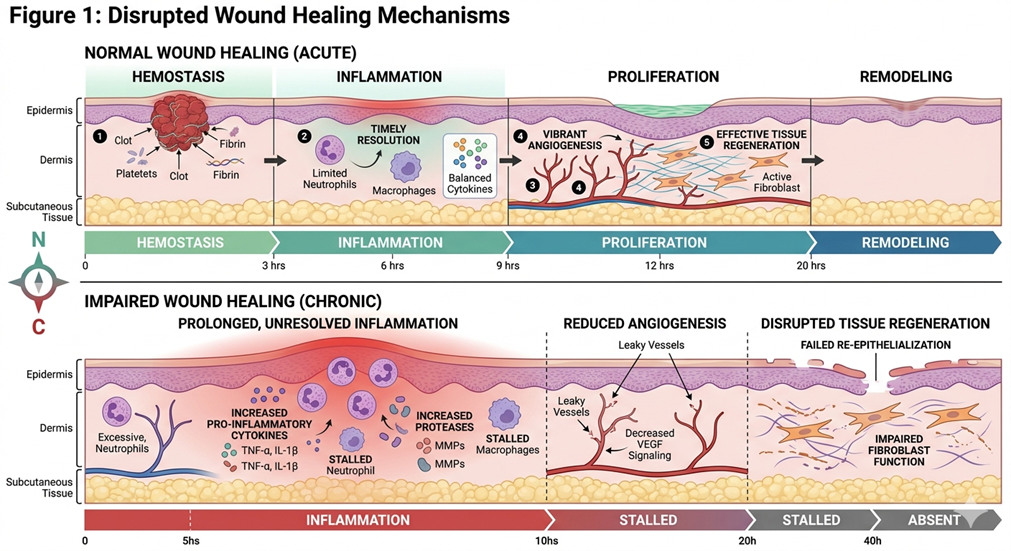
Schematic illustration of normal versus impaired wound healing, highlighting prolonged inflammation, reduced angiogenesis, and disrupted tissue regeneration in chronic wounds.
Common approaches include:
- Wound dressings and moisture control
- Antibiotics for infection management
- Debridement of damaged tissue
- Pressure offloading and supportive care
- Although these treatments are critical, they have their shortcomings:
- They do not directly resume disrupted cellular activity
- Healing can continue to be slow or incomplete
- Recurrence rates can be high
Underlying biological dysfunction may persist
Such challenges underscore the importance of approaches that promote healing on a more fundamental bioenergetic basis.
Cellular Mechanisms of Stem Cell Therapy in Wound Healing
When it comes to tissue repair, stem cell–based approaches with mesenchymal stem cells (MSCs), include UC-MSCs have been investigated.
Instead of directly replacing tissue, these cells are thought to act by paracrine signaling through the bioactive molecules they release into the surrounding wound environment.
Proposed mechanisms include:
- Anti-inflammatory effect: helping in the regulation of excess inflammation
- Supporting Angiogenesis: the formation of new blood vessels
- Improving communication in the repair microenvironment
- Secretion of growth factors: facilitating tissue regeneration processes
- Development of Extracellular Matrix: enhancing new tissue stability
These synergistic effects might contribute to transition of the wound microenvironment from chronic inflammatory state to a more regenerative one.
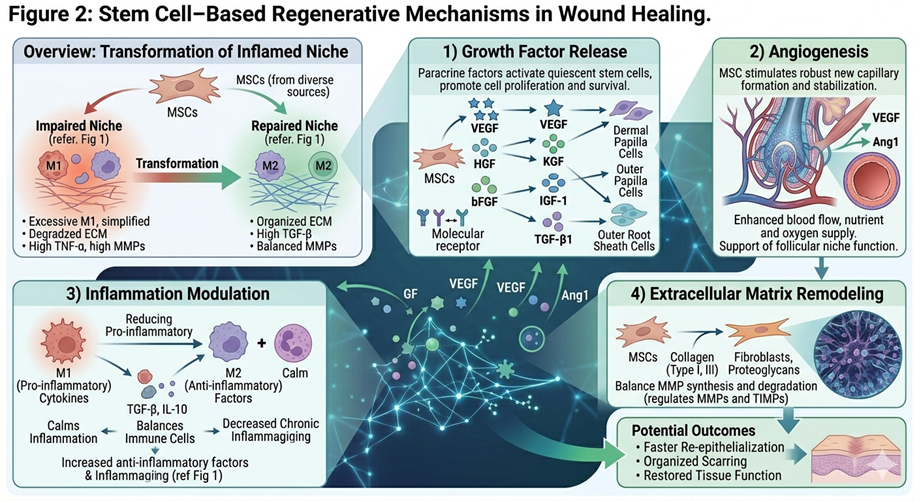
Conceptual illustration of stem cell–mediated wound healing, including growth factor release, angiogenesis, inflammation modulation, and extracellular matrix remodeling.
Why Patients Choose Thailand for Regenerative Wound Care
Many patients from the international community have come to Thailand for advanced wound care.
Key factors include:
- Access to regenerative medicine programs
- Advanced clinical and laboratory infrastructure
- Regenerative modalities in the context of wound care
- Treating Complex and Chronic Cases
- Personalized treatment planning
Such programs are usually intended for adjunct use with baseline wound care, not as a replacement.
Conclusion
Chronic wounds are a heterogenous group of pathologies characterized by persistent inflammation and impaired healing. While classical interventions are necessary for optimal wound healing, they fail to address the underlying biological disturbance. Mesenchymal Stem Cell Therapy in Thailand for Healing is a report that we have a new approach which is promoting tissue regeneration via paracrine signaling, angiogenesis and orchestration of inflammatory response. While these therapies are still in investigation and results may vary, they are a part of a large trend towards regenerative solutions in wound care. For many patients the aim is not only at wound closure but also at better quality of healing which in turn leads to fewer complications and improved overall quality of life.