

One out of the primary causes of female reproductive decline is ovarian aging which presents itself in terms of reduced ovarian reserve, poor follicular development and hormone imbalance. Health and fertility are large scale issues in what we see with diminished ovarian reserve (DOR) and premature ovarian insufficiency (POI). Presently we see that treatments are mainly supportive in nature: although we have hormonal therapy and assisted reproductive technologies we do not see a restoration at the cell level. What we are seeing now is the role played by mesenchymal stem cells in particular from the umbilical cord based stem cells (UC-MSCs) in the development of the ovarian microenvironment and in tissue repair which is very much at the fore front of what we are seeing in the field of regenerative medicine. Thailand has become a base for stem cell based therapies and is a home to special clinical infrastructure and integrated care models. This article looks at the bio mechanical processes of ovarian aging, the short comings of present treatments and also into the role of stem cell therapy in Thailand as a tool to support ovarian function.
- Introduction
Ovarian aging in women is a natural biological process characterized by a progressive loss of ovarian activity. This decline is accompanied by diminished oocyte quality, decreased follicular reserve, and changes in endocrine signaling. With declining ovarian function comes infertility and increased risk of conditions such as osteoporosis and cardiovascular disease.
Standard management options such as hormone replacement therapy (HRT) and assisted reproductive technologies (ART) counter hormonal deficiencies or override intrinsic limitations of reproduction. These approaches, however, do not restore ovarian intrinsic function.
New avenues for investigation have emerged in the field of regenerative medicine over the past few years directed towards ovarian rejuvenation at the cellular level. The use of stem cell–based therapies, especially those utilizing mesenchymal stem cells has been researched as a potential medicinal therapy to aid repair of the ovarian tissue and ultimately enhance reproductive outcomes.
- Biological Mechanisms of Ovarian Aging
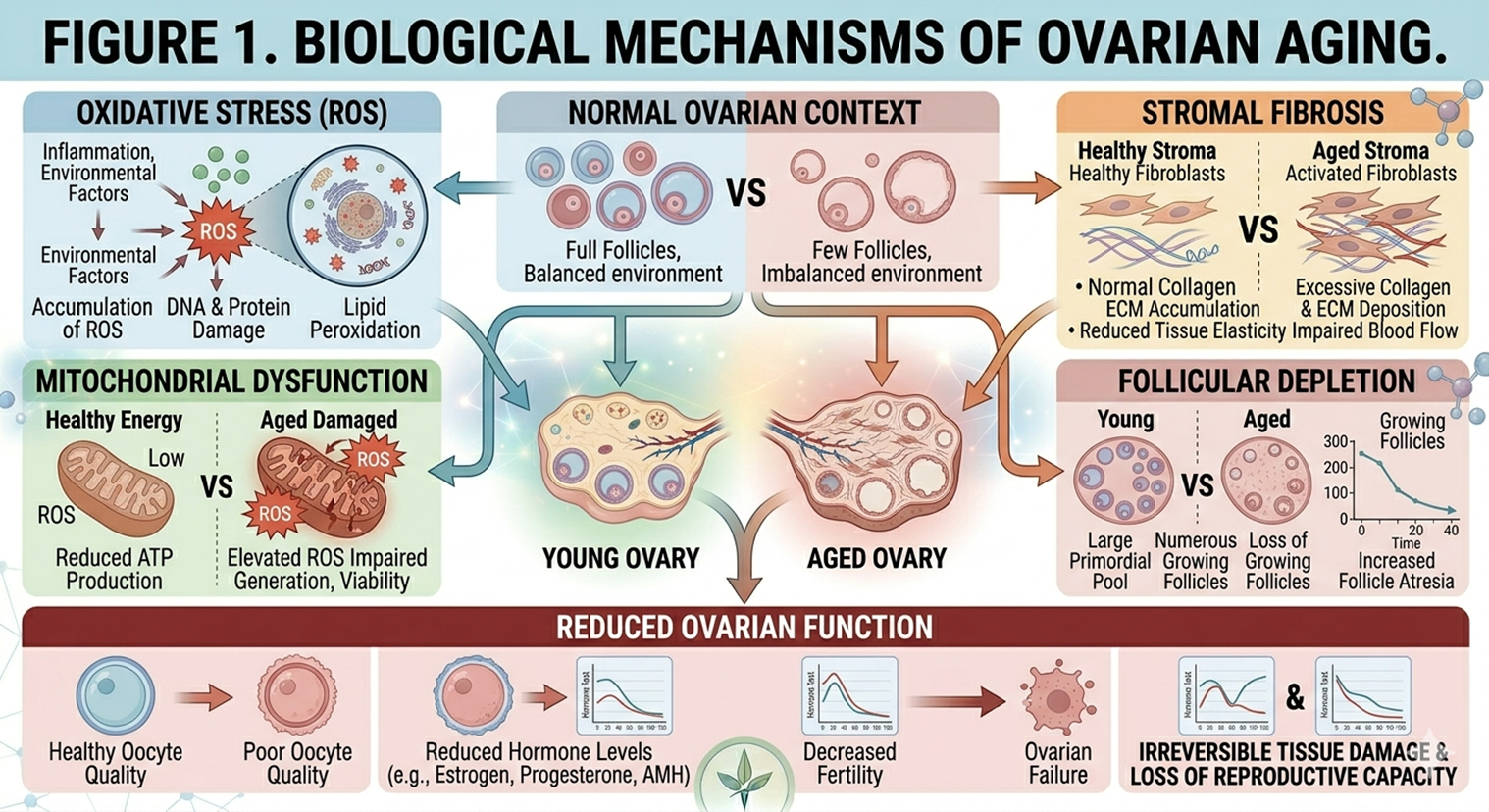
Ovarian aging results from a complex set of related processes which affect the quantity and quality of ovarian follicles.
- Follicle depletion : Over time the number of primordial follicles decreases which in turn reduces ovarian reserve and reproductive potential.
- Oxidation Stress : Accumulation of free radicals causes oocyte damage and impaired follicular development.
- Mitochondrial failure : Mitochondrial issues in oocytes which in turn affect energy production and oocyte viability.
- Endocrine Imbalance : Alteration of the hypothalamic–pituitary–ovarian (HPO) axis which in turn disrupts normal endocrine function.
- Stromal fibrosis and reduced vascularization : Changes in ovary tissue structure and blood flow impair follicle health and function.
These processes in total cause diminished ovarian function and reduced fertility.
- Limitations of Conventional Therapeutic Approaches
Presently there are mainly supportive treatments for ovarian aging and related conditions. Hormone replacement therapy can improve symptoms of low hormone levels but does not reverse ovarian tissue damage. Assisted reproductive technologies which include IVF also provide options for conception but do not treat the base issue of declining ovarian function. In the case of premature ovarian insufficiency treatment options are few which often includes use of donor oocytes. These facts point to a need for therapies which will restore ovarian function at a biological level.
- Mesenchymal Stem Cells in Ovarian Regeneration
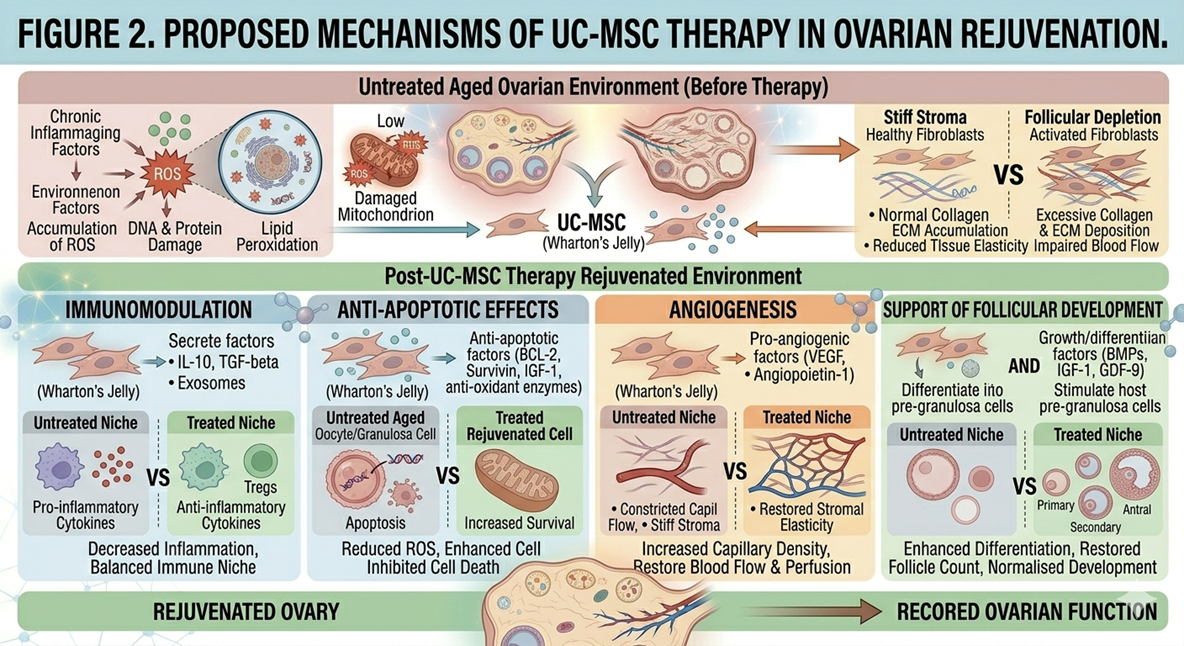
Mesenchymal stem cells (MSCs) which include umbilical cord derived MSCs (UC-MSCs) are a focus of study for their role in ovarian tissue repair and function. Instead of directly differentiating into oocytes, MSCs are reported to act via paracrine signaling which in turn releases bioactive factors that influence the ovarian microenvironment.
Proposed Mechanisms
- Immunoregulation : MSCs play a role in modulating inflammatory processes in the ovary which in turn supports follicle survival.
- Anti-apoptotic Effects : MSC derived factors may have the ability to reduce granulosa cell death and support follicle health.
- Tumor neovascularization : New growth of blood vessels may improve ovarian perfusion and oxygen delivery.
- Decrease in Oxidative Stress : MSC signaling plays a role in the reduction of oxidative damage which in turn improves oocyte quality.
- Support for Folliculogenesis : Emerging research reports that MSC derived factors improve follicle activation and growth.
Preclinical studies report better ovarian structure and function in animal models. While in the clinical setting we still have limited evidence and it is a subject of present research.
- Clinical Applications and Thailand as a Medical Hub
Thailand has emerged as a leading hotspot for regenerative medicine, with specialized clinics providing access to cutting-edge stem cell–based therapies. LABS: these centers are laboratories housed with clinical practitioners and scientists in reproductive and regenerative medicine.
Therapies using MSC are being investigated for clinical application in scenarios like reduced ovarian reserve and premature ovarian failure. Depending on clinical protocols, treatment may use systemic or localized administration.
Initial clinical observations indicate possible benefit in markers of ovarian function and patient-reported outcomes for carefully selected patients. But with some variability in results, further research is needed.
Thailand’s continued role in this area is the result of its combination advanced medical infrastructure, regulatory development and patient centered care.
Conclusion
Ovarian aging remains a multifactorial phenomenon affecting both fertility and general health status. Traditional treatments offer little ability to enhance ovarian function, highlighting the requirement for novel strategies.
Stem cell–based therapy, especially mesenchymal stem cell (MSC) therapy, appears to be a good alternative for both supporting the repair of ovarian tissue and enhancing the quality of the ovarian microenvironment. Interested in reproductive health with regenerative strategies, seem to reflect through clinical applications that showed up in Thailand.
But these therapies are investigational and further study is needed to define their clinical role. As regenerative medicine progresses, stem cell–based approaches will possibly be a part of new strategies in the future to promote fertility and healthy aging.