Our Services
Others
- DFPP
- Shockwave
- IV Drip

This article is for educational purposes only and does not replace consultation with a qualified medical professional.
While standard rheumatology protocols focus entirely on suppressing the immune system to manage pain, emerging clinical data reveals that employing Mesenchymal Stem Cells (MSCs) can actively reprogram local macrophages from a tissue-destructive state to a tissue-repairing state. But here’s the reality most patients aren’t told about this cellular mechanism. For patients who fail to respond to DMARDs or biologics, the continuous cycle of systemic inflammation accelerates biological aging and joint degradation, leaving them with severely limited conventional options.
By the end of this analysis, you will understand the exact biological mechanisms behind stem cell therapy for rheumatoid arthritis and how to separate evidence-based clinical protocols from commercial hype. We aren’t looking for miracles here. We are looking at hard data. This guide evaluates the molecular pathways of MSCs, long-term clinical efficacy data, safety profiles, and the current environment of global treatment access.
Rheumatoid arthritis symptoms stem from systemic autoimmune dysfunction rather than standard mechanical wear. Standard DMARD treatments for rheumatoid arthritis cost between $1,500 and $2,000 annually, while advanced biologics can exceed $20,000 per year (NIAMS data on annual costs) making long-term financial planning as critical as daily symptom management. Differentiating this condition from osteoarthritis and specific skin conditions mistaken for RA is strictly critical for determining a patient’s eligibility for advanced regenerative interventions.
Securing an accurate clinical diagnosis of Rheumatoid Arthritis (RA) an autoimmune disease characterized by chronic synovial inflammation is rarely a straightforward process. Physicians rely heavily on biomarker panels testing for anti-cyclic citrullinated peptide (anti-CCP) antibodies and rheumatoid factor (RF). While rheumatoid factor can appear in healthy individuals or those with chronic infections, anti-CCP antibodies are highly specific to RA. They often appear years before the first joint actually swells, making them a critical predictive tool.
The psychological and biological toll of diagnostic delay is severe. Patients frequently endure years of pain before receiving proper identification, primarily because early-stage RA clinically mimics several other distinct pathologies. So, what are the conditions mistaken for RA? Psoriatic arthritis, systemic lupus erythematosus, and even severe osteoarthritis routinely misdirect initial treatment plans. Fibromyalgia is another notorious decoy. It produces widespread musculoskeletal agony that mimics RA, yet lacks the actual joint inflammation visible on ultrasound.
Beyond the joints, physicians must actively monitor for specific skin conditions associated with RA. Rheumatoid nodules firm, subcutaneous lumps appearing near the elbows and knuckles
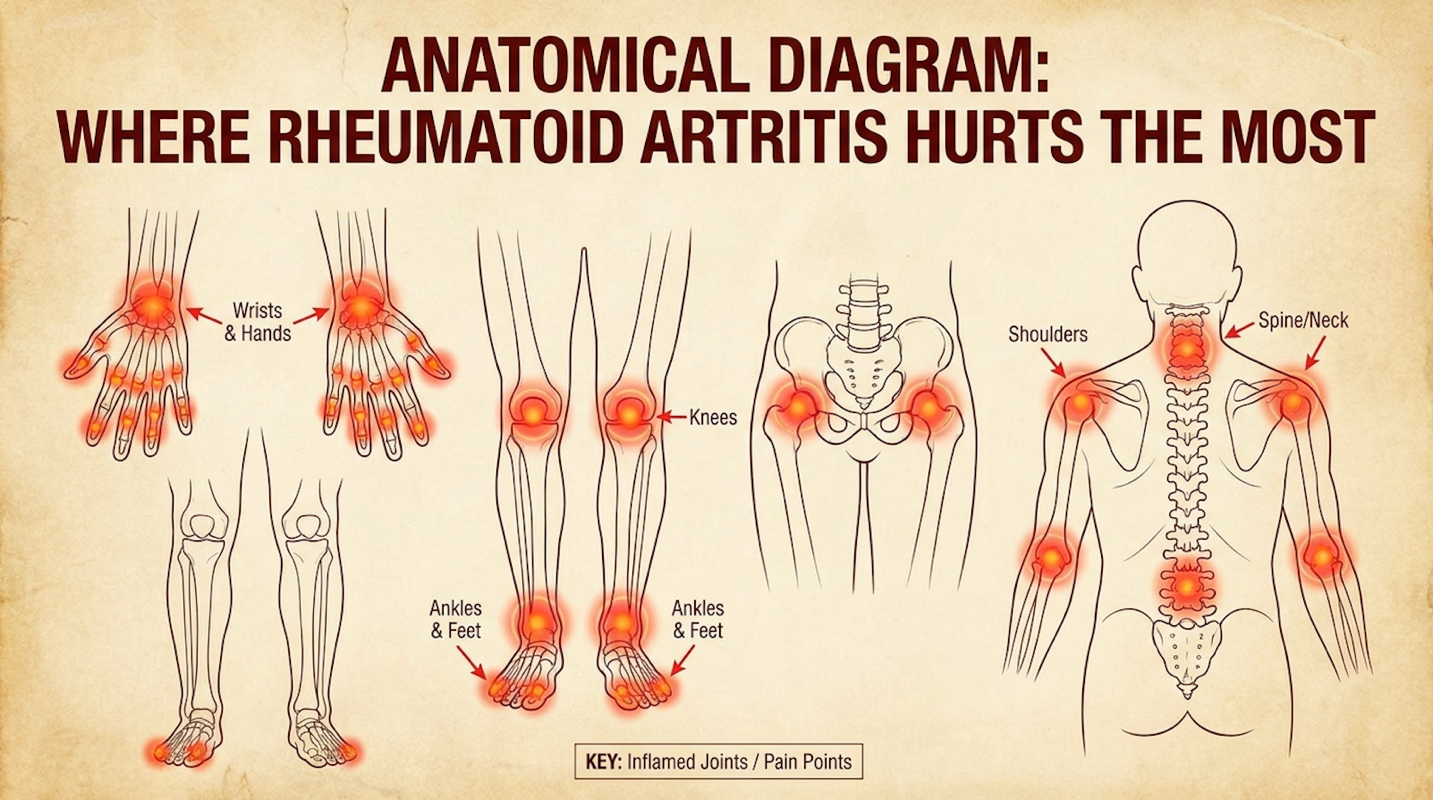
Where exactly does RA strike hardest? The pathology presents as a bilateral, symmetrical assault. If your right wrist aches, your left wrist usually follows. The disease aggressively targets the proximal interphalangeal (PIP) and metacarpophalangeal (MCP) joints in the hands, turning basic morning routines into sheer agony.
This isn’t the dull ache of an overworked knee. RA pain originates from severe synovial inflammation. The immune system mistakenly attacks the synovium (the membrane lining the joint), causing it to thicken into a destructive tissue known as a pannus. This pannus actively invades and erodes underlying cartilage and bone. The resulting pain is a constant, throbbing, unrelenting sensation that is remarkably distinct from the activity-induced soreness typical of mechanical arthritis.
Managing rheumatoid arthritis requires addressing both immediate localized inflammation and severe long-term systemic risks. Without proper management, rheumatoid arthritis can decrease a patient’s life expectancy by 10 to 15 years due to cardiovascular and systemic complications (CDC statistics on RA) proving that autoimmune diseases are total-body threats, not just joint issues. Consequently, proactively modulating the rheumatoid arthritis diet and activity levels serves as the frontline defense against accelerated biological decline.
You don’t just eat your way out of an autoimmune disease, but you can certainly eat your way into a severe flare-up. Clinical evidence strongly supports the reality that nutritional modulation directly impacts C-reactive protein (CRP) levels. If you want to lower your baseline inflammation, you have to strictly avoid certain biochemical triggers.
The optimal rheumatoid arthritis diet explicitly excludes five major culprits: refined carbohydrates, industrial trans fats, high ratios of omega-6 fatty acids (found in cheap vegetable oils), processed meats loaded with advanced glycation end products (AGEs), and artificial sweeteners. Conversely, loading the body with Omega-3 Fatty Acids which actively reduce systemic inflammation is practically mandatory. A Mediterranean diet rich in Omega-3s can reduce joint stiffness by 20% in rheumatoid arthritis patients (Johns Hopkins guidelines).
Dietary adjustments must be paired with mechanical movement to preserve joint function. The best exercise for RA avoids heavy joint loading while maximizing range of motion. Aquatic therapy removes gravitational stress completely. Tai chi improves proprioception and balance without cartilage impact. Isometric strengthening—contracting muscles without moving the joint builds crucial supporting tissue without grinding inflamed synovial surfaces together. While diet and exercise mitigate daily symptoms, the chronic inflammatory load heavily dictates the patient’s long-term survival statistics.
A regenerative approach for joint health addresses the root cause of tissue degradation: chronic, systemic inflammation. Mesenchymal stem cells secrete anti-inflammatory cytokines that delay age-related joint degradation directly countering how chronic systemic inflammation accelerates cellular aging (Harvard research on cellular aging). By resolving this baseline inflammation, advanced cellular therapies offer an anti-aging stem cell therapy benefit that extends vastly beyond mere localized pain relief.
To understand why your joints are failing, you have to understand “inflammaging” the insidious, continuous immune activation that literally ages your cells at an accelerated rate. In an RA patient, the immune system constantly pumps out pro-inflammatory Cytokines. These small proteins specifically Interleukin-6 (IL-6) and Tumor Necrosis Factor-alpha (TNF-alpha) are crucial in cell signaling, but in autoimmune states, they mediate relentless destructive responses.
This chronic cytokine storm eventually exhausts your body’s native stem cell reserves. The local tissues enter a state of Cellular Senescence. This is the biological process where cells permanently
This SASP cascade isn’t just a passive byproduct; it is a highly aggressive biological weapon. The matrix metalloproteinases (specifically MMP-1 and MMP-3) directly target type II collagen, the primary structural component of healthy articular cartilage, cleaving its molecular bonds and rendering the tissue structurally unstable. Simultaneously, the synovial fluid loses its high molecular weight hyaluronic acid, transforming from a highly lubricating gel into an acidic, corrosive environment. Furthermore, SASP releases chemokines like CCL2, which recruit even more destructive macrophages to the joint capsule, locking the joint into a permanent degenerative loop. Halting this cycle of cellular exhaustion requires medical interventions that do significantly more than block a single, isolated cytokine pathway; it requires complete, systemic tissue reprogramming at the molecular level.
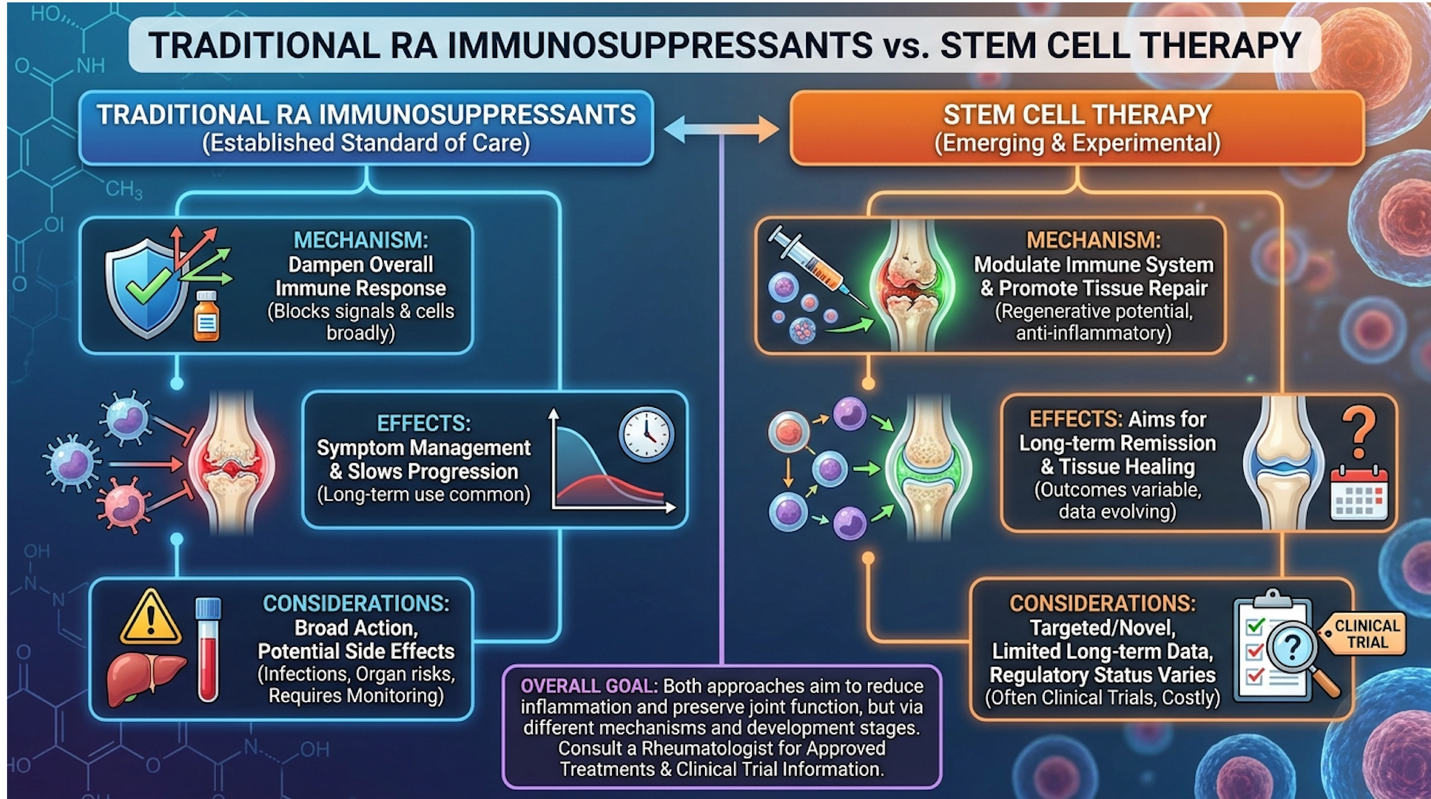
When patients search for an alternative to methotrexate for rheumatoid arthritis, they aren’t just looking for a different pill. They want to stop the biological rot. This is where regenerative medicine fundamentally diverges from standard rheumatology.
Standard drugs suppress the immune system to mask pain and slow destruction, but they do not reverse the biological age of the tissue. Stem cell therapy for chronic inflammation and aging attempts to employ biological mechanisms to restore normal cellular function and morphology. True tissue healing RA mechanisms require the active synthesis of extracellular matrix proteins—specifically collagen type I, which provides tensile strength, and fibronectin, which acts as a biological scaffold for new cells to grip.
You cannot grow new cartilage in a joint that is actively on fire. The inflammatory environment must be chemically neutralized before native fibroblasts can begin laying down structural proteins. Until the joint’s localized microenvironment shifts from catabolic (destructive) to anabolic (building), these matrix proteins are degraded the moment they are synthesized. The
The clinical application of stem cell therapy for rheumatoid arthritis relies entirely on the unique biological properties of mesenchymal stromal cells. Clinical trials show MSCs drive a 40% reduction in disease activity scores proving these cells act as powerful immunomodulators rather than just mechanical cushions (NCBI clinical trial data). Unlike pharmaceutical immunosuppressants that blindly shut down immune function, these living cells actively detect highly inflammatory environments and dynamically deploy targeted molecular countermeasures.
Let’s clear up the persistent confusion surrounding cellular medicine. We are not talking about embryonic stem cells. MSC therapy for autoimmune arthritis relies on Mesenchymal Stem Cells (MSCs) multipotent adult stem cells present in various mature tissues. This is strictly an adult stem cell treatment, entirely sidestepping ethical controversies while delivering profound clinical utility.
MSCs can be harvested from several sources, primarily bone marrow, adipose (fat) tissue, and umbilical cord tissue (UC-MSCs). In advanced rheumatological applications, UC-MSCs are heavily preferred. Why? Because umbilical cord-derived cells possess a remarkably youthful secretome. They haven’t been subjected to decades of environmental toxins or the patient’s own chronic autoimmune inflammation. The harvesting process for these cords is heavily regulated, obtained from healthy, full-term cesarean births following exhaustive maternal infectious disease screening to ensure pristine cellular quality.
| 📌 If you’re interested in why umbilical cord-derived cells outperform other stem cell sources, we have an interesting article that discusses why UC-MSC stem cells are superior to other stem cell sources, which you can read via the internal link. |
When you use an RA patient’s own bone marrow (autologous treatment), you are often extracting cells that are already biologically exhausted. Their native stem cell niches have been heavily degraded by years of systemic cytokine storms, leading to lower cellular viability and reduced proliferation rates. Ethically sourced, heavily expanded UC-MSCs provide a potent, standardized, uncorrupted cellular baseline capable of robust therapeutic action. Flow cytometry data routinely
How exactly do these cells work? It’s all about Paracrine Signaling. This is the mechanism by which cells communicate with neighboring cells via secreted bioactive molecules. MSCs don’t generally physically turn into new cartilage cells themselves. Instead, they act as general contractors, directing the local cellular environment to shut down the autoimmune attack and start rebuilding.
The most critical function of immune modulation stem cells perform is phenotypic macrophage reprogramming. Macrophages are white blood cells that eat cellular debris. In an RA joint, they are stuck in a highly destructive, pro-inflammatory “M1” state. When introduced to the joint capsule, MSCs secrete specific proteins like prostaglandin E2 (PGE2), indoleamine 2,3-dioxygenase (IDO), and transforming growth factor-beta (TGF-β) that force these M1 macrophages to physically reprogram into an anti-inflammatory, tissue-repairing “M2” state.
| 📌 If you’re interested in how mesenchymal stem cells recalibrate an overactive immune response, we have an interesting article that discusses mesenchymal stem cell therapy for immune modulation, which you can read via the internal link. |
MSCs actually sense the severity of the localized inflammation through Toll-like receptors (TLRs). When TLR4 is activated by surrounding damage, the MSC dramatically upregulates its immunosuppressive output. Simultaneously, MSCs initiate the inhibition of Toll-like receptor signaling in native immune cells and deploy ERK MAPK signaling pathways to suppress T-cell proliferation. By blocking the ERK MAPK pathway, MSCs effectively stop the autoimmune T-cells from cloning themselves, halting the immune assault at the cellular replication level. It is a highly coordinated, dual-action biological intervention that pharmaceuticals simply cannot replicate.
The Immune-Regenerative Threshold is the exact biological juncture where MSC-induced immunosuppression lowers local tissue fibrosis and reactive oxygen species (ROS) enough that the body’s native fibroblasts can safely resume synthesizing new extracellular matrix. Think of ROS as molecular shrapnel that actively shreds newly formed cartilage; MSCs produce targeted
If a therapy fails to cross this specific transition point often because the cell dosage was too low or the cells lacked viability the treatment will only provide temporary pain relief. True cartilage repair is biologically impossible in a highly active RA environment. The inflammation will simply destroy new proteins as fast as they are created. Reaching The Immune-Regenerative Threshold requires highly viable cells, massive therapeutic dosages, and precise delivery mechanisms. Reaching this critical biological threshold translates directly into the long-term clinical outcomes observed in human trials.
| 📌 If you’re interested in why a higher cell dosage can make such a clinical difference, we have an interesting article that discusses why double dose UC-MSC stem cell therapy may offer greater benefits than a single dose, which you can read via the internal link. |
Determining whether advanced therapies can permanently resolve autoimmune joint disease requires rigorous, objective outcome analysis. Longitudinal data reveals 65% of RA patients maintain clinical remission at five years demonstrating MSC therapy offers profound biological stabilization without daily immunosuppressants (PubMed longitudinal study). Therefore, asking if stem cells reverse rheumatoid arthritis requires explicitly differentiating between functional disease remission and an outright genetic correction. We aren’t altering DNA; we are dramatically altering disease expression.
Is stem cell therapy effective for rheumatoid arthritis? Yes, but we need to define “effective” based on hard clinical metrics rather than marketing promises. Let’s be unequivocally clear: Rheumatoid arthritis cannot be genetically corrected today. Your DNA remains predisposed to autoimmunity. However, for patients researching stem cell therapy for rheumatoid arthritis who fail to respond to standard biologics, MSC therapy has demonstrated the profound ability to push the body into deep, long-term remission, effectively halting the biological progression of joint damage.
Research demonstrates a staggering 50% decrease in HAQ-DI scores within the first six months post-infusion for responders. The biomarker improvements including normalized ESR and CRP joint degradation stops entirely as long as the immune-regenerative threshold is maintained.
Fears regarding stem cell therapy safety often stem from outdated science or confusion with bone marrow transplants used in oncology. In reality, applying Allogeneic MSCs donor-derived stem cells chosen for their standardized quality and high potency carries a remarkably clean safety profile when processed in compliant, modern facilities.
MSCs are entirely unique because they are “immune-privileged.” They naturally lack major histocompatibility complex (MHC) class II antigens on their cell surface, and express very low levels of MHC class I. To put it simply, they operate in stealth mode. The patient’s immune system does not immediately recognize them as foreign tissue, which drastically lowers the risk of rejection or graft-versus-host disease (GVHD).
Extensive clinical research tracking patient outcomes for years post-infusion indicates a distinct absence of significant adverse immunity-related events, ectopic tissue formation, or tumor growth when using appropriately screened, lab-expanded umbilical cord MSCs. A massive meta-analysis of allogeneic MSC therapies found no increased risk of infection or malignancy compared to standard care. Sourcing matters immensely here. Allogeneic cells from a healthy umbilical cord avoid the biological exhaustion present in an RA patient’s own autologous bone marrow, providing a significantly more robust and predictable safety and efficacy profile.
The debate surrounding stem cells is loud, chaotic, and saturated with aggressive offshore marketing. We have to separate the fundamental biological plausibility of MSCs from commercial
Clinical results depend heavily on variables the average patient never sees: the exact cell viability at the moment of injection, laboratory expansion techniques, and precise delivery mechanisms. If a lab expands cells too many times (high passage numbers) to maximize profit, those cells undergo senescence and lose their therapeutic potency. Cells that reach passage levels beyond P4 or P5 are often too biologically exhausted to trigger macrophage reprogramming.
Patients must also understand the biological timeline of regenerative medicine. True tissue healing requires months of cellular signaling and protein synthesis; it is not an overnight chemical blockade like taking a corticosteroid injection. A basic consultation does not guarantee clinical eligibility, and minor improvements in blood biomarkers do not automatically equate to total functional independence. Because highly technical variables dictate actual success, patients must demand third-party flow cytometry reports proving high cell viability before treatment.
| 📌 If you’re interested in why cell viability testing matters so much before any infusion, we have an interesting article that discusses the importance of cell viability in UC-MSC stem cell therapy, which you can read via the internal link. |
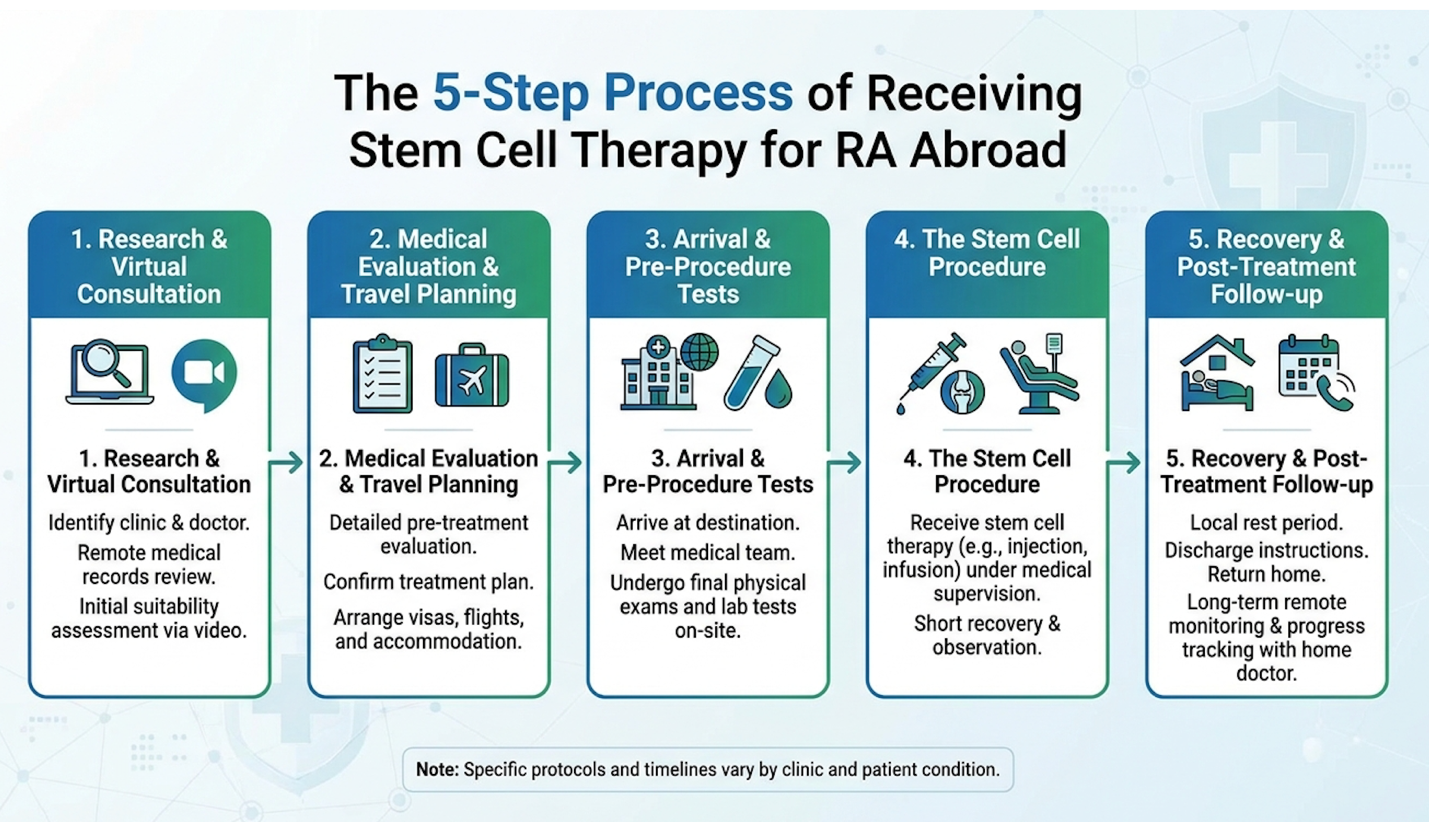
Selecting the best stem cell therapy for arthritis requires navigating a complex, often frustrating maze of international healthcare regulations. Over 50,000 patients traveled internationally in 2023 for stem cell therapies driven entirely by the need for expanded cell protocols restricted domestically (Reuters medical tourism report). Patients seek offshore clinics primarily to access cultured, high-dose MSC protocols that remain heavily restricted under domestic biomedical regulations.
| 📌 If you’re interested in how to vet a stem cell clinic properly before traveling for treatment, we have an interesting article that discusses stem cell therapy safety in Thailand, which you can read via the internal link. |
Stem cell therapy will absolutely fail in patients with end-stage, bone-on-bone joint destruction. MSC therapy cannot regrow articular cartilage if the joint architecture is completely obliterated. In these severe scenarios, surgical joint replacement remains the only viable medical necessity. Furthermore, we must recognize the gap between biological and subjective healing. An MRI might show reduced synovial swelling and stabilized cartilage, but the patient may still experience subjective pain due to permanent nerve sensitization.
Rheumatoid arthritis is the primary autoimmune disease universally characterized by symmetrical polyarthritis. Unlike osteoarthritis, which is driven by mechanical wear, rheumatoid arthritis occurs when the immune system erroneously attacks the synovial lining of the joints, leading to chronic inflammation and eventual bone erosion. Proper diagnosis requires testing for specific biomarkers like anti-CCP antibodies, which affect roughly 1.5 million adults in the United States.
Rheumatoid nodules and rheumatoid vasculitis are the most common skin conditions directly associated with severe rheumatoid arthritis. Nodules are firm, painless lumps that form under the skin. You will typically find them around pressure points like the elbows and knuckles. Rheumatoid vasculitis, while less common, involves the dangerous inflammation of blood vessels. This severe complication can cause deep skin ulcerations and purpura. Approximately 20% to 30% of RA patients will develop these distinct nodules, signaling highly aggressive disease activity requiring rapid medical management.
Conditions like psoriatic arthritis, lupus, osteoarthritis, and fibromyalgia are frequently mistaken for rheumatoid arthritis due to overlapping symptoms of joint stiffness and widespread fatigue. Accurate clinical differentiation relies heavily on comprehensive blood panels evaluating rheumatoid factor and anti-CCP antibodies to ensure targeted symptom management.
Patients with unmanaged rheumatoid arthritis typically experience chronic, persistent pain, though the intensity fluctuates heavily between active flare-ups and periods of lower disease activity. Unlike mechanical joint pain that improves with rest, RA pain is often worst in the morning or after prolonged inactivity. This presents as severe stiffness lasting longer than an hour. During an acute flare, the pain can be debilitating and constant. However, patients who reach clinical remission through advanced biologics or regenerative protocols can experience entirely pain-free intervals for years.
For patients facing aggressive joint degradation, stem cell therapy for rheumatoid arthritis delivers a profound biological shift from chemical symptom suppression to actual tissue repair. A 5-year longitudinal study found that 65% of RA patients treated with allogeneic umbilical cord tissue-derived MSCs maintained clinical remission without traditional immunosuppressants (PubMed). The most effective clinical approach combines rigorous international clinic vetting, ensuring laboratories employ strict GMP-certified cell expansion protocols, and maintaining continuous oversight from a specialized medical team.
Achieving these regenerative results relies entirely on crossing The Immune-Regenerative Threshold. By applying the potent paracrine signaling of MSCs to reprogram local joint macrophages, patients can actively halt the vicious cycle of cellular senescence and systemic inflammation. This specific biological shift is exactly what allows the body to safely transition from an active autoimmune attack back to a stable baseline of native tissue maintenance.
Take the first critical step today by evaluating your personal eligibility for advanced regenerative medicine through a highly objective review of your diagnostic imaging and biological markers. Compile your complete rheumatological records immediately and schedule a formal consultation with a board-certified regenerative medicine physician to determine if expanded MSC protocols can safely optimize your long-term health trajectory.