Our Services
Others
- DFPP
- Shockwave
- IV Drip

The long-term management of chronic nigrostriatal degeneration presents an intricate pathophysiological hurdle within modern clinical neurology. When a patient experiences the onset of Parkinson’s Disease, the cellular structures responsible for motor coordination undergo a steady, un-balanced decline. Specifically, the loss of dopamine-producing neurons within the deep midbrain disrupts the complex regulatory pathways that allow smooth, voluntary physical movement.
For decades, the standard response to this progressive brain decay has remained focused on a defensive framework. Conventional protocols rely heavily on oral drug replacement strategies, most notably Levodopa, to artificially supply the missing neurotransmitter.
While these oral chemical adjustments provide clear relief during the initial stages of a diagnosis, they function strictly as temporary patches. Exogenous chemical substitution does not alter the underlying destructive environment in the brain parenchyma. It cannot stop the ongoing cell death, leaves toxic protein accumulations untouched, and fails to repair the microvascular starvation that isolates deep neural tissues. Over time, patients face a challenging cycle of erratic motor fluctuations, involuntary movements, and a progressive rise in non-motor symptoms like cognitive slowing, sleep architecture disruptions, and mood imbalances.
Translational medicine provides a proactive alternative by targeting the biological conditions of the central nervous system. By leveraging high-potency, youth-derived neonatal umbilical cord mesenchymal stem cell lines, advanced protocols available through stem cell therapy bangkok thailand focus on changing the hostile microenvironment directly at the source.
Administered via optimized systemic or target-focused delivery networks, these fresh, allogeneic cell lines function as active signaling hubs. Instead of simply masking symptoms from the outside, they navigate toward inflamed neural pathways, release highly concentrated exosomal messages, calm overactive resident immune cells, and support the body’s natural neuroplastic pathways to protect surviving neural networks from ongoing decay.
1. The Nigrostriatal Collapse: Alpha-Synuclein Aggregation and Neural Atrophy
To see why traditional oral medications eventually lose their effectiveness and how advanced cellular strategies change clinical trajectories, we have to look past outward motor symptoms and examine the deep cellular breakdown occurring within the basal ganglia network.
As shown in the neuro-anatomical comparison above, healthy physical movement depends on a continuous, uncompromised stream of dopamine molecules moving across the synaptic cleft. This precise signaling loops through the putamen and striatum, serving as an internal volume knob that balances muscle contraction and relaxation.
In the development of Parkinson’s Disease, this essential signaling framework breaks down completely. The primary driver of this structural failure is the abnormal misfolding and accumulation of a native protein called alpha-synuclein. This protein clumps together inside remaining neurons, forming toxic structures known as Lewy bodies.
As these protein aggregates build up, they choke internal cellular transport lines, causing severe mitochondrial failure, massive oxidative stress, and rapid dopaminergic cell death within the substantia nigra pars compacta.
This cell loss cuts off the necessary dopaminergic input to the striatum, leading to a profound neurotransmitter deficit. The resulting structural imbalance causes the brain’s internal motor loop to continuously suppress movement, producing the classic asymmetric resting tremors, severe physical slowness, rigid limbs, and postural instability seen in clinical settings. When evaluating the impact of stem cell therapy bangkok thailand , the primary objective is to intervene directly within this toxic protein environment, protecting surviving cells before they cross the threshold into permanent apoptosis.
2. Molecular Transduction Patterns: The Neuroprotective Secretome Cascade
Mesenchymal cells derived from neonatal umbilical cord tissue introduce a highly advanced biological intervention for neurodegenerative conditions because they bypass the biological limitations, environmental mutations, and cellular fatigue that compromise adult self-derived bone marrow or fat extractions. Sourced exclusively from the ethically isolated Wharton’s Jelly of healthy, full-term donor tissues, these cells carry exceptional replication speeds and extended telomere lengths. Because they lack standard tissue-matching surface markers, they are highly immunoprivileged, allowing them to be safely introduced without complex tissue cross-matching or post-treatment anti-rejection medications.
As detailed in the comprehensive cell kinetics map above, when these high-potency cells are deployed, they move smoothly through a multi-stage process including rolling adhesion, tight binding, and migration across the vascular lumen to engage directly with the brain microenvironment. Rather than operating as passive physical patches, the therapeutic efficacy of deploying stem cell therapy bangkok thailand is driven by a tri-phasic molecular cascade:
Reprogramming Microglial Activation
Chronic neuroinflammation is a primary engine driving the progression of Parkinson’s Disease. When resident immune cells in the brain, known as microglia, are locked in a hyper-activated state, they continuously flood the surrounding tissue with a destructive wave of pro-inflammatory cytokines.
Upon sensing these distress signals, the transplanted cells release a powerful anti-inflammatory payload, including Interleukin-10 and Prostaglandin E2. This localized release neutralizes circulating inflammatory molecules and forces hyper-activated microglia to transition into a calm, protective repair state, effectively extinguishing the underlying tissue fire.
Direct Bio-Energetics Rescue via Nanotube Connections
Neurons affected by alpha-synuclein accumulation suffer from severe internal energy starvation and mitochondrial collapse. To reverse this structural crisis, the healing cells establish direct physical connections with struggling host cells by extending microscopic membrane projections called tunneling nanotubes. Healthy, high-functioning mitochondria travel down these nanotubes to cross directly into the cytoplasm of the injured neurons, restoring immediate ATP energy production and neutralizing harmful oxidative stress.
Upregulating Tyrosine Hydroxylase and Synaptic Plasticity
To encourage the repair of the striatal terminal web, the cells function as active mobile factories, discharging millions of microscopic extracellular vesicles, or exosomes, rich in vital neurotrophic support proteins—most notably Glial Cell-Line Derived Neurotrophic Factor and Brain-Derived Neurotrophic Factor.
These growth factors interact with surviving neurons to stimulate axon elongation. Most importantly, this paracrine stimulation upregulates the activity of Tyrosine Hydroxylase the primary rate-limiting enzyme required for independent dopamine synthesis directly increasing native dopamine production within the remaining neural circuits of patients with Parkinson’s Disease.
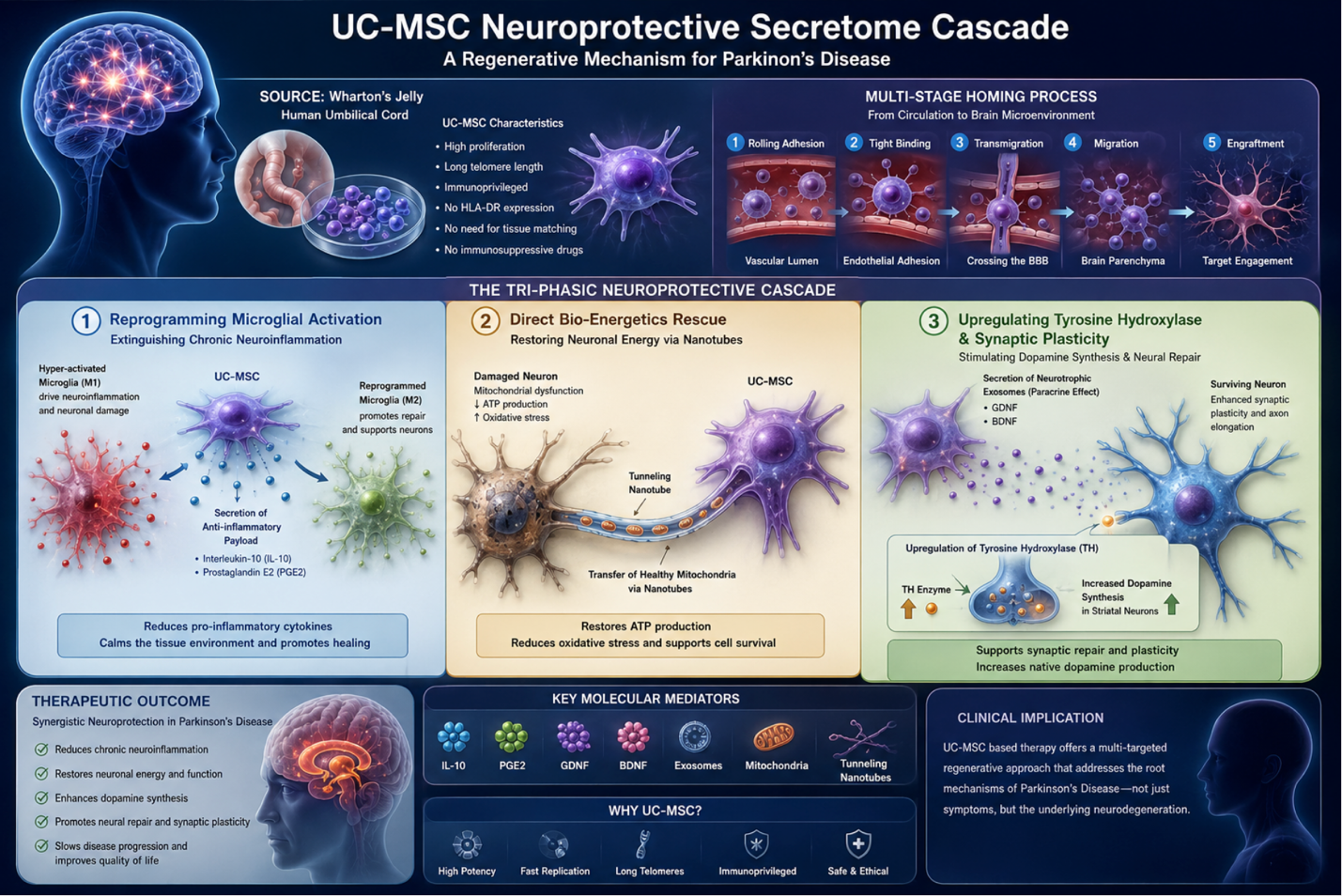
Figure 1: Proposed UC-MSC Neuroprotective Secretome Cascade in Parkinson’s Disease
3. Targeted Microenvironmental Rebalancing: An Operational Matrix
To see how a targeted cell protocol maps across a degraded brain axis to alter clinical outcomes, it is useful to analyze the specific tissue targets and their corresponding regenerative interventions within Parkinson’s Disease:
| Target Brain Layer / Cell | Pathological Malfunction in Parkinson’s | Cellular Regenerative Intervention | Key Semantic Entity |
| Substantia Nigra Neurons | Accumulate alpha-synuclein Lewy bodies, driving rapid cell apoptosis. | Deploys targeted exosomal microRNAs to downregulate apoptotic lines and rescue surviving cells. | Substantia nigra, Dopaminergic apoptosis, Alpha-synuclein clearance |
| Striatal Synaptic Cleft | Suffers from a profound loss of native dopamine input, disrupting motor outputs. | Upregulates Tyrosine Hydroxylase expression to stimulate endogenous dopamine synthesis. | Striatal dopamine depletion, Tyrosine Hydroxylase |
| Resident Brain Microglia | Locked in hyper-reactive states; continuously secretes neurotoxic cytokines. | Releases anti-inflammatory payloads to force an immediate transition into a calm, protective repair state. | Microglial activation, Neuroinflammation, Cytokine down-regulation |
| Cerebral Micro-Capillaries | Experience progressive narrowing and chronic hypoperfusion, starving local tissues. | Secretes high concentrations of angiogenic growth factors to activate capillary sprouting and restore local circulation. | Angiogenesis, VEGF signaling, Brain microvascular hypoperfusion |
4. The Viability Imperative: Bypassing Cryopreservation Shock in Bangkok Laboratories
The clinical success of stem cell therapy bangkok thailand for advanced neurodegenerative disorders is fundamentally governed by the preservation of cellular viability at the immediate point of care. The therapeutic secretome is an incredibly complex, active mix of signaling proteins that can only be produced and released by living, metabolically active cells. If a cell formulation contains high percentages of dead or dying cells, it cannot perform targeted chemotaxis, cannot manufacture exosomes, and will be quickly cleared away by the recipient’s immune system as biological waste.
Many international clinics source their cellular products from distant manufacturing facilities, requiring the cells to be deeply frozen and thawed right at the patient’s bedside. This cryopreservation process utilizing chemical cryoprotectants introduces profound thermodynamic stress to delicate plasma membranes, frequently causing cell lysis and destroying the vital homing receptors required for targeted transendothelial migration within degraded brain tissue beds.
Advanced biomedical facilities delivering stem cell therapy bangkok thailand bypass this logistical bottleneck by leveraging a continuous, closed-system cultivation framework operating locally. By executing aseptic processing within state-of-the-art laboratory environments close to the clinical suites, technicians expand neonatal umbilical cord lineages without the need for deep freezing.
The formulated allogeneic grafts remain suspended in a temperature-regulated, nutrient-dense transport matrix right up to the exact minute of clinical delivery. Automated cytometry and fluorescence-based live/dead assays confirm verified viability scores exceeding 95%. This logistical integration ensures that the recipient receives an uncompromised secretome payload, maximizing paracrine signaling efficiency and optimizing structural tissue remodeling within heavily compromised central environments.
5. Chronological Bio-Restorative Blueprint: Sequential Niche Calibration
Stepping into an advanced clinical pipeline for stem cell therapy bangkok thailand operates via a meticulously timed, objective medical execution strategy focused entirely on patient safety and structural tissue matrix optimization.
1.Neuro-Immunological Profiling & Baseline Cellular Telemetry
Sequence Alpha
The therapeutic pathway begins with extensive molecular and diagnostic charting, evaluating baseline baseline motor parameters, fasting metabolic levels, and inflammatory cytokine panels to confirm candidate suitability for treating Parkinson’s Disease.
2.Closed-System Bio-Synthesis & Automated Purity Verification
Sequence Beta
Following lineage characterization, specialized laboratories expand allogeneic neonatal lines under pristine atmospheric controls. The customized formulation undergoes rigorous flow cytometry and sterility assays to ensure exceptional purity and cell viability scores.
3.Directed Transvascular Infusion & Monitored Tissue Seeding
Sequence Gamma
Utilizing precise systemic delivery channels under full sterile and multi-parametric medical tracking, the fresh concentration of day-zero cells is introduced into the patient’s circulatory pathways to activate transendothelial brain homing.
4.Functional Matrix Potentiation & Synaptic Remodeling Support
Sequence Delta
The final ongoing phase pairs targeted post-treatment care with customized metabolic co-factors and neuroprotective dietary modulators, working to maintain a highly receptive internal environment and maximize long-term synaptic repair in Parkinson’s Disease.
6. Real-World Expectations: Tracking Neurological Turning Points
When discussing advanced cellular therapies for Parkinson’s Disease, maintaining absolute honesty, transparency, and a grounded perspective is essential. Stem cell therapy is not a magical overnight cure that will instantly eliminate long-standing motor challenges or wipe away years of physical degradation in a single day. Instead, it serves as a powerful biological accelerant that works hand-in-hand with clinical management to slow the progression of neurodegeneration and create conditions where lost neurological function can gradually recover.
Patients who respond well to advanced neuro-regenerative protocols typically report gradual, steady health improvements over a window of two to six months:
Reduction in Motor Fluctuations: A noticeable smoothing of daily motor control, extending the duration of independent movement windows and significantly lowering the occurrence of sudden immobility periods.
Tremor and Rigidity Stabilization: A visible reduction in baseline resting tremor amplitudes and a softening of muscle stiffness across the limbs, supporting improved daily fine motor tasks like writing or dressing.
Reclamation of Postural Balance: Improvements in stride length, gait symmetry, and rapid postural adjustments, helping to lower overall fall risks and enhance walking confidence.
Amelioration of Non-Motor Symptoms: Noticeable improvements in sleep architecture, cognitive planning capabilities, and a systematic reduction in daytime fatigue or baseline anxiety.
Conclusion: Securing Your Neurological Future
Nigrostriatal cell loss, microglial activation, and progressive synaptic decay involve complex, aggressive biological processes, but patients and families do not have to remain locked in a purely reactive cycle of managing symptoms with temporary chemical drugs while their underlying brain tissue undergoes permanent degradation. Continuing to treat a deep biological and microvascular failure with simple surface-level chemical substitution masks the physical decline without addressing the true neurodegenerative crisis.
By choosing advanced, fresh cellular protocols through stem cell therapy bangkok thailand , you give your body the highly potent, youth-derived resources it needs to cool chronic brain inflammation, rescue failing mitochondria, and support healthy dopaminergic signaling from the inside out. Embracing the cutting edge of regenerative medicine under strict quality control standards represents a powerful, proactive choice to avoid the constraints of progressive disease, protect your long-term independence, and build a resilient foundation for your neurological future.