Our Services
Others
- DFPP
- Shockwave
- IV Drip

The progressive thinning of systemic bone mineral infrastructure presents an increasingly severe challenge within contemporary metabolic endocrinology and regenerative orthopedics. This skeletal breakdown, pathologically diagnosed as Osteoporosis, features a profound loss of structural matrix density, micro-architectural decay within trabecular networks, and a systematic thinning of cortical bone walls. As this structural decay advances, the physical integrity of the skeleton collapses, leaving patients highly vulnerable to low-energy fragility fractures particularly within the vertebral bodies, distal radius, and femoral neck.
For decades, the standard response to this skeletal erosion has operated under a defensive framework. Conventional medical models rely on oral or injectable medications: antiresorptive bisphosphonates or RANK-ligand inhibitors designed to slow down bone loss, alternated with seasonal parathyroid hormone analogs to encourage temporary bone growth.
While these conventional interventions alter bone mineral scores on paper, they suffer from deep biological limits. Antiresorptive drugs work by completely freezing the activity of bone-clearing cells, which traps the body in a state where old, damaged bone cannot be removed, leading to brittle bone matrices and rare complications like atypical femoral fractures or jaw osteonecrosis. Anabolic hormone injections are limited by strict continuous usage windows due to local receptor fatigue.
Translational molecular biology provides a proactive alternative to this loop by targeting the biological conditions of the bone marrow niche directly at the source. By leveraging high-potency cellular matrices, advanced protocols available through stem cell therapy bangkok thailand focus on changing the hostile microenvironment of the thinning skeleton.
Instead of placing temporary mineral coatings onto a weakening framework, the systemic deployment of live, youth-derived cell formulations delivers active paracrine signaling networks directly into the marrow spaces. These advanced signaling arrays help reset faulty differentiation paths, clear out chronic low-grade tissue inflammation, and reactivate the body’s independent bone-building systems to address the true root causes of advanced Osteoporosis.
1. The Marrow Microenvironment: Accelerated Osteoclastogenesis and the Adipogenic Shift
To see why traditional pharmaceutical options eventually plateau and how advanced stem cell therapy bangkok thailand alters long-term skeletal health, the biological lens must look past superficial bone density scores and examine the deep cellular environments inside the trabecular bone cavity. Healthy bone structure depends on a continuous, tightly coupled cycle of bone remodeling managed by two opposing cell groups: bone-resorbing osteoclasts and bone-building osteoblasts.
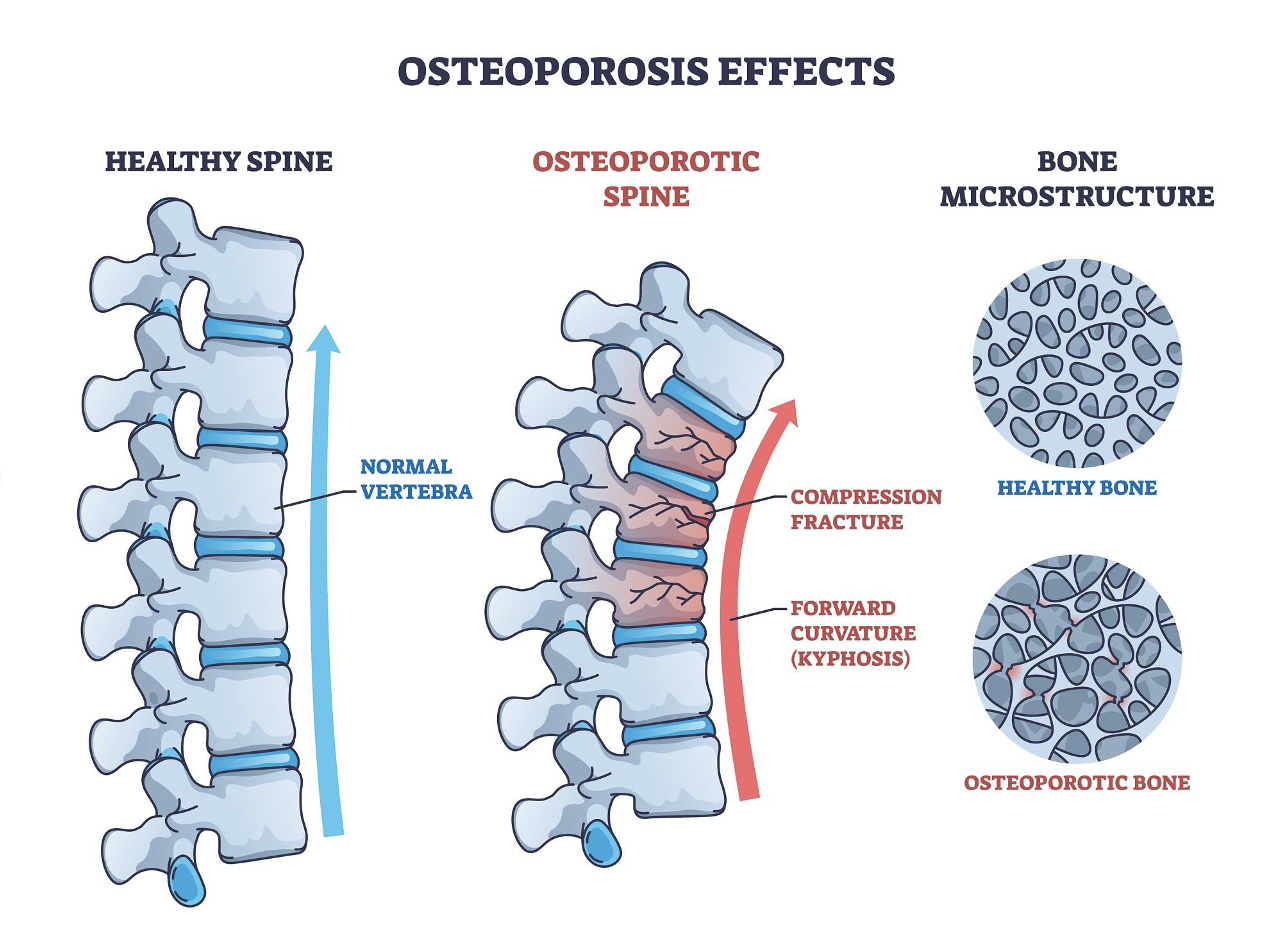
The structural pathomechanisms of trabecular thinning and vertebral compression in Osteoporosis. Source: VectorMine / Getty Images
As shown in the anatomical breakdown above, the progression of Osteoporosis transforms a dense, highly connected skeletal microstructure into a thin, fragile grid prone to compression fractures. The primary driver of this structural failure is a major imbalance in cell production within the marrow niche.
Healthy bone marrow contains multipotent stromal progenitor cells that face a constant biological choice: differentiate into bone-building osteoblasts or fat-storing adipocytes.
As the body experiences aging or chronic low-grade inflammation, the genetic wiring behind this selection path fails. The body upregulates the transcription factor PPAR-, which commands local progenitor cells to stop transforming into osteoblasts and instead shift into fat cells. This process, known as marrow adipogenesis, floods the bone cavity with fat tissue while starving the skeleton of fresh, bone-building cells.
Concurrently, the remaining marrow cells display an un-balanced overproduction of RANKL (Receptor Activator of Nuclear Factor B Ligand) while downregulating its natural protector, Osteoprotegerin (OPG).
This major collapse in the RANKL/OPG ratio triggers massive osteoclastogenesis an over-activation of multinucleated osteoclasts that aggressively tunnel through trabecular bridges faster than the remaining osteoblasts can repair them. The resulting structural decay creates the porous, micro-fractured skeletal networks that define advanced Osteoporosis.
Traditional medications cannot alter this fat-versus-bone lineage mistake; they merely freeze the existing broken matrix. Suppressing this decline requires a targeted biological intervention that can step in to completely rewrite the cell differentiation pathway. By utilizing stem cell therapy bangkok thailand, pioneering clinical protocols seek to deliver specific paracrine factors that systematically override this adipogenic shift, restoring balance to the skeletal matrix.
2. Molecular Transduction Signaling: Activating the Canonical Wnt Pathway
Advanced applications of stem cell therapy bangkok thailand intervene within this broken skeletal niche by using a highly specialized biological strategy: paracrine transduction. When high-potency cellular lines are introduced, they utilize the body’s natural circulatory highways to migrate directly toward the high concentrations of chemokines released by damaged, thinning bone tissues.
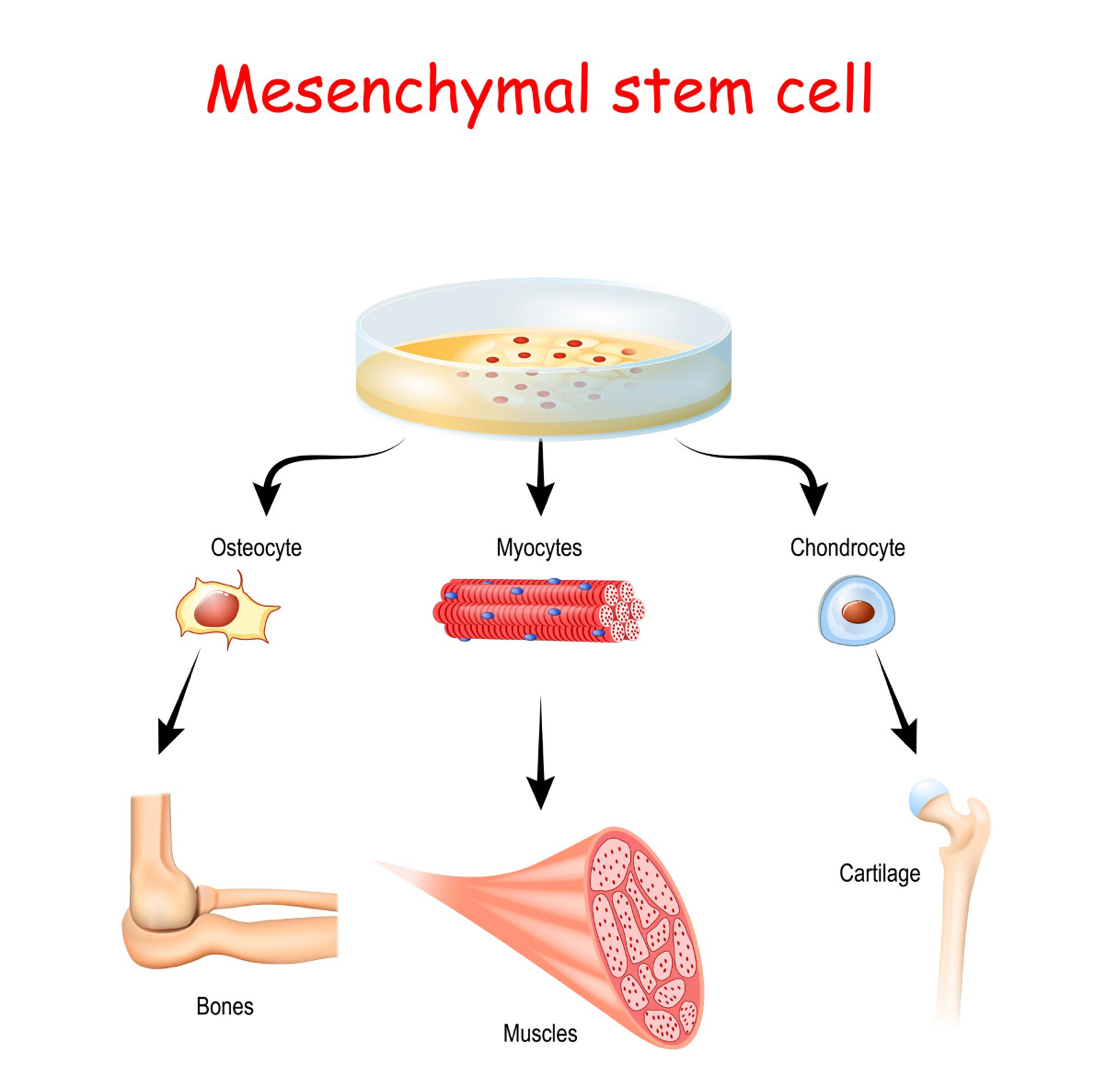
The multipotent differentiation paths of mesenchymal progenitors in tissue repair.
As outlined in the lineage framework map above, these youth-derived cellular lines possess the distinct biological plasticity required to alter the marrow microenvironment. Rather than operating as passive physical patches that manually turn into bone cell-for-cell, their primary therapeutic mechanism is the continuous manufacture and targeted deployment of a powerful anti-inflammatory and anabolic secretome payload. Once settled within the porous marrow niche, the cell lines deployed via stem cell therapy bangkok thailand execute a multi-layered molecular override to reverse the progression of Osteoporosis:
Reactivation of the Canonical Wnt/-Catenin Pathway
In an osteoporotic skeleton, bone formation is permanently blocked because senescent cells continuously produce inhibitory proteins like Sclerostin and Dickkopf-1 (DKK-1), which shut down the cellular engines of bone growth. The cell lines deployed in stem cell therapy bangkok thailand counter this restriction by releasing a dense cloud of canonical Wnt ligands (such as Wnt-3a and Wnt-10b).
These signaling molecules bind directly to the LRP5/6 receptors on sluggish host progenitor cells, completely blocking the destructive GSK-3$beta$ enzyme complex. This molecular interaction allows -catenin to accumulate in the cytoplasm and move directly into the cell nucleus.
Once inside, -catenin activates the essential Runx2 and Osterix genes, commanding host progenitors to stop turning into fat cells, shut down PPAR- production, and immediately restart the mass synthesis of fresh, active osteoblasts.
Restoring the RANKL/OPG Ratio via Exosomal MicroRNA Transfer
To stop unchecked bone tunneling, the cell lines deployed via stem cell therapy bangkok thailand discharge millions of microscopic, membrane-bound extracellular vesicles called exosomes into the marrow fluid. These vesicles fuse with host stromal cells, dropping off highly concentrated payloads of regulatory microRNAs—most notably miR-21, miR-29a, and miR-133.
This microRNA payload acts as an intracellular brake, systematically downregulating the production of destructive RANKL while actively increasing the secretion of protective Osteoprotegerin (OPG). OPG acts like a biological shield, binding to RANKL before it can touch osteoclasts, completely freezing their hyper-activated tunneling and stopping progressive bone loss.
Upregulating Type I Collagen Synthesis and Extracellular Mineralization
As the newly activated osteoblasts multiply under the influence of stem cell therapy bangkok thailand, paracrine growth factors primarily Transforming Growth Factor-beta 3 and Bone Morphogenetic Protein 2 (BMP-2) command them to ramp up the manufacture of Type I Collagen strands.
These strands are woven into an organized osteoid matrix, which serves as a tight structural net that captures circulating calcium and phosphorus. This targeted deposition forms fresh hydroxyapatite crystals along the thinning trabecular arches, progressively restoring structural bone density.
3. Microenvironmental Target Mapping Across the Marrow Niche
To see how a targeted cell protocol maps across a degraded skeletal axis to alter structural outcomes, it is useful to analyze the specific biological targets and their corresponding regenerative interventions within Osteoporosis:
| Target Bone Niche Layer | Pathological Malfunction in Osteoporosis | Cellular Regenerative Intervention | Key Semantic Entity |
| Marrow Progenitors | Overexpress PPAR-γ; switch from bone-building to fat cell production. | Secretes Wnt-10b to activate β-catenin, shutting down PPAR-γ and driving osteoblastogenesis. | Marrow adipogenesis, Osteoblastogenesis, β-catenin accumulation |
| Osteoclast Matrix | Overstimulated by excessive RANKL levels; aggressively tunnels through bone arches. | Delivers exosomal microRNAs to restore the RANKL/OPG ratio, freezing unchecked bone resorption. | Osteoclastogenesis, RANKL/OPG ratio, Trabecular fragmentation |
| Extracellular Osteoid | Suffers from severe Type I collagen depletion and matrix fragmentation. | Produces BMP-2 and TGF-β3 to stimulate fresh collagen weaving and capture mineral deposits. | Extracellular matrix (ECM), Type I Collagen, Extracellular mineralization |
| Bone Marrow Capillaries | Experience progressive narrowing and tissue ischemia, starving local cell networks. | Releases high concentrations of VEGF to activate micro-capillary sprouting and restore marrow circulation. | Angiogenesis, VEGF signaling, Skeletal microvascular ischemia |
4. The Viability Imperative: Protecting Cellular Integrity in Bangkok Cultivation Centers
The clinical success of advanced stem cell therapy bangkok thailand for systemic disorders like Osteoporosis relies entirely on a single technical metric that is frequently overlooked in mainstream discussions: cellular viability at the exact point of care. The human secretome is an incredibly complex, active mix of signaling proteins that can only be produced and released by living, metabolically active cells. If a formulation contains high percentages of dead or dying cells, it cannot perform targeted chemotaxis, cannot manufacture exosomes, and will be quickly cleared away by the recipient’s immune system as biological waste.
Many international clinics source their cellular products from distant manufacturing facilities, requiring the cells to be deeply frozen and thawed right at the patient’s bedside. This cryopreservation process utilizing chemical cryoprotectants introduces profound thermodynamic stress to delicate plasma membranes, frequently causing cell lysis and destroying the vital surface receptors required for targeted bone homing.
Advanced biomedical facilities delivering stem cell therapy bangkok thailand bypass this logistical bottleneck by leveraging a continuous, closed-system cultivation framework operating locally. By executing aseptic processing within state-of-the-art laboratory environments close to the clinical suites, technicians expand neonatal lineages without the need for deep freezing.
The formulated allogeneic grafts remain suspended in a temperature-regulated, nutrient-dense transport matrix right up to the exact minute of clinical delivery. Automated cytometry and fluorescence-based live/dead assays confirm verified viability scores exceeding 95%. This logistical integration ensures that the recipient receives an uncompromised secretome payload, maximizing paracrine signaling efficiency and optimizing structural tissue remodeling within heavily compromised bone environments.
5. Real-World Expectations: Tracking Skeletal Turning Points
When discussing advanced cell-based applications for bone density restoration, maintaining absolute transparency and an honest, grounded perspective is essential. Stem cell therapy is not a magical overnight treatment that will instantly eliminate bone porosity or wipe away years of physical degradation in a single day. Instead, it serves as a powerful biological accelerant that works from the inside out to slow the progression of tissue decay and create conditions where lost skeletal density can naturally recover.
Patients responding well to advanced, fresh cell protocols typically observe gradual, steady skeletal improvements over a window of three to nine months:
Stabilization of Bone Turnover Markers: A measurable reduction in circulating serum cross-laps paired with a steady increase in bone-specific alkaline phosphatase (BSAP), providing clear evidence of shifted cell dynamics under the influence of stem cell therapy bangkok thailand.
Arrest of Microstructural Height Loss: A noticeable stabilization of vertebral body height, accompanied by a systematic reduction in chronic, deep dull bone pain across the axial skeleton.
Progressive Trabecular Stabilization: High-resolution follow-up dual-energy X-ray absorptiometry (DEXA) scans or peripheral quantitative CT panels typically reveal a visible stabilization or progressive recovery of trabecular micro-architecture following the completion of stem cell therapy bangkok thailand.
Reduction in Fragility Incidents: A significant increase in the mechanical loading threshold of weight-bearing structures, helping to lower overall fracture risks during daily physical activities.
Conclusion: Securing Your Skeletal Future
Marrow adipogenesis, osteoclast overactivation, and progressive trabecular fragmentation involve complex, aggressive biological processes, but patients do not have to remain locked in a purely reactive cycle of managing bone loss with temporary chemical blocks while their underlying skeletal health undergoes permanent degradation. Treating a deep cellular and microenvironmental failure with simple surface-level mineral supplements masks the physical decline without addressing the true biological crisis.
By choosing advanced, fresh cellular protocols through stem cell therapy bangkok thailand, you give your body the highly potent, youth-derived resources it needs to cool chronic marrow inflammation, reactivate the canonical Wnt pathway, and rebuild a resilient parallel collagen scaffold from the inside out. Embracing the cutting edge of regenerative medicine under strict quality control standards represents a powerful, proactive choice to avoid the constraints of progressive disease, protect your long-term mobility, and build a resilient foundation for your skeletal future.