Our Services
Others
- DFPP
- Shockwave
- IV Drip

The systemic resolution of progressive striated muscle wasting paired with life-threatening cardiac involvement, pathologically characterized as muscular dystrophy with secondary cardiomyopathy, represents a highly critical area of focus in modern translational medicine and neuro-cardiology. Driven primarily by genetic deletions or mutations that dismantle essential structural anchor systems, this degenerative pathology affects both skeletal muscle matrices and the deep muscle layers of the heart wall.
As the disease moves past early skeletal signs, individuals navigate an aggressive, life-limiting cycle of progressive skeletal muscle wasting and severe dystrophic cardiomyopathy. The relentless thinning of the ventricular walls disrupts mechanical loading alignments, precipitating progressive dilated cardiomyopathy, severe cardiac arrhythmias, and eventual congestive heart failure.
For generations, conventional clinical management has operated within a distinctly defensive, palliative framework. The standard medical playbook remains heavily restricted to managing downstream systemic symptoms: using oral corticosteroids to slow skeletal decay, paired with standard heart failure medications like ACE inhibitors, beta-blockers, and mineralocorticoid receptor antagonists to reduce mechanical workload on the heart.
While these conventional drugs modify survival timelines on paper, they operate strictly as surface patches; they do not change or correct the underlying biological failures driving the cell loss. Corticosteroids offer temporary strength stabilization but carry severe long-term complications, including accelerated metabolic strain, skeletal osteopenia, and fluid retention that can overload a struggling heart.
Traditional interventions cannot halt ongoing cell death, leave fibrotic scar accumulation untouched, and completely fail to repair the chronic localized inflammation that systematically suffocates remaining heart muscle cells.
Translational molecular biology provides a proactive alternative to this clinical loop by targeting the biological conditions of the muscle and cardiac niches directly at the source. By leveraging high-potency cellular matrices, advanced clinical protocols available through stem cell therapy bangkok thailand focus on changing the hostile microenvironment of the failing myocardium.
Instead of waiting for permanent fibro-fatty tissue to replace functioning heart muscle, the systemic deployment of live cell formulations delivers active paracrine signaling networks directly into the circulation. These advanced signaling arrays help suppress chronic tissue inflammation, protect remaining heart muscle cells from premature programmed cell death (apoptosis), and promote a receptive landscape for long-term tissue stabilization.
1. The Dystrophic Crisis: Membrane Fragility and Progressive Myocardial Fibrosis
To see why traditional pharmaceutical options eventually plateau and how advanced cell-based applications alter long-term outcomes, the biological lens must look past outward physical weakness and examine the deep cellular breakdowns occurring within the cardiomyocyte membrane.
Healthy heart muscle relies on an uncompromised structural link that connects the internal cellular skeleton directly to the surrounding tissue support grid.
The structural layout of the dystrophin-glycoprotein complex within healthy muscle tissue. Source: MDPI
As shown in the structural diagram above, normal muscle stability requires a functional dystrophin-glycoprotein complex (DGC) to act as a physical shock absorber during every heartbeat. In the development of muscular dystrophy with heart involvement, the complete absence or structural defect of the dystrophin link breaks this entire anchoring grid apart. Lacking a functional shock absorber, the fragile outer cell membrane undergoes severe structural tearing under normal mechanical loading forces.
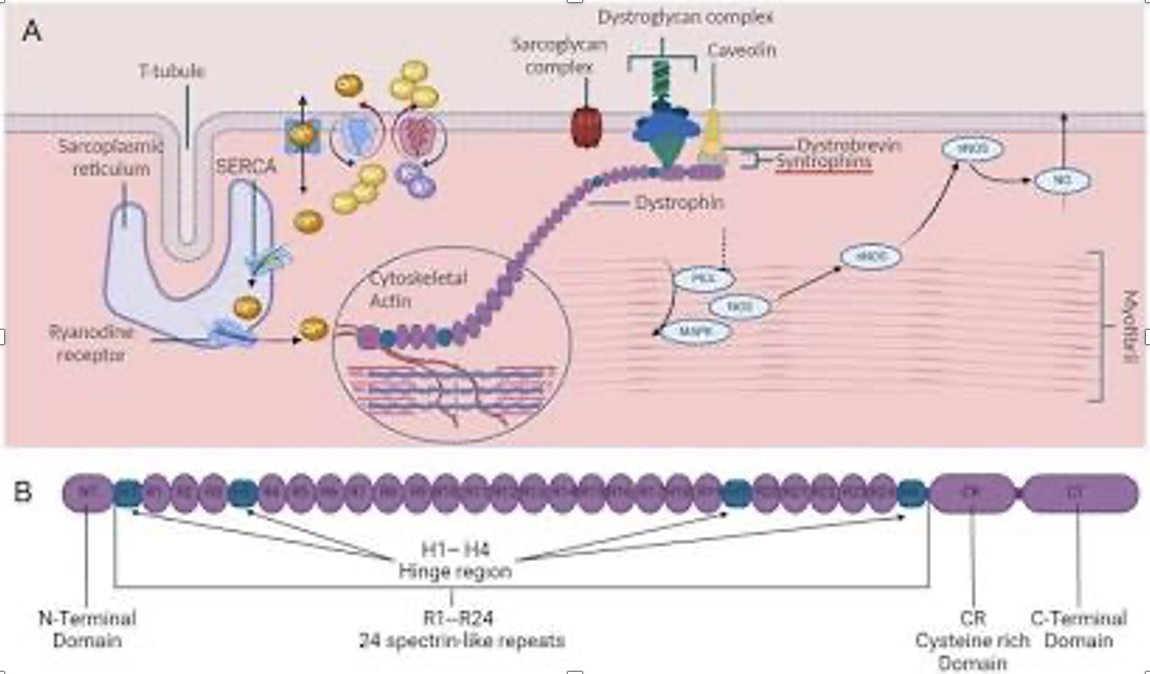
This membrane tearing triggers an immediate cellular emergency. Excess calcium ions flood through the broken membrane into the cell, completely overloading the internal storage tanks. This massive calcium influx causes chronic mitochondrial failure, producing high levels of harmful oxidative stress that forces the cardiomyocyte into accelerated apoptosis.
As these heart muscle cells die off, the body cannot replace them; instead, resident fibroblasts hijack the injury site, depositing loose, chaotic networks of fibrotic scar tissue.
This progressive myocardial fibrosis stiffens the ventricular walls, completely disrupting the heart’s electrical pathways and leading to dangerous arrhythmias and dilated heart failure. By implementing stem cell therapy bangkok thailand, pioneering clinical protocols focus on delivering active biological factors directly into this damaged tissue environment, stabilizing the cellular matrix long before permanent scar tissue sets in.
2. Molecular Signaling Transduction: Re-Programming the Inflamed Cardiac Niche
Advanced applications of stem cell therapy bangkok thailand alter this progressive heart decay by utilizing an elite biological strategy: paracrine transduction. When high-potency cellular formulations are introduced into the systemic circulation, they utilize the body’s natural tracking paths to migrate directly toward the high concentrations of distress chemokines released by damaged, ischemic heart tissue.
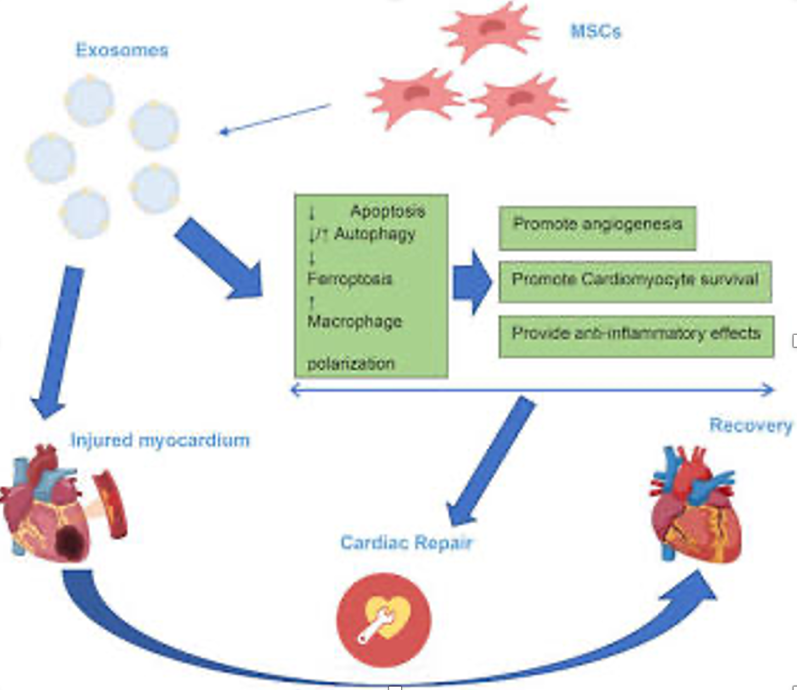
Cellular exosomal signaling pathways for immunomodulation and cardiac tissue protection.
As detailed in the comprehensive cell kinetics map above, once settled within the compromised tissue beds, the cell formulations deployed via stem cell therapy bangkok thailand execute a multi-layered molecular override to alter the chronic auto-inflammatory loop:
Macro-Immunomodulation and Macrophage Phenotypic Shifting
Chronic tissue inflammation is a primary engine driving progressive heart muscle wasting. As shown in the mechanism map, when the tissue is injured, pro-inflammatory immune cells flood the myocardium, continuously pumping out destructive cytokines like IL-1$beta$ and TNF- that accelerate cell death.
The cell lines deployed through stem cell therapy bangkok thailand counter this danger by releasing a powerful anti-inflammatory secretome payload, including Interleukin-10 (IL-10) and Prostaglandin E2 (PGE2). This localized release neutralizes circulating inflammatory signals and forces hyper-activated immune cells to polarize into a calm, protective M2 repair phenotype, effectively turning off the central tissue fire.
Exosome-Mediated Cardiomyocyte Rescue and Mitochondrial Recovery
To stop unchecked cell death, the cell lines deployed in stem cell therapy bangkok thailand discharge millions of microscopic, membrane-bound extracellular vesicles called exosomes directly into the coronary circulation. These vesicles cross dense tissue boundaries to fuse with host heart muscle cells, dropping off highly concentrated payloads of regulatory microRNAs is the most notably miR-21, miR-29, and miR-146a, directly into the cytoplasm.
This microRNA payload downregulates pro-apoptotic pathways, protects remaining cells from calcium overload, and restores healthy mitochondrial ATP energy production, rescuing weak cardiomyocytes from premature cell death.
Neo-Angiogenesis and Restoring Local Circulation
Stressed, fibrotic heart muscle experiences progressive capillary narrowing and chronic tissue ischemia, which starves the remaining functional cells of oxygen and vital nutrients. Advanced applications of stem cell therapy bangkok thailand actively resolve this restriction by releasing potent pro-angiogenic factors, primarily Vascular Endothelial Growth Factor (VEGF) and basic Fibroblast Growth Factor (bFGF). These signaling proteins command nearby endothelial cells to sprout a dense network of fresh micro-capillaries directly into the ventricular walls, restoring local blood flow and stabilizing the structural microenvironment.
3. Spatial Environmental Blueprint: A Niche-by-Niche Dynamics Breakdown
To see how a targeted cell protocol maps across a degraded muscle and heart axis to alter structural outcomes, it is useful to analyze the specific biological targets and their corresponding regenerative interventions:
| Target Tissue Layer | Pathological Malfunction in Dystrophic Cardiomyopathy | Cellular Regenerative Intervention | Key Semantic Entity |
| Cardiomyocyte Membrane | Suffers from severe calcium ion influx and mitochondrial energy failure, driving cell death. | Delivers targeted exosomal microRNAs to restore mitochondrial function and downregulate apoptotic paths. | Cardiomyocyte apoptosis, Calcium overload, Mitochondrial stabilization |
| Myocardial Interstitium | Locked in a hyper-reactive inflammatory loop; experiences rapid fibrotic scar accumulation. | Releases IL-10 and PGE2 to force an immediate transition into a calm, protective M2 repair state. | Myocardial fibrosis, M1 to M2 transition, Cytokine down-regulation |
| Coronary Microvascular Bed | Experiences progressive narrowing and chronic hypoperfusion, starving local cell networks. | Produces high volumes of VEGF and bFGF to stimulate fresh micro-capillary sprouting and restore circulation. | Angiogenesis, VEGF signaling, Coronary microvascular hypoperfusion |
| Skeletal Muscle Stroma | Locked in chronic cycles of fiber necrosis and exhaustive depletion of native satellite cells. | Secretes anabolic growth factors to reduce skeletal fiber breakdown and support local matrix health. | Skeletal muscle matrix, Satellite cell exhaustion, Fiber necrosis |
4. The Viability Matrix: Bypassing Cryopreservation Stress in Bangkok Laboratories
The clinical success of advanced stem cell therapy bangkok thailand for systemic disorders like muscular dystrophy relies entirely on a single technical metric that is frequently overlooked in mainstream discussions: cellular viability at the exact point of care. The human secretome is an incredibly complex, active mix of signaling proteins that can only be produced and released by living, metabolically active cells. If a formulation contains high percentages of dead or dying cells, it cannot perform targeted chemotaxis, cannot manufacture exosomes, and will be quickly cleared away by the recipient’s immune system as biological waste.
Many international clinics source their cellular products from distant manufacturing facilities, requiring the cells to be deeply frozen and thawed right at the patient’s bedside. This cryopreservation process utilizing chemical cryoprotectants introduces profound thermodynamic stress to delicate plasma membranes, frequently causing cell lysis and destroying the vital surface receptors required for targeted tissue homing.
Advanced biomedical facilities delivering stem cell therapy bangkok thailand bypass this logistical bottleneck by leveraging a continuous, closed-system cultivation framework operating locally. By executing aseptic processing within state-of-the-art laboratory environments close to the clinical suites, technicians expand neonatal lineages without the need for deep freezing.
The formulated allogeneic grafts remain suspended in a temperature-regulated, nutrient-dense transport matrix right up to the exact minute of clinical delivery. Automated cytometry and fluorescence-based live/dead assays confirm verified viability scores exceeding 95%. This logistical integration ensures that the recipient receives an uncompromised secretome payload, maximizing paracrine signaling efficiency and optimizing structural tissue remodeling within heavily compromised joint and cardiac spaces.
5. Chronological Bio-Restorative Blueprint: Sequential Niche Calibration
Stepping into an advanced clinical pipeline for stem cell therapy bangkok thailand operates via a meticulously timed, objective medical execution strategy focused entirely on patient safety and structural tissue matrix optimization.
Cardio-Muscular Baseline Profiling & Architectural Diagnostic Mapping
Sequence Alpha
The therapeutic pathway begins with extensive diagnostic charting, evaluating baseline skeletal motor parameters, echocardiography parameters (ejection fraction tracking), and cardiac inflammatory markers to confirm candidate suitability.
Closed-System Bio-Synthesis & Automated Purity Verification
Sequence Beta
Following lineage characterization, specialized laboratories expand allogeneic neonatal lines under pristine atmospheric controls. The customized formulation undergoes rigorous flow cytometry and sterility assays to ensure exceptional purity and cell viability scores prior to clinical deployment.
Directed Transvascular Infusion & Monitored Cardiac Homing
Sequence Gamma
Utilizing precise systemic delivery channels under full sterile and multi-parametric medical tracking, the fresh concentration of day-zero cells is introduced into the patient’s circulatory pathways to activate transendothelial tissue homing.
Functional Matrix Potentiation & Myocardial Stabilization Support
Sequence Delta
The final ongoing phase pairs targeted post-treatment care with customized metabolic co-factors and cardioprotective nutrients, working to maintain a highly receptive internal environment and maximize long-term structural repair.
6. Real-World Expectations: Tracking Cardiac Progress
When discussing advanced cell-based applications for muscular dystrophy with heart involvement, maintaining absolute transparency and an honest, grounded perspective is essential. Stem cell therapy is not a magical overnight cure that will instantly correct genetic deletions or rewrite broken DNA patterns in a single day. Instead, it serves as a powerful biological accelerant that works from the inside out to slow the progression of tissue decay and create conditions where remaining muscle and cardiac function can gradually stabilize.
Patients responding well to advanced, fresh cell protocols typically observe gradual, steady improvements over a window of three to six months:
Stabilization of Myocardial Performance: A measurable stabilization or improvement in left ventricular ejection fraction (LVEF) and strain metrics, providing clear evidence of enhanced heart muscle function under the influence of stem cell therapy bangkok thailand.
Reduction in Arrhythmic Events: A reduction in ectopic heartbeats and a stabilizing of resting heart rate variability, driven by the down-regulation of inflammatory markers within the myocardial wall.
Preservation of Skeletal Motor Function: A noticeable stabilization of daily energy levels, increased tolerance for minor physical therapy exercises, and a reduction in skeletal muscle cramps.
Down-Regulation of Cardiac Damage Markers: Serial blood panels typically reveal a visible reduction in circulating serum troponin and brain natriuretic peptide (BNP) markers following the completion of stem cell therapy bangkok thailand.
Conclusion: Reclaiming Control of Your Systemic Health
Cardiomyocyte apoptosis, membrane fragility, and progressive myocardial fibrosis involve complex, aggressive biological processes, but patients and families do not have to remain locked in a purely reactive cycle of managing symptoms with temporary chemical drugs while their underlying heart and muscle health undergoes permanent degradation. Treating a deep cellular and microvascular failure with simple surface-level symptom suppression masks the physical decline without addressing the true biological crisis.
By choosing advanced, fresh cellular protocols through stem cell therapy bangkok thailand, you give your body the highly potent, youth-derived resources it needs to cool chronic tissue inflammation, protect remaining heart muscle cells from premature death, and support healthy cellular respiration from the inside out. Embracing the cutting edge of regenerative medicine under strict quality control standards represents a powerful, proactive choice to avoid the constraints of progressive disease, protect your long-term vital systems, and build a resilient foundation for your physical independence.