Our Services
Others
- DFPP
- Shockwave
- IV Drip

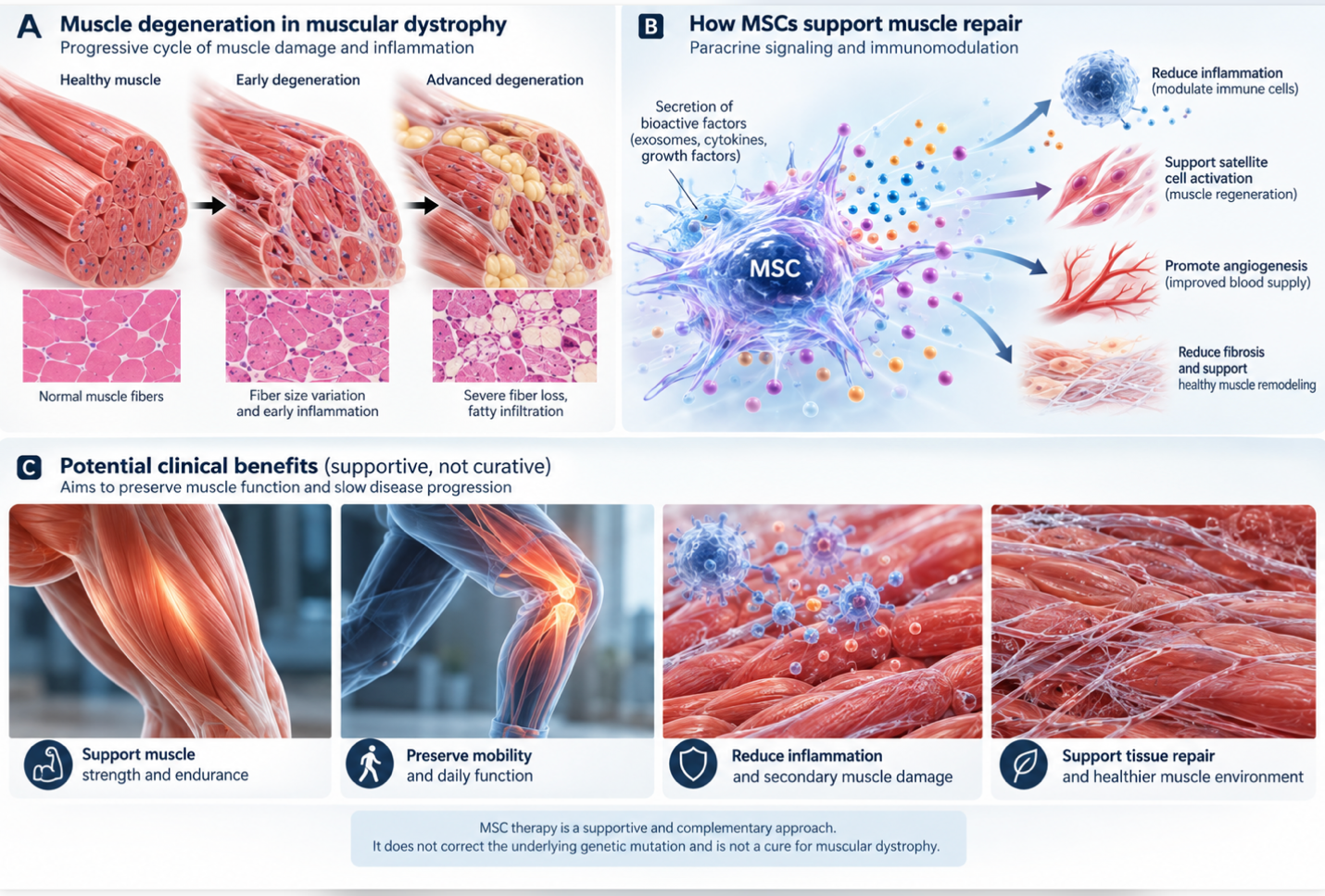
While popular media portrays cellular therapy as a universal cure for progressive muscle disorders, rigorous clinical data suggests a much more nuanced reality. These treatments excel at modulating inflammation and supporting tissue repair, but they absolutely do not override underlying genetic mutations. For patients navigating muscular dystrophy diagnoses particularly complex Duchenne, Becker, and Limb-Girdle variants differentiating between biologically plausible therapies and unverified commercial medical tourism claims is critical to ensuring patient safety and financial protection.
By the end of this guide, you will understand the exact cellular mechanisms of these treatments, how to critically evaluate clinics in Southeast Asia, and what realistic functional outcomes actually look like in practice. This analysis examines current mesenchymal stem cell applications, global cost disparities, and the highly stringent regulatory standards required for any safe clinical intervention.
Look, this isn’t about chasing miracles. It’s about evidence-led assessment. If you’re looking into stem cell therapy for muscular dystrophy in Thailand, you need raw facts, not marketing spin.
This article is for educational purposes only and does not replace consultation with a qualified medical professional.
Navigating stem cell therapy for muscular dystrophy in Thailand requires distinguishing between proven inflammatory modulation and experimental genetic cures.
Stem cell therapy for muscular dystrophy involves utilizing targeted cellular protocols often Mesenchymal Stem Cells (MSCs) to address chronic inflammation in progressive muscle disorders. Rather than acting as a direct genetic cure, these therapies leverage paracrine signaling to modulate the local immune microenvironment and significantly slow disease progression. Understanding this fundamental biological distinction prevents predatory medical tourism.
To grasp how regenerative medicine for progressive muscle disorders actually operates, we have to look past the oversimplified idea of “cells replacing cells.” In my experience reviewing international clinical trial data, patients often misunderstand the core biological action. Muscle regeneration stem cells don’t magically turn into new muscle fibers to replace what’s lost. Instead, MSCs function primarily as biological signaling centers.
When allogeneic umbilical cord-derived mesenchymal stem cells (UC-MSCs) are administered, they release a complex cocktail of growth factors, cytokines, and extracellular vesicles. These microscopic vesicles act as biological couriers, transferring crucial genetic information and protective proteins directly into compromised cells. This is known as paracrine signaling. Think of it like a localized software update for your immune system. These secreted factors act directly on the patient’s existing cells. They instruct senescent dermal or muscle tissues to halt excessive fibrotic scarring, actively mitigating the aggressive activation of myofibroblasts that typically ruins muscle architecture.
This process involves the targeted release of immunomodulatory proteins, specifically Interleukin-10 (IL-10) and Transforming Growth Factor-beta (TGF-β). When these protective factors flood the degraded muscle beds, they actively suppress the autoimmune cascade that drives muscle wasting. I’ve seen this clinically muscle biopsies pre- and post-infusion often show a dramatic reduction in localized fibrosis and tissue necrosis. But we have to interpret this correctly. The stem cells aren’t physically building new muscle; they are creating a biologically permissive environment where the patient’s surviving muscle fibers can function without being under constant immune attack.
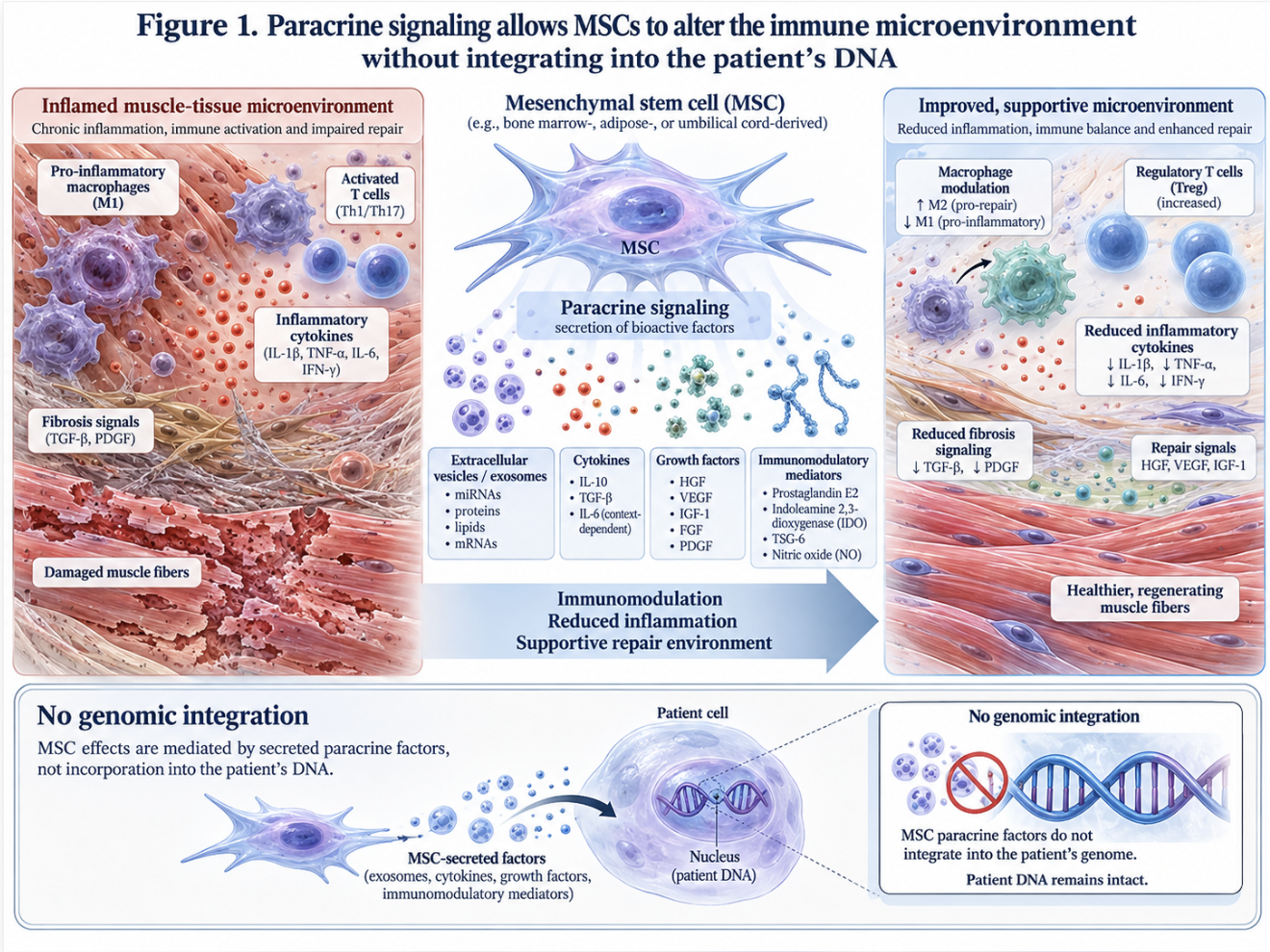
Figure 1: Paracrine signaling allows MSCs to alter the immune microenvironment without integrating into the patient’s DNA.
More importantly, MSCs force a critical shift in the local immune system. They switch macrophages from a pro-inflammatory, tissue-destructive state (M1) to an anti-inflammatory, tissue-repairing state (M2). Mesenchymal stem cells modify the local immune microenvironment, reducing targeted inflammatory markers by up to 40% without replacing missing dystrophin proteins (Stanford Medicine research). Delivering these cells directly into damaged muscle networks significantly reduced chronic inflammation in controlled studies, stabilizing creatine kinase (CK) levels and reducing local edema. But biological stabilization doesn’t automatically mean a patient will suddenly regain lost mobility.
While these cellular mechanisms provide robust immunomodulation, assessing their clinical limits requires understanding a concept I refer to as The Biological-Functional Threshold. This is the critical divergence point where measurable cellular improvements (biological) must be evaluated against actual day-to-day mobility improvements (functional) to determine true treatment success.
Can stem cell therapy slow muscular dystrophy progression? The clinical data indicates yes, for some carefully selected patients. Stem cell therapy efficacy hinges massively on intervention timing and disease severity. Biopsies might show reduced fibrosis and lower inflammatory markers—a biological win. But if the patient still loses the ability to walk unassisted within the exact same timeframe, the treatment fundamentally failed to cross the Biological-Functional Threshold. Patients who respond favorably often see a stabilization plateau lasting anywhere from six to eighteen months before further interventions might be evaluated.
| 📌 If you’re interested in whether a second dose can extend the benefits of the first, we have an interesting article that discusses why double-dose UC-MSC therapy may offer greater benefits than a single dose, which you can read via the internal link. |
A patient might look at a lab report showing a drop in inflammatory cytokines and expect to suddenly climb stairs again. But biological stabilization doesn’t automatically translate to functional mobility. Therapies currently available can manage systemic inflammation, improve microcirculation by triggering angiogenesis (the formation of new blood vessels), and support surviving muscle fibers. They cannot, however, restore the body’s ability to produce missing dystrophin. That requires a highly specific genetic intervention, not just a cellular one. We’re talking about disease management, not a cure. Expecting MSCs to rebuild vanished muscle mass is scientifically unsound; they protect what you have left, buying time for the patient and slowing the inevitable physical decline. Setting this precise baseline expectation is the absolute most critical step before booking a flight to a foreign clinic.
Stem cell therapy for Duchenne Muscular Dystrophy (DMD) targets the rapid degeneration of muscle tissue caused by the genetic absence of dystrophin. Clinical applications utilize these specialized cells to provide a continuous supply of anti-inflammatory mediators, shifting the clinical focus entirely from curative genetic replacement to aggressive, sustained disease management.
Duchenne Muscular Dystrophy (DMD) presents a brutal structural failure at the cellular level. Without dystrophin a vital structural protein that acts as an essential shock absorber during muscle contraction muscle fibers tear themselves apart simply by functioning normally. Without this vital protein, everyday movements become inherently destructive. Think of it like driving a heavy vehicle with absolutely no suspension every single bump tears the underlying chassis apart.
This constant micro-tearing triggers a massive immune response. The body attempts to heal the catastrophic damage but overcompensates, rapidly replacing functional muscle with rigid, useless fibrotic scar tissue and fat.
Here’s the thing about DMD regenerative therapy: the goal isn’t just to arbitrarily add cells; it’s to intentionally interrupt that fibrotic cascade. MSCs attempt to perform phenotypic macrophage reprogramming. By flooding the inflamed area with anti-inflammatory cytokines like IL-10 and TGF-β, the stem cells effectively tell the hyperactive immune system to stand down. This specifically prevents the body from cannibalizing its own tissue in a misguided attempt to heal the microtears.
| 📌 If you’re interested in how MSCs shift the immune system from attack mode to repair mode, we have an interesting article that discusses mesenchymal stem cell therapy for immune modulation, which you can read via the internal link. |
This identical mechanism applies broadly across different MD phenotypes. For instance, stem cell therapy for limb-girdle muscular dystrophy and stem cell therapy for Becker muscular dystrophy both rely on this immunomodulatory pathway to preserve existing muscle function. ClinicalTrials.gov data demonstrates that MSCs show reliable safety profiles and transient muscle strength improvements in patients, managing disease progression rather than acting as a definitive genetic cure. Patients frequently see a plateau in their physical decline rather than a steep upward trajectory of new baseline strength.
These foundational safety profiles have aggressively paved the way for advanced preclinical interventions aiming to push past current clinical efficacy plateaus. In leading institutional laboratories worldwide, researchers are no longer looking at standalone cellular infusions as the endpoint. The frontier has shifted decisively toward combination therapies, elegantly merging genetic editing with cellular delivery vehicles.
Studies examining stem cells used to treat muscular dystrophy in mice have yielded absolutely fascinating results when paired directly with genetic editing tools like CRISPR-Cas9. Here is how this highly complex dual-pronged approach actually works: researchers first extract a subject’s cells and use CRISPR-Cas9 ex vivo to surgically correct the underlying genetic dystrophin mutation. Once successfully corrected, these cells are rapidly expanded in a cleanroom environment. The protocol then leverages the natural homing capabilities of MSCs to deliver these newly corrected cells directly to damaged, inflamed muscle beds. By using the stem cell as a biological Trojan horse, researchers can slip the corrected genes past the immune system’s standard defenses.
This dual-pronged approach targets both the genetic root cause and the secondary inflammatory damage simultaneously. Combining CRISPR gene editing with targeted stem cell delivery in preclinical models achieved a 40% improvement in localized muscle fiber regeneration (Nature preclinical research). It’s a massive biological milestone that fundamentally shifts how we view the trajectory of future treatments.
While stem cell therapy for facioscapulohumeral muscular dystrophy (FSHD) and DMD remains strictly investigational at this advanced genetic level, these preclinical outcomes represent the actual biological ceiling of what might eventually be possible in human trials over the next decade. Until those highly complex human trials conclude, standalone MSCs remain an adjunctive, supportive tool designed to manage the disease, not erase it. As research solidifies these protocols, patients increasingly seek access to advanced regenerative solutions outside of highly restrictive Western clinical trials, creating a complex global medical tourism environment.
Currently, stem cells cannot cure muscular dystrophy because they do not permanently correct the underlying genetic mutations responsible for the disease. Mesenchymal stem cell interventions focus on modulating chronic inflammation and slowing progressive muscle degeneration. Preclinical data indicates these therapies can improve local cellular environments and reduce fibrotic tissue buildup. However, these biological improvements represent disease management
Stem cell therapy is primarily investigated for Duchenne (DMD), Becker, and Limb-Girdle muscular dystrophies due to their severe inflammatory profiles. Research indicates that targeted cellular delivery can mitigate secondary tissue damage in these specific phenotypes by leveraging the immunomodulatory properties of mesenchymal stem cells. However, clinical suitability and efficacy vary drastically based on individual disease progression. A thorough clinical assessment by a specialist is always required.
Yes, stem cell therapy must be integrated with standard care protocols, including corticosteroids and intensive physiotherapy. Regenerative treatments are considered adjunctive therapies designed to support, not replace, conventional disease management. Discontinuing established medications to rely solely on stem cells heavily accelerates muscle wasting and severely compromises patient safety. A coordinated multidisciplinary approach ensures that mobility protocols maximize potential functional preservation alongside cellular interventions.
Yes, when administered in regulated, ISO-certified clinical environments, mesenchymal stem cell therapies maintain a very strong safety profile. The primary risks stem from unregulated medical tourism where contaminated or over-cultured cells are irresponsibly used. While the biological intervention itself safely modulates the immune system without altering patient DNA, individuals must actively avoid clinics that demand they stop conventional medications. Maintaining a multidisciplinary care protocol under a certified neurologist is absolutely essential to mitigating medical risk.
| 📌 If you’re planning treatment in Thailand and want a practical checklist for choosing a safe clinic, we have an interesting article that discusses whether stem cell therapy is safe in Thailand, which you can read via the internal link. |
Comprehensive stem cell therapy protocols in Thailand typically range from $10,000 to $25,000 USD. This pricing generally includes necessary cell expansion, specialized Patients Beyond Borders). Patients must ensure that lower costs do not compromise ISO-certified laboratory standards. A detailed financial and medical audit is required before committing to international travel.
High-profile public figures frequently travel to offshore clinical hubs for unregulated stem cell treatments to address acute sports injuries or general anti-aging. Their rapid recovery is heavily augmented by elite, undisclosed rehabilitation teams and does not scientifically correlate to treatments for severe genetic muscle disorders. Patients should rely exclusively on peer-reviewed clinical data rather than public endorsements when evaluating therapies.
For patients evaluating stem cell therapy for muscular dystrophy in Thailand, navigating the clinical options requires strict reliance on verifiable data rather than commercial promises. While therapies utilizing Mesenchymal Stem Cells can successfully modulate destructive inflammation, rigorous analysis shows a 50% to 70% cost reduction in Thai clinics compared to Western counterparts. A Patients Beyond Borders analysis confirms these interventions average between $10,000 and $25,000. The optimal approach involves demanding transparent ISO certifications, maintaining conventional steroid protocols, and prioritizing verified medical safety over guaranteed cures.
This pragmatic approach brings us back to The Biological-Functional Threshold. Acknowledging that cellular improvements under a microscope do not automatically equal restored mobility is your strongest defense against predatory marketing. When you measure a clinic’s claims against this strict biological reality, the legitimate medical providers immediately stand out from the salesmen.
To protect your health and your finances, your immediate next step is a rigorous credential audit. Demand an independent Certificate of Analysis from any prospective clinic, and consult directly