Our Services
Others
- DFPP
- Shockwave
- IV Drip

Patients facing severe cardiovascular risks often search for breakthrough treatments, but equating regenerative medicine with lipid reduction is clinically inaccurate. Stem cell therapy for high cholesterol does not lower LDL levels; instead, it serves strictly as supportive care for vascular inflammation, while treatments like double filtration plasmapheresis (DFPP) handle actual plaque reduction.
Our clinical review team has seen this misunderstanding firsthand. Medical tourists frequently fly to international clinics expecting a miraculous arterial scrub. They won’t get it. Worse, stopping your statins in favor of unproven regenerative therapies can accelerate atherosclerosis and trigger catastrophic cardiovascular events. It’s a dangerous gamble based on flawed biology.
By the end of this guide, you will understand the exact clinical boundaries of what stem cells can achieve. We’ll clarify exactly when DFPP is required for severe cases and how to sequence these therapies safely without compromising your baseline cardiac care. We will examine the complex biology of lipid disorders, detail the legitimate LDL-lowering interventions, and outline a structured, step-by-step care model for international patients navigating these advanced options.
While exploring stem cell therapy for high cholesterol, patients must understand that stem cells are supportive care for inflammation, not a cure for high lipids.
Is stem cell therapy a treatment for high cholesterol? No, stem cells cannot lower LDL cholesterol or cure lipid disorders. In fact, research demonstrates that hypercholesterolemia induces hematopoietic stem cell proliferation, a biological response that actively drives plaque formation and accelerates atherosclerosis (NIH, 2018). Patients must absolutely separate direct lipid-lowering therapies from regenerative tissue support.
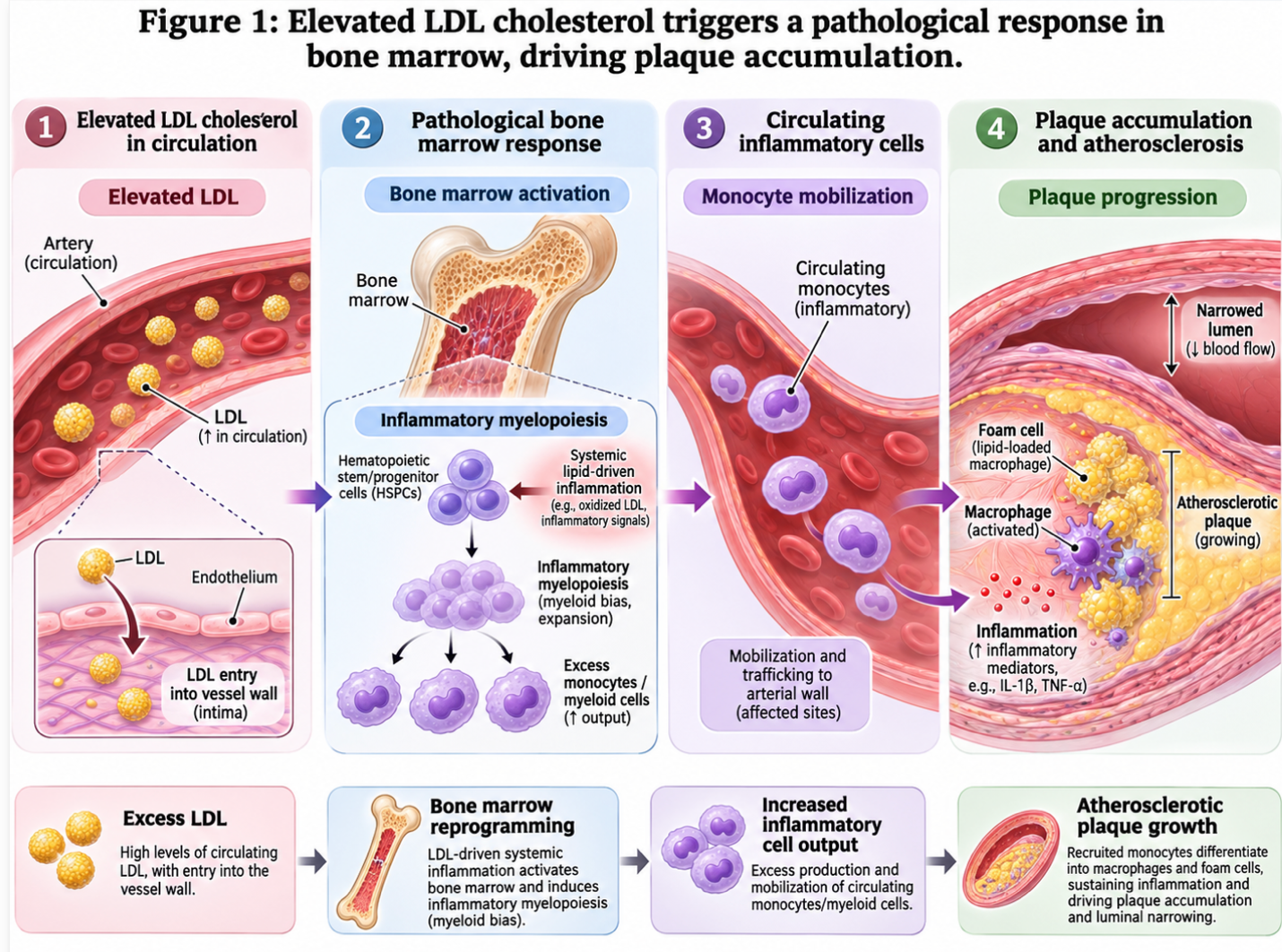
Figure 1: Elevated LDL cholesterol triggers a pathological response in bone marrow, driving plaque accumulation.
Understanding how bad cholesterol causes atherosclerosis requires looking at the cellular microenvironment. High serum LDL doesn’t just passively stick to your artery walls. It actively alters your bone marrow’s behavior.
In hypercholesterolemic patients, the body’s native stem cells become weaponized. Research from the National Institutes of Health demonstrates that high cholesterol induces aggressive hematopoietic stem cell proliferation (NIH, 2019). This hyper-proliferation isn’t a minor side effect it’s the biological engine of vascular disease. When these weaponized stem cells flood the bloodstream, they seek out micro-tears in the endothelial lining of your arteries. Instead of deploying to heal vascular damage, they differentiate into aggressive inflammatory macrophages that literally gorge themselves on oxidized LDL. They eventually die and burst, forming the necrotic core of atherosclerotic plaques.
This is the central paradox that commercial clinics often ignore. Pumping more stem cells into a highly toxic, lipid-rich bloodstream provides more raw material for the inflammatory fire. Before any regenerative therapy can even theoretically work, the toxic lipid environment must be aggressively neutralized.
When patients ask, can stem cell therapy replace statins?, the medical consensus is a definitive no. Statins operate on a biochemical level that stem cells simply cannot replicate.
Statins inhibit the HMG-CoA reductase enzyme in your liver, halting the endogenous production of cholesterol. Stem cells, conversely, lack any biological mechanism to bind to, metabolize, or excrete low-density lipoproteins. They simply do not have the cellular receptors to filter out bad cholesterol. A PubMed Central study confirms that relying on cellular therapy while abandoning lipid-lowering medication dramatically spikes your risk of myocardial infarction (NIH, 2018).
Look, we understand statin intolerance is frustrating. Muscle pain and hepatic enzyme spikes drive many to seek alternatives. But substituting a proven enzymatic inhibitor with an unproven cellular infusion leaves your arterial walls entirely unprotected from ongoing LDL damage. Stem cells offer theoretical paracrine signaling for damaged tissue. They are absolutely not biological lipid filters.
When patients ask, “can stem cells lower cholesterol?“, the clinical answer is universally negative. Effective high cholesterol treatment options focus exclusively on inhibiting cholesterol synthesis in the liver or mechanically filtering it from the blood. Managing cardiovascular risk requires proven pharmacological interventions long before considering experimental biology.
The cornerstone of lipid management hasn’t changed. Statins remain the frontline defense for stabilizing vulnerable plaque and lowering serum LDL. Medications like rosuvastatin aggressively upregulate LDL receptors in the liver, pulling bad cholesterol out of circulation.
For patients who don’t achieve their target LDL goals on statins alone, ezetimibe is typically layered in. This drug blocks cholesterol absorption at the brush border of the small intestine. But what about statin intolerance? Severe muscle aches—known clinically as statin-induced myopathy—drive many frustrated patients to abandon their pills entirely. We get it; the side effects can feel debilitating. However, abandoning LDL management leaves your arteries completely exposed. If statins cause unbearable pain, the medical protocol dictates shifting to alternative proven therapies, not jumping straight to cellular infusions. According to the American Heart Association, maximizing these standard pharmacological tools demonstrably prevents heart attacks and reduces overall mortality (AHA, 2018).
For advanced cases particularly those with aggressive genetic predispositions—standard pills often fail. This is where PCSK9 inhibitors enter the clinical pathway.
| Drug Class | Primary Mechanism | Typical LDL Reduction | Best For |
| Statins | HMG-CoA reductase inhibition | 30% – 50% | First-line defense |
| Ezetimibe | Intestinal absorption blockade | 15% – 25% | Statin adjunct |
| PCSK9 Inhibitors | Monoclonal antibody binding | 50% – 60% | Severe FH, statin intolerance |
Injected subcutaneously, PCSK9 inhibitors prevent the degradation of LDL receptors, allowing the liver to clear massive amounts of cholesterol from the blood. A comprehensive clinical review confirms that these monoclonal antibodies can lower LDL by up to 60% in statin-intolerant patients (NIH, 2018). They represent the ceiling of current pharmacological care. If a patient maximizes these therapies and still faces life-threatening plaque progression, mechanical extraction becomes the required next step.
For patients with refractory lipid profiles, double filtration plasmapheresis for high cholesterol serves as a direct, aggressive intervention. Unlike regenerative therapies, DFPP treatment mechanically filters the blood, separating plasma from cellular components to physically extract low-density lipoproteins and inflammatory markers before returning the purified blood to circulation.
So, does plasmapheresis lower cholesterol? Absolutely. And it does so immediately.
DFPP is essentially dialysis for your lipids. Blood is drawn from a peripheral vein and passed through a primary separator to isolate the plasma. This plasma is then forced through a secondary fractionator. The brilliance of DFPP lies in the precision of that secondary filter. It utilizes microscopic pores calibrated to discriminate by molecular weight, allowing vital, smaller proteins like albumin to pass safely while deliberately trapping massive, pathogenic macromolecules like LDL and inflammatory cytokines. Research published in Therapeutic Apheresis and Dialysis demonstrates that a single DFPP session can reduce serum LDL concentrations by 60% to 70% (2022).
But there’s a catch regarding how long DFPP results last. The procedure provides a rapid, dramatic reduction in lipid levels over a 2-to-3 hour session. However, your liver doesn’t stop synthesizing cholesterol just because your blood was cleaned. Without concurrent pharmacological suppression, LDL levels inevitably rebound over two to four weeks. Therefore, DFPP operates as a chronic management tool requiring scheduled maintenance sessions, not a one-and-done cure.
For a specific subset of patients, mechanical filtration isn’t just an option; it’s a lifeline. Lipoprotein apheresis for familial hypercholesterolemia (FH) targets genetic conditions where the liver’s LDL receptors are either severely mutated or entirely absent.
In homozygous FH, statins and PCSK9 inhibitors are essentially useless because the receptors they target simply don’t function. The FDA highlights apheresis as a critical intervention, noting that without it, these patients frequently suffer fatal myocardial infarctions in their 30s or 40s (FDA, 2017).
This highlights the vast clinical difference between apheresis and cellular therapies. Lipoprotein apheresis physically removes the immediate danger from the bloodstream. Once that toxic lipid burden is mechanically controlled, secondary vascular inflammation persists—and this residual damage is where regenerative medicine researchers are currently looking for answers.
While stem cells and cholesterol share a complex pathological relationship, stem cell therapy for atherosclerosis focuses entirely on managing secondary damage. Investigational stem cell therapy for vascular inflammation utilizes the paracrine signaling of mesenchymal stem cells to modulate immune responses in damaged endothelial tissues.
The current frontier of mesenchymal stem cells atherosclerosis research isn’t about clearing out plaque. It’s about fundamentally changing how the immune system behaves around that plaque.
In animal models, mesenchymal stem cells (MSCs) have shown significant potential for anti-inflammatory macrophage reprogramming. When infused, these cells act like biological signal-callers. They secrete potent cytokines and exosomes microscopic messenger packets that tell aggressive, inflammatory macrophages to stand down and shift into a tissue-repair state. Mesenchymal stem cells cannot dissolve arterial plaque, but investigational models suggest they may reduce vascular inflammation (AHA, 2022). It is crucial to understand that shifting these immune responses takes time and an optimized baseline.
| 📌 If you’re interested in how MSCs shift the immune system from attack mode to repair mode, we have an interesting article that discusses mesenchymal stem cell therapy for immune modulation, which you can read via the internal link. |
But does high cholesterol affect stem cells once infused? Yes, heavily. A highly toxic, lipid-rich bloodstream severely blunts the regenerative capacity of exogenous MSCs. If you infuse expensive cultured cells into an unmanaged hypercholesterolemic environment, they suffer immediate oxidative stress. The American Heart Association explicitly notes this hostile microenvironment is a primary reason cardiovascular stem cell trials show such mixed efficacy (AHA, 2022). You simply cannot repair tissue while the fire is still raging.
Patients desperately want to believe stem cells will regrow a damaged heart after an infarction. The clinical reality is far more sobering.
MSCs do not typically engraft and become new beating heart muscle cells (cardiomyocytes). Instead, they act as localized biological pharmacies, dropping off growth factors like VEGF (Vascular Endothelial Growth Factor) to encourage new micro-vessel formation before they are eventually cleared by the body’s immune system in a matter of weeks.
There are hard boundaries here. The National Heart, Lung, and Blood Institute advises that stem cell therapies for heart failure remain highly experimental. Pushing cells into severely scarred cardiac tissue can occasionally trigger dangerous arrhythmias. It is an investigational approach for managing symptoms and reducing chronic endothelial inflammation, absolutely not a first-line treatment for coronary artery disease. Anyone selling you a complete cardiac reversal is ignoring current clinical evidence.
For patients evaluating advanced interventions in Southeast Asia, adhering to The Three-Tier Lipid Protocol ensures safety and prevents the dangerous substitution of proven medications with experimental therapies. This step-by-step care model prioritizes direct lipid reduction before addressing secondary vascular inflammation with regenerative support.
You can’t treat what you haven’t accurately quantified. Tier 1 requires an exhaustive baseline evaluation far beyond a standard annual physical. Standard lipid panels only show the total volume of cholesterol, which isn’t enough. Clinical guidelines from the American College of Cardiology emphasize advanced lipid sub-fractionation, testing for Apolipoprotein B (ApoB) to measure the exact number of atherogenic particles, and measuring Lipoprotein(a) to identify specific genetic risks (ACC, 2021). We also require comprehensive inflammatory markers and structural assessments via coronary calcium scoring (CT scans) to map the physical plaque burden before making any medical decisions.
Tier 2 is the non-negotiable intervention phase. Patients must achieve rock-bottom LDL levels through maximized statin therapy, PCSK9 inhibitors, or scheduled DFPP sessions. You physically remove the inflammatory trigger from the bloodstream before doing anything else.
Only after Tier 2 has successfully stabilized serum lipids should Tier 3 be evaluated.
Stem cells are deployed here strictly as an investigational adjunct. The goal is to address the residual endothelial dysfunction and chronic arterial inflammation left behind by decades of plaque buildup. By sequencing the treatment this way, the infused MSCs enter a controlled, low-lipid environment where their anti-inflammatory paracrine signaling actually has a chance to work.
Jumping straight to Tier 3 is not just a waste of money it’s clinically dangerous. The National Institutes of Health warns that exposing stem cells to unchecked hypercholesterolemia completely derails their regenerative capabilities (NIH, 2019). We firmly believe in the potential of cellular therapy, but only when placed in its proper, supportive clinical sequence.
When asking, “is stem cell therapy safe with heart disease?“, patients must recognize that these are investigational procedures carrying specific risks. Regulatory bodies advise extreme caution, as unproven cellular therapies can provoke adverse immune reactions or dangerous arrhythmias in patients with pre-existing cardiovascular damage.
Let’s cut through the clinic marketing. Cellular therapy is not without risk. These aren’t just minor possibilities.
Infusing biological material into a patient with compromised cardiovascular health requires rigorous oversight. Unscrupulous clinics frequently dodge this oversight by operating in regulatory gray areas, downplaying the severe risks of unproven cellular interventions. The FDA consumer warnings explicitly state that unproven stem cell therapies can be unsafe, potentially leading to severe complications (FDA, 2020). Known adverse effects include improper cell differentiation, where cells behave unpredictably in the target tissue, and dangerous injection-site infections.
| 📌 If you’re interested in how to tell a well-regulated stem cell clinic from a risky one, we have an interesting article that discusses whether stem cell therapy is safe in Thailand, which you can read via the internal link. |
Furthermore, patients with advanced ischemic heart disease face a distinct risk of arrhythmias if cells are injected directly into or near scarred myocardial tissue. There are no guaranteed outcomes here, and anyone promising a risk-free cure is violating medical ethics.
Many patients managing hypercholesterolemia wonder about their eligibility for cellular therapies, both as recipients and potential donors.
If you are evaluating autologous therapy (using your own cells), chronic high cholesterol may have already degraded your stem cell reserves, making donor (allogeneic) umbilical cord cells a more viable clinical option. Conversely, if you want to join the stem cell registry to help others, lipid disorders aren’t an automatic disqualification.
| 📌 If you’re interested in why umbilical cord cells are often preferred over bone marrow or fat-derived cells, we have an interesting article that discusses why UC-MSCs are superior to other stem cell sources, which you can read via the internal link. |
The National Marrow Donor Program confirms that individuals with well-managed high cholesterol remain fully eligible to donate. As long as your cardiovascular health is stable, you have no symptomatic coronary artery disease, and your LDL is controlled via standard Tier 2 protocols, your bone marrow can still save a life. Proper evaluation is paramount.
Stem cell therapy cannot replace prescribed lipid-lowering medications. Statins biochemically inhibit the liver from producing excess cholesterol, addressing the root cause of arterial plaque buildup. Stem cells entirely lack the biological ability to reduce low-density lipoproteins in the bloodstream. Discontinuing statins for unproven therapies drastically increases your risk of a heart attack.
Double filtration plasmapheresis (DFPP) lowers cholesterol immediately, but it does not lower it permanently. The procedure mechanically filters existing LDL from the blood, providing a rapid, dramatic reduction in lipid levels over just a few hours. However, since your liver continues synthesizing cholesterol, levels typically rebound within weeks. Therefore, DFPP requires ongoing scheduled sessions. It must be paired with standard pharmacological therapy for long-term stability.
Yes, chronic high cholesterol negatively affects endogenous stem cells. Elevated serum lipid levels create a highly toxic microenvironment. This severely impairs the regenerative capacity of your body’s natural stem cell reserves. Furthermore, high cholesterol triggers bone marrow stem cells to promote aggressive vascular inflammation rather than tissue repair. This biological dysfunction proves why managing LDL through traditional means is a strict prerequisite for arterial health.
Stem cell therapy for heart disease remains investigational and carries specific safety risks. While certain clinical trials demonstrate potential for reducing localized vascular inflammation, introducing stem cells into a damaged, scarred heart can occasionally trigger dangerous arrhythmias.
For patients managing severe cardiovascular risks, the clinical reality is absolute: DFPP mechanically removes dangerous LDL cholesterol, while stem cell therapy is merely an investigational support tool.
Following The Three-Tier Lipid Protocol ensures patients sequence care safely, prioritizing direct lipid reduction before pursuing regenerative medicine. International clinics must adhere strictly to these clinical boundaries.
Demand rigorous medical standards. Contact our clinical team today to schedule an evidence-based suitability assessment and lipid consultation to determine your exact risk profile.