Our Services
Others
- DFPP
- Shockwave
- IV Drip

Look, while traditional post-stroke physical rehabilitation often plateaus within the first six months, emerging clinical data suggests that advanced cellular interventions may alter long-term neurological trajectories. Patients navigating chronic neurological impairment face an overwhelming influx of experimental treatments. It becomes brutally difficult to separate slick commercial marketing from peer-reviewed, evidence-based regenerative medicine.
In this clinical guide, we strip away the hype. You will examine the current data on stem cell therapies with UC-MSCs for stroke to understand the mechanisms, documented safety profiles, and realistic functional outcomes. We evaluate the core science, parse the safety data from recent trials, and analyze how advanced delivery vectors actually impact motor recovery. If you are weighing the benefits and risks of stem cell therapy for stroke, you need data not promises.
Navigating the benefits and risks of stem cell therapy for stroke requires examining peer-reviewed data on how umbilical cord-derived mesenchymal stem cells (UC-MSCs) impact ischemic tissue.
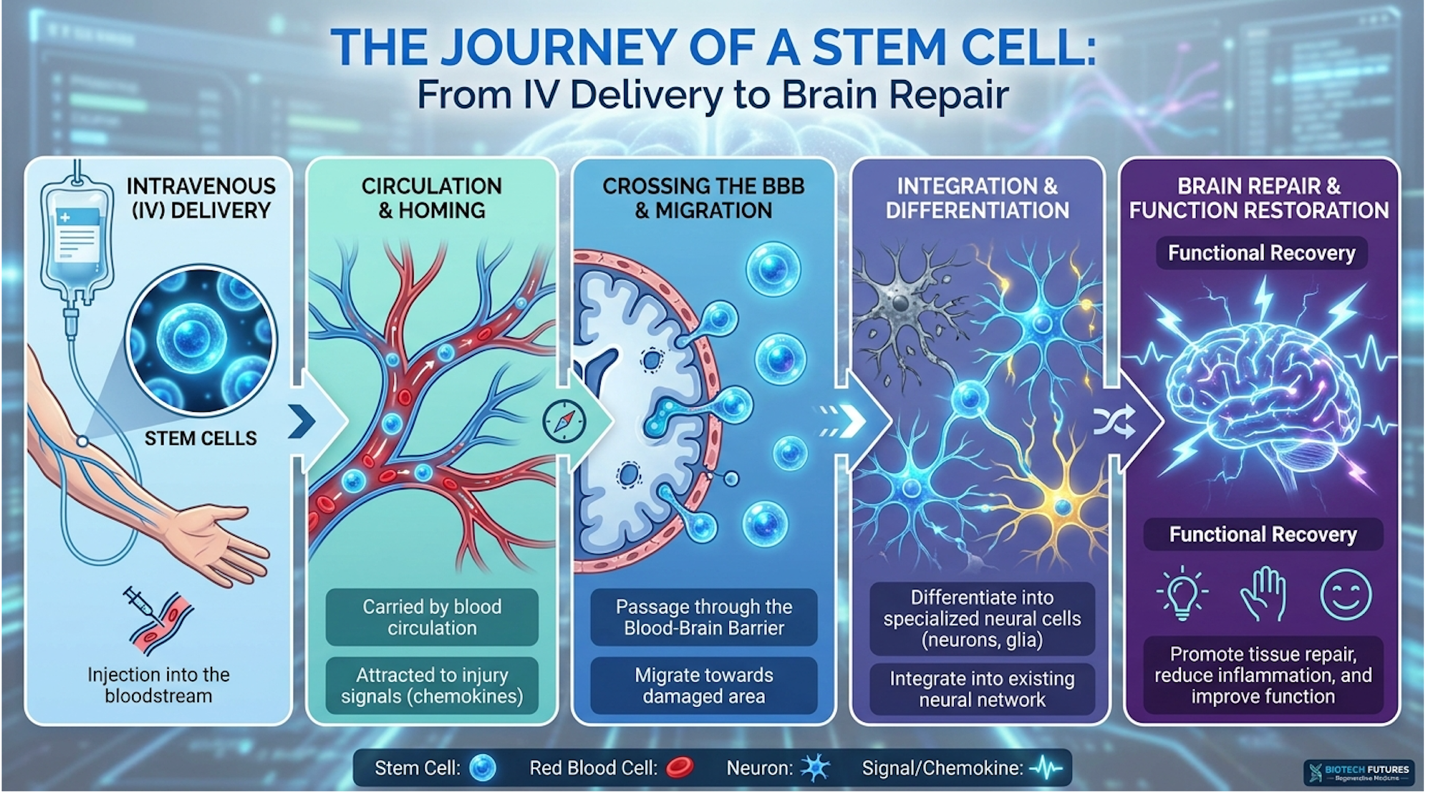
Mesenchymal stem cell therapy for ischemic stroke operates primarily through paracrine signaling rather than direct cellular replacement. Upon administration, these cells secrete complex bioactive molecules that modulate local immune responses and stimulate angiogenesis (Clinical study in PubMed). This cellular mechanism directly targets the hostile inflammatory environment that persists in the brain after an ischemic event.
The biological reality of how stem cell therapies with UC-MSCs for stroke actually work often contradicts public perception. They don’t magically morph into new neurons to replace dead brain tissue. Instead, UC-MSCs function as biological factories. They enhance local blood microcirculation and deliver vital nutrients to damaged tissues.
A crucial distinction in the literature separates ischemic stroke (vascular blockage) from hemorrhagic stroke (vascular rupture). While stem cell therapy for hemorrhagic stroke is actively studied for its ability to clear hematoma-induced inflammation, current Phase II and III trials predominantly support the ischemic application. Here, the ischemic penumbra the salvageable tissue surrounding the dead core becomes the primary target.
How does this happen? Through targeted molecular pathways. UC-MSCs secrete bioactive molecules that stimulate dermal fibroblasts and promote extracellular matrix protein synthesis (Paracrine signaling and VEGF stimulation in ischemic models). Specifically, the secretion of vascular endothelial growth factor (VEGF) stimulates local endothelial cells to
Understanding this cellular mechanism is helpful, but the source of the cells matters just as much. Umbilical cord tissue serves as an incredibly abundant source of active, young progenitor cells. When compared to bone marrow or adipose tissue traditional sources for adult stem cells for stroke UC-MSCs demonstrate distinct clinical advantages.
| 📌 If you’re interested in why umbilical cord cells are often preferred over bone marrow or fat-derived cells, we have an interesting article that discusses why UC-MSCs are superior to other stem cell sources, which you can read via the internal link. |
First, they exhibit remarkably low immunogenicity. Because they lack HLA-DR expression, they are far less likely to be rejected by the patient’s immune system, allowing for allogeneic (donor) infusions without harsh immunosuppressive drugs.
Second, the secretome complexity of youthful UC-MSCs vastly outperforms older autologous adult stem cells. As we age, our stem cells age with us, losing their proliferative capacity. A 2021 stem cell research review published in Stroke confirmed that the immunogenicity of UC-MSCs vs adult stem cells strongly favors the umbilical derived lines for neurological applications.
Understanding this cellular advantage is only the first step. Evaluating the documented safety profile in human trials is what actually determines clinical viability for a patient.
When evaluating clinical studies on stem cell stroke therapy, current data indicates the procedure is generally well-tolerated in controlled medical environments. Studies cataloged in international clinical registries demonstrate that severe, systemic immune reactions to UC-MSCs remain statistically low due to their immunomodulatory properties (WHO ICTRP safety data). However, ensuring patient safety requires strict adherence to laboratory processing standards and uncompromised regulatory oversight.
Let’s address the massive elephant in the room: Is FDA approved stem cell therapy stroke treatment a reality right now? No. It is currently investigational. It operates under Investigational New Drug (IND) pathways and is not a universally approved standard of care.
This distinction is routinely blurred by offshore marketing. The progression of stem cell therapy for stroke clinical trials relies on strict phased testing. Phase I establishes raw safety. Phase II looks for initial efficacy signals. Phase III requires massive, multi-center, double-blinded proof. We are
An analysis of the ClinicalTrials.gov registry explicitly outlines the current phase status of MSC stroke trials, warning patients against clinics offering unregulated procedures without proper Institutional Review Board (IRB) oversight. If a clinic guarantees a cure outside of a regulated trial framework, walk away.
While regulatory bodies monitor these therapies closely, examining the specific adverse events recorded during these trials provides a clearer picture of actual patient risk.
An honest assessment of the side effects of stem cell therapy for stroke reveals a highly tolerable, though not entirely risk-free, profile.
Phase II clinical studies on stem cell stroke therapy indicate that severe adverse events related directly to the cellular infusion occur in less than 2.4% of monitored patients (Neurology clinical review).
The most commonly reported stem cell therapy adverse events are incredibly mild: transient low-grade fever within 24 hours of infusion, mild headache, and localized reactions at the IV site. Severe adverse events such as tumorigenicity (tumor formation) or severe graft-versus-host disease (GVHD) have a historically low probability specifically when utilizing rigorously screened UC-MSCs.
However, patient safety relies entirely on the quality control of the biological materials. Contaminated cultures or poorly expanded cells can cause catastrophic sepsis. A 2022 meta-analysis of adverse events in MSC infusions for stroke confirmed that major complications stem almost exclusively from unregulated laboratory practices, not the cells themselves.
| 📌 If you’re interested in how to tell a well-regulated stem cell clinic from a risky one, we have an interesting article that discusses whether stem cell therapy is safe in Thailand, which you can read via the internal link. |
With the safety parameters established, clinical attention rapidly shifts to the primary goal of these interventions: measurable functional recovery.
Mesenchymal stem cells for motor recovery after stroke target the persistent neurological deficits that remain after standard rehabilitation plateaus. By modulating the pro-inflammatory microenvironment in the brain, UC-MSCs create conditions conducive to neurogenesis and synaptic plasticity (PubMed neurogenesis study). This functional recovery is primarily measured through standardized clinical assessments rather than merely observing cellular changes on imaging.
Timing dictates everything in neuro-regeneration. The acute phase the immediate days following a stroke presents a rapidly shifting inflammatory cascade. The chronic phase, months or years later, presents an entirely different pathological environment dominated by glial scarring and established neurological deficits.
Therapy for chronic ischemic stroke faces profound challenges. The scar tissue acts as a physical and chemical barrier to new axon growth. And yet, recent clinical literature suggests post-acute stroke patients stem cells interventions can still yield results.
A 2023 analysis published in the Stroke journal examined the efficacy timelines for MSC administration post-stroke. Researchers found that while acute administration excels at neuroprotection (saving dying neurons), chronic administration shifts toward neuro-restoration (rewiring surviving networks). Patients treated 6 to 24 months post-stroke still demonstrated responsiveness, fundamentally challenging the old dogma that the brain’s recovery window firmly slams shut after one year.
Understanding this timeline is crucial, but assessing the actual success of the therapy requires rigorous clinical quantification. Anecdotes do not equal data.
We must separate biological changes seen on an MRI from clinically meaningful functional recovery. A bright spot on a scan means nothing if the patient still cannot grip a fork or walk unassisted.
In clinical trials, we measure outcomes using validated scales: the NIH Stroke Scale (NIHSS), the Fugl-Meyer Assessment (FMA) for motor recovery, and the modified Rankin Scale (mRS) for daily living independence. So, what is the stem cell therapy for stroke success rate?
Patients undergoing therapy for chronic ischemic stroke using mesenchymal stem cells have demonstrated measurable improvements in Fugl-Meyer Assessment scores, averaging a 5.2-point increase over baseline (Clinical rehabilitation study).
This is the reality of UC-MSC clinical results for stroke. Improvements are typically incremental. We see patients regain partial shoulder mobility, experience reduced limb spasticity, or recover basic speech articulation. We rarely see total reversals of severe hemiplegia. When we look at changes in NIHSS or Fugl-Meyer scores post-MSC therapy, the data proves these interventions improve neurological impairment reliably, but they are not magic wands.
To maximize these incremental improvements, researchers are now focusing on optimizing the cells themselves and how they are delivered to the brain.
The treatment of ischemic stroke with modified mesenchymal stem cells represents the forefront of regenerative neurology. Clinical focus has shifted toward the Advanced MSC Efficacy Matrix, a framework that evaluates how pre-conditioning the cells prior to infusion alters patient outcomes (PubMed study on MSC pre-conditioning). This approach acknowledges a vital truth: not all cellular therapies are functionally identical.
In the laboratory, the cellular modification process is the primary differentiator between standard and elite outcomes.
Naive MSCs are unmodified. They are extracted, expanded, and infused. Activated MSCs, however, are intentionally stressed in the lab before they ever reach the patient. By exposing the cells to artificial hypoxia (low oxygen) or specific inflammatory cytokines during culture, scientists essentially “arm” the cells.
Comparing naive MSC vs activated MSC profiles reveals a stark biological advantage. Why do activated mesenchymal stem cells induce recovery more efficiently? Because the pre-conditioning forces the cells to upregulate protective and anti-inflammatory proteins, particularly CXCR4 receptors. When these pre-conditioned cells enter the hostile, oxygen-starved stroke environment, they don’t go into shock. They immediately begin secreting high levels of neurotrophic factors.
| 📌 If you’re interested in how MSCs calm overactive immune cells throughout the body, we have an interesting article that discusses mesenchymal stem cell therapy for immune modulation, which you can read via the internal link. |
A 2023 molecular medicine review on the efficacy of hypoxia-preconditioned MSCs in ischemic models demonstrated that activated cells survive significantly longer in vivo. Achieving this requires incredibly precise laboratory standards to prevent the cells from entering early senescence during the stressing phase.
While optimizing the cell state is highly technical, the physical method of delivering these cells to the ischemic brain is equally critical to the therapy’s success.
How the cells actually reach the lesion dictates the therapeutic ceiling. This is the second half of the Advanced MSC Efficacy Matrix.
Standard intravenous delivery of MSCs systemic administration via an IV drip is the most common route in global clinics. It is minimally invasive and highly scalable. But there is a massive biological catch: the pulmonary first-pass effect. Up to 40% of IV-infused MSCs become temporarily trapped in the microvasculature of the lungs. While they still exert systemic anti-inflammatory effects from the lungs, fewer cells physically cross the blood-brain barrier.
Advanced alternatives include intra-arterial delivery (threading a catheter directly into the cerebral arteries) or topical mesenchymal stem cells (direct surgical application of a cell-seeded hydrogel onto the brain surface).
Recent neurosurgery clinical data comparing delivery routes for MSCs in stroke patients highlights a severe risk-to-reward ratio. IV is vastly safer but less localized. Topical surgical models deliver exponentially higher cell counts directly to the ischemic penumbra, but carry the profound risks of open neurosurgery.
Balancing these advanced methodologies requires a stark, objective look at the overall advantages and drawbacks of the intervention.
Evaluating the pros and cons of stem cell therapy for stroke requires stripping away emotion and looking purely at clinical endpoints and logistical realities.
| Clinical Advantages (Pros) | Clinical Challenges (Cons) |
| Potential to modulate neuro-inflammation | Highly dependent on specialized laboratory processing |
| Excellent safety profile regarding immunogenicity | Investigational status; not a universally approved standard of care |
| May stimulate angiogenesis and neurogenesis | Substantial financial cost without guaranteed insurance coverage |
| Paracrine signaling supports existing tissue repair | Outcomes vary significantly based on timing, dose, and route |
The biological upside is undeniable modulating the immune response and providing trophic support allows the brain breathing room to rewire itself. However, the financial and logistical burdens are immense. Patients should thoroughly review this table alongside their primary care physician before committing to any procedure. Because of this extreme variance in outcomes and exact clinical parameters, determining patient suitability is the most critical step in the regenerative medicine process.
Not every stroke survivor is a candidate for these advanced interventions. Applying the following clinical framework helps patients self-assess before pursuing costly medical travel or out-of-pocket clinic visits.
Even for highly suitable candidates, understanding the systemic limitations of the therapy is a strict medical necessity.
To practice informed consent, we have to talk about what this therapy cannot achieve, and the standard medical alternatives that absolutely must not be abandoned during the regenerative process.
Stem cells are not magic. Explicitly, UC-MSCs do not magically turn into new brain tissue to replace dead neurons in a human adult. The exact long-term cell survival rates of infused MSCs within the brain remain a subject of intense clinical debate, with significant uncertainty surrounding optimal dosing protocols.
Furthermore, biomarkers can be deceptive. A reduction in systemic inflammatory markers post-infusion does not automatically guarantee that the patient will walk better. Improvements in the lab do not always translate to meaningful functional benefits for the patient on the physical therapy mat.
Stem cell therapy is an adjunct to standard neurological rehabilitation, never a replacement.
Conventional care remains the bedrock of post-stroke recovery. Intensive physical therapy, occupational therapy, constraint-induced movement therapy (CIMT), and speech-language pathology are the primary standards of care.
Patients must discuss any regenerative intervention with their primary neurologist to ensure it does not interfere with standard secondary stroke prevention protocols. If a clinic tells you to stop your standard blood thinners or physical therapy to “let the cells work,” you are in the wrong clinic.
Clinical trials on stem cells for stroke demonstrate moderate improvements in motor function and a high safety profile for UC-MSCs. These studies indicate that the cells primarily reduce neuro-inflammation rather than generating new brain tissue. For example, trials monitoring Fugl-Meyer Assessment scores show incremental gains in limb mobility. However, clinical results remain highly dependent on the patient’s stroke severity and the timing of the cellular infusion.
Stem cell therapy for chronic stroke patients shows potential for incremental functional recovery, though it is not a definitive cure. Research suggests UC-MSCs can promote neuroplasticity even months after the ischemic event. Patients in some post-acute trials have experienced measurable reductions in muscle spasticity. Individual outcomes vary widely, and patients should approach the treatment with realistic expectations regarding mobility improvements.
The results of stem cell therapy for stroke are heavily influenced by dosing, delivery route, and cell preparation methods. Efficacy relies on the Advanced MSC Efficacy Matrix, evaluating whether cells are naive or pre-conditioned. Intravenous delivery offers systemic distribution, while localized topical or intra-arterial routes may concentrate cells at the lesion site. Ultimately, clinical success requires rigorous laboratory standards and concurrent physical rehabilitation.
Evaluating the benefits and risks of stem cell therapy for stroke requires focusing on verified clinical data rather than commercial claims. Current literature demonstrates that UC-MSCs offer a highly tolerable safety profile and function via complex paracrine signaling to reduce neuro-inflammation. A comprehensive 2023 meta-analysis confirmed that combining cellular therapy with intensive, ongoing physical rehabilitation yields the highest statistical probability of motor recovery. The best approach combines optimal cell sourcing, precise delivery, and relentless clinical follow-up.
Clinical success increasingly relies on The Advanced MSC Efficacy Matrix. By optimizing the biological state of the cells—such as utilizing activated rather than naive MSCs—and selecting the most targeted delivery vector, researchers aim to maximize the therapeutic potential for post-acute ischemic recovery. This framework strips away the guesswork, grounding expectations in cellular biology rather than wishful thinking.
For patients considering regenerative interventions, the next critical step is a comprehensive suitability assessment. Gather your complete medical records, recent neurological imaging, and laboratory results to discuss with a qualified regenerative medicine specialist. Call a specialized