Our Services
Others
- DFPP
- Shockwave
- IV Drip

For patients experiencing the compounding complications of metabolic disease, the dialogue surrounding regenerative medicine often blurs the line between clinical reality and commercial optimism. In reviewing longitudinal patient tracking data, clinical monitoring protocols reveal that advanced patients evaluating cell-based interventions against traditional symptom-management protocols are frequently bombarded with misleading marketing. And the inherent danger in the regenerative market is very real. Regulatory agencies repeatedly warn that many heavily marketed treatments lack condition-specific evidence, leaving patients vulnerable to unproven offshore clinics.
This analysis dissects the current scientific validity of stem cell diabetes using stem cell therapy, separating established investigational trials from premature commercial offerings. We evaluate precise cellular mechanisms, recent clinical benchmarks, regulatory realities, and cost-effectiveness models to deliver an uncompromising, evidence-led look at regenerative endocrinology.
Evaluating stem cell diabetes using stem cell therapy requires analyzing how specific cellular derivatives interact with compromised pancreatic microenvironments. Rather than serving as a universal repair mechanism, regenerative approaches target distinct biological deficits. Depending on the pathology, these therapies either replace destroyed pancreatic beta cells or modulate systemic inflammation to restore metabolic homeostasis.
Our evidence-led review indicates that while foundational biology outlines the potential for restored metabolic function, translating this into clinical reality requires vastly different approaches for autoimmune versus acquired insulin resistance.
The physiological goal of any legitimate regenerative approach isn’t simply a “cure” it’s the restoration of physiological glycemic control, ideally achieving complete endogenous insulin independence. Pancreatic beta cells, the primary endocrine cells responsible for synthesizing and secreting insulin, exist in a highly specialized, tightly regulated microenvironment. Endogenous insulin, the hormone naturally produced within the body, is released in precise pulsatile bursts that exogenous subcutaneous injections simply cannot replicate perfectly.
But here’s the thing. The pancreatic microenvironment in a diabetic patient is exceptionally hostile. In Type 1 diabetes, relentless autoimmune attacks orchestrated by rogue CD8+ T-cells create a warzone. These T-cells recognize specific autoantigens like GAD65 and ZnT8 and actively hunt and destroy newly introduced beta cells. In Type 2, the biological hostility looks different but is equally destructive. Severe lipotoxicity (where excess fatty acids generate ceramides), fibrotic scarring, and chronic inflammation suffocate cellular function and induce endoplasmic reticulum stress.
Pancreatic beta cells do not function in a vacuum. They rely on a highly complex extracellular matrix that provides structural support and biochemical cues necessary for insulin secretion. In chronic diabetes, decades of hyperglycemic stress degrade this matrix, replacing it with rigid fibrotic tissue. This fibrosis acts as a physical barrier. So, when unencapsulated stem cells are infused into this hostile environment, they often face immediate apoptosis cell death because they cannot anchor or vascularize properly. This biological reality dictates that successful engraftment requires pre-conditioning the microenvironment to support new angiogenesis.
Attempting to engraft new cells into a fibrotic, inflamed pancreas is like planting a delicate sapling in toxic, scorched earth. The immune system must be managed, the inflammatory cytokines suppressed, and adequate vascularization established. Diabetes directly causes 1.5 million deaths annually globally forcing endocrinology to prioritize regenerative cell therapies over mere palliative symptom management (World Health Organization global diabetes statistics, 2023). Moving from theoretical cellular mechanisms to patient qualification requires a strict metric to gauge potential clinical efficacy.
To objectively evaluate viability alongside Type 1 outcomes, we must rely on a rigorous clinical framework: The Beta-Cell Independence Threshold. This proprietary analytical framework assesses a patient’s viability for stem cell therapy based on three non-negotiable pillars.
First, the duration of the disease. A patient with decades of chronicity often exhibits severe pancreatic fibrosis, limiting the structural matrix necessary for new cell engraftment. Without a healthy extracellular matrix, cells simply wash away or undergo apoptosis. Second, the presence and titer of autoantibodies. High circulating levels of autoantibodies indicate an active, aggressive autoimmune state that will rapidly destroy unprotected donor cells. Third, baseline C-peptide levels. C-peptide serves as the definitive biomarker for residual endogenous insulin production.
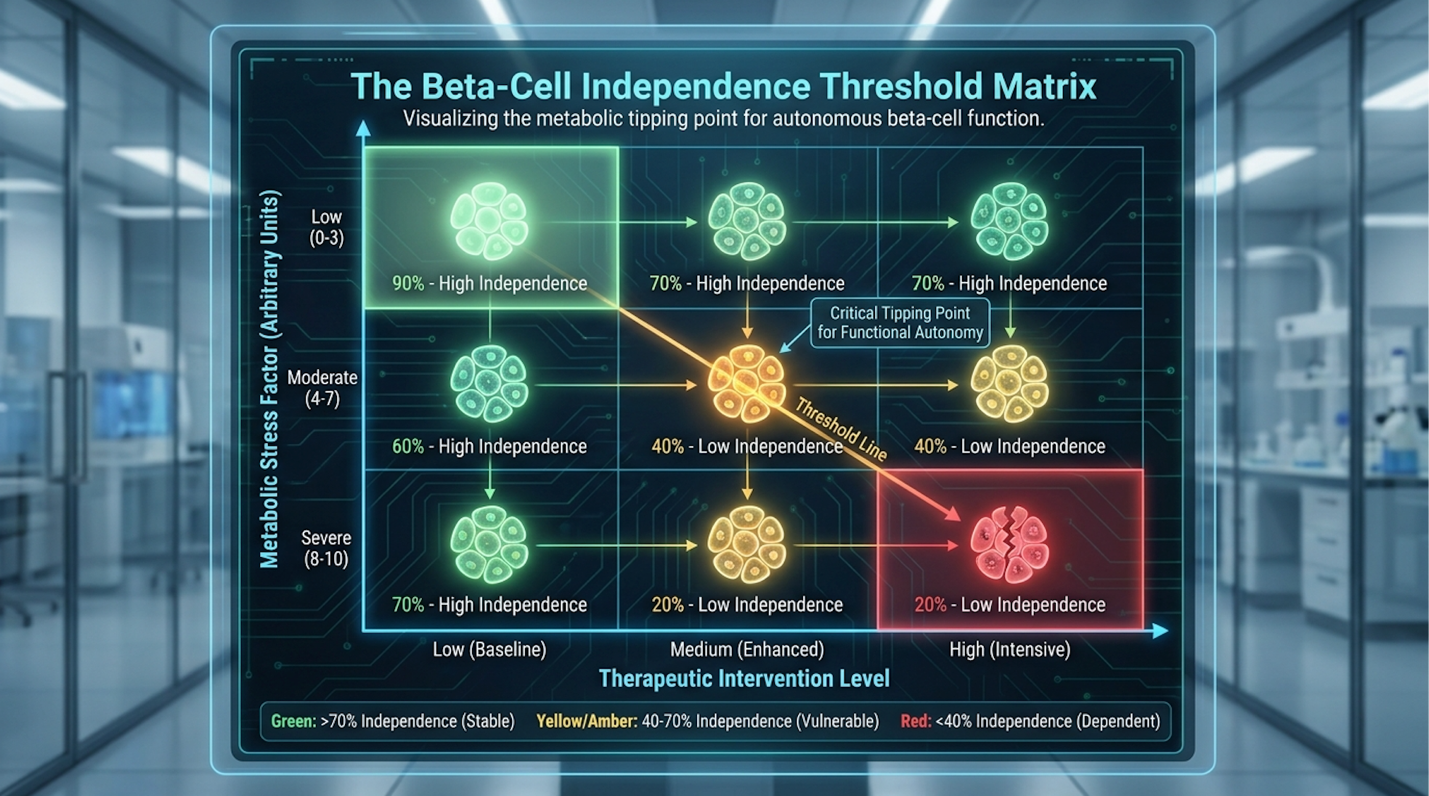
As outlined in the Beta-Cell Independence Threshold matrix above, an ideal candidate for unencapsulated cellular therapy possesses some residual C-peptide mass, low autoantibody titers, and a shorter disease duration. Applying this threshold reveals exactly why cellular interventions cannot be standardized, forcing a strict divergence in clinical protocols depending on the underlying pathology.
What are the actual stem cell therapy success rates when applying this threshold? While biological plausibility is incredibly high in controlled settings, achieving long-term functional insulin independence in un-immunosuppressed patients remains a massive clinical hurdle. Success heavily skews based on timing. A patient with recent-onset diabetes typically experiences vastly superior engraftment rates compared to someone facing decades of metabolic scarring. Current verified trials show temporary to moderate success meaning significant reductions in HbA1c and lowered exogenous insulin needs but rarely offer a lifelong, one-and-done cure without ongoing immunomodulation.
A critical failure in commercial regenerative medicine is the dangerous conflation of diabetes subtypes. Stem cell therapy for Type 2 diabetes operates on entirely different biological pathways when treating systemic insulin resistance versus interventions designed for Type 1 autoimmunity. While Type 1 requires the exogenous replacement of destroyed islet clusters, Type 2 treatment leverages cellular immunomodulation to rescue existing beta cells and radically reduce peripheral insulin resistance.
While these mechanisms provide robust biological plausibility in controlled laboratory settings, validating their efficacy requires analyzing the rigorous clinical trials actively translating these theories into human applications. The FDA’s approval of Lantidra marked the first allogeneic pancreatic islet cellular therapy proving that severe glycemic volatility can be functionally reversed in specific patient cohorts (FDA, 2023). Ultimately, applying undifferentiated cells to solve an organ-specific structural deficit remains biologically unsound.
Stem cell-derived islet therapies, which involve differentiating pluripotent cells into functional insulin-producing clusters, represent the holy grail for Type 1 management. The process is biologically exhausting. Scientists must coax human embryonic or induced pluripotent stem cells (iPSCs) through multiple, highly specific developmental stages. They must perfectly mimic natural embryonic pancreatic organogenesis moving cells from definitive endoderm into pancreatic progenitors that express critical markers like PDX1 and NKX6.1, and finally maturing them into functional endocrine cells capable of glucose-stimulated insulin secretion.
But generating the cells is only half the battle. The true hurdle is engraftment vascularization and immune evasion. The moment these new islet cells are introduced into the hepatic portal vein the standard surgical delivery route originally pioneered by the Edmonton Protocol the host’s immune system recognizes them as foreign invaders and attacks. Within hours, a devastating inflammatory response known as the Instant Blood-Mediated Inflammatory Reaction (IBMIR) destroys up to 60% of the infused cells before they can even attempt to engraft. Unless aggressively protected, the remaining introduced cells are rapidly destroyed by both cellular allorejection and recurrent T-cell autoimmunity.
To combat this, clinical researchers face a brutal trade-off. Do they utilize traditional systemic immunosuppression, which carries severe morbidity risks including opportunistic infections and nephrotoxicity? Or do they pioneer novel encapsulation devices using biomaterials like alginate hydrogels or polytetrafluoroethylene (PTFE) membranes that physically shield the cells? These macro- and micro-encapsulation devices aim to allow glucose in and insulin out, while physically blocking cytotoxic T-cells from penetrating the barrier.
Evaluating success in this arena requires looking at regulatory milestones. Lantidra’s approval marked a massive paradigm shift in treating brittle diabetes (FDA approval of the first cellular therapy for Type 1 diabetes, 2023). This historic approval proved that replacing beta cells using deceased donor allogeneic sources can functionally rescue adults unable to reach target HbA1c levels due to recurrent severe hypoglycemia. Conversely, replacing beta cells does absolutely nothing to resolve the systemic metabolic dysfunction central to the adult-onset variant of the disease.
Autologous mesenchymal stem cells (MSCs), multipotent stromal cells known for their potent immunomodulatory properties, serve an entirely different biological function. When assessing stem cell therapy for Type 2 diabetes success rates, it is crucial to understand that MSCs do not actively engraft and differentiate into new beta cells. Their therapeutic efficacy relies almost exclusively on robust paracrine signaling and immune regulation.
Think of MSCs as biological paramedics rather than replacement parts. Once infused, they secrete a massive payload of anti-inflammatory cytokines, growth factors, and exosomes packed with regulatory microRNAs (such as miR-146a). This targeted immunomodulation often utilizing cells harvested from adipose tissue or the Wharton’s jelly of umbilical cords directly addresses the lipotoxicity, chronic systemic inflammation, and severe hepatic and muscular insulin resistance that define Type 2 diabetes. The goal isn’t to build a new pancreas; it is to rehabilitate the toxic environment suffocating the current one.
One of their most fascinating mechanisms is phenotypic macrophage reprogramming. In a Type 2 diabetic, the visceral adipose tissue and pancreatic microenvironment are dominated by pro-inflammatory M1 macrophages that excrete tissue-damaging cytokines. MSCs secrete factors like PGE2 and TSG-6, which force these hostile M1 macrophages to switch into tissue-healing, anti-inflammatory M2 states. They simultaneously upregulate regulatory T cells (Tregs) and secrete protective factors like TGF-beta and IL-10. This cellular flip effectively turns off the hostile environment, rescuing the patient’s own exhausted beta cells and allowing them to resume endogenous insulin secretion.
A comprehensive review of broad clinical data demonstrates that using mesenchymal stem cells for metabolic repair exerts strong paracrine anti-inflammatory effects to mitigate peripheral insulin resistance (NIH research on how mesenchymal stem cells reduce insulin resistance, 2022). By resolving endoplasmic reticulum stress in the liver and skeletal muscle, MSCs improve the body’s natural insulin sensitivity. They don’t replace the organ; they rehabilitate the systemic environment it operates within. These distinct mechanisms frame the global race toward functional recovery, driving major institutions to push the absolute boundaries of clinical application in human trials.
Determining if the first-ever stem cell therapy restores insulin independence permanently requires scrutinizing active, peer-reviewed clinical trials over isolated, sensationalized media reports. Between 2024 and 2026, the international research landscape spanning from North American biotechnology firms to highly specialized Asian research hospitals produced unprecedented data regarding cellular engraftment and sustained C-peptide secretion in human subjects.
While institutional research continues to validate these cellular technologies in highly controlled environments, translating these breakthroughs into commercial, accessible treatments introduces complex socioeconomic variables. Clinical registries currently track over 50 active cellular therapy trials for metabolic disease signaling a massive industry pivot from symptom management to organ regeneration. Realistically, evaluating trial data requires ignoring press releases and focusing strictly on primary endpoints like C-peptide preservation.
In the regenerative space, the term “reversal” is thrown around recklessly. However, examining the highly publicized China reverse diabetes stem cells trials provides concrete, objective endpoints. According to a landmark peer-reviewed publication, a 25-year-old woman achieved insulin independence following a transplant of chemically reprogrammed stem cells marking a monumental leap in autologous cellular engineering (Nature report on stem-cell reversal in China, 2024).
Let’s break down the exact methodology. The research team utilized chemically induced pluripotent stem cells (CiPSCs). This means the cells were derived from the patient’s own body (autologous) and manipulated in a laboratory using proprietary small molecule cocktails rather than risky viral vectors to become functional insulin-producing islets before being surgically re-infused. Avoiding viral vectors dramatically lowers the risk of unintended oncogenesis (tumor formation), which has historically plagued pluripotent stem cell research.
The primary endpoints achieved in this trial were staggering: complete restoration of glycemic control, maximum Time in Range (TIR) via continuous glucose monitoring, and the total cessation of exogenous insulin requirements. The patient produced endogenous insulin robustly for over a year post-transplant. But we must contextualize these findings through the Beta-Cell Independence Threshold:
Because the cells were autologous, the risk of traditional allogeneic rejection was completely bypassed, though managing the underlying autoimmune component remained a massive variable for researchers to monitor. While this N=1 case study is a phenomenal proof of biological concept, a single success story does not equate to a scalable commercial therapy. Parallel to these individual autologous successes, major Western research consortiums are pursuing highly scalable, allogeneic off-the-shelf therapies.
Based on our systematic review of Phase 1/2 clinical trial endpoints, the most aggressive push toward a universal cellular treatment stems from Vertex Pharmaceuticals and their VX-880 clinical trial program. Trial NCT04786262 actively evaluates VX-880 to strictly assess its safety and efficacy in restoring natural insulin production under required immunosuppression protocols (Phase 1/2 clinical trial for stem cell-derived islet replacement, 2026).
VX-880 utilizes fully differentiated, allogeneic islet cells derived from embryonic stem cell lines originally developed through foundational research at the Harvard Stem Cell Institute diabetes programs. Because the cells are allogeneic (from a donor cell line), patients must endure standard, lifelong systemic immunosuppression typically utilizing potent nephrotoxic drugs like tacrolimus and mycophenolate mofetil to prevent immediate host allorejection. The trade-off is stark: you trade the daily burden of insulin injections and the risk of fatal hypoglycemia for the chronic risks associated with anti-rejection medications.
To eliminate this exact trade-off, researchers tested stem-cell derived islet replacements using a specialized encapsulation device to protect cells from the immune system, potentially bypassing anti-rejection drugs entirely (University of Alberta stem-cell derived islet replacement trial, 2023). If the device properly vascularizes without triggering a foreign body fibrotic response, the cells survive indefinitely inside their synthetic home, releasing insulin into the bloodstream without ever coming into contact with hostile T-cells.
Meanwhile, large-scale Brazil clinical trial diabetes cohorts evaluating MSCs continue to refine dosing protocols for Type 2 patients. Researchers have found that intravenous dosages of 1×10^6 cells per kilogram of body weight often yield the most optimal anti-inflammatory response without triggering unwanted microvascular clotting. The exorbitant costs associated with developing these regulated, encapsulated cell products drive many desperate patients to seek immediate, though totally unregulated, alternatives abroad.
For patients researching stem cell therapy diabetes cost models, the market bifurcates sharply into two completely distinct arenas: highly regulated, heavily subsidized investigational clinical trials in the US and EU, and the booming, aggressive sector of commercial medical tourism offering immediate access to loosely regulated cellular infusions for a massive out-of-pocket fee.
As patients balance the high financial risks of medical tourism against the strict, often exclusionary inclusion criteria of domestic clinical trials, many must simultaneously evaluate how cellular therapy compares to the rapidly advancing pharmaceutical pipeline. Offshore commercial clinics often charge upwards of $30,000 for unverified infusions leaving patients financially drained without measurable improvements in endogenous insulin production. The lack of independent IRB oversight in these jurisdictions remains a glaring patient safety hazard.
If you want to understand the true financial burden of medical tourism, the numbers are sobering. Offshore commercial clinics typically charge anywhere from $10,000 to $30,000+ per single infusion cycle. These clinics almost exclusively utilize adipose-derived or umbilical cord MSCs because they are cheap to harvest and expand. It is a massive out-of-pocket cash expense, virtually never covered by domestic health insurance. This figure also excludes the hidden costs of international travel, accommodations, and the potential need for emergency medical interventions upon returning home if severe complications arise.
Contrast this brutal out-of-pocket reality with regulated investigational trials like VX-880. Participation in these Phase 1/2 FDA-monitored trials is typically completely free for the participant. The catch? You must meet incredibly strict eligibility criteria—aligning perfectly with the Beta-Cell Independence Threshold and formally accept the very real, unknown long-term risks of experimental biology, including the necessity for frequent organ biopsies and continuous blood monitoring.
The pharmacoeconomic argument for enduring these regulated trials is compelling. Health economics models indicate that restoring endogenous insulin production can successfully offset the staggering lifetime costs of traditional symptom management (economic evaluations of stem cell therapy cost-effectiveness, 2020). When you calculate the lifetime cumulative cost of analog insulins, continuous glucose monitors (CGMs), pump supplies, and the eventual management of devastating complications like severe neuropathy or diabetic nephropathy, a single definitive cellular therapy becomes a highly rational investment for modern healthcare systems.
When explicitly answering how much it costs for stem cell therapy for diabetes, the financial model heavily depends on the regulatory environment. Domestically in the US, if a patient is accepted into an FDA-sanctioned clinical trial (like those testing VX-880 or encapsulated islets), the experimental cellular product and the associated surgical procedures are generally covered by the trial sponsor at no direct cost to the patient. However, if a patient chooses to bypass the clinical trial route and seeks treatment at commercial medical tourism clinics in jurisdictions like Latin America or Eastern Europe, they will pay entirely out-of-pocket. These commercial MSC treatments typically range from $15,000 to $35,000 for a comprehensive treatment protocol. Because these treatments are considered experimental, standard domestic health insurance providers including Medicare and Medicaid will absolutely not authorize coverage or reimbursement for the procedure.
When patients search for options, they are instantly flooded with advertisements for Stem Cell Treatment For Diabetes in Thailand. Commercial entities like ProgenCell stem cell therapy or ANOVA IRM diabetes dominate search results, boasting high-end facilities, VIP patient experiences, and glowing video testimonials.
But here is the stark medical reality. The primary risk of medical tourism isn’t just unclean facilities; it is biological incompatibility and systemic ineffectiveness. Many offshore clinics offer generalized, undifferentiated MSCs via simple intravenous (IV) infusion to Type 1 diabetics. Biologically, undifferentiated MSCs injected into an arm vein often get trapped in the pulmonary capillary bed a phenomenon known as the “pulmonary first-pass effect” and never actually reach the pancreas in therapeutic concentrations. Even if a fraction of cells bypass the lungs, they cannot miraculously replace destroyed islet cells. At best, they offer transient, temporary immunomodulatory relief. They do not, and biologically cannot, result in insulin independence for a Type 1 patient.
| Feature | Regulated Trial (FDA/EMA) | Offshore Commercial Clinic |
| Oversight | Independent IRB, Regulators | Minimal to None, Self-Regulated |
| Cell Type Specificity | Targeted (Differentiated Islets) | Generalized (e.g., Adipose MSC IV) |
| Cost to Patient | Typically Free (Sponsored) | $15,000 – $35,000+ Out-of-Pocket |
| Follow-up Rigor | 5-10 Years Mandatory Tracking | Minimal, Ends Upon Departure |
If you are forced to vet an offshore clinic, demand published peer-reviewed outcomes for their specific protocol. Ask for independent cell characterization reports detailing exact cellular viability percentages and absolute cell counts. If a clinic guarantees a cure, walk away immediately. For patients deemed ineligible for experimental trials or understandably unwilling to risk offshore interventions, the decision pivots toward emerging pharmacological innovations designed specifically to delay end-organ damage.
The timeline for widespread, accessible cellular therapy must be contextualized against the explosive, unprecedented advancement of the pharmacological sector. As endocrinologists look toward a new diabetes medication 2026 pipeline, the clinical standard of care is rapidly shifting from crude glycemic suppression toward highly sophisticated dual and triple-receptor agonists that offer unprecedented weight loss and metabolic correction.
Ultimately, the choice between lifelong pharmacological management and experimental cellular regeneration demands a sober, objective assessment of both biological limitations and immediate patient safety parameters. Advanced GLP-1 receptor agonists consistently demonstrate a 15% reduction in total body weight dramatically lowering the peripheral insulin resistance that drives metabolic failure. Cellular therapies must eventually prove superiority over these highly accessible, non-surgical pharmacological interventions.
The rise of GLP-1, GIP, and glucagon receptor agonists often heralded as the modern wonder drug for diabetes class has violently disrupted diabetes management. Medications like Tirzepatide and Retatrutide don’t just passively lower blood sugar. They fundamentally alter gastric emptying, stimulate surviving beta cells to produce more insulin in a glucose-dependent manner by dramatically increasing intracellular cAMP, and drive massive, clinically significant reductions in visceral adipose tissue.
But we must strictly contrast this pharmacological stimulation with the regenerative approach. Receptor agonists require lifelong, weekly administration. They constantly whip the remaining beta cells, forcing them to work harder to meet metabolic demands. Some researchers fear this could theoretically accelerate beta-cell exhaustion over a timescale of decades. Stem cell interventions take the exact opposite approach: a definitive biological reset aiming to rebuild the organ’s native capacity rather than forcing the failing organ into overdrive.
Revisiting the Beta-Cell Independence Threshold makes the limitations of pharmacology perfectly clear. A patient with 0% beta cell function, totally devoid of circulating C-peptide, gains absolutely nothing from a GLP-1 agonist’s insulin-stimulating effects. They are entirely dependent on exogenous insulin. For them, stem cell-derived islet replacement is the only physiological endgame. A complete lack of endogenous C-peptide nullifies pharmacological insulin stimulation, rendering cellular replacement the sole biological pathway to true euglycemia.
In the Type 2 treatment hierarchy, the clinical reality of replacing metformin is a daily conversation in endocrinology offices. Metformin remains the undisputed gold standard, the first-line defense deployed globally upon initial diagnosis. It works reliably by inhibiting mitochondrial complex I and activating AMPK to effectively lower hepatic glucose output. However, its specific systemic burdens are undeniable and compounding.
Mayo Clinic notes that long-term metformin use is associated with gastrointestinal distress and potential vitamin B-12 deficiency, driving patients toward newer regenerative therapies (Mayo Clinic overview of metformin side effects, 2026). Beyond severe GI toxicity, it places potential renal strain on patients navigating advanced stages of the disease. It is a grueling, unyielding drug to take daily for forty years, leading to massive adherence fatigue across the diabetic population.
This toxicity drives patients to seek natural alternatives to metformin, like high-dose berberine or radical, intensive lifestyle modification protocols. They are frustrated by the compounding prescriptions required to chase a continually degrading HbA1c. Autologous MSC therapy should not be positioned as a “natural” alternative, but rather as a highly targeted biological intervention designed to halt this progressive requirement for escalating pharmacological combinations. By directly targeting the inflammatory root of insulin resistance via macrophage reprogramming, MSCs attempt to break the chemical dependency cycle entirely.
Long-term metformin use places the heaviest physiological strain directly on the gastrointestinal tract and the kidneys. While the liver is primarily responsible for metabolizing the medication, compromised kidney function can lead to a dangerous, albeit rare, accumulation of the drug in the bloodstream known as lactic acidosis. For this reason, nephrologists closely monitor estimated glomerular filtration rates (eGFR) in patients taking the drug long-term. Additionally, decades of consistent use are intrinsically linked to chronic vitamin B-12 malabsorption in the gut, which can mimic or exacerbate diabetic neuropathy. These cumulative organ burdens are exactly what drive significant clinical interest toward regenerative, medication-free therapies that do not rely on chronic chemical filtration.
The pursuit of insulin independence carries immense biological risk. Patients must evaluate cellular therapies through a lens of defensive medicine, recognizing where these interventions fail, where they carry severe morbidity risks, and where conventional alternatives are objectively safer.
Navigating the regenerative market requires intense, unyielding skepticism. There are three major pitfalls that desperate patients frequently encounter.
First, purchasing undifferentiated MSC infusions for Type 1 diabetes is a critical clinical error. MSCs cannot replace lost islet cells; spending $20,000 on this procedure will yield zero improvement in endogenous insulin production, leaving the patient completely dependent on exogenous injections while simultaneously risking IV-related infections. To avoid this, Type 1 patients must demand protocols specifically utilizing differentiated beta cells or islet clusters.
Second, assuming a lack of FDA approval simply means a clinic possesses a “hidden cure” that the government is suppressing is highly dangerous logic. This conspiracy-driven mindset ignores the reality that unapproved treatments simply lack proven safety data. Patients risk severe complications, including tumorigenesis (teratomas) from improperly differentiated pluripotent cells. Always verify independent IRB oversight.
Third, ignoring the massive risks of systemic immunosuppression required for allogeneic islet transplants is a fatal oversight. Patients focus solely on the benefit of stopping insulin, forgetting that immunosuppression leaves them highly vulnerable to severe opportunistic infections and renal toxicity. Avoid allogeneic transplants unless participating in a rigidly monitored Phase 1/2 trial.
Cellular therapy isn’t universally appropriate, and in many specific clinical cases, it shouldn’t even be on the table. For a patient with well-controlled Type 2 diabetes who is highly responsive to modern GLP-1/GIP dual agonists, the inherent risks of an experimental stem cell intervention vastly outweigh the proven, predictable metabolic control of modern drugs. If a once-weekly injection maintains your HbA1c at 5.5% while driving cardiovascular benefits, stay the course.
Additionally, patients of advanced age with significant cardiovascular comorbidities should strictly avoid islet transplants requiring systemic immunosuppression. The physiological stress and severe infection risks associated with anti-rejection protocols present a much higher mortality threat than standard exogenous insulin management. In these cases, advanced closed-loop insulin pump systems represent a vastly safer, highly effective technological alternative.
Any evaluation for cellular therapy whether a domestic trial or an offshore consultation requires the intervention of a board-certified endocrinologist. Do not rely solely on the medical director of a commercial regenerative clinic, whose financial incentives are inherently tied to convincing you to undergo their specific procedure.
Seek informed medical advocacy. Have your primary endocrinologist review your comprehensive metabolic panel, specifically your C-peptide levels and autoantibody titers, to determine your precise standing on the Beta-Cell Independence Threshold. If a clinic flatly refuses to consult with your home endocrinologist regarding your clinical suitability, consider it a massive red flag and terminate the engagement immediately.
Stem cell therapy for diabetes shows moderate to high success in tightly controlled clinical trials, particularly regarding temporary reductions in insulin requirements. Success rates depend entirely on the diabetes subtype and cellular protocol used. For instance, recent Phase 1/2 trials involving stem cell-derived islet replacements have enabled specific Type 1 patients to achieve exogenous insulin independence. However, long-term efficacy past five years remains undocumented. Patients should consult endocrinologists to evaluate their individual Beta-Cell Independence Threshold before proceeding.
A universal, commercially available cure for diabetes is highly unlikely by 2026. While breakthrough clinical trials using chemically reprogrammed stem cells and advanced islet encapsulation will advance into late-stage testing by 2026, regulatory approvals require extensive longitudinal safety data. These timelines suggest that while functional insulin independence will become possible for highly selected trial participants, widespread commercial availability is years away. Patients must rely on emerging pharmacologics in the interim.
The most significant cellular breakthrough for Type 2 diabetes involves utilizing autologous mesenchymal stem cells (MSCs) to combat systemic insulin resistance. Unlike treatments designed to replace beta cells, MSC therapy leverages paracrine signaling to reduce chronic systemic inflammation and rescue exhausted endogenous beta cells. Clinical data indicates this can substantially lower HbA1c levels in patients failing traditional oral medications. However, this is strictly classified as disease modification rather than a definitive cure.
In 2024, researchers in China successfully reversed Type 1 diabetes in a 25-year-old patient during a highly controlled clinical trial. Medical teams utilized chemically reprogrammed autologous stem cells to generate functional islet clusters, resulting in the patient producing their own insulin independently for over a year (Nature, 2024). While representing a monumental biological milestone, this remains an N=1 case study. Broad application requires large-scale Phase 3 trials to confirm systemic safety across diverse populations.
Currently, stem cell therapy cannot proactively prevent the onset of Type 1 diabetes. Experimental protocols primarily focus on replacing beta cells after the autoimmune destruction has already severely compromised endogenous insulin production. However, separate investigational immunomodulation trials are exploring whether early intervention with regulatory T-cells or specific MSC protocols can halt the autoimmune attack during the “honeymoon phase” of early diagnosis. Until these trials conclude, prevention remains outside the scope of current clinical capabilities.
Mainstream domestic health insurance providers universally refuse to cover commercial stem cell therapies for diabetes, classifying them as experimental procedures. Patients pursuing treatment at medical tourism clinics will be entirely responsible for the $15,000 to $35,000 out-of-pocket costs. The only exception occurs when a patient is formally accepted into an FDA-sanctioned clinical trial, where the trial sponsor typically covers all costs associated with the experimental cellular product and monitoring. Financial planning must account for these rigid coverage exclusions.
For patients evaluating advanced metabolic interventions, stem cell diabetes using stem cell therapy delivers biologically proven pathways toward functional insulin independence. With diabetes directly causing 1.5 million deaths annually globally (World Health Organization, 2023), regenerative medicine offers a potent alternative to lifelong palliative care. The most clinically sound approach combines acknowledging the biological distinction between Type 1 islet replacement and Type 2 MSC immunomodulation, prioritizing regulated trials over commercial tourism, and demanding transparent clinical endpoints.
Navigating this complex sector requires abandoning the search for a universal “cure” and instead strictly applying The Beta-Cell Independence Threshold. By evaluating disease chronicity, residual C-peptide levels, and autoimmune status, clinicians and patients can accurately determine if cellular intervention is biologically viable or if advanced pharmacological management remains the safer, evidence-backed strategy.
Do not abandon current prescribed regimens in pursuit of unverified commercial therapies. Instead, schedule a consultation with a board-certified endocrinologist or a research hospital conducting FDA-sanctioned clinical trials to review your comprehensive metabolic panel and assess your eligibility for emerging regenerative protocols.
This article is for educational purposes only and does not replace consultation with a qualified medical professional. **