

Knee pain and joint degeneration are among the most widespread musculoskeletal conditions affecting people across the globe. Conventional treatment strategies generally focus on reducing symptoms rather than repairing the underlying damage to cartilage or bone.
In recent years, regenerative medicine has introduced innovative approaches aimed at restoring damaged tissues instead of simply managing discomfort. One of the most promising developments is therapy using umbilical cord–derived mesenchymal stem cells (UC-MSCs). This advanced treatment is gaining increasing attention for its potential to support cartilage and bone regeneration within the knee joint. Unlike traditional therapies that provide temporary relief, stem cell therapy seeks to repair injured tissue, improve joint function, and potentially delay or prevent the need for invasive surgical procedures such as knee replacement.
How Stem Cell Therapy Supports Knee Healing
- Cartilage Repair and Regeneration
Healthy cartilage acts as a smooth protective layer covering the ends of bones in the knee joint. It allows the joint to move easily and absorbs mechanical stress during walking, running, and other activities. When cartilage deteriorates due to injury or degenerative disease, bones may rub against each other, leading to pain, swelling, and reduced mobility.
Stem cells can stimulate the regeneration of cartilage by differentiating into cartilage-forming cells and by releasing growth factors that encourage surrounding tissues to repair themselves. This process helps rebuild the joint surface, improve shock absorption, and restore smoother movement.
- Bone Tissue Support
In advanced joint degeneration, damage may extend beyond cartilage and affect the underlying bone. Stem cells can assist in repairing these deeper structural problems by developing into osteoblasts, which are responsible for producing new bone tissue. Through this regenerative activity, stem cell therapy may help strengthen weakened bone areas and support overall joint stability.
- Control of Inflammation
Chronic inflammation is a major contributor to joint deterioration in conditions such as osteoarthritis. Persistent inflammatory processes accelerate cartilage breakdown and cause swelling and pain within the joint. Stem cells release anti-inflammatory molecules that help regulate the immune response. By calming inflammation, these cells create a healthier environment that promotes tissue repair and slows further degeneration.
- Reduction of Pain and Improvement in Mobility
As the knee begins to heal through cartilage regeneration, bone support, and reduced inflammation, many patients experience a noticeable decrease in pain. Joint flexibility and strength may gradually improve, allowing individuals to return to normal activities with less discomfort. These improvements can enhance mobility, physical function, and overall well-being.
Stem Cell Treatment Methods Used in Thailand
- Intra-Articular Stem Cell Injection: The most commonly used technique involves injecting stem cells directly into the knee joint. This procedure is minimally invasive and usually performed with imaging guidance to ensure precise placement. Once injected, the cells migrate toward damaged tissues and begin releasing regenerative growth factors that encourage healing.
- Scaffold-Supported Stem Cell Therapy: For patients with larger cartilage defects or more extensive tissue loss, stem cells may be combined with a biological scaffold. This scaffold acts as a structural framework that allows the cells to attach and grow more effectively. Over time, the scaffold supports the formation of new cartilage or bone tissue within the damaged area.
- Combination Therapy with Platelet-Rich Plasma (PRP): Another approach involves combining stem cell therapy with platelet-rich plasma. PRP is prepared from the patient’s own blood and contains a high concentration of growth factors that accelerate healing. When used alongside stem cells, PRP may enhance regenerative effects, support tissue repair, and reduce inflammation more efficiently.
- Stem Cell Implantation During Surgery: In certain cases—especially when damage is localized to specific areas—stem cells may be implanted during minimally invasive surgical procedures. This approach enables physicians to place the regenerative cells directly at the site of injury, increasing the likelihood of targeted tissue repair.
Benefits of Stem Cell Therapy for Knee Conditions
Stem cell therapy offers several advantages compared with conventional treatments for knee disorders.
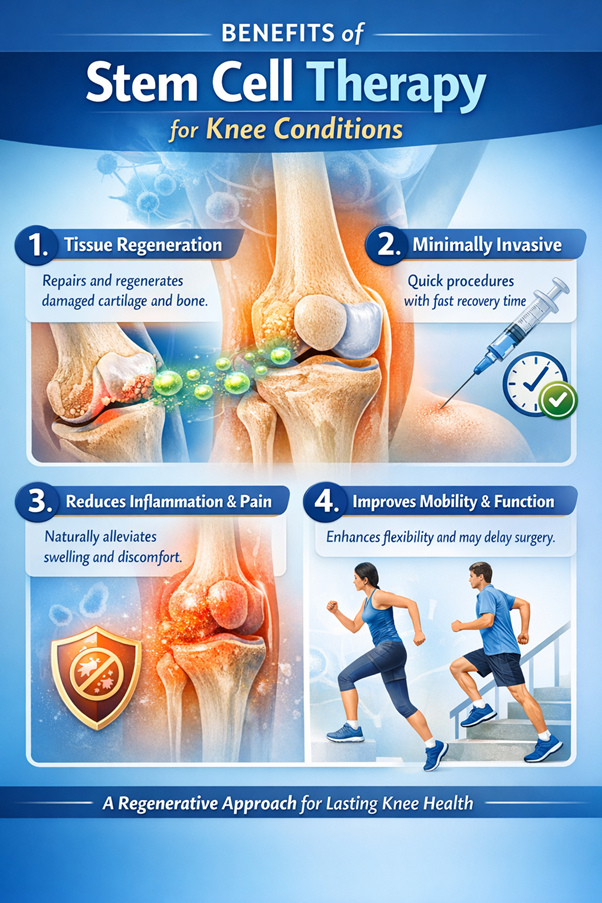
First, it focuses on repairing and regenerating damaged tissues rather than merely masking pain. This regenerative strategy addresses the underlying causes of joint deterioration.
Second, many stem cell procedures are minimally invasive and require little recovery time. Patients can often return to daily activities much sooner than they would after major orthopedic surgery.
Third, the anti-inflammatory properties of stem cells can help relieve swelling and discomfort naturally, potentially reducing the need for long-term medication.
In addition, by improving cartilage health and strengthening the joint structure, the therapy may enhance flexibility, endurance, and overall function. For some individuals—particularly those with early or moderate degeneration—stem cell therapy may delay or reduce the need for knee replacement surgery.
Thailand’s Role in Regenerative Knee Care
Thailand has become a prominent hub for regenerative medicine in Asia. The country offers modern medical infrastructure, highly trained specialists, and laboratories that follow international standards for cell processing and safety. Stem cells used for therapy are ethically obtained from donated umbilical cords after childbirth, with strict quality control measures in place.
Many Thai medical centers integrate stem cell treatments with rehabilitation programs such as physiotherapy, strengthening exercises, and lifestyle guidance. This comprehensive approach helps patients maximize the benefits of regenerative therapy and achieve longer-lasting improvements in joint function.
Conclusion
Umbilical cord–derived mesenchymal stem cell therapy represents a significant advancement in the treatment of knee cartilage and bone disorders. By utilizing the body’s natural regenerative potential, this innovative approach seeks to repair damaged tissues, reduce inflammation, and restore joint performance. Instead of simply relieving symptoms, stem cell therapy targets the biological causes of joint degeneration.
For individuals suffering from chronic knee pain or early stages of osteoarthritis, regenerative treatment may offer a promising alternative to conventional therapies and invasive surgery. With its expanding expertise in biotechnology and regenerative medicine, Thailand continues to play an important role in providing advanced stem cell therapies that support joint healing and help patients regain a more active, pain-free life.