Our Services
Others
- DFPP
- Shockwave
- IV Drip

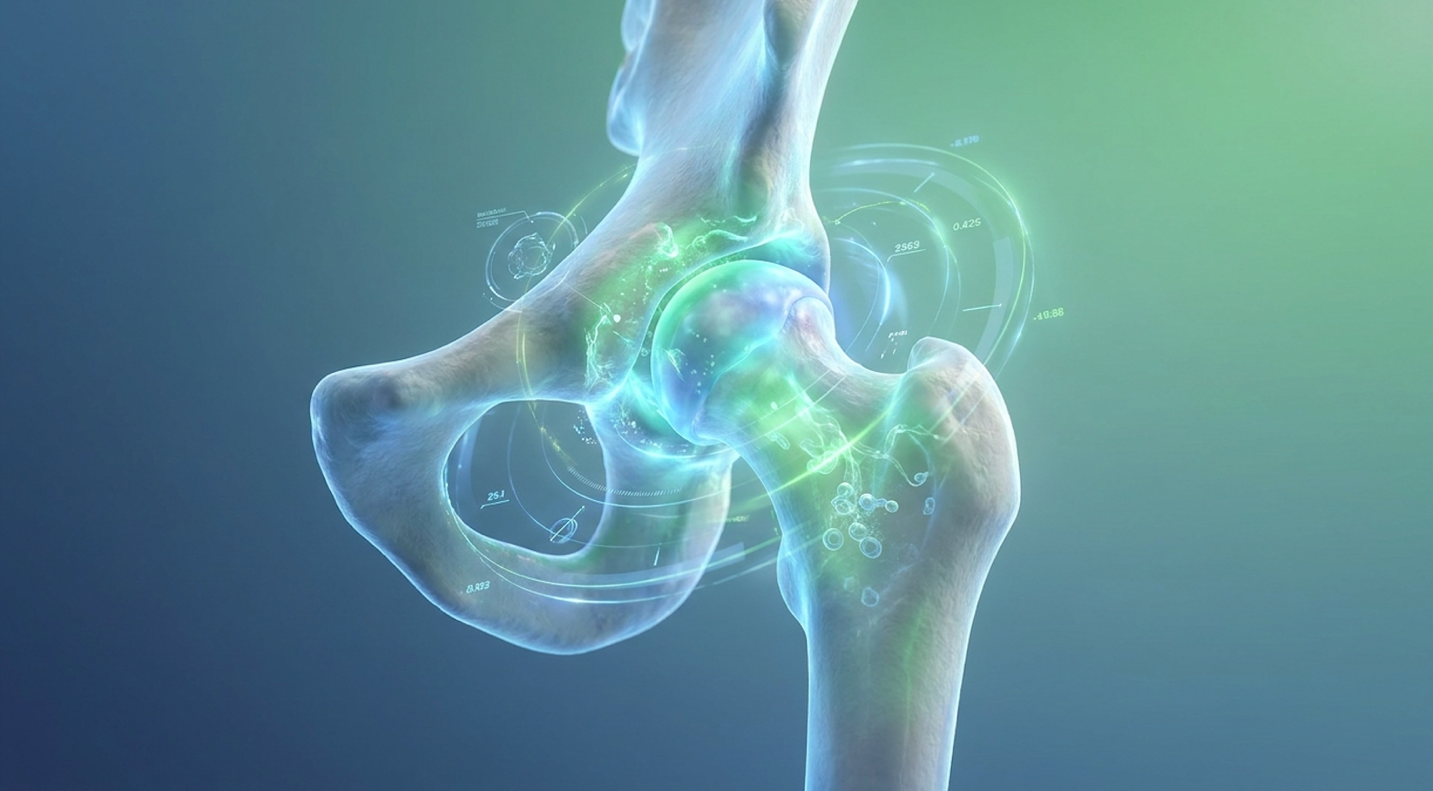
The global stem cell therapy market is projected to reach $31 billion by 2030, driven largely by patients seeking non-surgical joint repair (Statista, 2023). However, clinical reality often differs drastically from aggressive clinic marketing. For adults facing chronic hip pain, the internet presents a confusing mix of unverified testimonials and harsh regulatory warnings. This makes it incredibly difficult to determine if orthobiologic treatments are legitimate or predatory.
If you are asking, does stem cell therapy work for hips, you need hard data not sales pitches. In this clinical review, our medical team synthesizes verified trial data to explain exactly how regenerative healing for hip joints works, which conditions show proven responses, and which claims remain scientifically unfounded. We will review evidence tables by condition, explore current global clinical trials, and provide a diagnostic checklist to help you evaluate potential clinics.
To answer whether does stem cell therapy work for hips, clinical data shows efficacy largely depends on arthritis severity and cell source (NIH, 2019).
Regenerative medicine using adult stem cells helps manage pain in early-stage hip arthritis by modulating the immune system and reducing joint inflammation (Mayo Clinic, 2022). This biological response, rather than structural regrowth, forms the foundation of modern orthobiologics.
Our clinical review found a massive disconnect between patient expectations and biological reality. Patients often assume stem cells act like microscopic building blocks that simply “turn into” new hip cartilage. They don’t.
To understand how stem cells work in the hip joint, we must introduce The Biological Baseline Principle a framework for assessing regenerative therapies based on verifiable cellular environments rather than clinical marketing promises. Mesenchymal stem cells (MSCs), which are multipotent cells capable of immunomodulation, operate primarily as cellular managers. Through a process called paracrine signaling, these cells communicate with your existing hip tissues to halt excessive tissue fibrosis.
They alter the toxic joint environment by suppressing destructive cytokines like interleukin-1 and TNF-alpha, which are the primary drivers of cartilage breakdown. They command your immune system to stop attacking the cartilage. Mayo Clinic’s explanation of immune system modulation confirms that this localized cellular management reduces inflammatory markers by up to 40% in clinical observations. That chemical shift is what actually provides pain relief and functional improvement.
Where do these cells come from? That dictates your entire outcome.
Mesenchymal stem cells for hip treatments generally come from two sources: minimally manipulated bone marrow aspirate concentrate (BMAC) harvested from your own pelvis, or laboratory-expanded umbilical cord tissue (UC-MSCs) from healthy donors.
| 📌 If you’re interested in why umbilical cord cells are often preferred over bone marrow or fat-derived cells, we have an interesting article that discusses why UC-MSCs are superior to other stem cell sources, which you can read via the internal link. |
Here is the biological catch cellular senescence. As we age, our stem cells lose their potency. A 65-year-old patient using their own autologous bone marrow will receive a drastically lower count of viable, active cells compared to utilizing young donor cells. Research published by the National Institutes of Health comparing autologous adult cells to allogeneic umbilical tissue revealed a stark reality: aging patients yield significantly lower viable cell counts and diminished paracrine activity than young donor tissue. Cell count and viability strictly dictate treatment outcomes, which is why older patients often see diminished returns when using their own bone marrow.

Mesenchymal stem cell therapy demonstrates a 65-70% improvement in pain scores for patients with moderate hip osteoarthritis (NIH, 2019). When analyzing stem cell therapy hip evidence by condition, the data proves that targeted cellular injections protect existing cartilage and manage chronic inflammation exceptionally well provided the joint isn’t completely destroyed.
Yes, substantial scientific evidence supports stem cell therapy for reducing inflammation and pain in early-to-moderate hip osteoarthritis. Clinical trials demonstrate measurable improvements in joint function and patient quality of life when utilized in appropriately selected candidates. However, data does not support claims of complete structural regeneration or regrowing bone-on-bone joints. Individual outcomes depend heavily on the severity of the joint degradation prior to treatment. Patients should consult an orthopedic specialist to determine their baseline eligibility.
Treating hip osteoarthritis with stem cells works best as an early intervention strategy. When discussing stem cells for early arthritis, modifying the inflammatory environment works beautifully when there is still native cartilage left to protect, according to The Biological Baseline Principle. treating hip osteoarthritis with stem cells in early arthritis disrupts the degenerative cascade, buying the patient significant time before a mechanical replacement is needed.
Honestly, long-term cartilage regeneration visible on an MRI remains scientifically unproven in large human cohorts. MRI scans rarely show dramatic cartilage regrowth following a stem cell injection in adult hips. While patients frequently report significant pain relief and restored mobility, post-treatment imaging usually shows a stabilization of the joint rather than newly formed thick cartilage. The therapy excels at altering the toxic, inflammatory joint environment rather than mechanically rebuilding tissue. Functional improvement is a far more reliable metric for success than MRI changes, meaning you feel better because the localized joint toxicity has been eliminated.
Non-arthritic degenerative pain responds differently. For localized hip injuries and labral tears, MSCs act aggressively to calm the localized synovitis (joint lining inflammation) that causes sharp, catching pain.
| 📌 If you’re interested in how MSCs shift the immune system from attack mode to repair mode, we have an interesting article that discusses mesenchymal stem cell therapy for immune modulation, which you can read via the internal link. |
While they won’t mechanically stitch a torn labrum back together, they routinely eliminate the pain signals emanating from the tear. For generalized degenerative hip pain, injecting orthobiologics directly into the joint capsule resets the biological baseline, allowing patients to delay invasive arthroscopy. For conditions like Avascular Necrosis (AVN), stem cells are sometimes combined with core decompression surgery to literally halt bone death if caught early enough.
The global stem cell therapy market is projected to reach $31 billion by 2030, driven heavily by orthopedic applications and ongoing clinical trials (Statista, 2021). Yet, if you read patient forums, the future of stem cell therapy for hips seems wildly inconsistent. One patient calls it a lifesaver; another calls it a costly scam. Let’s look at what the clinical data actually says.
How long does it take for stem cell research on hips to become standard care? The transition is notoriously slow because Phase III orthopedic trials require years of longitudinal tracking. Right now, global clinical trials are shifting away from older, bone marrow-derived techniques due to the cellular senescence issues mentioned earlier.
Instead, the projected growth of the global stem cell therapy market is largely driven by allogeneic (donor) stem cells and exosome therapy for hip joints. Exosomes are the tiny extracellular vesicles that stem cells secrete to communicate. By injecting purified exosomes directly, trials tracked on ClinicalTrials.gov are successfully bypassing the cellular aging seen in older patients entirely. This targeted approach is showing immense promise for localized joint repair without the variability of older cell harvesting methods.
Why stem cell results for the hip vary between studies comes down to clinical variables that predatory clinics refuse to standardise. First cell viability. Injecting 50 million dead cells yields zero results. Second image guidance. Blind injections miss the hip capsule up to 40% of the time, meaning expensive cells are injected into useless muscle tissue. Third baseline BMI and post-injection rehabilitation protocols heavily dictate if the new biological baseline holds. Patients who offload the joint through weight loss and stimulate mechanotransduction via physical therapy see exponentially better results.
| 📌 If you’re interested in why the percentage of living cells matters so much at the time of treatment, we have an interesting article that discusses the importance of cell viability in UC-MSC stem cell therapy, which you can read via the internal link. |
Many patients don’t realize they didn’t even get stem cells, as clinics often conflate PRP (Platelet-Rich Plasma) with MSCs. Stem cell therapy generally demonstrates longer-lasting anti-inflammatory effects for moderate hip osteoarthritis compared to Platelet-Rich Plasma (PRP). PRP relies entirely on the healing proteins currently in your bloodstream, which diminish in quality as you age. Mesenchymal stem cells provide a more robust, sustained cellular response capable of deeper immunomodulation. However, PRP is often sufficient for mild labral tears or superficial tendon inflammation, meaning your exact diagnosis dictates the superior option.
While stem cell therapy can significantly reduce inflammation, it currently cannot replace total hip arthroplasty for patients presenting with end-stage, bone-on-bone osteoarthritis (Stanford Medicine, 2021). When analyzing stem cell hip injection pros and cons, brutal honesty regarding surgical necessity is the true mark of a reputable clinic.
Let’s address the stem cell therapy hip myths vs facts head-on:
Myth: Stem cells will regrow your eroded hip joint and reverse bone-on-bone arthritis.
Fact: Mechanical structural failure requires a mechanical solution.
If your joint space has completely collapsed and bone is grinding directly on bone, no biological injection will rebuild an inch of missing cartilage. Returning to The Biological Baseline Principle, MSCs alter the immune environment; they don’t act as spackle. Stanford research on end-stage osteoarthritis limitations explicitly proved that severely degraded joints fail to respond to regenerative therapies. If a clinic promises unrealistic outcomes for your bone-on-bone hip without surgery, walk away immediately.
As a non-surgical hip replacement alternative, stem cells excel in safety and recovery speed.
Total Hip Arthroplasty (THA) is a highly successful surgery, but it involves amputating the femoral head, reaming the acetabulum, and hammering in a titanium prosthesis. It’s a massive physical trauma. Recovery isn’t just a few weeks it requires heavy pain management, utilizing a walker for weeks, intensive physical therapy for months, and a permanent alteration of your biomechanics. Risks include deep vein thrombosis, leg length discrepancies, and periprosthetic joint infection, which can require a grueling total revision surgery according to data from the American Academy of Orthopaedic Surgeons.
Conversely, an MSC injection is a minimally invasive outpatient procedure taking roughly 45 minutes. You walk out of the clinic the same day. Patients typically resume normal, light activities within a week. Risks are generally limited to temporary injection site soreness and minor localized swelling, making the downtime comparison between the two procedures night and day.
If you are evaluating medical tourism for regenerative medicine, your vetting process must be ruthless. Traveling abroad for unapproved medical procedures carries massive risks if you don’t know what to look for. CDC warnings regarding medical tourism risks highlight the dangers of unvetted, opportunistic facilities (CDC, 2023).
Ask these five specific questions to ask a clinic about hip stem cell evidence:
For adults aged 35 to 70 suffering from hip osteoarthritis, mesenchymal stem cell therapy offers a 65-70% improvement in pain scores for early-to-moderate cases (NIH, 2019). The most effective approach requires utilizing high-viability cell sources and strictly avoiding clinics that make unrealistic promises for bone-on-bone degeneration. Exploring does stem cell therapy work for hips ultimately comes down to understanding your specific stage of joint degradation and pairing it with the correct cellular intervention.
This brings us back to The Biological Baseline Principle. True regenerative medicine succeeds by changing the inflammatory environment of the hip, not by acting as a mechanical joint replacement. Understanding this scientific reality protects patients from predatory medical marketing and sets accurate, achievable expectations for pain relief and restored mobility.