

- Introduction
Autism spectrum disorder (ASD) is a complex neurodevelopmental disorder characterized by difficulties with communication, behavior, and social interaction. For many families, autism is not just about developmental delay; but also long-term care, daily struggles and quality of life.
Conventional approaches behavioral therapy, speech therapy and educational interventions are also crucial. These are just functions, however, and those processes must occur in biology particularly when human beings play a role. While this is an emerging area of focus, interest in natural cellular regenerative approaches to autism research (in the larger context of regenerative medicine) has grown in recent years. These strategies attempt to harmonize the internal environment within the brain, specifically at all levels of inflammation, cellular communication, and neurobiological balance.
Instead of trying to “replace” brain cells, this new way of thinking investigates how the body’s own systems might be assisted at a cellular level.
Biological Mechanisms in Autism
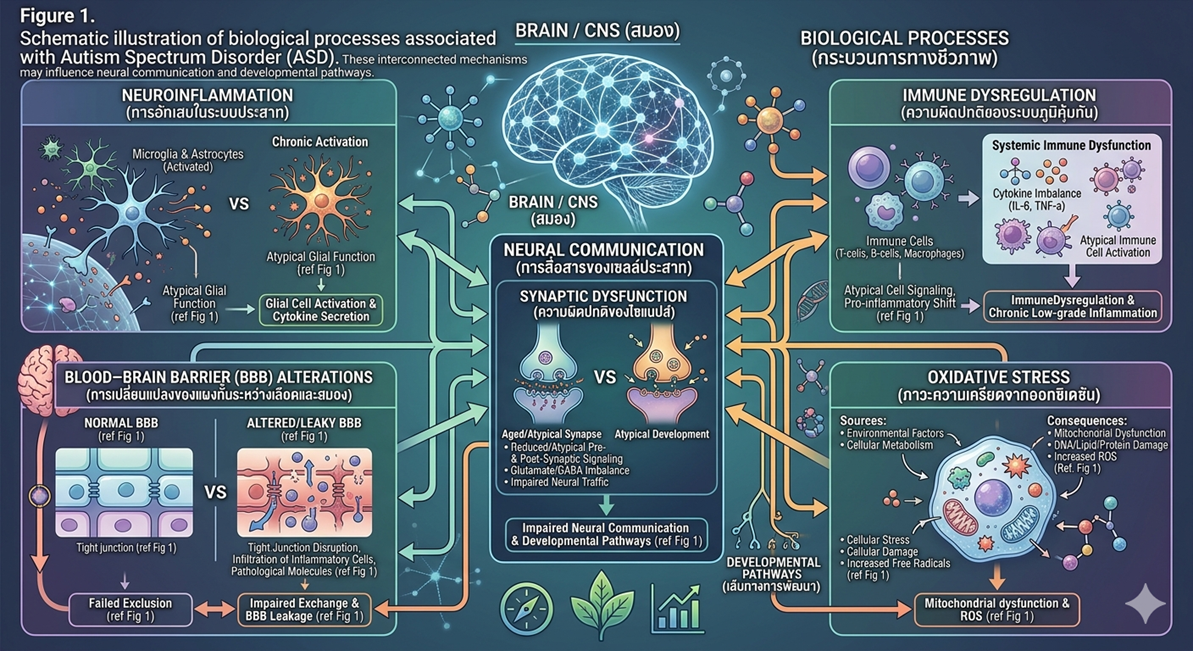
It is not a single thing that leads to the development of autism. Instead, research indicates multiple biological systems might play a role.
Key mechanisms include:
- Neuroinflammation: High inflammatory signals in the brain could impair neural communication
- Immune dysregulation: Dysregulated immune responses may play a role in neurodevelopment.
- Oxidation: Changes in oxidative stress may affect neuronal processing
- Synaptic dysfunction: Modified connectivity between neurons could disturb learning and behavior
- Changes in blood–brain barrier: May permit peripheral inflammatory signals to affect brain
These processes interact in complex ways to lead to the variability seen in autism. For many patients, that means autism is not just neurological but systemic and biological.
- Limitations of Conventional Approaches
Standard autism management focuses on behavioral and supportive therapies.
Common approaches include:
- Behavioral intervention programs
- Speech and occupational therapy
- Educational support
- Medications for specific symptoms
While these approaches are important, they have limitations:
- They do not directly target biological mechanisms
- Progress may vary between individuals
- Some symptoms may persist despite therapy
- Long-term outcomes can remain unpredictable
These challenges have led to interest in complementary strategies that support the body at a deeper biological level.
- Cellular Mechanisms of Natural Regeneration
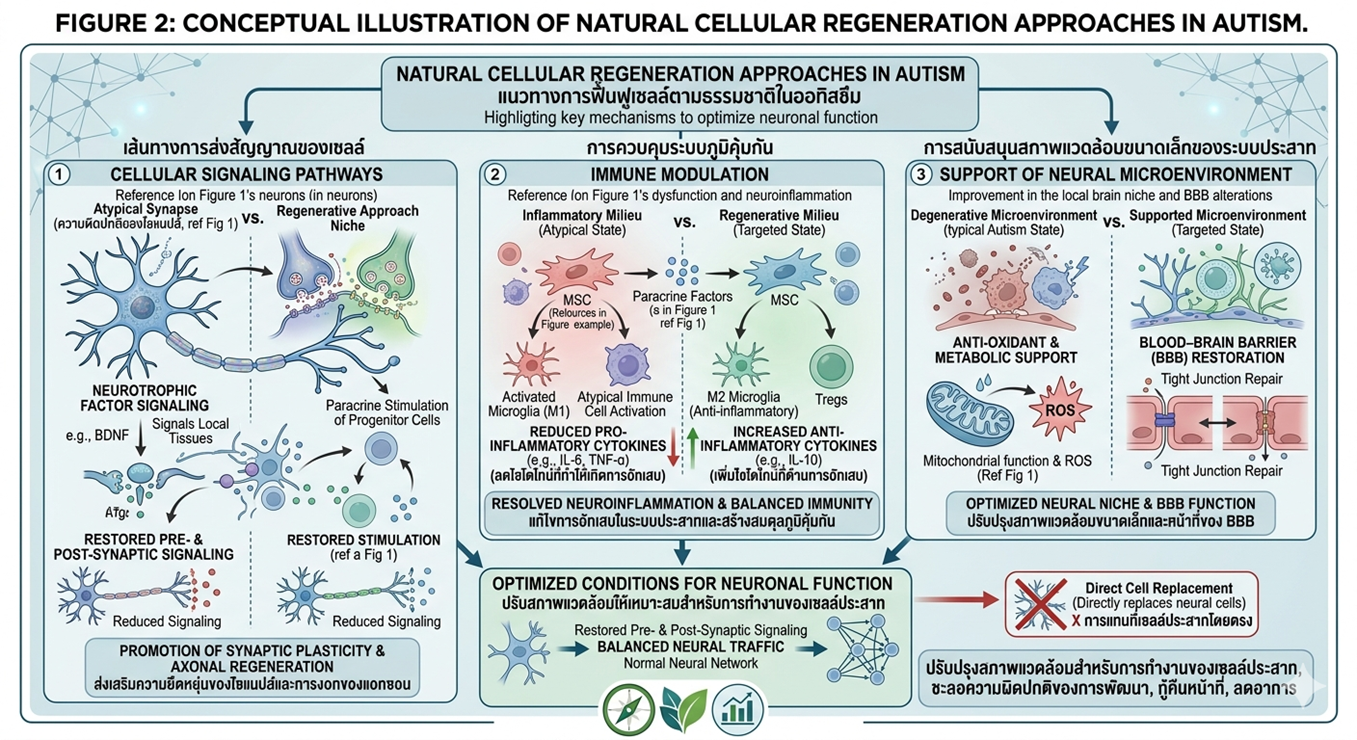
Natural cellular regeneration focuses on supporting the body’s ability to regulate and maintain balance.
One area of interest involves cellular signaling, particularly through mesenchymal stem cells (MSCs), including umbilical cord–derived MSCs (UC-MSCs).
These cells are studied not for becoming neurons, but for their ability to release bioactive signals.
Proposed mechanisms include:
- Immunomodulation: helping regulate immune activity
- Anti-inflammatory effects: reducing excessive inflammatory signaling
- Cellular communication: supporting signaling between cells
- Neuro-supportive environment: promoting conditions favorable for brain function
- Reduction of oxidative stress: helping limit cellular damage
These processes are mediated through signaling molecules such as growth factors, cytokines, and extracellular vesicles.
Importantly, these approaches aim to support the environment in which brain cells function, rather than directly altering brain structure.
Conclusion
Autism Spectrum Disorder is a multifactorial condition involving both neurological and systemic processes. While traditional therapies remain essential, they do not fully address underlying biological mechanisms. Natural cellular regeneration approaches in autism represent an emerging field focused on supporting inflammation balance, cellular communication, and the neural environment. Although these approaches remain investigational and outcomes may vary, they reflect a broader shift toward more biologically informed and integrative care strategies.
For many families, the goal is not perfection but progress, stability, and improved quality of life.