Our Services
Others
- DFPP
- Shockwave
- IV Drip

For decades, the conversation around aging focused obsessively on extending the chronological clock. Today, advanced clinical research has shifted the focus toward functional longevity. When evaluating stem cell therapy for cellular regeneration, the conversation fundamentally changes from aesthetics to raw biological mechanics. Standard clinical assessments frequently reveal that patients present at clinics expecting magic erasers for their age, completely misunderstanding the rigorous science of tissue repair. We aren’t talking about spa treatments here. The clinical reality centers on the complex signaling networks that dictate how the body repairs cumulative biological wear.
Cellular regeneration is the body’s process of replacing damaged tissue, which naturally slows as stem cell reserves deplete. Stem cell therapy for cellular regeneration may support this process through molecular signaling, with the strict aim of improving healthspan (years of healthy function), not extending lifespan.
In this guide, we bypass the marketing noise. We’ll examine the exact biological mechanics of mesenchymal stromal cells, look at hard data from current clinical trials including the 2026 Longeveron frailty data and outline strict eligibility requirements. Let’s look at what the science actually says.
Age-related decline in cellular regeneration occurs because our native stem cell pools deplete and lose functional efficiency over time. This chronic biological degradation outpaces the body’s natural repair mechanisms, leading to tissue breakdown, delayed healing, and systemic functional loss as we get older. Understanding this decline requires looking closely at the microscopic environment that dictates local tissue health.
As we age, the raw materials required for structural repair become scarce. Native stem cell reserves decline significantly with age, reducing the body’s ability to maintain tissue homeostasis and repair cumulative damage (NCBI, 2026). You cannot simply command the body to heal if the cellular labor force no longer exists. Think of your tissues as a bustling city infrastructure. In a younger biological system, damage to the infrastructure is met instantly by a massive, highly efficient crew of repair cells. By the sixth decade of life, that local repair crew is operating with a fraction of its original personnel, causing minor damage to compound over time.
This wear manifests biologically at a microscopic level long before physical symptoms appear in the joints or the skin. Progenitor cells the specialized descendants of stem cells that differentiate to create specific tissue types gradually lose their proliferative capacity. DNA damage inevitably accumulates within the cellular matrix. The extreme loss of tissue elasticity, uneven vascular tone, and delayed healing times are simply outward symptoms of this internal cellular exhaustion. Ultimately, the local microvasculature that supplies oxygen and nutrients to tissues physically degrades, essentially starving the surrounding matrix.
We see this most prominently in capillary rarefaction. As you age, the total surface area of your capillary beds physically shrinks. The endothelial cells lining these microscopic vessels undergo cellular senescence, meaning they stop dividing and lose their structural integrity. When a younger tissue is starved of oxygen (hypoxia), it triggers specific proteins to rapidly build new blood vessels. But in an aging body, this vital trigger is severely blunted.
Cellular regeneration mechanics rely on a robust population of native progenitor cells to maintain tissue integrity. By late adulthood, marrow-derived stem cell reserves decline by over 50%, fundamentally limiting the structural materials available for deep tissue repair. This systemic cellular exhaustion explains why minor soft tissue injuries take significantly longer to heal in older populations. The primary driver of this exhaustion is chronic oxidative stress.
| 📌 If you’re interested in why umbilical cord cells are often preferred over bone marrow or fat-derived cells, we have an interesting article that discusses why UC-MSCs are superior to other stem cell sources, which you can read via the internal link. |
Over decades, cells accumulate reactive oxygen species (ROS) highly reactive chemicals formed from the natural metabolization of oxygen. While manageable in youth, elevated ROS levels in aging bodies actively degrade mitochondrial membranes. Mitochondria are the powerhouses required for cellular synthesis and repair. When their membranes are compromised, the cell is stripped of its energy, forcing it into a dormant state that prevents effective tissue regeneration.
The body’s native repair system eventually hits a hard biological ceiling. In a younger system, local immune microenvironments quickly switch from a pro-inflammatory state (which cleans up cellular debris) to an anti-inflammatory, tissue-repairing state. But with age, this critical immune switch gets stuck in the inflammatory phase. Clinical observation confirms that persistent inflammation severely blunts the body’s intrinsic healing response.
Chronic exposure to internal and external stressors creates a localized environment flooded with inflammatory cytokines. This localized microenvironment becomes intensely hostile to new cell growth. For a deeper look into how immune function directly impacts tissue breakdown, you can review comprehensive resources on the scientific approach to systemic aging. Standard clinical protocols show that a simple tendon injury in a 65-year-old takes four times longer to heal than it does in a 25-year-old because the local environment is simply too toxic, too inflamed, and too depleted of functional stem cells to facilitate rapid regeneration.
Stem cells support cellular regeneration not by physically turning into new tissue, but by secreting powerful signaling molecules that command your body’s dormant cells to wake up and begin repairing local damage. This is a subtle but massive distinction in modern regenerative medicine.
Clinical assessments frequently reveal that patients assume infused stem cells travel to a damaged knee and magically transform into fresh cartilage. This is a fundamental misunderstanding of the biology. We need to look at this through The Paracrine Healthspan Framework. This concept dictates that infused cells act as molecular directors rather than replacement building blocks, orchestrating a complex systemic repair response.
Mesenchymal stromal cells function primarily through paracrine signaling, secreting bioactive molecules that stimulate the patient’s own dermal fibroblasts and local endothelial cells (NIH, 2026). When umbilical cord-derived mesenchymal stromal cells (UC-MSCs) are introduced via intravenous infusion or localized injection, they release a massive payload of bioactive molecules called a secretome. This highly complex secretome is packed with epidermal growth factors, basic fibroblast growth factors, and hepatocyte growth factors.
These molecules bind directly to specific receptors on the surface of the patient’s quiescent (dormant) fibroblasts. Once biochemically stimulated, these native fibroblasts aggressively ramp up the synthesis of vital extracellular matrix proteins specifically collagen type I, fibronectin, and elastin (NIH research, 2026). The therapy relies entirely on the patient’s existing cellular infrastructure to execute the actual repair work.
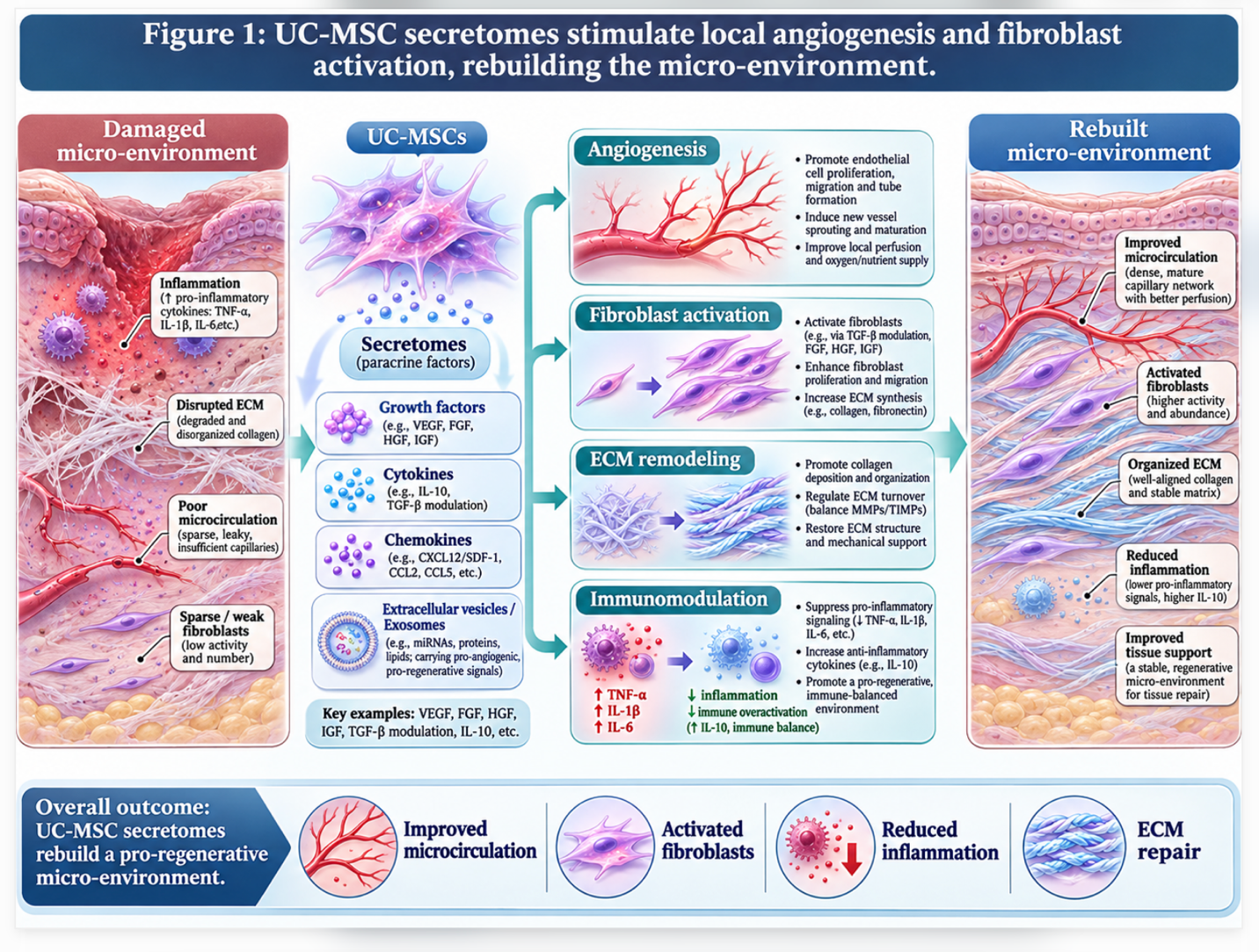
Figure 1: UC-MSC secretomes stimulate local angiogenesis and fibroblast activation, rebuilding the micro-environment.
Simultaneously, vascular endothelial growth factor (VEGF) released from the secretome binds directly to a highly specific receptor (VEGFR-2) located on the surface of local endothelial cells. This precise binding activates the ERK MAPK signaling pathway.
This isn’t just a generic “healing” process. The ERK MAPK pathway triggers a precise biochemical kinase cascade that forces the endothelial cell to survive, migrate, and actively form tube-like structures. This process is called angiogenesis the physical formation of new microscopic blood vessels. Without this specific kinase cascade, angiogenesis fails completely. This newly developed microvasculature actively flushes the damaged area with oxygen and vital nutrients, fundamentally altering the tissue’s biological capacity to heal itself.
By improving microcirculation at the capillary level, the tissue is no longer starved of the basic resources required for cellular synthesis. This vascular enhancement is precisely why clinical outcomes often show systemic improvements in energy and localized healing, even in tissue beds far from the original site of injury.
One of the most persistent myths encountered in clinical practice is the idea that infused stem cells take up permanent residence in the body. They absolutely do not.
Infused UC-MSCs are typically cleared by the patient’s immune system within days to a few weeks. Their true biological value lies in the “hit and run” effect. Before they are cleared from the system, these infused cells initiate a massive, lasting cascade of molecular signals. One of their most critical functions is macrophage reprogramming forcing local immune cells to physically switch from a destructive, pro-inflammatory M1 phenotype to a tissue-repairing, anti-inflammatory M2 phenotype. Even after the infused stem cells are entirely gone, the biological environment they fundamentally altered continues to repair tissue for months. The cells are temporary biological visitors; the systemic upgrade they leave behind is what drives actual long-term cellular regeneration.
| 📌 If you’re interested in how MSCs shift the immune system from attack mode to repair mode, we have an interesting article that discusses mesenchymal stem cell therapy for immune modulation, which you can read via the internal link. |
True cellular regeneration is the structural, biological repair of damaged tissue driven by complex molecular signaling and improved microcirculation, whereas rejuvenation is typically a superficial cosmetic concept marketed heavily by the wellness industry.
If you want to understand how stem cells support cellular regeneration, you have to look closely at biological timelines. Regeneration is hard, metabolically expensive work. It requires massive amounts of raw materials, cellular energy (ATP), and precise biochemical instructions. It involves physically enhancing local blood microcirculation, delivering vital nutrients to previously starved tissues, and completely remodeling the local immune microenvironment from the ground up.
Mesenchymal stromal cell protocols initiate complex biological cascades that require substantial time to physically rebuild tissue architecture. Current clinical literature published in Nature Aging confirms that true tissue remodeling requires a minimum of six months to demonstrate quantifiable changes in local matrix density. When a patient undergoes a legitimate regenerative protocol, specialists track specific systemic inflammatory markers, monitor tissue density changes via imaging, and measure functional mobility outcomes over three to four quarters. It is the systemic, structural repair of the body’s foundational architecture, completely distinct from quick aesthetic fixes.
Because this is an intense biological building process, the timeline cannot be artificially rushed. During the first thirty days post-infusion, the primary biological action is entirely dedicated to cleanup. The cells dictate immune modulation and the reduction of systemic inflammation via the M1 to M2 macrophage shift. Patients may notice a drop in generalized pain, but actual tissue repair has barely begun.
Months two through six are defined by active angiogenesis and extracellular matrix synthesis. This is when the fibroblasts are working overtime to lay down new pro-collagen and elastin fibers. Finally, months six through nine involve tissue maturation and cross-linking. Enzymes like lysyl oxidase must physically cross-link the newly built collagen fibers so they gain their permanent tensile strength. This is exactly why you don’t feel “cured” in a week.
The spa and wellness industry has heavily co-opted the language of cellular rejuvenation therapy, muddying the clinical waters for patients seeking serious medical care. Rejuvenation, in the commercial sense, usually refers to aesthetic masking dermal fillers, chemical peels, or superficial laser treatments. These commercial modalities make tissue look younger by inducing localized swelling or masking visible deficits, but they do absolutely nothing to repair the underlying cellular degradation.
Let’s be unequivocally clear about what UC-MSCs cannot do. Stem cell therapies do not “generate new immune cells” out of thin air. They do not “activate telomerase” to magically stop your DNA from chronologically aging. Any clinic claiming their unregulated IV drips will permanently stop the clock is selling complete biological fiction. The explicit goal of stem cell therapy is to optimize the living tissue you currently have by temporarily restoring the chemical signaling pathways your body lost over time. It is a profound biological assist, not a time machine. The ultimate success of any regenerative protocol lies not in the infusion itself, but in realistic clinical expectations.
Before and after regenerative treatment, patients often want a single, easily digestible number to prove the expensive therapy worked. Biological age testing specifically epigenetic clocks like the Horvath clock or GrimAge has become incredibly popular in longevity circles. These commercial tests meticulously analyze DNA methylation patterns to mathematically estimate how fast your cells are aging at a molecular level compared to your chronological age.
While epigenetic testing offers highly interesting biomarker data, it is absolutely not the gold standard for measuring clinical success in regenerative medicine. Epigenetic clocks measure molecular noise, but they do not prove that you can physically lift your grandchildren or walk up a flight of stairs without severe joint pain. True therapeutic results are measured strictly through hard functional metrics.
Clinical protocols demand we look at C-reactive protein levels (measuring systemic inflammation), VO2 max, clinical joint mobility assessments, and standardized physical mobility tests. If a biological age test claims you are five years younger, but you haven’t improved your 6-minute walk distance, the therapy failed its primary clinical objective. Biological age testing before and after stem cell therapy should always be viewed as a secondary, supporting indicator, validating the tangible functional improvements we track in the clinic.
Advanced regenerative protocols utilize the secretomes of mesenchymal stromal cells to target severe neurodegenerative decline and chronic tissue damage through highly specialized molecular pathways.
When clinical focus moves from general aging frailty to specific, severe tissue damage, the underlying biology becomes exponentially more complex. Researchers are looking closely at how stem cell paracrine signaling directly interacts with the SIRT1 pathway. SIRT1 acts as a NAD-dependent deacetylase a highly critical protein that physically removes acetyl groups from other proteins, protecting cells from severe oxidative stress and rigorously regulating mitochondrial biogenesis.
By chemically activating this specific pathway, the signaling molecules from UC-MSCs can actively mitigate the excessive activation of dermal myofibroblasts, which is the primary biological driver of pathological, restrictive tissue scarring.
Furthermore, compelling clinical data is emerging regarding exosomes—the tiny, lipid-bound vesicles naturally secreted by stem cells. Exosomes are essentially biological mail carriers, typically 30 to 150 nanometers in size. They act as highly targeted molecular delivery systems, carrying vital mRNA and specialized proteins directly across stubborn biological barriers, specifically including the notoriously strict blood-brain barrier.
Because they are wrapped in a protective lipid bilayer, they easily cross into neural environments, completely bypassing the massive systemic inflammation that usually halts the natural healing process. In clinical cases of severe chronic tissue wear, these specialized exosomes deliver the exact molecular blueprints that native cells desperately need to begin the slow process of localized repair.
We must directly address the elephant in the room: advanced neurodegenerative diseases. Patients frequently ask if advanced stem cell protocols can rapidly repair the profound neural damage associated with Parkinson’s and Alzheimer’s.
The honest, evidence-based clinical answer requires extreme caution and managed expectations. Current medical applications for these severe conditions are strictly investigational. We frame this entirely as treatment exploration. Paracrine signaling and targeted exosome delivery may help support neural environments by aggressively reducing neuroinflammation and actively protecting surviving neurons from further oxidative toxicity.
However, they do not cure these devastating conditions, nor do they magically regrow already dead neural tissue. Patients actively exploring stem cell therapy for advanced chronic conditions must do so exclusively under highly selective clinical trial protocols or strictly regulated medical oversight, fully understanding the profound limitations of the current science.
A legitimate cellular regeneration therapy program in Thailand combines rigorous, internationally accredited laboratory cell culturing with stringent medical protocols to ensure cell viability and maximum patient safety.
For patients looking internationally, a cellular regeneration program in Thailand offers targeted access to advanced UC-MSC protocols that may be heavily restricted elsewhere. However, selecting a program is absolutely not about choosing a luxury medical vacation; it requires ruthlessly evaluating the clinical standards of the destination. Patients should prioritize facilities that completely separate tourism from their core medical protocols.
The critical biological differentiator of a high-tier program such as those actively utilizing Vega laboratory protocols is the strict internal control of the cell culture process. Authentic cellular regeneration fundamentally requires strict Good Manufacturing Practice (GMP) lab standards. In a proper Vega-standard clinical lab, UC-MSCs are cultured in a tightly controlled, highly sterile environment specifically designed to maintain their undifferentiated state and actively maximize their paracrine secretome potential.
The standard clinical program includes rigorous quality control testing for raw cell viability, dangerous endotoxins, and mycoplasma long before any physical infusion occurs. You aren’t just getting a generic IV bag; you are receiving a highly engineered biological product that has been rigorously tested for precise molecular efficacy. This intense level of laboratory integration is exactly what separates legitimate clinical medicine from unregulated, highly dangerous offshore clinics. Ensuring brand proximity to GMP standards guarantees higher clinical success rates.
| 📌 If you’re interested in why the percentage of living cells matters so much at the time of treatment, we have an interesting article that discusses the importance of cell viability in UC-MSC stem cell therapy, which you can read via the internal link. |
Not everyone is a viable candidate for these immensely powerful biological signaling therapies. Patient safety requires incredibly strict exclusion criteria. Individuals with active cancer or a recent medical history of specific malignancies should not have cellular regeneration therapy under any circumstances. Because MSC secretomes actively secrete growth factors and heavily promote new blood vessel formation (angiogenesis), there is a significant theoretical risk that they could inadvertently support dormant tumor growth by providing it with a fresh blood supply.
Additionally, patients with severe, active systemic infections or those currently in the middle of a severe autoimmune crisis are strictly contraindicated. The body’s immune system must be stable enough to respond to the paracrine signals appropriately rather than attacking the infused cells. Finally, individuals seeking a guaranteed medical cure for terminal diseases must be ethically turned away.
Stem cell therapy requires the active, daily synergy of lifestyle habits—including deep sleep architecture, anti-inflammatory nutrition, and mechanical load—to sustain the biological repair process initiated by the cellular infusion.
Let’s get one biological reality straight: you cannot simply out-infuse a highly toxic lifestyle. Stem cell therapy is absolutely not a standalone medical fix. If you invest heavily in advanced regenerative medicine but continue to subject your body to chronic, unmanaged systemic stress, you are effectively throwing a bucket of water onto a raging biological fire.
To fully maximize the hit-and-run signaling of the infused MSCs, you must actively support the body’s native repair mechanisms daily. The therapy alters the environment, but your lifestyle dictates whether that new environment survives.
This biological synergy begins with strict sleep architecture. Deep, slow-wave sleep is the exact physiological window when the body naturally releases vital human growth hormone and aggressively clears metabolic waste from neural tissues. The brain literally shrinks slightly during this phase to allow cerebrospinal fluid to wash away toxic proteins. If you continuously disrupt this critical biological cycle with late-night alcohol consumption or chronic psychological stress, you severely stunt the regenerative cascade initiated by the stem cells.
Daily nutrition plays a highly direct role in maintaining the essential macrophage shift we discussed earlier. An anti-inflammatory diet rich in targeted polyphenols and powerful antioxidants actively mitigates the localized oxidative stress that damages fragile new cellular membranes.
Lastly, routine mechanical load specifically consistent resistance training—is biologically non-negotiable. Muscle and bone tissue fundamentally require physical stress to biochemically signal the absolute need for remodeling. The stem cells provide the biological capacity and raw materials for repair, but exercise physically provides the directional blueprint. Without rigorous daily habits actively supporting cellular regeneration, the expensive medical intervention will yield rapidly diminishing clinical returns.
Cellular regeneration is the biological process where the body repairs or replaces damaged and aging tissues to maintain optimal function. At a molecular level, this involves the activation of dormant fibroblasts and the synthesis of extracellular matrix proteins like collagen and elastin. Unlike superficial cosmetic changes, regeneration occurs deep within the cellular architecture over a timeline of several months. Understanding this specific process is absolutely critical for setting realistic clinical expectations for medical therapies.
Cellular regeneration slows with age primarily because the body’s native reserves of progenitor cells become depleted and lose their functional efficiency. As tissues accumulate oxidative stress and DNA damage over time, the local immune microenvironment heavily shifts from a tissue-repairing state to a pro-inflammatory state. Consequently, standard daily wear and tear drastically outpaces the body’s natural ability to heal itself.
Stem cell therapy may help improve healthspan by utilizing paracrine signaling to aggressively reduce systemic inflammation and stimulate tissue repair. Clinical evidence suggests that infused mesenchymal stromal cells can significantly enhance functional mobility and daily vitality, which are the core components of healthspan. However, these specific therapies are absolutely not a cure for underlying chronic diseases and do not guarantee an extended chronological lifespan. The effectiveness of the protocol heavily depends on the patient’s baseline health, which is why clinical assessments are mandatory.
Biological age testing, such as epigenetic clocks, is sometimes used to loosely measure cellular health before and after stem cell therapy. These specific tests meticulously analyze DNA methylation patterns to mathematically estimate how fast a body is aging at a molecular level compared to strict chronological age. While they offer highly interesting biomarker data, clinicians strongly caution that these tests do not ever replace validated functional metrics like mobility, grip strength, and localized inflammatory blood markers. If an epigenetic test shows improvement but the patient’s mobility has not changed, the clinical outcome is still considered poor. Patients should view biological age tests as secondary clinical indicators rather than definitive proof of functional clinical success.
You can support cellular regeneration naturally by adopting stringent daily habits that aggressively reduce systemic inflammation and promote tissue homeostasis. Prioritizing deep, restorative slow-wave sleep is essential, as this is precisely when the body naturally releases growth factors and clears neurological metabolic waste. A strict anti-inflammatory diet combined with daily mechanical resistance training helps safely mitigate severe oxidative stress while maintaining muscle density.
A legitimate cellular regeneration program in Thailand includes comprehensive medical screening, highly specialized laboratory cell culturing, and rigorous post-treatment monitoring. The absolute core of a safe program relies heavily on GMP-certified labs, like Vega, which rigorously culture UC-MSCs in tightly controlled environments to absolutely maximize their paracrine secretome potential. Treatment typically involves extensive pre-infusion blood panels, viability testing of the cellular product, and highly targeted delivery methods based strictly on the patient’s specific functional deficits. Reputable clinical facilities always prioritize strict clinical oversight over luxury tourism amenities, ensuring patient safety comes first.
Individuals with active cancers or a recent medical history of certain malignancies should absolutely not have cellular regeneration therapy due to the severe risk of inadvertently stimulating tumor growth through newly formed blood vessels. Patients with severe, active systemic infections or wildly uncontrolled autoimmune crises are also typically contraindicated until their overall condition heavily stabilizes. Additionally, individuals seeking a guaranteed medical cure for terminal neurological diseases are not suitable candidates, as the therapy remains highly investigational for such severe conditions.
For aging adults actively experiencing functional physical decline, stem cell therapy utilizing regulated UC-MSCs may structurally support deep tissue regeneration and measurably improve overall healthspan. Trial data clearly indicates profound improvements in functional mobility, such as a massive 63-meter increase in baseline walking distance for specifically diagnosed frailty patients. The best clinical approach heavily focuses on deep biological repair rather than superficial cosmetic marketing. We aren’t extending the chronological clock; we are attempting to vastly optimize the functional years you have remaining through highly targeted, evidence-based molecular interventions.
The Paracrine Healthspan Framework demonstrates that long-term clinical success comes entirely from the signaling molecules naturally secreted by UC-MSCs, which forcefully trigger the body’s own dormant repair mechanisms into action. The infused cells themselves do not magically become new tissue, but their massive secretomes fundamentally alter the local immune microenvironment. By forcing a harsh chemical shift from systemic, chronic inflammation to active, localized tissue repair, the aging body gains a temporary but profound biological advantage.
Want to know if a rigorous cellular regeneration program functionally fits your specific medical profile? Ask our doctor via WhatsApp, email, or the contact form to actively begin your clinical suitability assessment. A highly qualified specialist will rigorously review your medical history, frankly discuss the clinical realities of the therapy, and help you definitively determine if this advanced biological intervention properly aligns with your personal healthspan goals.