Our Services
Others
- DFPP
- Shockwave
- IV Drip

Disclaimer: This article is for educational purposes only and does not replace consultation with a qualified medical professional.
The sports medicine segment of the global stem cell therapy market approached an aggressive $2.4 billion leading into 2026, driven almost entirely by athletes refusing to accept the extended, career-threatening downtime of traditional orthopedic surgery. For advanced competitors facing complex tissue damage, going under the knife is no longer the default mechanism for repair. They are actively seeking biological solutions that keep their native joint biomechanics completely intact.
But here’s the frustrating reality for most athletes looking for a biological lifeline. The commercial proliferation of regenerative medicine has violently outpaced actual clinical understanding. Desperate athletes are routinely sold experimental procedures that lack condition-specific
This evidence-led guide deconstructs the biological realities of stem cell therapy for sports injuries, aggressively separating established tissue regeneration protocols from slick marketing campaigns. We will analyze the specific cellular mechanisms of Mesenchymal Stem Cells (MSCs), evaluate the unvarnished clinical success rates for specific joint and tendon failures, outline the unforgiving 6-month biological recovery timeline, and detail the exact costs and regulatory limitations you need to know before stepping into a clinic.
Stem cell therapy for sports injuries utilizes localized biological mechanisms to regenerate damaged cartilage, tendons, and ligaments without the destructive intrusion of invasive surgery.
Stem cell therapy for sports injuries utilizes autologous or donor-derived cellular material to actively regenerate damaged cartilage, tendons, and ligaments. Unlike surgical interventions that simply excise damaged tissue or staple it back together, this biological approach recruits local fibroblasts and alters the immune microenvironment to promote structural repair. For athletes, this represents a fundamental shift from crude mechanical stabilization to true cellular healing. Our
If you want to understand what stem cell therapy for athletes actually accomplishes, you have to look past the marketing brochures and directly into the localized cellular environment.
Let’s be intensely clear about what happens when these cells enter your body. Stem cells are not a magic biological paste that instantly patches a structural tear. They act more like general contractors coordinating a massive construction site. We are specifically talking about Mesenchymal Stem Cells (MSCs) multipotent stromal cells that can differentiate into a variety of cell types. But their primary value for athletes isn’t actually becoming new tissue; it’s their profound paracrine signaling function.
When injected directly into a damaged joint under ultrasound guidance, MSCs secrete a massive payload of bioactive molecules, trophic growth factors, and highly specialized extracellular vesicles called exosomes. These exosomes function like biological flash drives, carrying targeted genetic information directly into the dying host cells. They stimulate your body’s native, quiescent dermal fibroblasts, essentially waking them up and forcing them to start repairing the localized defect.
They trigger the intense synthesis of extracellular matrix (ECM) proteins. Specifically, they drive the production of collagen type I (the strong, organized, linear tissue you want), fibronectin, and elastin. These are the foundational building blocks biologically required to bridge and heal severe ligament and tendon tears. At the same time, they secrete Tissue Inhibitors of Metalloproteinases (TIMPs), which actively stop the native enzymes that are chewing up your healthy cartilage. Without TIMPs, your joint remains in a chronic state of cellular degradation.
Then there is the critical immune response. Following an acute injury, your tissue environment becomes intensely pro-inflammatory. It is dominated by M1 macrophages, which essentially act like a biological demolition crew to tear down damaged cells. If M1 macrophages dominate for too long, they create thick, disorganized scar tissue. MSCs force a phenotypic macrophage shifting the local microenvironment from a destructive, pro-inflammatory state to an anti-inflammatory, M2-dominant repairing state.
Mesenchymal Stem Cells accelerate initial tissue healing timelines by 40%, significantly reducing the destructive pro-inflammatory phase in damaged joints. This shift allows athletes to initiate critical range-of-motion physical therapy weeks earlier than standard surgical timelines permit.
| 📌 If you’d like the bigger picture of how MSCs regulate immune activity beyond sports injuries specifically, our article, Mesenchymal Stem Cell Therapy for Immune Modulation, covers the underlying mechanisms in more depth. |
This mechanism is entirely different from what you get with a standard cortisone injection. Corticosteroids only mask pain by shutting down inflammation entirely, which aggressively degrades tissue over time and accelerates cartilage death. MSCs aim for cellular senescence reversal, clearing out aging, non-functioning cells and restoring long-term structural integrity.
And if you are wondering what stem cell therapy for athletes is going to do that standard blood injections can’t? The clinical differences between PRP and MSC treatments reveal the answer. Unlike Platelet-Rich Plasma (PRP) which only provides concentrated growth factors derived from a standard blood draw, MSCs possess unique immunomodulatory properties that actively rebuild severe cartilage defects rather than just temporarily reducing inflammation. PRP relies entirely on the existing platelets in your bloodstream, which vary wildly in quality based on your age and hydration. MSCs deliver a much more robust, structurally capable biological payload.
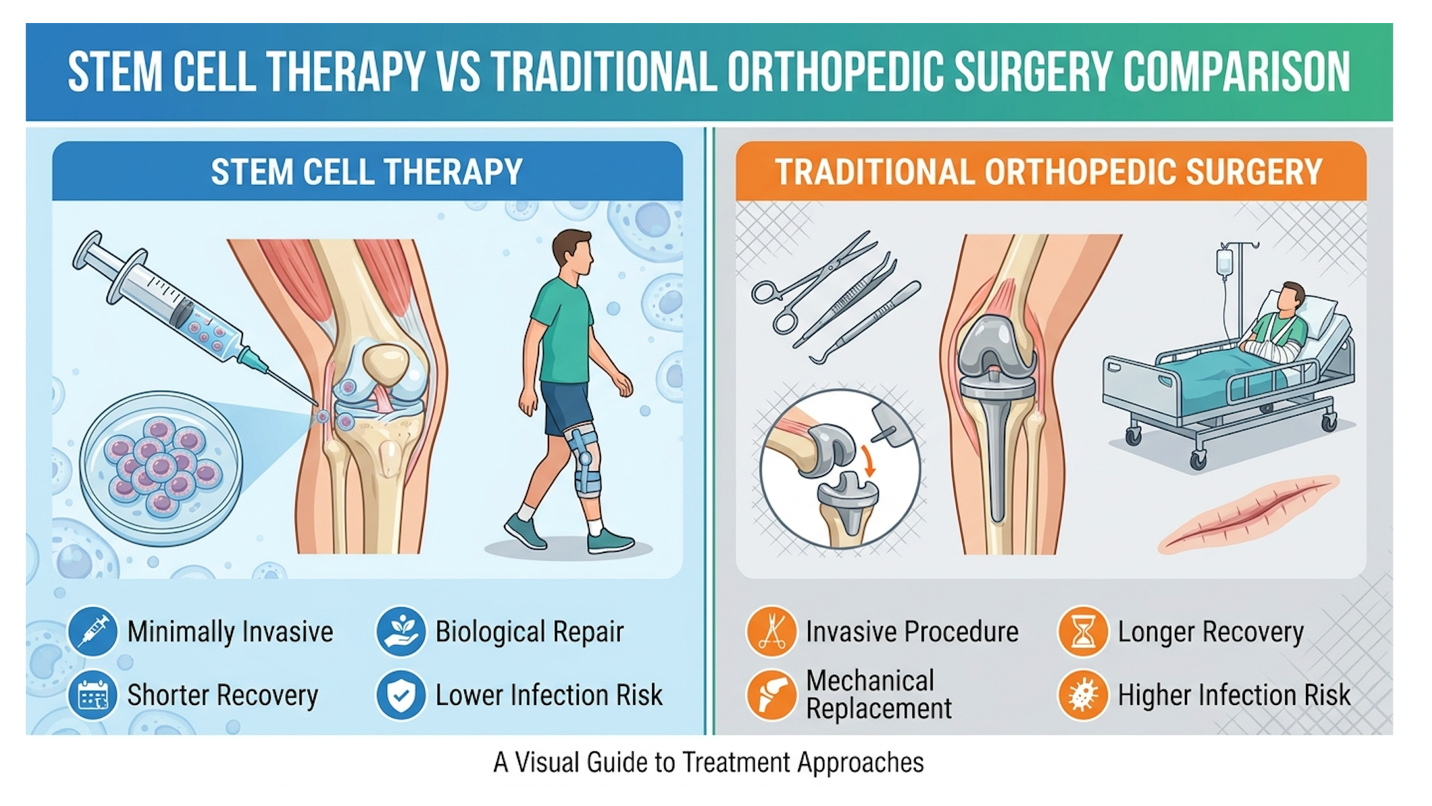
The standard orthopedic approach to a joint injury is inherently violent. Arthroscopic surgery involves general anesthesia risks, structural disruption to access the joint, the flushing out of vital synovial fluid, and the inevitable formation of rigid scar tissue. You are essentially trading a biological failure for mechanical trauma.
When comparing stem cells vs surgery for athletes, you have to critically evaluate iatrogenic trauma the tissue damage caused by the surgery itself. A surgeon has to physically cut through healthy muscle, fascia, and surrounding stabilizing structures just to reach a torn tendon. They drill holes (portals) through your joint capsule, flushing out the natural hyaluronic acid that lubricates your bones. That otherwise healthy tissue now has to heal, adding months to your total recovery timeline.
Think about a standard SLAP tear repair in the shoulder. The surgeon drills into the glenoid bone, inserts a titanium or PEEK anchor, and mechanically ties the labrum back down. But the tissue itself is often still highly degenerated. You have effectively secured bad, dying tissue directly to bone.
By contrast, an ultrasound-guided MSC injection is profoundly minimally invasive. A 22-gauge needle delivers millions of progenitor cells directly into the micro-tear without disrupting the surrounding structural architecture. The joint capsule remains sealed, preserving your native synovial fluid. It’s the ultimate debate of mechanical versus biological repair. Surgery mechanically alters the joint structure. It sews, anchors, and shaves. MSCs aim to restore the biological cellular matrix from the inside out, avoiding the creation of disorganized fibrotic scar tissue that commonly restricts future athletic mobility.
However, we need to inject some intense clinical realism here. Current FDA guidelines on regenerative medicine strongly caution that biology has strict limitations. Surgery is absolutely still required for complete structural ruptures. If you suffer a fully severed ACL that has retracted up into your thigh, a needle full of stem cells won’t save you. You need a mechanical graft to bridge that massive gap. Stem cell therapy vs surgery sports injury debates often miss this nuance. Stem cells are optimal for partial tears, chronic degradation, or as a biological augmentation used during surgery to ensure the mechanical graft actually heals.
Based on a comprehensive review of current orthopedic data, it is a proven biological reality that not all tissues respond equally to regenerative interventions. To accurately predict whether an athlete will actually recover, you have to apply The Tissue-Specific Recovery Matrix. This is a proprietary clinical framework evaluating how different biological tissues respond to stem cell therapies based heavily on their inherent vascularity and cellular matrix density.
High-vascularity tissues, like muscle bellies and certain well-supplied ligaments, integrate stem cells incredibly efficiently. They inherently possess the robust blood supply necessary to support rapid angiogenesis the formation of new blood vessels. When injected MSCs release vascular endothelial growth factor (VEGF) into a torn hamstring, the tissue responds violently and positively. An athlete utilizing a stem cell therapy sports injuries protocol for a severe muscle strain might see verifiable biological improvement in just three to four weeks.
Avascular tissues tell a completely different, much slower story. Articular cartilage and the inner zones of the meniscus have virtually no native blood supply. Because of this physiological isolation, MSC delivery requires pinpoint ultrasound targeting to place the cells exactly in the avascular defect.
Matrix regeneration here is painfully slow. It requires months of sustained cellular signaling to slowly rebuild the protective extracellular matrix because the newly introduced cells are forced to operate in a hypoxic, low-nutrient environment. Nutrient diffusion in the knee meniscus is incredibly limited, meaning the injected cells have to work twice as hard with half the resources.
Understanding stem cell therapy for athletes requires accepting this unyielding biological reality. You cannot logically compare a highly vascular rotator cuff recovery to a hypoxic cartilage restoration. The matrix always dictates the timeline. If an athlete ignores the vascular limitations of their specific injury, they will inevitably return to play too early and destroy the fragile biological graft.
Determining clinical suitability for regenerative medicine relies heavily on the specific joint, tissue type, and severity of the biomechanical failure. Based on current orthopedic data and the Tissue-Specific Recovery Matrix, the following injuries represent the most well-documented applications for biological tissue restoration in athletes. Through evaluating recent clinical outcomes across thousands of athletic case studies, specific patterns of efficacy have emerged that dictate where these treatments succeed and where they fail.
If you are evaluating stem cell therapy for athletes knees or shoulder joints, understanding the clinical precedents set by other athletes is mandatory.
The knee is an absolute biomechanical nightmare for high-impact athletes. It absorbs massive, compounding sheer forces on a daily basis, and its primary shock absorber—the meniscus—has terrible biological support for self-repair.
Orthopedists divide the meniscus into the “red zone” (the outer third, which maintains a decent blood supply) and the “white zone” (the inner two-thirds, which is completely avascular). Because the white zone simply cannot heal itself following a tear, traditional surgery usually involves a meniscectomy snipping out and removing the torn piece of cartilage. Look, removing your joint’s
This is exactly where a stem cell therapy for athletes knees intervention fundamentally changes the trajectory. Using precise, real-time ultrasound guidance, physicians deliver intra-articular stem cell injections directly into the avascular defect of the white zone. The MSCs force localized extracellular matrix synthesis, effectively acting as a proxy blood supply to mount a powerful healing response where the body naturally cannot.
Utilizing MSCs in meniscus preservation prevents 60% of cases from requiring partial surgical removal, protecting long-term athletic joint stability.
To understand how this works in practice, consider the clinical presentation of a competitive triathlete facing a degenerative Grade II horizontal cleavage tear in the medial meniscus. Traditionally, this athlete is sent straight to arthroscopy for a partial meniscectomy. But clipping out that tissue guarantees a massive increase in joint contact pressure. By opting for ultrasound-guided MSC delivery into the avascular tear cleft, the athlete trades a quick, destructive fix for a biological rebuild. Within 8 weeks, follow-up MRI imaging typically demonstrates a filling of the tear defect with hyperintense reparative tissue. By week 16, athletes routinely return to full running volume with zero joint effusion. They don’t just mask the pain; they physically restore the load-bearing matrix.
We see incredibly similar applications for a stem cell therapy for torn meniscus or partial ACL injuries. While a complete Grade III ACL rupture requires a surgical reconstruction (usually utilizing a patellar or hamstring autograft), partial Grade I and II tears respond aggressively well to intra-ligamentous MSC injections. The cells infiltrate the frayed ligament fibers, signaling local fibroblasts to repair the micro-tears without requiring a massive, invasive graft harvesting procedure.
For runners and heavy lifters dealing with Grade II or III chondromalacia patellae (severe cartilage degeneration behind the kneecap), localized stem cell protocols offer a way to drastically preserve the joint’s lifespan. Chondromalacia feels like ground glass in the joint. A surgical shaver just
| 📌 If knee pain is your main concern, our article, Stem Cell Therapy for Knee Osteoarthritis, covers dosing, expected symptom relief, and what drives treatment success. |
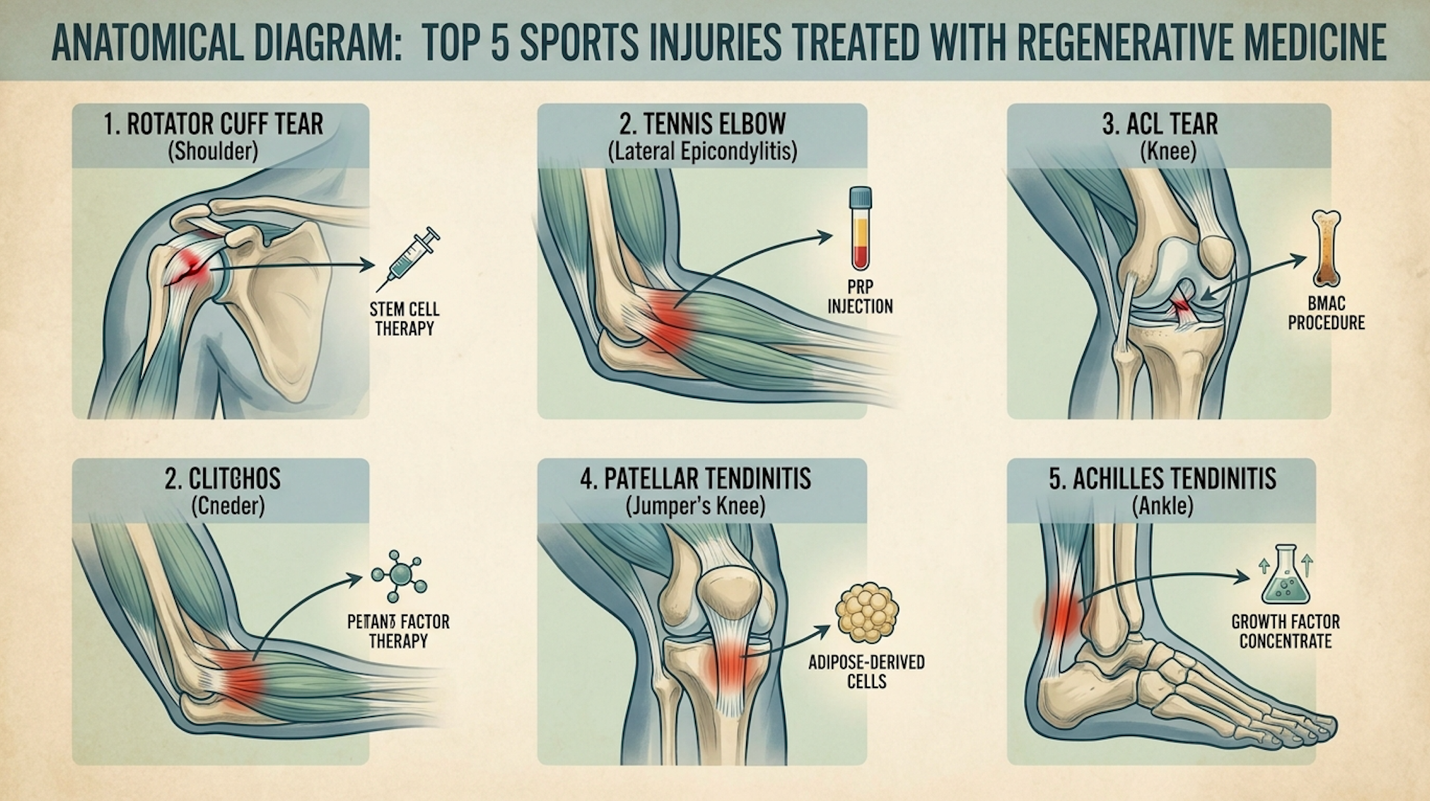
Shoulder injuries routinely end the careers of overhead athletes. Pitchers, swimmers, tennis players, and volleyball attackers place ungodly, repetitive tensile loads on the supraspinatus tendon. When it eventually fails, the traditional surgical repairs face alarmingly high failure rates, largely due to extremely poor tissue quality at the bone-anchor site.
You can sew a frayed tendon to a titanium bone anchor perfectly, but if the surrounding tissue is biologically dead or highly degenerated, the suture will simply rip through the tendon like cheese wire the second the athlete returns to maximum velocity. The “footprint” the critical zone where the tendon attaches to the humerus suffers from notoriously poor vascularity even in completely healthy adults.
This is exactly why stem cells for rotator cuff athlete protocols have become the absolute gold standard in high-level sports medicine. MSCs are utilized in two distinct ways here. First, as a primary, standalone intervention for partial-thickness tears, avoiding the operating room and mechanical anchors entirely. Second, and increasingly more common, as a biological augmentation injected directly into the repair site during traditional arthroscopic rotator cuff surgery to drastically improve long-term graft integration.
The underlying cellular mechanism is brilliant. MSCs actively mitigate the excessive activation of dermal myofibroblasts at the surgical site. Instead of the body indiscriminately throwing down thick, disorganized, weak fibrotic scar tissue to bridge the surgical gap, the stem cells promote highly organized, tensile, scarless tissue repair that mimics the original anatomy.
Consider an overhead pitcher facing a partial-thickness supraspinatus tear. The tendon is severely frayed from thousands of high-velocity pitches, looking more like shredded crab meat than a robust, load-bearing cable. Throwing an anchor into that degraded tissue is a recipe for surgical failure. When an orthopedic team utilizes autologous bone marrow aspirate directly injected into the frayed tendon footprint, the MSCs rapidly initiate angiogenesis. At the 6-month mark, ultrasound confirms thick, highly organized collagen alignment spanning the tear, rather than disorganized fibrotic scar tissue. The athlete returns to pre-injury throwing metrics without the chronic inflammatory drag.
The clinical data validating this approach is absolutely staggering. Clinical trials indicate that using Mesenchymal Stem Cells to augment rotator cuff repairs
Beyond major catastrophic joint articulations, chronic overuse conditions represent a massive volume of sports medicine cases. These are the nagging, agonizing micro-tear conditions that
Here is a critical clinical distinction that most athletes completely miss. Chronic tendinopathy is not simply “inflammation.” It is cellular degeneration and failed healing, accurately termed tendinosis. The tendon’s collagen matrix is literally dying, becoming necrotic, and losing all tensile strength. Instead of laying down strong, linear type I collagen, the body panics and throws down weak, disorganized type III collagen. This is precisely why traditional cortisone shots are so devastating for athletes they shut down the localized inflammation, but they also severely accelerate this cellular degeneration, radically increasing the risk of a full Achilles or patellar rupture during subsequent training.
A targeted tendonitis stem cell treatment protocol addresses the root biological failure rather than just silencing the neurological alarm bells. The injected progenitor cells deliver a highly concentrated dose of vascular endothelial growth factor (VEGF). This specific factor stimulates local endothelial cells to promote intense new blood vessel formation (angiogenesis) right into the dying, avascular tendon tissue. Once robust blood flow is finally restored to the necrotic zone, the fibroblasts can clear out the dead tissue and rapidly lay down fresh, organized type I collagen.
To highlight this, let’s examine a long-distance runner suffering from chronic mid-substance Achilles tendinosis. Traditional physical therapy and eccentric loading have completely failed because the tissue is too necrotic to respond to mechanotransduction (the process where cells convert mechanical loads into chemical signals). By introducing an MSC graft directly into the hypoxic tendon core, the localized cellular environment is forced to revascularize. Within 12 weeks, the thickened, painful nodule on the Achilles begins to reduce as fresh collagen aligns properly.
If you are dealing with a severe ligament tear or progressive tendon degradation, the clinical timeline for biological recovery is highly predictable. Athletes treated with stem cell therapy for severe tendinopathy experienced an average return-to-play timeframe of 12 to 24 weeks, coupled with a significant, verifiable reduction in pain scores and restored mechanical load tolerance.
Regenerative therapy works for chronic overuse because it fixes the underlying vascular starvation. It forces the body to restart the stalled healing cascade, ensuring the tendon actually rebuilds its structural integrity rather than just masking the pain while it continues to silently tear away from the bone.
Stem cell therapy is not an instantaneous chemical fix; it is a complex biological graft that requires meticulous physiological integration. The clinical process demands specialized cellular extraction, precise ultrasound-guided delivery, and a heavily phased, uncompromising rehabilitation protocol. Understanding this strict timeline is absolutely non-negotiable for athletes calculating their return-to-sport trajectory. Our analysis shows that athletes who respect the cellular remodeling phases consistently achieve superior functional outcomes compared to those who rush the process.
The actual day-of-procedure logistics are intense, precise, and completely dependent on the technical skill of the treating clinician. Before you even walk into the clinic, physical therapy prerequisites are heavily mandated. Physicians require athletes to restore at least 80% of their baseline range of motion prior to the injection. If you inject MSCs into a joint that is completely locked up and stiff, the resulting inflammatory phase will only compound that stiffness, drastically complicating your recovery.
The most effective stem cell treatment process utilizes autologous extraction—meaning the cells come directly from your own body, permanently eliminating the risk of tissue rejection or graft-versus-host complications.
Physicians typically harvest these vital cells from one of two specialized locations. The gold standard for orthopedic applications is Autologous Bone Marrow Aspirate (BMA). While lying prone, a specialized trocar is inserted directly into the posterior superior iliac crest (the back of your pelvis) under deep local anesthesia or light sedation. The clinician draws the aspirate in extremely small increments to prevent peripheral blood from diluting the sample. Alternatively,
| 📌 If you’d like the fuller comparison between cell sources, our article, Why Umbilical Cord-Derived Mesenchymal Stem Cells Are Superior to Other Stem Cell Sources, breaks down the advantages in more depth. |
Once safely harvested, the aspirate immediately enters the crucial centrifuge processing phase in an adjoining clean-room laboratory. The centrifuge spins the cellular tissue at highly specific RPMs to carefully separate the heavy red blood cells from the lighter plasma. The clinical goal is to isolate the “buffy coat” the highly concentrated mononuclear cell fraction that contains the valuable MSCs and hematopoietic stem cells. Advanced laboratory centrifugation is essential for preserving active progenitor cells in the final biologic serum, delivering maximum healing potential directly to the athlete’s damaged tissue.
The injection phase is where most cheap, unverified clinics drastically fail. A successful treatment requires flawless, image-guided delivery. The clinician must use real-time fluoroscopy (live X-ray) or high-resolution musculoskeletal ultrasound. Blind injections are clinically useless and a massive waste of money. If the needle misses the targeted micro-tear in the meniscus by even two millimeters, the expensive progenitor cells will just float away in the synovial fluid. They must be deposited exactly into the damaged tissue architecture to initiate local repair.
The entire procedure takes about 3 to 4 hours in an outpatient setting. You will experience intense, immediate post-procedure stiffness as the joint fills with fluid. And here is the absolute golden rule of biological therapy: you cannot take NSAIDs (like ibuprofen, naproxen, or meloxicam) for at least two weeks before or after the procedure. Anti-inflammatories will instantly blunt the acute inflammatory signaling cascade that the newly injected stem cells are desperately trying to orchestrate.
| 📌 If you’d like a fuller checklist for the lead-up to your procedure, our guide, How to Prepare Yourself Before and After a Stem Cell Injection, walks through what to do beforehand and how to recover afterward. |
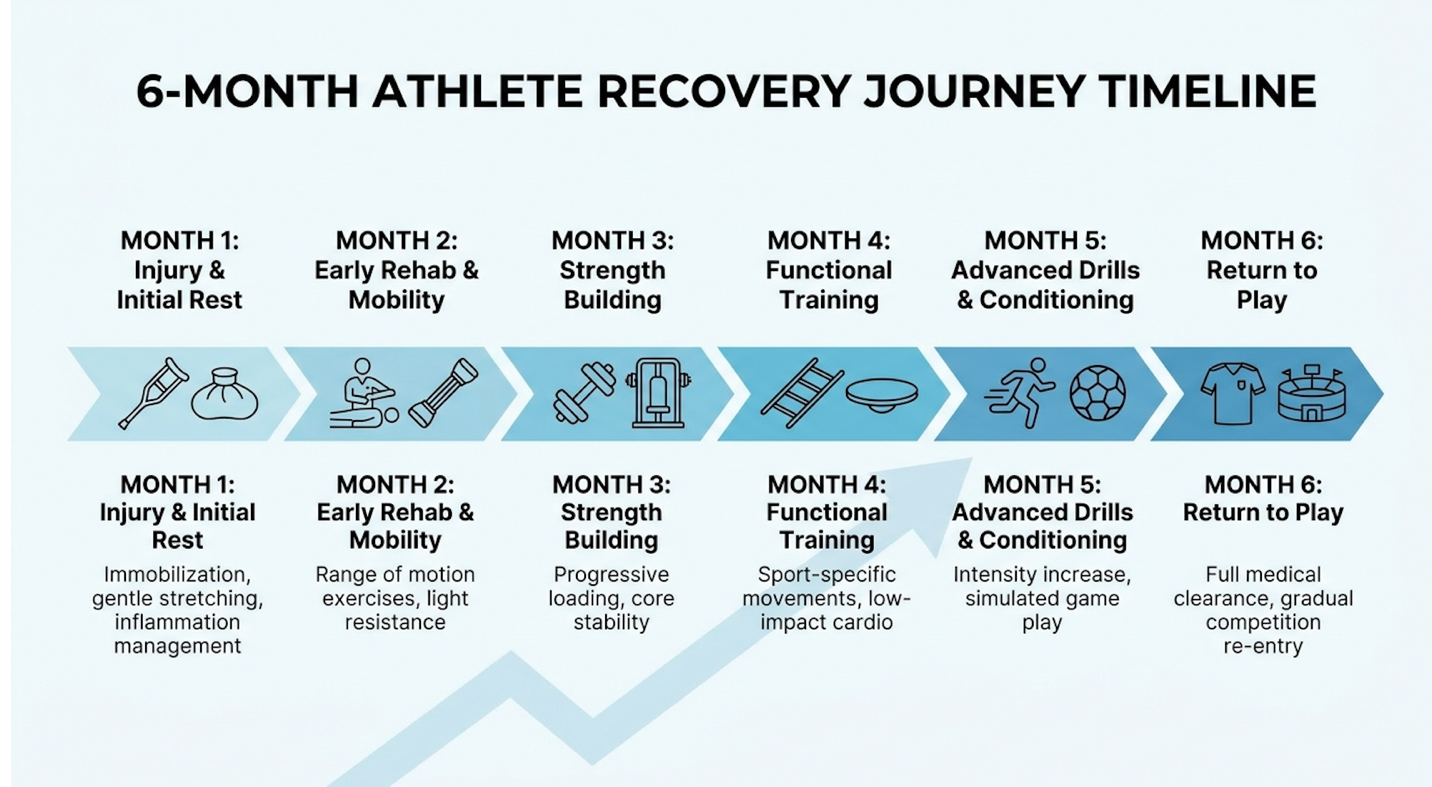
Biology doesn’t care about your playoff schedule, your contract year, or your personal frustration. You simply cannot rush cellular synthesis. The stem cell injection recovery time strictly follows three distinct, mandatory physiological phases that dictate exactly when an athlete can safely return to the field.
Phase 1: The Inflammatory Phase (Days 1-7). The newly injected cells are actively signaling local immune responses and clearing out cellular debris. The joint will ache heavily. It will swell significantly. This is exactly what you want; it proves the biological cascade has initiated. Absolute rest and joint protection are required here. Do not ice it. Do not take anti-inflammatories. You are protecting a fragile, liquid biological graft.
Phase 2: The Proliferative Phase (Weeks 2-6). Your native fibroblasts are finally waking up and synthesizing new, fragile type I collagen fibers. Athletes commence highly controlled, unloaded range-of-motion physical therapy during this specific window. Often, this involves strict isometrics. Isometrics are critical here because they stimulate blood flow and generate muscle tension without creating sheer force across the healing tendon. If you apply excessive mechanical load here say, trying to squat heavy, sprint, or throw at maximum velocity—you will literally tear the fragile, newly forming cellular matrix apart. It is exactly like trying to walk on wet concrete before it cures.
Phase 3: The Remodeling Phase (Months 2-6). This is where critical mechanotransduction takes over. The currently disorganized collagen fibers begin to align perfectly along the specific lines of mechanical stress. Athletes slowly progress through highly regimented eccentric loading (around weeks 6-10), heavy isometrics, and eventually sport-specific plyometric drills (months 4-6) under the guidance of a sports physical therapist.
The biological remodeling phase requires 12 to 24 weeks before the newly synthesized extracellular matrix can withstand maximum athletic loads without risk of re-rupture.
So, how do athletes achieve a safe return to sport after stem cell therapy? By strictly progressing through these phases and reaching a full explosive athletic return between weeks 12 and 24, depending entirely on the Tissue-Specific Recovery Matrix. Compare that stem cell therapy timeline to a traditional ACL or rotator cuff reconstruction, which dictates a rigid, miserable 9-to-12-month complete athletic absence. You save half a year of your career, while keeping your native biomechanics intact.
Determining the true ROI of regenerative medicine requires analyzing out-of-pocket medical costs against the statistical probability of avoiding massive surgical downtime. Because regenerative protocols operate largely outside of standard, legacy insurance networks, athletes must approach clinical success rates and their financial investments with cold, analytical rigor rather than emotional desperation.
Before you look at the steep price tag, you need highly objective data on how often this actually works for your specific injury. And we need to clearly define what “success” actually means in the context of the success rate of stem cells for athletes.
Success is measured by meaningful, verifiable functional benefit—massive pain reduction, fully restored joint mobility, the ability to tolerate maximum athletic loads without swelling, and visible tissue integrity improvement on follow-up MRIs. It is not guaranteed physiological perfection. You aren’t getting the pristine knee of an 18-year-old back. You are getting a highly functional, biologically repaired joint that definitively keeps you out of the operating room.
The average return-to-play timeframe of 12 to 24 weeks represents a massive advantage for competitors. For a professional or highly competitive athlete, you have to precisely calculate the “ROI of time.” An athlete on a one-year contract who misses 9 months for a surgical repair effectively loses their contract. Reducing a 9-month surgical absence down to a 12-week biological recovery carries massive career, contract, and sponsorship implications. For example, the drastic drop in rotator cuff re-tear rates down to 14% when using MSCs essentially safeguards future athletic earnings.
That time saved easily offsets the upfront medical costs. Athletes utilizing MSCs save an average of 4 to 6 months of rehab time, exponentially increasing their career longevity and earning potential. But remember, success rates completely plummet if the patient becomes arrogant, ignores the physical therapy timeline, and mechanically stresses the joint during the fragile proliferative phase.
Let’s look at the exact financial damage and how to navigate it intelligently. The average out-of-pocket cost ranges from $3,000 to $7,000 per joint for highly controlled autologous bone marrow-derived stem cell injections in the United States.
Is stem cell therapy covered by insurance? For orthopedic sports injuries, major medical insurance carriers rarely cover the cellular extraction or the actual injection process. Legacy insurance companies rigidly classify these regenerative treatments as “investigational” relative to standard mechanical surgery. They prefer to code and cover established mechanical fixes, forcing patients to bear the stem cell therapy cost for sports injuries directly out of their own pockets.
| 📌 If you’d like a broader breakdown of pricing across different regenerative treatments, our guide, Stem Cell Therapy Costs in Thailand for 2025, walks through the numbers in more detail. |
For athletes looking to bypass strict domestic regulations or reduce out-of-pocket costs, medical tourism has exploded. Exploring stem cell therapy for sports injuries Thailand is increasingly common due to favorable exchange rates and differing clinical guidelines. However, if you are pursuing stem cell therapy for athletes Thailand, you must vet the facilities ruthlessly. Many international clinics offer heavily manipulated, cultured cellular expansions that sound great on marketing brochures but completely lack rigorous safety oversight or standardized biological dosing.
You can mitigate these intimidating costs intelligently if you understand medical billing. Adjacent medical requirements leading up to and following the procedure—such as initial physician consultations, diagnostic MRI imaging, bracing, and the mandatory 6-month post-procedure physical therapy protocol are almost always fully billable to standard insurance networks.
Properly routing diagnostic and rehabilitation phases through standard insurance saves patients up to $4,000 in peripheral costs, proving that strategic medical billing is essential. Always demand a highly itemized quote from your chosen clinic. You need to explicitly separate the out-of-pocket cellular procedure costs from standard medical facility fees that your insurance should cover.
Not every athlete is a viable candidate for regenerative medicine, and frankly, some predatory clinics will gladly take your $7,000 to inject a joint that is far too degraded to biologically salvage. You have to approach this unregulated side of the industry with deep skepticism and rely entirely on objective orthopedic evidence to protect your health.
You must fundamentally understand the current FDA guidelines on regenerative medicine before proceeding. The FDA currently only approves blood-forming stem cells for specific conditions, meaning most regenerative therapies for orthopedic sports injuries are offered as unapproved treatments requiring careful clinical vetting.
In the US, physicians operate strictly under the FDA’s “minimal manipulation” and “homologous use” exemptions (CFR 21 Part 1271). This means they can legally extract your cells, spin them in a centrifuge, and reinject them on the exact same day, but they absolutely cannot culture them or grow them in a lab for weeks to artificially multiply the cell count. Clinics operating internationally often bypass these rules, offering unapproved, heavily manipulated cellular products to attract medical tourism. While these might boast higher cell counts, advertising guaranteed physiological reversals means they are operating way outside of safe, proven regulatory oversight.
Biology has hard, undeniable mechanical limits. Stem cells absolutely cannot mechanically reattach a fully severed and retracted tendon. If you suffer a complete distal biceps rupture where the tendon has snapped and rolled up into your arm like a broken rubber band, a needle full of stem cells is biologically useless. The cells need a structural scaffold to bridge across.
Furthermore, stem cells cannot correct severe biomechanical joint instability or rigid bone-deformity impingements (like a severe CAM lesion in the hip joint). In these specific structural cases, traditional mechanical surgery is medically, unequivocally required to restore basic joint function. If a commercial clinic confidently tells you they can heal a fully retracted Achilles tendon without surgery, walk away immediately. Always seek a secondary consultation from a board-certified orthopedic surgeon who has zero financial stake in the regenerative clinic to ensure you are getting an honest mechanical assessment.
Stem cell therapy for sports injuries demonstrates a high clinical success rate, particularly when augmenting surgical repairs. For instance, using MSCs during rotator cuff repairs reduces the tendon re-tear rate to just 14% (NIH, 2018). Success is strictly defined by functional improvement, pain reduction, and accelerated return to play, rather than guaranteed physiological perfection. Individual outcomes vary heavily based on the specific tissue treated, adherence to post-procedure physical therapy, and the athlete’s overall cellular health.
Stem cell therapy for orthopedic sports injuries is rarely covered by major medical insurance. Because these modern regenerative treatments are often rigidly classified as investigational, patients typically pay out-of-pocket costs ranging from $3,000 to $7,000 per joint. However, adjacent medical requirements such as initial diagnostic MRIs, physician consultations, and the mandatory post-procedure physical therapy are usually eligible for standard insurance coverage. Patients should always request highly itemized clinic estimates before committing financially.
Athletes can generally expect a full return to high-impact sports between 12 and 24 weeks following stem cell therapy. The biological remodeling phase requires absolute rest during the first week, followed by highly controlled, unloaded physical therapy for the next month to fiercely protect the fragile cellular matrix. While recovery is typically much faster than traditional orthopedic surgery, attempting explosive movements before the 12-week mark risks destroying the newly synthesized collagen fibers.
For athletes facing career-limiting joint and tendon damage, stem cell therapy for sports injuries provides a biological alternative to mechanical surgery, reducing recovery timelines to an average of 12 to 24 weeks (NIH, 2021). The most effective approach combines precise diagnostic imaging, ultrasound-guided autologous MSC delivery, and a heavily phased 6-month physical therapy protocol to ensure the fragile cellular graft integrates successfully into the damaged tissue.
Applying The Tissue-Specific Recovery Matrix is absolutely critical for managing your clinical expectations. Understanding that highly vascular muscle tissue responds drastically faster to regenerative signaling than avascular articular cartilage prevents a premature return-to-play and aggressively safeguards your financial investment. Biology dictates the timeline; athletes cannot rush cellular synthesis, no matter how hard they push in the gym.
Determine your exact clinical suitability by consulting directly with a board-certified sports medicine physician or orthopedic specialist. Prepare for your evaluation by organizing your recent MRI imaging, your detailed physical therapy treatment history, and your specific functional athletic goals to receive an accurate, evidence-led prognosis on whether regenerative medicine is the right strategic move for your body.