Our Services
Others
- DFPP
- Shockwave
- IV Drip

1.Is UC-MSC stem cell therapy in Bangkok safe for children with autism?
Safety depends heavily on the facility performing the treatment. When administered in accredited medical facilities, under medical supervision, using cells sourced from healthy, screened umbilical cord donors and processed in GMP-certified laboratories, UC-MSC stem cell therapy in bangkok has generally been reported as well-tolerated. Reported side effects are typically mild when they occur such as fatigue or low-grade fever though, as with any medical procedure, families should ask their specific provider for a full and specific safety disclosure rather than relying on general reassurances.
2.How long does it take to see improvement after UC-MSC stem cell therapy in bangkok?
Response timelines vary significantly between individuals, and not every child shows noticeable change. Some families have reported changes within 1–3 months, while others describe more gradual progress over 6–12 months, or no clearly noticeable change at all. Examples some families have described include shifts in focus, eye contact, activity level, language use, or emotional regulation but these are individual reports, not guaranteed or expected outcomes for any specific child. Continued follow-up with therapists and physicians remains essential regardless of response.
3.How many sessions are required for autism stem cell therapy in bangkok?
Treatment programs commonly involve one to three sessions, depending on medical evaluation and the child’s overall health, though this varies by individual case. Sessions may include intravenous infusion, targeted administration, or both. The specific treatment plan should be personalized based on the child’s condition, age, medical history, and clinical assessment not applied as a fixed, one-size-fits-all protocol.
4.How much does UC-MSC stem cell therapy for autism cost in Bangkok?
Cost varies by clinic, the number of cells administered, treatment duration, and any supportive therapies included, and is typically confirmed directly with the clinic following an initial medical evaluation. As a general reference point, published costs in Bangkok have ranged from approximately USD 8,000 to USD 20,000, which some sources describe as lower than comparable treatment in Western countries. Families should confirm current, itemized pricing directly with any clinic they’re considering, rather than relying on general figures alone.
5.How can I choose a stem cell clinic in Bangkok for autism treatment?
When evaluating a clinic, look for:
Licensed medical supervision, with treatment following recognized regenerative medicine guidelines
UC-MSC stem cell therapy in Bangkok sourced from certified GMP laboratories, with full donor screening documentation available on request
Structured pre- and post-treatment care, including developmental assessment and ongoing medical monitoring
Transparent, specific communication about the therapy’s goals, realistic, expected outcomes, and the current state of scientific evidence including its limitations
It’s worth independently verifying patient reviews where possible and consulting with a qualified medical professional including, where relevant, your child’s existing developmental therapy team before making travel or treatment decisions.
Final Thoughts
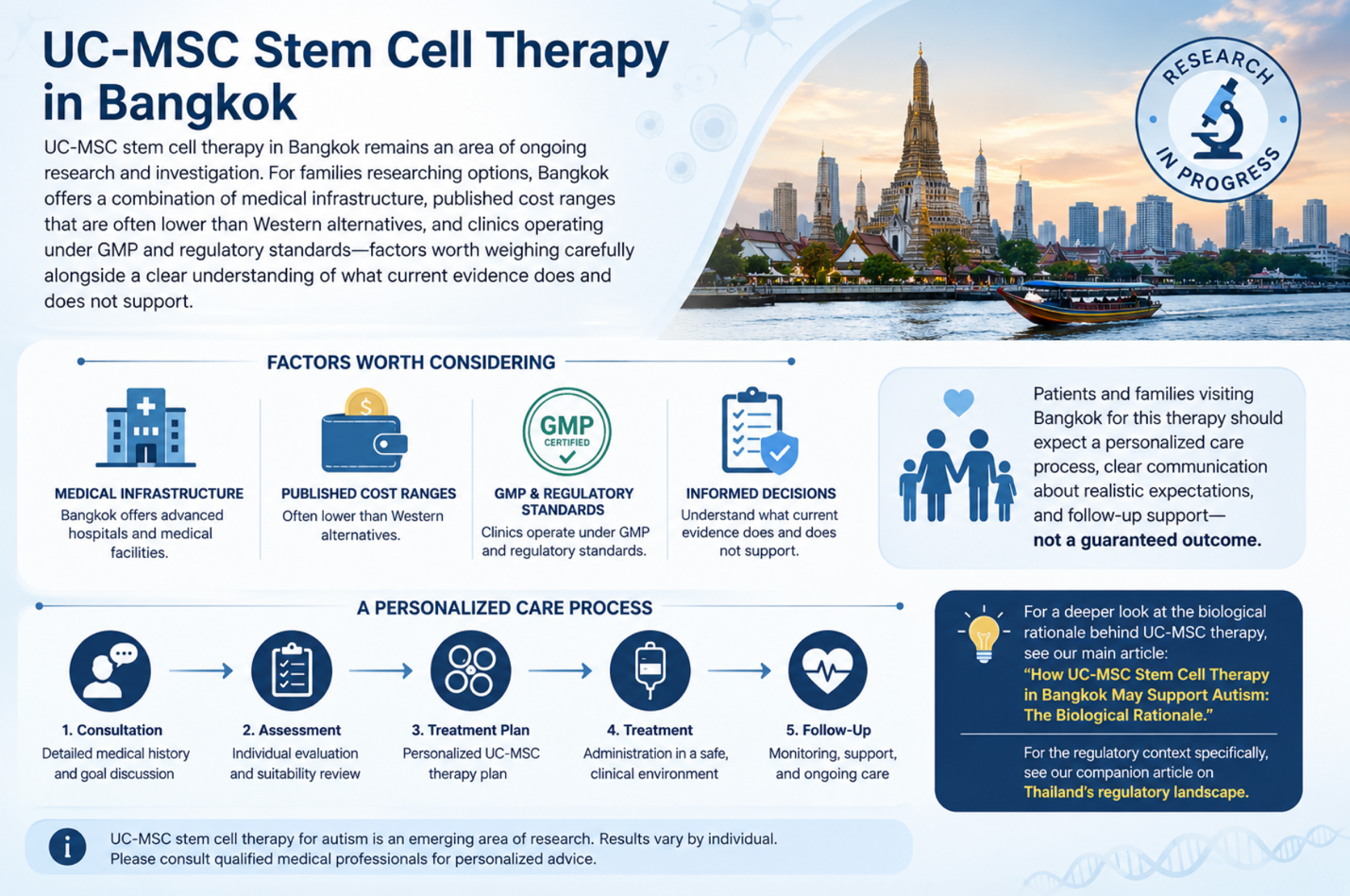
UC-MSC stem cell therapy in bangkok remains an area of ongoing research and investigation. For families researching options, Bangkok offers a combination of medical infrastructure, published cost ranges that are often lower than Western alternatives, and clinics operating under GMP and regulatory standards factors worth weighing carefully alongside a clear understanding of what current evidence does and does not support.
Patients and families visiting Bangkok for this therapy should expect a personalized care process, clear communication about realistic expectations, and follow-up support not a guaranteed outcome. For a deeper look at the biological rationale behind UC-MSC therapy, see our main article, “How UC-MSC stem cell therapy in bangkok May Support Autism: The Biological Rationale.” For the regulatory context specifically, see our companion article on Thailand’s regulatory landscape.
This article is for educational purposes and does not constitute medical advice. UC-MSC stem cell therapy for autism is investigational and is not a cure. Please consult a qualified physician to discuss your child’s specific situation.