Our Services
Others
- DFPP
- Shockwave
- IV Drip

This article is for educational purposes only and does not replace consultation with a qualified medical professional. No supplement is proven to improve stem cell therapy results.
Preparing for regenerative treatments requires more than just showing up on procedure day. Optimizing your body’s microenvironment is critical. I’ve seen patients drop thousands of dollars on a UC-MSC joint injection, only to flush the localized cells out of the joint capsule because they took high-dose fish oil that morning a massive bleeding risk.
Patients routinely sabotage their own outcomes. They take contraindicating supplements that either increase procedural hematomas or actively inhibit cell proliferation right before the needle goes in.
In this guide, you will learn the exact 30-day pre-treatment plan for taking supplements before stem cell therapy. We are covering what to take, what to stop entirely, and exactly when to do both. We’ll look at the specific vitamins that actually support cellular health, natural lifestyle triggers you can pull, and a strict washout table for supplements to avoid before stem cell therapy.
But let me be blunt right up front: no supplement is clinically proven to improve stem cell therapy results. What we are doing here is preparing the biological environment, laying down the optimal groundwork so your body doesn’t fight the treatment.
Taking the right supplements before stem cell therapy involves a strategic 30-day pre-conditioning protocol to optimize your cellular microenvironment.
Proper stem cell therapy preparation requires adopting a 30-day nutritional and lifestyle regimen to optimize the biological microenvironment. Pre-procedure nutritional protocols, combined with the strict avoidance of NSAIDs, significantly boost the readiness of local tissues for regenerative medicine (Stanford Medicine, 2021). This protocol ensures your body is biologically primed for cellular engraftment.
If you are wondering how to prepare for stem cell therapy, the answer lies in strict timing. Your biological environment doesn’t change overnight. The 30-Day Cellular Pre-Conditioning Protocol dictates a highly specific four-week timeline leading up to your injection.
During Weeks 4 and 3, you introduce supportive compounds like Vitamin D3 and NAD+ precursors while pulling baseline blood work. You want these compounds saturating your tissues well before the procedure. By Week 2, the focus shifts heavily toward lifestyle optimization. Your diet tightens up, your sleep architecture becomes a priority, and you continue the safe vitamins that won’t interfere with platelet aggregation.
Then comes Week 1the Washout Period. This is where most patients get it wrong. During the final seven days, you must critically cease taking specific herbs and supplements especially fish oil, curcumin, and high-dose vitamin E. Why? Because they act as mild to moderate anticoagulants. Procedural bleeding ruins regenerative treatments. If you bleed excessively into a joint space during a UC-MSC injection, the inflammatory response alters, and the physical cells can literally be washed out of the target tissue matrix.
This timeline applies directly to patients receiving UC-MSC injections for orthopedic, anti-aging, or systemic conditions. Post-treatment supplements belong to an entirely separate recovery phase consult our aftercare guide for post-treatment protocols once your procedure is finished.
You can’t manage what you don’t measure. Before starting the 30-Day Cellular Pre-Conditioning Protocol, clinical observations published in 2023 strongly suggest obtaining a baseline metabolic panel.
I always advise patients to look specifically at their high-sensitivity C-reactive protein (hs-CRP) and 25-hydroxyvitamin D levels. If your hs-CRP is skyrocketing, your body is currently a hostile, highly inflammatory environment. Dropping fragile mesenchymal stem cells into a systemic firestorm isn’t a great strategy. Getting these numbers four weeks out allows you to use the specific compounds below to actually move the needle on your systemic inflammation before procedure day.
| 📌 If you’re interested in how MSCs calm overactive immune cells throughout the body, we have an interesting article that discusses mesenchymal stem cell therapy for immune modulation, which you can read via the internal link. |
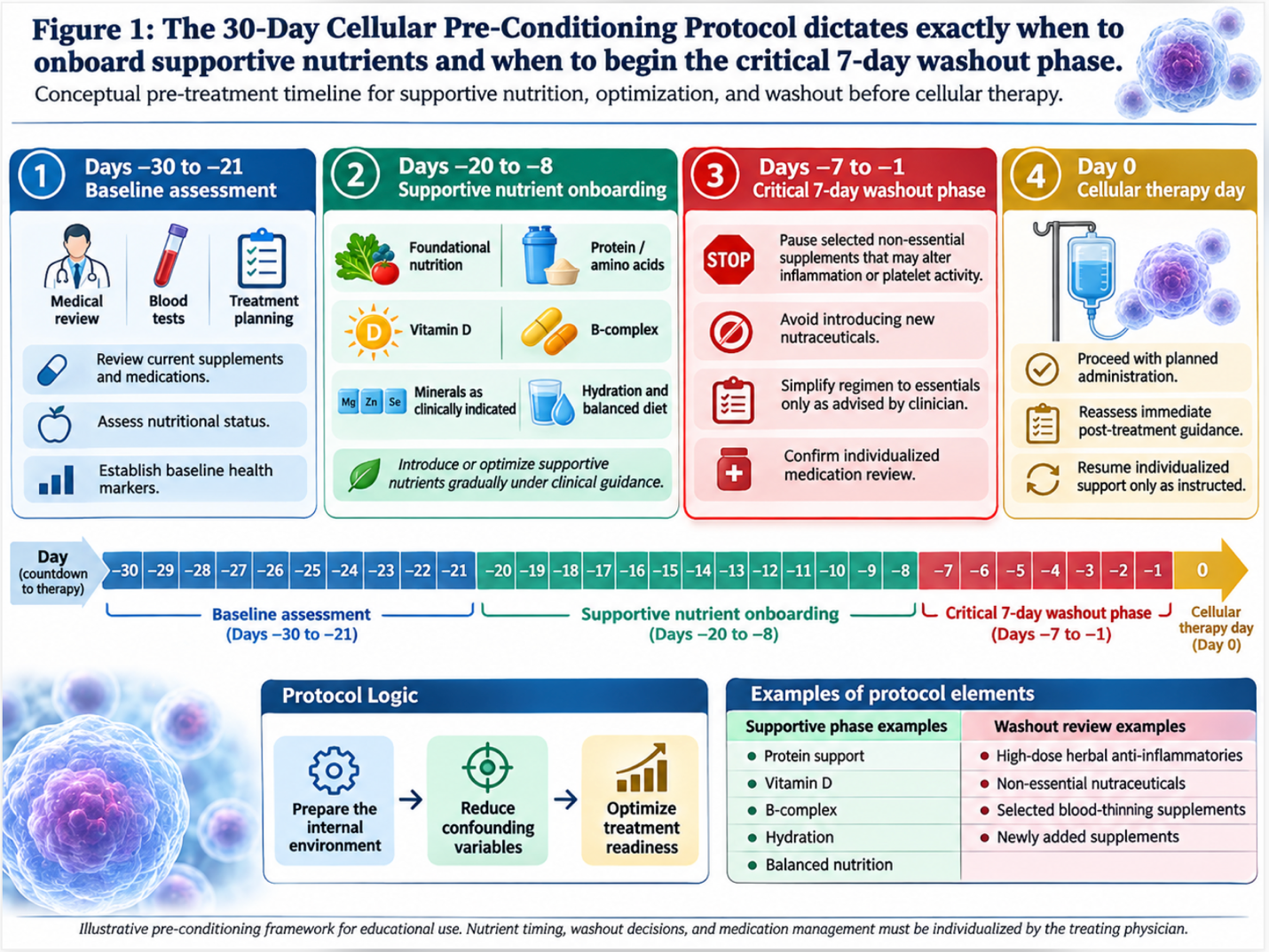
Figure 1: The 30-Day Cellular Pre-Conditioning Protocol dictates exactly when to onboard supportive nutrients and when to begin the critical 7-day washout phase.
Identifying the best supplement for stem cells means looking at compounds that preserve the regenerative script and support cellular proliferation. Current evidence highlights Vitamin D3, NAD+ precursors, and specific polyphenols as key mediators in reducing cellular senescence and maintaining epigenetic health during the weeks prior to therapy.
Vitamin D3 isn’t just a vitamin. It’s a steroid hormone that dictates expression across hundreds of genes. When looking at vitamin D before stem cell therapy, the clinical data is hard to ignore. Vitamin D3 supplementation significantly increases the proliferation rate and osteogenic differentiation of bone marrow-derived mesenchymal stem cells (National Institutes of Health, 2019).
Basically, it tells your existing stem cells to wake up and get to work building bone and cartilage.
But you cannot dose this blindly. You must get a blood test to check your baseline 25(OH)D levels before taking high-dose vitamin D. Blindly taking 10,000 IU a day can lead to hypercalcemia. Your target blood level should be 50-70 ng/mL. To hit that, patients commonly require a consistent dose of 4,000-5,000 IU daily during the pre-conditioning phase.
Always pair D3 with Vitamin K2 (specifically MK-7). While D3 increases calcium absorption in the gut, K2 acts as a biological traffic cop, routing that calcium into your bones and teeth rather than letting it calcify your arteries. A standard dose is 100mcg of K2 daily alongside your D3.
Alongside hormonal precursors like Vitamin D, cellular energy metabolism relies heavily on NAD+ levels. NAD+ and stem cells are inextricably linked. As we age, our systemic NAD+ levels plummet. This decline directly impairs the function of mesenchymal stem cells, pushing them toward senescence a zombie state where they stop dividing and just secrete inflammatory sludge.
Nicotinamide Riboside (NR) and Nicotinamide Mononucleotide (NMN) are precursors that efficiently restore these depleting NAD+ levels. PubMed research from 2020 demonstrates that boosting NAD+ extends the regenerative capabilities in aged cells, essentially tricking older stem cells into behaving like younger, highly proliferative ones.
For the 30-day protocol, the target is one consistent dose of 300-500mg of either NR or NMN, taken daily in the morning. Because NAD+ operates on a circadian rhythm, taking these precursors late in the afternoon can wreck your sleep architecture. Stick to a morning dose to fuel the cellular engines properly.
While NAD+ fuels the cell, managing the inflammatory microenvironment requires targeted lipids and polyphenols. If you inject stem cells into a joint heavily saturated with inflammatory cytokines, the cells spend all their energy fighting the inflammation rather than regenerating tissue.
Omega-3 fatty acids actively reduce these inflammatory cytokines. NIH findings (2021) clearly indicate that Omega-3s promote stem cell survival in inflammatory microenvironments. The clinical target here is 2,000mg of combined EPA/DHA daily.
Similarly, curcumin preconditioning chemically alters the microenvironment. According to clinical data published in 2020, curcumin enhances stem cell survival via preconditioning, dampening the hostile immune response that might otherwise attack the newly introduced cells. A highly bioavailable curcumin formulation (like one bound to lipids or paired with piperine) at 500mg daily is the standard target.
Finally, polyphenols like resveratrol or basic Vitamin C (ascorbic acid) help preserve the cellular regenerative script by neutralizing oxidative stress. A daily 1,000mg dose of Vitamin C during the first three weeks of your protocol provides a cheap, effective antioxidant shield. Just remember these anti-inflammatory powerhouses come with a massive catch regarding procedural safety, which we will address in the washout section.
If you are wondering how to increase stem cells naturally, the most effective strategies involve physiological stressors rather than oral supplements. Fasting, specific dietary protocols, and optimized sleep architecture directly influence the mobilization and functional capacity of your body’s endogenous stem cell reserves.
Patients constantly ask me: does fasting increase stem cells?
The short answer is yes, absolutely. Prolonged fasting triggers a process called autophagy literally “self-eating.” When you deprive the body of nutrients for 24 to 72 hours, it begins hunting down senescent, damaged cells and recycling their parts. This systemic cleanup forces your bone marrow to pump out fresh, highly capable hematopoietic and mesenchymal stem cells to replace the old ones. The US National Library of Medicine (2022) notes that dietary fasting triggers cellular autophagy and has been shown to enhance the regenerative capacity of intestinal and mesenchymal stem cells.
During your 30-Day Pre-Conditioning Protocol, implementing a 16:8 intermittent fasting window (fasting for 16 hours, eating for 8) is highly effective.
Regarding foods that increase stem cells, you want to focus heavily on polyphenol-rich foods. Think dark berries, extremely dark chocolate, and cruciferous vegetables like broccoli and Brussels sprouts. These foods don’t magically spawn new cells, but they drastically lower the oxidative stress that kills off your existing stem cell populations.
Nutritional timing regulates cellular cleanup, but deep tissue repair is exclusively governed by circadian rhythms. So, does sleep affect stem cells? Drastically.
Circadian rhythm disruptions severely impair the mobilization of stem cells from the bone marrow. When you hit Slow-Wave Sleep (deep sleep), your brain secretes massive pulses of human growth hormone. This hormone is the ultimate master switch for stem cell division, tissue repair, and immune system regulation. If you are sleeping six hours a night and missing your deep sleep cycles, you are chemically hamstringing your own regenerative capacity.
According to sleep researchers (2021), stem cell trafficking is highly synchronized to our circadian clocks. You should target 7.5 to 8 hours of sleep, prioritizing strict sleep-wake consistency in the two weeks prior to therapy. Go to bed at the exact same time every night. No exceptions.
Identifying supplements to stop before stem cell injection is a matter of procedural safety and biological efficacy. Certain compounds actively suppress stem cell proliferation or act as blood thinners, increasing the risk of hematomas and procedural complications. Adhering to a strict washout period is mandatory.
This is the most critical safety section of this entire guide. Certain supplements are outright dangerous on procedure day.
High-dose fish oil, curcumin, vitamin E, Ginkgo Biloba, and garlic all act as platelet aggregation inhibitors. They are blood thinners. If you take them leading up to an intra-articular or intravenous injection, you drastically increase your risk of uncontrolled bleeding, severe bruising, and hematomas. You will literally bleed the therapeutic cells out of the target zone.
Furthermore, you must avoid NSAIDs (Non-Steroidal Anti-Inflammatory Drugs) like Ibuprofen, Naproxen, or Aspirin. Administration of NSAIDs prior to orthobiologic injections significantly suppresses mesenchymal stem cell proliferation and chondrogenic differentiation (National Institutes of Health, 2019). Stem cells rely on an acute, localized inflammatory signal to know where to go and what to heal. If you chemically suppress that signal with an NSAID, the stem cells wander aimlessly and eventually die off.
| 📌 If you’re interested in why the percentage of living cells matters so much at the time of treatment, we have an interesting article that discusses the importance of cell viability in UC-MSC stem cell therapy, which you can read via the internal link. |
You can’t just stop taking a supplement the night before and expect your blood to clot normally. Compounds have biological half-lives.
High-dose omega-3 fatty acids incorporate themselves deep into your cell membranes. It takes days sometimes over a week for platelet function to return to absolute baseline after you stop taking them. According to surgical safety guidelines published in 2020, herbal anticoagulants like Ginkgo and high-dose garlic extract require a minimum 7-day cessation to ensure procedural safety.
Don’t guess. Don’t assume. Follow the washout table below exactly, and always clear this list with your administering clinician.
To manage bleeding risks and ensure your stem cells aren’t chemically suppressed, you must stop these specific compounds during Week 1 of your protocol.
| Supplement Category | Specific Examples | When to Stop | Reason |
| Omega-3 Fatty Acids | Fish Oil, Krill Oil, Algae Oil | 7-10 days prior | High Bleeding Risk (inhibits platelet aggregation) |
| Anti-inflammatory Botanicals | Curcumin, Turmeric Extracts | 7 days prior | Bleeding Risk / Alters acute inflammatory signaling |
| Herbal Anticoagulants | Ginkgo Biloba, Garlic Extract, Ginseng | 7-10 days prior | High Bleeding Risk |
| Fat-Soluble Antioxidants | High-Dose Vitamin E | 7 days prior | Mild Bleeding Risk |
| NSAIDs (Not supplements, but critical) | Ibuprofen, Naproxen, Aspirin, Meloxicam | 7-14 days prior | Suppresses stem cell proliferation entirely |
Despite the obvious need to stop many of these supplements to avoid before stem cell therapy, patients routinely fall victim to heavily marketed pills claiming to boost their results.
When asking do stem cell supplements work, patients must distinguish between established biological plausibility and clinical proof. While certain vitamins preserve the cellular microenvironment in laboratory settings, no commercial supplement is clinically proven to guarantee or improve the results of a stem cell therapy procedure.
To understand the marketing lies, you need to understand the “regenerative script.” This refers to the complex genetic and epigenetic programming that allows a stem cell to replicate perfectly and differentiate into tissue like cartilage or muscle.
In a pristine laboratory environment, scientists can introduce antioxidants to stem cell cultures and watch incredible things happen. For instance, PubMed research from 2018 shows that adding Vitamin C (ascorbic acid) to a petri dish reduces oxidative stress and helps preserve the regenerative script during cellular expansion. The cells stay younger and divide faster.
Supplement companies see this test-tube data, put Vitamin C and some proprietary herbal blends into a capsule, slap a “Stem Cell Booster” label on it, and charge you $90 a bottle.
Observing cellular preservation in a petri dish is vastly different from a human ingesting a pill.
Most “stem cell boosters” rely entirely on in-vitro (test tube) data or, at best, mouse models. They completely ignore oral bioavailability limitations. When you swallow a proprietary herbal blend, your stomach acid destroys half of it. Your liver filters out the rest. The microscopic fraction of the active compound that actually reaches your bone marrow or a damaged knee joint is biologically negligible.
Peer-reviewed analyses (2022) of these commercial products confirm a harsh truth: No over-the-counter supplement has been clinically proven to improve the engraftment or outcome of targeted stem cell injections in humans.
You take supplements to fix systemic deficiencies and precondition your body—not as miracle boosters for the therapy itself.
Because of these clinical nuances, bioavailability issues, and very real bleeding risks, individualized medical guidance is completely non-negotiable.
DIY supplementation fails disastrously when medical complexity scales up. A standard 30-day pre-conditioning protocol is great for a healthy 45-year-old fixing a torn meniscus. It is dangerous for someone managing a complex autoimmune disease or cardiovascular issues.
If you are on prescription blood thinners like Warfarin, Eliquis, or Plavix, you cannot simply follow a generic internet washout table. Your coagulation cascade is medically altered. You must have your prescribing cardiologist and your regenerative medicine doctor coordinate exactly when and how to bridge your medications. Furthermore, high-dose vitamin clearance requires healthy kidneys and a functioning liver. If you have renal or hepatic impairment, standard supplement doses become toxic.
You must review your exact medication and supplement list with a qualified physician prior to any regenerative procedure.
| 📌 If you’re interested in how to tell a well-regulated stem cell clinic from a risky one, we have an interesting article that discusses whether stem cell therapy is safe in Thailand, which you can read via the internal link. |
Don’t leave anything out. I have reviewed cases where patients hid their herbal supplement usage because they thought natural meant safe, only to experience severe bruising and poor clinical outcomes. Your physician needs the complete picture to ensure your safety. Hematology reports (2021) routinely flag “natural” supplements as the primary culprits behind unexpected procedural bleeding. Take this seriously.
Fish oil must be stopped 7 to 10 days prior to a stem cell injection. Omega-3 fatty acids actively inhibit platelet aggregation, which chemically prevents your blood from clotting normally. Taking it too close to procedure day increases the risk of hematomas and can literally bleed the injected stem cells out of the target tissue. A full 7-to-10 day washout ensures your platelets return to baseline function.
High-dose turmeric or curcumin should be stopped 7 days before a stem cell procedure. While curcumin is fantastic for reducing systemic inflammation in the weeks prior, its mild anticoagulant properties pose an unacceptable bleeding risk during the physical injection. You want your body to mount a brief, acute inflammatory response post-injection to signal the stem cells to heal, which turmeric suppresses.
There is no single “best” supplement, but Vitamin D3 and NAD+ precursors (like NMN) show the strongest clinical potential for supporting the cellular microenvironment. These compounds preserve the epigenetic health of your existing cells and prevent early senescence. However, they support general biological readiness rather than guaranteeing enhanced therapy outcomes. Always request a baseline blood test before starting high-dose regimens.
Prolonged fasting does trigger cellular autophagy and stimulates the regeneration of specific endogenous stem cell populations. By fasting for 24 to 72 hours, your body chemically clears out damaged, senescent cells, forcing the marrow to mobilize fresh stem cells. However, initiating a severe fast immediately before a medical procedure requires explicit clearance from your clinician to avoid dangerous hypoglycemic events.
Preparing for regenerative treatments requires a highly strategic approach to supplements before stem cell therapy. The 30-Day Cellular Pre-Conditioning Protocol provides that structure giving you exactly three weeks to onboard supportive compounds like Vitamin D3 and NAD+ precursors, followed by a mandatory 7-day washout period. We’ve established that fish oil, curcumin, and NSAIDs must be stopped to prevent bleeding risks and cellular suppression. And let’s reiterate the most important truth: no supplement is clinically proven to improve stem cell therapy results.
However, implementing The 30-Day Cellular Pre-Conditioning Protocol allows you to control the variables you can actually influence. By actively lowering systemic inflammation, addressing hormonal deficiencies, and respecting the bleeding-risk washout table, you ensure your biological microenvironment isn’t actively fighting the expensive cellular therapy you are about to receive.
Stop guessing with your procedural safety. Request a formal consultation with Vega Stem Cell to review your specific condition, analyze your baseline lab work, and build a customized, medically supervised pre-treatment readiness plan.