Our Services
Others
- DFPP
- Shockwave
- IV Drip

This article is for educational purposes only and does not replace consultation with a qualified medical professional.
As families evaluate emerging biological interventions for Autism Spectrum Disorder (ASD), the future of stem cell therapy for autism centers heavily on Umbilical Cord Mesenchymal Stem Cells (UC-MSCs). The demand for transparent data on safety, pricing, and realistic success rates has never been higher, especially as offshore clinics continue to make unsubstantiated claims that muddy the waters of legitimate clinical research.
I’ve reviewed dozens of these clinical trial protocols over the years, and the disconnect between laboratory science and commercial marketing is staggering. To cut through the noise, we must rely on The Proof-to-Practice Continuum an analytical framework that forces us to evaluate cellular therapies by strictly isolating their theoretical biological plausibility from proven, functional clinical outcomes.
By the end of this guide, you will understand the exact biological mechanisms, current clinical evidence, and regulatory realities of UC-MSC therapy.
The future of stem cell therapy for autism currently focuses on immunomodulation and neuroinflammation reduction using UC-MSCs.
Umbilical cord mesenchymal stem cells (UC-MSCs) are currently classified as an investigational therapy for autism spectrum disorder, not a standard medical treatment. Unlike hematopoietic stem cells used in established oncology treatments, UC-MSCs are utilized in neurological research solely for their regenerative and immunomodulatory properties. Understanding this distinction is step one in the Proof-to-Practice Continuum.
UC-MSCs demonstrate a viability rate exceeding 90% in controlled settings establishing them as structurally superior to aging bone marrow sources.
When analyzing the future of UC-MSC therapy for autism, you have to look closely at the cellular source. UC-MSCs are harvested from Wharton’s jelly in umbilical cord tissue. This tissue offers an incredibly abundant source of active, naïve progenitor cells compared to adult bone marrow MSCs, which physically degrade in quality as the donor ages. Specifically, Wharton’s jelly yields approximately 1 to 5 million viable MSCs per centimeter of cord tissue. This massive initial yield minimizes the need for extreme, risky laboratory multiplication.
| 📌 If you’re interested in why umbilical cord cells are often preferred over bone marrow or fat-derived cells, we have an interesting article that discusses why UC-MSCs are superior to other stem cell sources, which you can read via the internal link. |
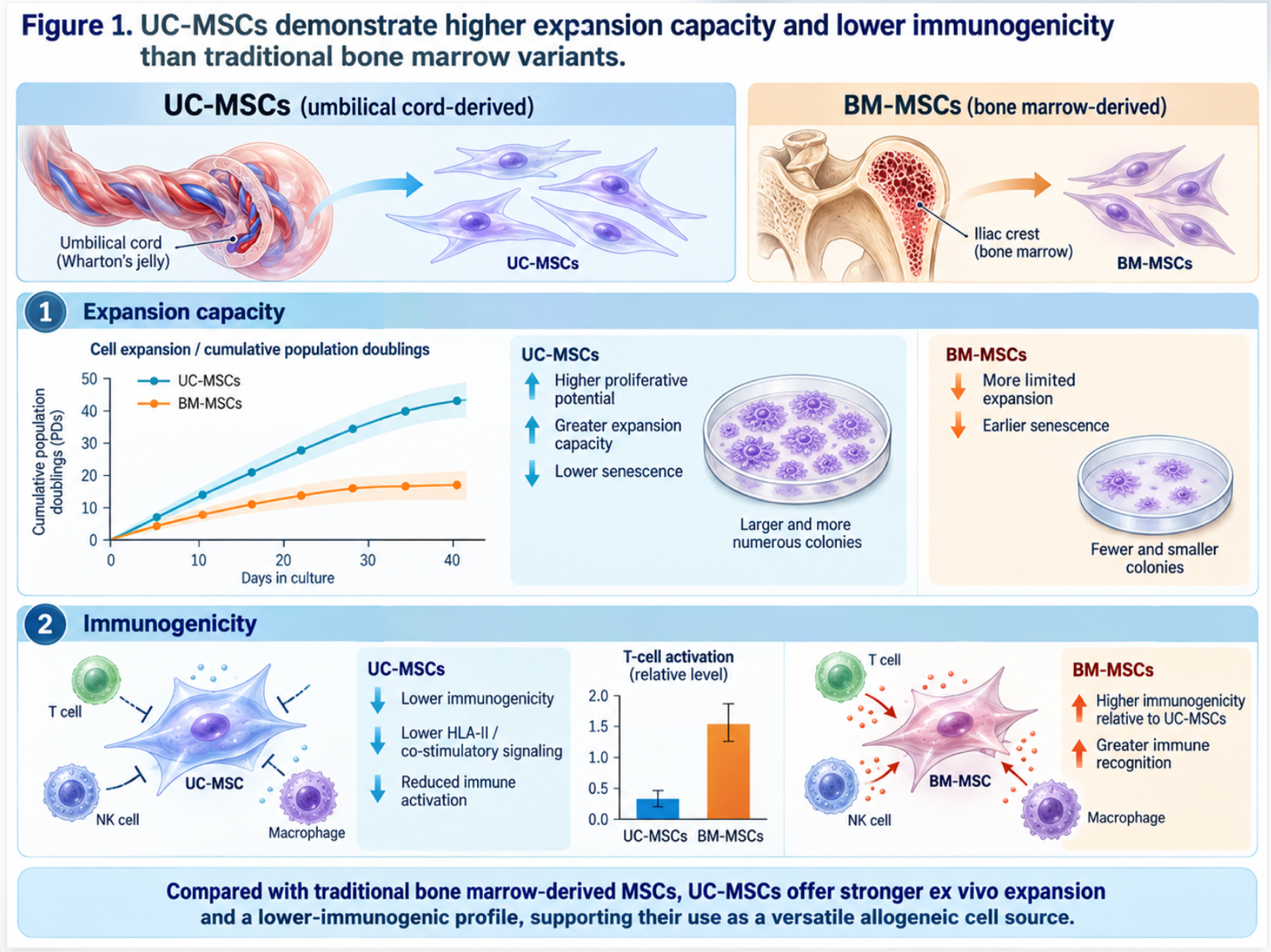
Figure 1: UC-MSCs demonstrate higher expansion capacity and lower immunogenicity than traditional bone marrow variants.
Crucially, UC-MSCs are entirely distinct from highly controversial embryonic stem cells. They carry a significantly lower risk of tumor formation (teratomas) and bypass the ethical barriers that halted early 2000s stem cell research. A recent cellular derivative profile analysis confirmed that UC-MSCs exhibit superior immunosuppressive properties compared to older bone marrow sources.
But here’s the catch while UC-MSCs are biologically promising, they aren’t a universal repair material. Standard laboratory expansion processes drastically impact their viability, meaning the way a lab handles the cells dictates whether the treatment has any chance of working. For example, clinical guidelines mandate that these cells should ideally be administered before Passage 4 (P4) to maintain genomic stability. Pushing cellular expansion beyond this limit a common practice in unregulated clinics trying to maximize their profit margins drastically degrades their immunosuppressive capabilities. The cells become senescent, essentially turning into expensive, biologically inactive saline.
Let’s address the elephant in the room: there is no biological “cure” for autism. ASD is a deeply complex, multi-factorial neurodevelopmental condition. No current biological intervention alters core neurological architecture.
When researchers discuss what research is still needed before stem cell therapy for autism becomes standard care, they focus entirely on symptom ameliorationspecifically, reducing systemic inflammation not reversing the disorder. Commercial marketing frequently conflates biological plausibility with guaranteed recovery. A clinic promising to “reverse” ASD is lying to you; a genuine pediatric neurology consensus focuses on measuring specific shifts in inflammatory cytokines as actual science.
To understand why scientists invest millions into investigating these cells despite the lack of a cure, we have to look at the exact mechanisms they utilize inside the central nervous system. True scientific progress in this field is entirely incremental. The ultimate goal isn’t transforming a neurodivergent child into a neurotypical one, but rather alleviating the chronic, hidden physical pain caused by severe systemic inflammation. By reducing this underlying biological burden, the patient gains a much higher baseline capacity for learning, emotional regulation, and daily behavioral functioning.
Paracrine signaling is the primary mechanism of action for UC-MSCs in autism research, where cells secrete immunomodulatory molecules rather than differentiating into new neurons. Research targets the suppression of chronic neuroinflammation observed in specific subpopulations of ASD patients. By secreting specific growth factors, UC-MSCs attempt to modify the local immune microenvironment in the brain.
Paracrine signaling accounts for the vast majority of immunomodulatory effects observed in MSCs proving that cell secretion, not physical replacement, drives therapeutic potential.
Post-mortem and advanced neuroimaging studies repeatedly identify chronic neuroinflammation and microglial activation in a significant subset of individuals with ASD. UC-MSCs don’t fix this by physically replacing damaged brain cells. Instead, they secrete a vast array of bioactive molecules known as the secretome which includes vascular endothelial growth factor (VEGF) and basic fibroblast growth factor (bFGF).
In highly controlled laboratory models, UC-MSC paracrine signaling has been shown to reduce pro-inflammatory cytokines like TNF-α by up to 40% in targeted microenvironments so this directly correlates with a measurable drop in neurotoxic stress.
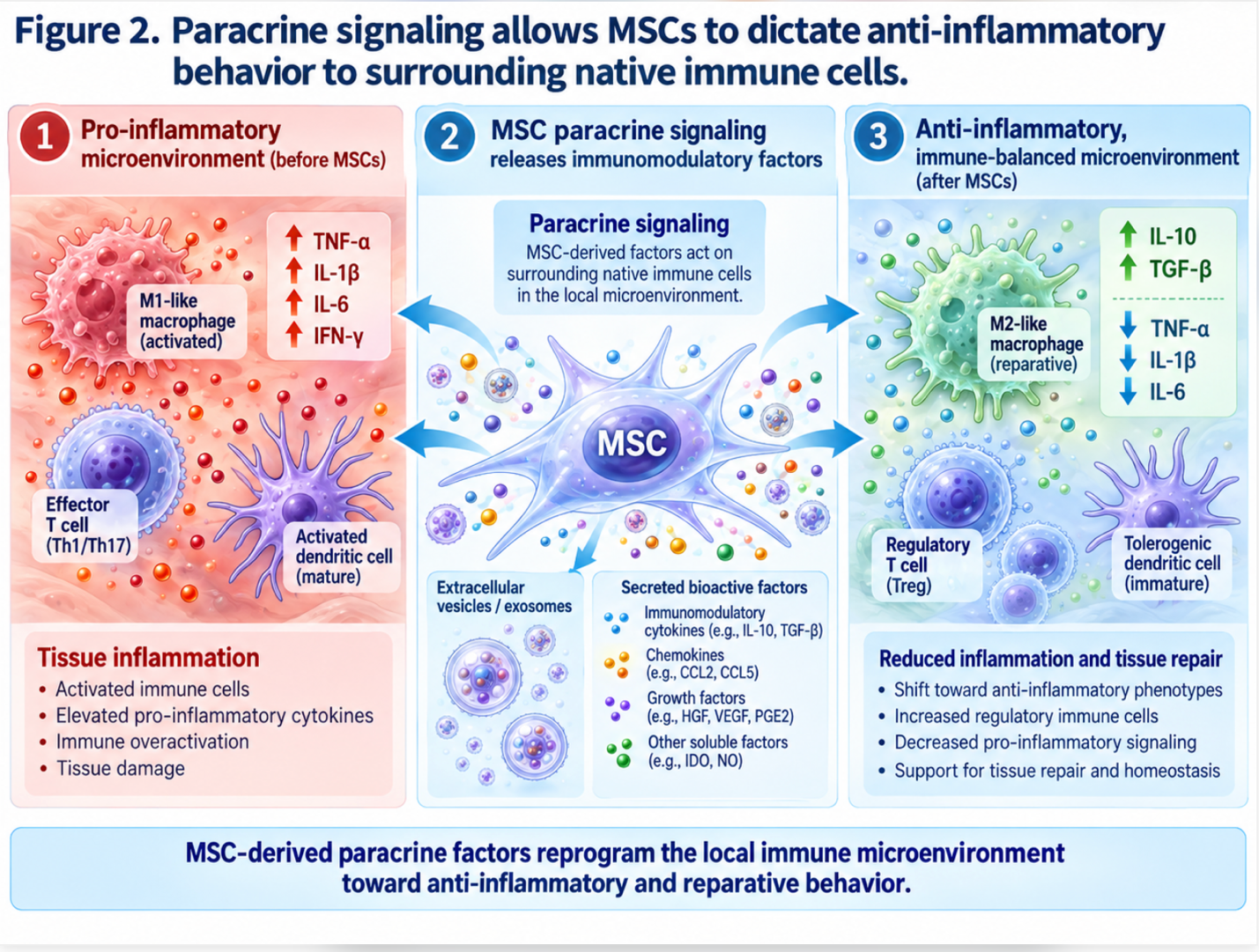
Figure 2: Paracrine signaling allows MSCs to dictate anti-inflammatory behavior to surrounding native immune cells.
This is why exosome therapy for autism is gaining massive traction. Exosomes are the cell-free, nano-sized extracellular vesicles that carry these exact signaling proteins. Because they lack a cellular nucleus and are incredibly small, they easily bypass the blood-brain barrier. The therapeutic potential relies entirely on this paracrine signaling instructing native neural cells to reduce inflammation, rather than the infused stem cells engrafting into the brain tissue. Beyond generalized inflammation reduction, these secreted factors initiate highly specific, measurable changes in the behavior of local immune cells.
The real heavy lifting of UC-MSC therapy happens at the macrophage level. UC-MSCs actively promote phenotypic macrophage reprogramming. They force local immune cells to switch from a pro-inflammatory, tissue-destructive state (M1) to an anti-inflammatory, tissue-repairing state (M2). This crucial transition is mediated by the targeted upregulation of Interleukin-10 (IL-10) and transforming growth factor-beta (TGF-β), molecules that act as the immune system’s braking mechanism against rampant inflammation.
| 📌 If you’re interested in how MSCs shift the immune system from attack mode to repair mode, we have an interesting article that discusses mesenchymal stem cell therapy for immune modulation, which you can read via the internal link. |
Can stem cells target mitochondrial dysfunction in autism? The data suggests they might, indirectly. By inhibiting Toll-like receptor signaling and promoting the SIRT1 pathway, MSCs protect neural tissue against severe oxidative stress in immunological pathway analysis models. This reduces the metabolic burden on cellular mitochondria.
The prevailing medical hypothesis suggests that fixing this systemic immune dysregulation correlates directly with behavioral improvements in ASD patients. However, this only applies to patients who actually have baseline immune dysregulation. If a patient’s autism stems entirely from genetic structural variances without an inflammatory component, these immunomodulatory mechanisms have nothing to target. This stark biological reality is exactly why mass, indiscriminate cellular infusions are destined to fail. For the therapy to work, the patient’s native immune cells must be actively misfiring. When researchers successfully isolate patients with documented immune dysregulation, the treatment efficacy data shifts dramatically, validating the premise that these cells act as targeted immunomodulators rather than generalized magic bullets.
Phase II clinical trials evaluating stem cells for autism demonstrate highly variable response rates, indicating the critical need for predictive biomarkers. While biological mechanisms are well-documented in petri dishes, human application yields frustratingly inconsistent functional benefits. In legitimate trials, improvements are measured using validated psychological tools rather than subjective parental reporting, representing the next critical stage in the Proof-to-Practice Continuum.
Phase II data reveals roughly 30% of participants show measurable adaptive improvements underscoring the urgent need for targeted patient selection profiles.
When analyzing the challenges of stem cell therapy for autism, you have to look at the objective trial data, not clinic testimonials. Take Duke University’s high-profile trials with cord blood and tissue. The study designs matter immensely: sample size, control groups, blinding, and follow-up duration dictate the validity of the data.
Open-label trials where the parents know their child received the treatment suffer massively from placebo effects. Serious researchers rely on randomized controlled trial data using double-blind methodologies. They measure outcomes using the Childhood Autism Rating Scale (CARS) or the Vineland Adaptive Behavior Scales (VABS). Recent Phase II trial data indicates that while some cohorts show statistically significant drops in CARS scores (indicating reduced symptom severity), a substantial portion of patients show absolutely no clinical response.
This is why the medical community insists on completing massive, multi-center Phase III trials before considering any broader clinical integration. Without rigorous, placebo-controlled data spanning diverse demographics, true efficacy remains impossible to confirm. This high variability in patient response necessitates a strict re-evaluation of what constitutes treatment success.
Specific immunological biomarkers hold significant potential for predicting patient response to stem cell therapy, though they are not yet standard clinical tools. Researchers are actively studying baseline neuroinflammatory markers, such as elevated TNF-alpha or specific cytokine profiles, to
However, validated predictive biomarker testing is currently confined to advanced clinical research settings. Families should view commercial clinics offering “guaranteed” biomarker matching with intense skepticism. Because the human immune system is incredibly dynamic, a single blood draw rarely provides the full picture. True predictive modeling requires longitudinal biomarker tracking over several months prior to infusion, a standard that virtually no offshore commercial clinic currently meets.
There is a massive gap between statistical significance in a laboratory marker (like lowered TNF-alpha in a blood draw) and a meaningful functional benefit in a child’s daily life.
This brings us to the core question: why do some children with autism respond to stem cell therapy and others don’t? The answer lies in patient selection. We desperately need predictive biomarker response analysis for stem cell therapy in autism. Personalized stem cell therapy for autism means using individual immunological profiles specific cytokine baselines to determine if a child is a candidate, rather than mass-applying infusions to anyone who can afford it. When improvements do happen, they typically manifest as subtle shifts: better eye contact, reduced lethargy, or modulated irritability. They do not look like a sudden, miraculous neurotypical awakening.
The U.S. Food and Drug Administration (FDA) has not approved any stem cell therapy for the treatment of autism, meaning all commercial UC-MSC interventions remain strictly investigational. When evaluating if these interventions are safe, peer-reviewed clinical trial data must be carefully weighed against regulatory warnings regarding unapproved regenerative products.
Intrathecal administration drastically elevates neurological infection risks demanding rigorous medical oversight for any spinal procedures.
No biological intervention is without risk. Documented side effects in pediatric MSC infusions generally fall into two categories: transient reactions and severe adverse events.
Common transient reactions observed in pediatric safety profiles include low-grade fever, lethargy, and localized pain at the IV site. But the biological risks of allogeneic (donor-derived) cell therapies run much deeper. There are valid concerns regarding immunological reactions, laboratory cross-contamination, and the theoretical risk of ectopic tissue formation if cells are recklessly over-expanded in unregulated labs. Furthermore, the route of administration drastically alters the risk profile. While intravenous (IV) infusions carry standard vascular risks, intrathecal (spinal canal) injections carry unique, severe neurological infection risks. Because of these inherent biological dangers, there are clear scenarios where proceeding is medically inadvisable.
There are specific clinical scenarios where UC-MSC therapy is definitively the wrong choice.
If a patient exhibits no proven neuroinflammatory markers or systemic immune dysregulation, cellular infusions are biologically pointless. Likewise, patients with ongoing, severe acute infections must delay any immunosuppressive therapy.
More importantly, biological interventions should never replace established standard-of-care behavioral therapies like Applied Behavior Analysis (ABA), speech therapy, and occupational therapy. Pursuing expensive, experimental treatments at the cost of validated behavioral interventions can permanently delay critical developmental milestones. For a patient lacking baseline behavioral support, the immediate alternative is securing standard therapeutic infrastructure, not boarding a plane for an experimental infusion.
The FDA’s stance is unequivocal: they have repeatedly issued warnings against unapproved regenerative medicine products marketed for autism. Yet, medical tourism thrives because desperate families frequently travel to jurisdictions with entirely different regulatory frameworks.
Will stem cell therapy for autism ever be approved? Yes, but only when Phase III trials prove undeniable efficacy. Until then, families navigating offshore options face severe risks. If you are evaluating the safety of international clinics in places like Thailand, you must demand third-party safety testing. You have to evaluate independent laboratory standards, demand cell viability reporting, and verify basic cGMP (Current Good Manufacturing Practice) compliance.
| 📌 If you’re planning treatment in Thailand and want a practical checklist for choosing a safe clinic, we have an interesting article that discusses whether stem cell therapy is safe in Thailand, which you can read via the internal link. |
There is currently no globally recognized standard protocol for autism stem cell therapy because the treatment remains firmly in the investigational phase. Clinical trials utilize highly varied methodologies regarding cell sources, dosages, and administration routes, making standard guidelines difficult to establish. Furthermore, autism spectrum disorder presents with heterogeneous biological markers, meaning a uniform treatment approach is scientifically impractical right now.
Mesenchymal stem cell-derived exosomes represent a highly promising future vector for autism treatment, potentially offering a safer alternative to live cell infusions. Exosomes are extracellular vesicles containing the immunomodulatory secretomes responsible for paracrine signaling. Because they are cell-free, exosomes completely bypass the risks of immune rejection, ectopic tissue growth, and pulmonary embolism associated with live cells. While preclinical data is exceptionally strong, exosome therapy for neurodevelopmental disorders requires extensive human clinical trials before establishing definitive clinical efficacy.
India’s Supreme Court restricted commercial stem cell therapy for autism due to a lack of conclusive, peer-reviewed evidence proving its safety and efficacy. The ruling was driven by the Ethics and Medical Registration Board (EMRB) highlighting that commercial clinics were operating outside established clinical trial frameworks. The court determined that offering unproven experimental cellular therapies as routine clinical treatments posed unacceptable risks to pediatric patients, leading to the strict limitation. This legal precedent underscores the global
Changes resulting from stem cell therapy, when they occur, are rarely immediate. Most clinical trial protocols track functional improvements over a 6 to 12-month period post-infusion. Because the therapy relies on modulating neuroinflammation and altering cellular behavior rather than acting as a fast-acting chemical stimulant, physiological changes take significant time to manifest as behavioral improvements.
For families exploring the future of stem cell therapy for autism, current data demonstrates that UC-MSCs possess compelling biological capabilities to modulate neuroinflammation. However, Phase II clinical trials continue to show highly variable functional response rates. The safest approach requires families to prioritize conventional, evidence-based behavioral therapies while treating cellular interventions strictly as investigational procedures requiring rigorous medical oversight.
Applying the Proof-to-Practice Continuum protects patients from predatory commercial claims. By demanding clear distinctions between theoretical laboratory biological plausibility and peer-reviewed clinical functional outcomes, caretakers can make objective, risk-aware decisions regarding advanced cellular therapies.
Always consult directly with a board-certified pediatric neurologist and an immunologist before evaluating any experimental treatments. Demand transparent clinical data, verified laboratory safety records, and comprehensive pre-treatment suitability assessments from any medical facility you consider.