Our Services
Others
- DFPP
- Shockwave
- IV Drip

Cardiovascular disease remains one of the leading causes of mortality worldwide, with myocardial infarction and heart failure resulting in irreversible loss of cardiomyocytes and progressive replacement of functional myocardium with non-contractile fibrotic tissue. Because the adult human heart has a markedly limited capacity for endogenous regeneration, stem cell therapy has been investigated for over two decades as a means of repairing damaged cardiac tissue, promoting neovascularization, and modulating the inflammatory and fibrotic processes that follow ischemic injury. This article reviews the biological rationale for cardiac stem cell therapy, the principal cell types under investigation, their proposed mechanisms of action, and the current state of clinical evidence. Particular attention is given to the disparity between mechanistic promise demonstrated in preclinical and early-phase studies and the more equivocal findings reported in larger controlled trials and meta-analyses, an area that remains genuinely unsettled in the cardiology literature.
Ischemic heart disease and its downstream consequence, heart failure, continue to impose a substantial global health burden. Following an acute myocardial infarction, a region of the myocardium is deprived of blood supply, resulting in cardiomyocyte death through both necrotic and apoptotic pathways. Unlike tissues such as the liver or skin, the adult mammalian heart possesses only a very limited endogenous regenerative capacity: cardiomyocytes lost to ischemic injury are not meaningfully replaced by new, functional muscle cells but are instead substituted by collagen-rich scar tissue. This scar prevents ventricular rupture in the acute phase but is mechanically non-contractile, and its presence contributes over time to adverse ventricular remodeling, reduced left ventricular ejection fraction (LVEF), and the eventual onset of clinical heart failure.
This fundamental biological limitation the heart’s inability to regenerate lost muscle has provided the principal rationale for investigating stem cell-based therapies in cardiology. The underlying hypothesis is that exogenously delivered or endogenously mobilized stem cells might replace lost cardiomyocytes, stimulate the formation of new blood vessels in ischemic tissue, and favorably modulate the inflammatory and fibrotic responses that follow infarction, thereby preserving or restoring cardiac function.
Stem cells are defined by two properties of particular relevance to cardiac regeneration: self-renewal, the capacity to proliferate while maintaining an undifferentiated state, and multipotency or pluripotency, the capacity to differentiate into specialized cell types. In the cardiac context, these properties have motivated efforts to introduce stem cells into damaged myocardium via intramyocardial injection, intracoronary infusion, or systemic intravenous administration with the aim of directly or indirectly promoting tissue repair, reducing infarct size, and improving ventricular function.
ESCs are pluripotent cells derived from early-stage embryos, capable in principle of differentiating into any somatic cell type, including cardiomyocytes. Despite this theoretical versatility, their clinical use in cardiology has been constrained by ethical controversy surrounding embryonic sourcing, regulatory heterogeneity across jurisdictions, and concerns regarding tumorigenicity (teratoma formation) following transplantation.
MSCs constitute the most extensively studied cell type in cardiac regenerative medicine. They can be isolated from bone marrow, adipose tissue, or umbilical cord tissue (Wharton’s jelly). Umbilical cord-derived MSCs (UC-MSCs) in particular have drawn increasing research interest owing to their comparatively low immunogenicity, higher proliferative capacity relative to adult-tissue-derived MSCs, and pronounced immunomodulatory and anti-inflammatory properties—features that appear central to their reported cardioprotective effects.
iPSCs are somatic cells reprogrammed to a pluripotent state, offering the possibility of autologous, patient-derived cell therapy that minimizes the risk of immune rejection. iPSCs can be differentiated in vitro into cardiomyocytes and other cardiac lineages, positioning them as a candidate for personalized regenerative approaches, though manufacturing complexity and residual tumorigenic risk remain practical barriers to widespread clinical use.
These cells are isolated directly from cardiac tissue and are capable of differentiating into cardiomyocytes, smooth muscle cells, and endothelial cells. Their cardiac tissue origin has been proposed as a potential advantage in terms of biological compatibility with the target organ, although isolation is more invasive than for MSCs or iPSCs.
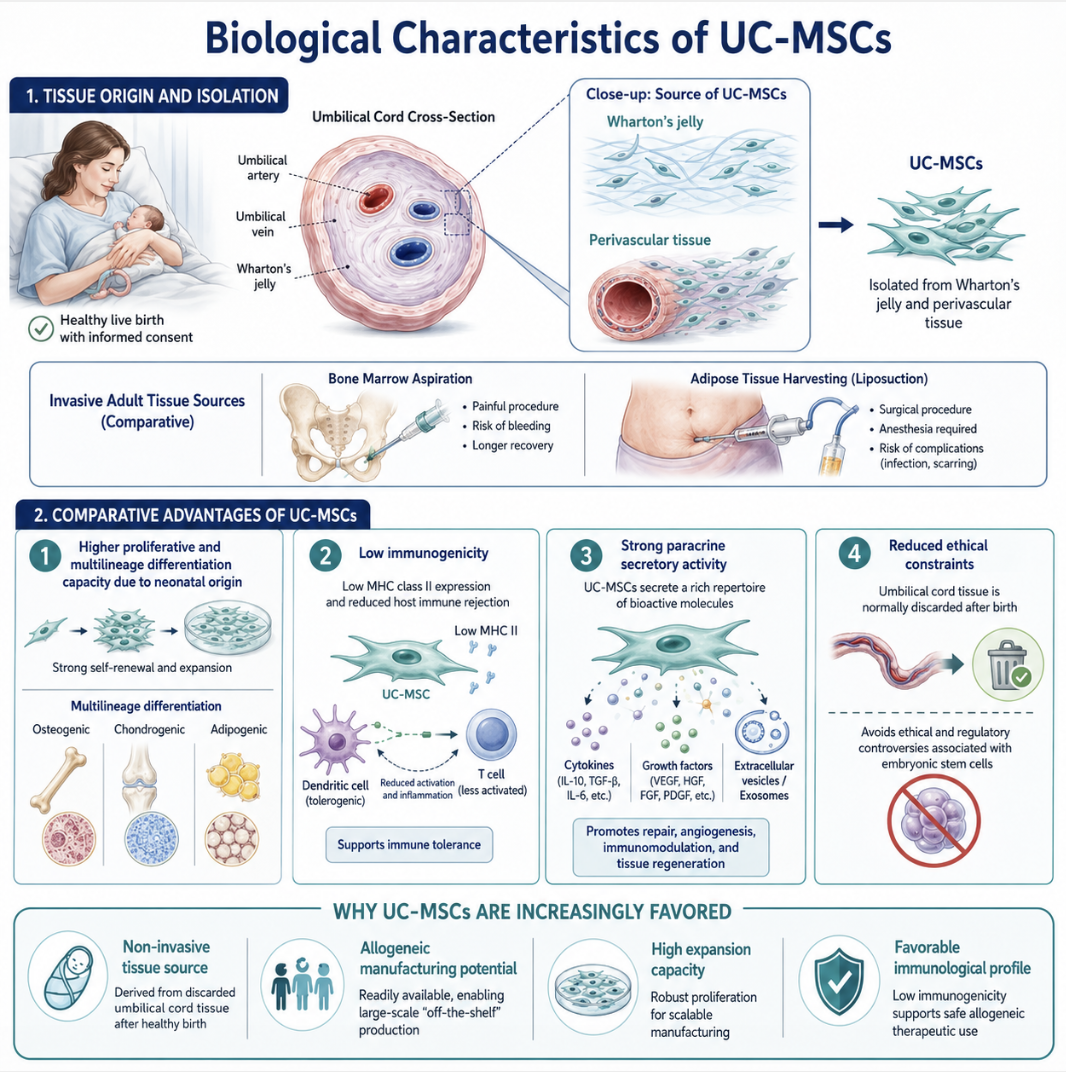
A primary therapeutic objective is the generation of new, functional cardiomyocytes to replace those lost during ischemic injury. While direct transdifferentiation of transplanted stem cells into mature, electrically integrated cardiomyocytes has proven more limited in practice than initially hypothesized, some contribution to muscle regeneration has been reported in both preclinical models and early clinical studies.
Stem cells, particularly MSCs, are understood to secrete pro-angiogenic factors that stimulate the formation of new capillaries within ischemic myocardium. Improved vascularization is thought to enhance oxygen and nutrient delivery to viable but functionally compromised tissue in the peri-infarct zone, a mechanism that has been directly observed in first-in-human trial data using umbilical cord-derived MSCs (UMSC01) delivered by combined intracoronary and intravenous routes following ST-elevation myocardial infarction (Hsiao et al., 2022).
Persistent post-infarction inflammation contributes to secondary tissue injury and adverse remodeling. MSCs exert immunomodulatory effects, notably promoting the polarization of macrophages toward a reparative (M2-like) phenotype via paracrine signalling. A Phase I/II trial of intramyocardial umbilical cord-derived MSC injection reported that this mechanism macrophage repolarization, direct pro-angiogenic activity, and suppression of inflammatory responses contributed to myocardial repair in patients with chronic ischemic heart failure, with an acceptable safety and tolerability profile (Phase I/II Clinical Trial of Intramyocardial Injection of HucMSCs, ClinicalTrials.gov NCT07265349).
Some evidence suggests that stem cell-derived paracrine factors can limit the extent of fibrotic scar formation following infarction and, in certain preclinical contexts, promote remodeling of existing scar tissue toward a more compliant, less mechanically restrictive state.
This section requires particular candor, as the clinical evidence for cardiac stem cell therapy is considerably more heterogeneous than the mechanistic rationale might suggest.
Early-phase and pilot studies have generally reported that stem cell administration across intracoronary, intramyocardial, and intravenous routes is safe and reasonably well tolerated in the short term. The first-in-human pilot trial combining intracoronary and intravenous UC-MSC therapy in STEMI patients with reduced LVEF is illustrative of this pattern, demonstrating procedural feasibility and an acceptable safety profile in a small, open-label cohort (Hsiao et al., 2022).
When the evidence is aggregated across multiple randomized controlled trials, the picture becomes considerably less clear. A 2024 meta-analysis of randomized controlled trials examining MSC transplantation in patients with chronic heart failure concluded that the effect of MSC therapy on major adverse cardiovascular events and cardiac function indices remains a genuinely contested question within the field (Kavousi et al., 2024). Similarly, a broader narrative review covering trials published between 2015 and 2024 found that although some studies including the BAMI and C-CURE trials reported improvements in LVEF and reduction in infarct size, substantial heterogeneity in trial design, small sample sizes, and short follow-up durations limit the generalizability of these findings, and that long-term benefits such as improved survival and reduced hospital readmission remain inconclusive (Assessing the Potential Benefits of Stem Cell Therapy in Cardiac Regeneration, PMC, n.d.).
Several larger, more methodologically rigorous trials are currently underway or recently completed, reflecting the field’s effort to resolve these uncertainties. These include a Phase III randomized trial evaluating intracoronary infusion of umbilical cord-derived Wharton’s jelly MSCs for the prevention of heart failure following acute myocardial infarction (Attar et al., 2022), and a trial investigating repeated multi-intravenous infusion of UC-MSCs rather than the single-dose protocols used in most prior studies in patients with heart failure and reduced ejection fraction (Gong et al., 2024). The design of this latter trial reflects a broader shift in the field toward examining whether dosing regimen, rather than cell type alone, may account for some of the inconsistency observed across earlier studies.
| Treatment Modality | Primary Objective | Principal Limitation |
| Pharmacological therapy (e.g., beta-blockers, ACE inhibitors) | Symptom control and prevention of disease progression | Does not repair existing myocardial damage |
| Percutaneous coronary intervention (PCI) | Restore blood flow through occluded vessels | Does not regenerate tissue already lost to infarction |
| Coronary artery bypass grafting (CABG) | Surgically reroute blood supply | Invasive, with associated procedural risk |
| Stem cell therapy (investigational) | Tissue repair, angiogenesis, and immunomodulation | Evidence remains heterogeneous; meta-analytic findings are contested; long-term outcome data are limited |
The comparative appeal of stem cell-based approaches lies in their orientation toward addressing the underlying loss of functional tissue rather than solely managing downstream symptoms, together with a generally favorable short-term safety profile across studies conducted to date. This must, however, be weighed carefully against the genuine uncertainty that persists at the level of aggregated clinical evidence, as detailed in Section 5.
Current research is exploring the co-administration of stem cells with biomaterial scaffolds, gene therapy vectors, or exogenous growth factors, on the premise that combined interventions may address limitations such as poor cell retention and survival following transplantation that appear to constrain the efficacy of cell therapy alone.
Advances in bioengineering may eventually permit the fabrication of stem cell-seeded cardiac patches or three-dimensional bioprinted tissue constructs capable of replacing larger areas of damaged myocardium, an approach that remains at an earlier stage of development than injectable cell-based therapies.
Stem cell therapy for cardiovascular disease is grounded in a biologically coherent rationale: the adult heart’s limited regenerative capacity, combined with the demonstrated ability of stem cells—particularly mesenchymal stem cells to promote angiogenesis, modulate inflammation, and potentially limit fibrotic scarring. Early-phase clinical studies have generally supported the safety and feasibility of this approach across multiple cell types and delivery routes. However, the field is characterized by a notable divergence between this mechanistic and early clinical promise and the more equivocal, at times contradictory, findings emerging from larger randomized trials and meta-analyses. Patients and clinicians considering stem cell therapy for cardiovascular disease should therefore treat it as an active and evolving area of investigation rather than an established therapeutic standard, and any treatment decision should be made in close consultation with a cardiologist or specialist in regenerative cardiology.
Disclaimer: This article is intended for general informational and academic purposes only and does not constitute individualised medical advice. The clinical evidence discussed herein is heterogeneous and, in several respects, unresolved; readers considering stem cell therapy for cardiovascular disease should consult a qualified cardiologist or specialist in regenerative medicine to evaluate the suitability, risks, and realistic expected outcomes of treatment for their specific condition.