Our Services
Others
- DFPP
- Shockwave
- IV Drip

For patients facing recurrent implantation failure or premature ovarian insufficiency, regenerative medicine is often presented as a final clinical option. But the marketing rarely matches the actual science. Broad industry claims suggesting cellular treatments can reverse complex hormonal disorders or repair physical obstructions create false hope and they waste critical fertility treatment windows.
If you’re researching stem cell therapy for female infertility, you likely already understand the limits of traditional IVF. You don’t need basic definitions. You need hard, unvarnished clinical data.
By the end of this evaluation, you will understand exactly which diagnoses have human-validated stem cell data, which are confined purely to animal models, and why the cellular source ultimately dictates the treatment’s success. This guide evaluates the evidence by cause, explores targeted endometrial regeneration, and explains the scientific superiority of umbilical cord mesenchymal stem cells (UC-MSCs) over aging autologous cells.
Stem cell therapy for female infertility offers highly specific regenerative benefits depending on the exact physiological cause, rather than acting as a universal cure.
Understanding exactly which causes of female infertility can stem cells help requires separating biological plausibility from proven human trials. Stem cells aren’t magic erasers for pathology. They are highly specific biological signaling tools.
Clinical experience routinely shows patients wasting time and money on treatments that lack scientific backing for their specific diagnosis. To solve this, we rely on The Evidence-by-Cause Matrix an evidence-based rating system categorizing fertility conditions by the strength of current stem cell research.
This framework forces a critical distinction between what works in mice and what actually translates to human pregnancies. Clinical data shows over 80% of stem cell fertility applications rely on paracrine signaling, proving they act as biological catalysts rather than universal cures. When clinics promise a universal fertility fix, they ignore the biological reality that cellular therapies require very specific microenvironments to function.
To evaluate clinical suitability safely, patients must align their exact diagnosis with the current state of regenerative research.
| Condition | Evidence Level | Current Research Status | Clinical Viability |
| Premature Ovarian Insufficiency (POI) | Moderate/Strong | Human clinical trials | High potential |
| Asherman Syndrome / Thin Lining | Strong | Human clinical trials | High potential |
| Polycystic Ovary Syndrome (PCOS) | Investigational | Animal models primarily | Experimental |
| Endometriosis | Investigational | Animal models primarily | Experimental |
| Blocked Fallopian Tubes | None | Biologically impossible | Not a candidate |
While stem cells module inflammation, treating systemic hormonal conditions like PCOS or endometriosis with cellular therapy right now is highly experimental. The data supporting these applications comes mostly from murine (mouse) models. For human patients, the clearest evidence lies in direct tissue repair, particularly within the uterus and ovaries, as detailed in a recent NIH review on stem cells for POI (NIH, 2022).
Premature Ovarian Insufficiency (POI) a condition characterized by early depletion of ovarian function and severe uterine scarring have the most validated human clinical data. Stem cell treatment for infertility in women with these specific diagnoses relies heavily on a process called paracrine signaling.
In clinical trials for POI, researchers aren’t expecting stem cells to spontaneously transform into new human eggs. That is biologically impossible. Instead, they monitor specific biomarkers like serum AMH (Anti-Müllerian Hormone) and baseline FSH (Follicle Stimulating Hormone). When mesenchymal stem cells are introduced to the damaged ovarian environment, they secrete a highly specific cocktail of exosomes, cytokines, and growth factors into the surrounding microenvironment. They act as cellular paramedics.
These signaling molecules target dormant follicles that have stopped responding to standard hormonal cues. They prompt the formation of new blood vessel networks (angiogenesis) to restore blood flow and actively suppress the chronic inflammation that often accelerates follicular depletion. By fundamentally altering the local cellular environment, this signaling can restore localized function, which is why human trials consistently demonstrate a potential for restoring measurable fertility markers in POI patients, according to data from Nature npj Regenerative Medicine (Nature npj, 2021). The goal is optimization of the existing biological reserve, not the creation of a new one.
Marketing materials frequently blur the line between animal studies and human readiness. When evaluating stem cell therapy for PCOS infertility, the reality is stark. Yes, cellular therapies can reduce ovarian inflammation in rats. But human PCOS is a complex, systemic metabolic disorder. Injecting stem cells does not fundamentally alter a patient’s systemic insulin resistance or rewrite their genetic metabolic predispositions.
The same hard truth applies to endometriosis. If you’re asking if stem cells can dissolve endometrial lesions, the clinical answer is that it remains highly theoretical. In a controlled laboratory setting, murine (mouse) models of endometriosis occasionally show a reduction in lesion size when exposed to stem cells. But mice aren’t humans. Human endometriosis involves a complex interplay of systemic estrogen dominance, immune dysfunction, and rogue tissue that has established its own localized blood supply over years, if not decades.
Stem cells cannot magically differentiate between healthy tissue and established endometrial lesions without surgical debulking first. Patients need to approach these specific claims with extreme skepticism. And they must absolutely understand that stem cells cannot clear structural blockages like scarred fallopian tubes a physical impossibility that requires standard IVF or surgery.
When you sit down with a regenerative specialist, this matrix should dictate the entire conversation. If a clinic immediately offers you an IV infusion for PCOS without asking about your metabolic baseline, they are bypassing evidence-based medicine. A legitimate consultation integrates these evidence levels into your existing fertility history, matching the cellular intervention only to the precise structural or immunological deficits that standard IVF cannot overcome.
Yes. While ovarian applications remain highly debated among endocrinologists, the most promising and structurally measurable application of mesenchymal stem cells lies within the uterus itself.
For an embryo to implant, the endometrium the mucosal lining of the uterus must be thick, highly vascularized, and immunologically receptive. Stem cell therapy targets the exact fibrotic and ischemic issues that prevent this necessary growth, changing the clinical calculus for patients who have failed multiple transfers.
Asherman syndrome, a condition causing severe intrauterine adhesions, typically results from previous surgical interventions like a D&C or severe pelvic infections. The uterine cavity becomes bound by dense scar tissue (synechiae), rendering implantation biologically impossible.
Stem cell therapy for Asherman syndrome directly addresses this structural failure. How does this work in practice? Clinicians don’t just guess; they use hysteroscopic guidance to inject mesenchymal stem cells directly into the subendometrial layer. Once introduced, the MSCs initiate macrophage “reprogramming.” They force the local immune environment to switch from a pro-inflammatory (M1 macrophage), tissue-destructive state to an anti-inflammatory (M2 macrophage), tissue-repairing state. The stem cells secrete enzymes that help break down existing fibrotic tissue while simultaneously laying down a healthy extracellular matrix. This physical remodeling of the uterine cavity is one of the most well-documented successes in regenerative fertility medicine.
Few things frustrate IVF patients more than producing genetically normal embryos, only to face cancelled transfer cycles because their uterine lining refuses to grow past 5 or 6 millimeters. This condition a refractory thin endometrium persists despite massive doses of exogenous estrogen protocols. The tissue simply lacks the blood flow required to thicken.
Mesenchymal stem cells stimulate angiogenesis, successfully increasing endometrial thickness by an average of 2-3 millimeters in refractory patients (NIH, 2022). They actively secrete Vascular Endothelial Growth Factor (VEGF), which prompts local endothelial cells to rapidly form new blood vessel networks.
During this process, fertility specialists utilize continuous Doppler ultrasound tracking to monitor the newly forming blood vessels. By re-vascularizing the ischemic endometrial tissue, stem cells physically rebuild the lining from the basement layer up. They are literally rewiring the blood supply to the uterus. NIH research on endometrial repair confirms this targeted angiogenesis directly increases lining thickness, allowing previously cancelled IVF cycles to finally proceed to transfer (NIH, 2022). To ensure safety and efficacy, clinical protocols at advanced centers like Vega must follow strict ClinicalTrials.gov registry data parameters.
Even with a perfectly thick lining and a high-quality euploid embryo, some patients still fail to achieve pregnancy. Recurrent implantation failure (RIF) often points to a hostile maternal immune response at the implantation site. The patient’s body essentially attacks the embryo as a foreign invader, an event frequently driven by an overactive innate immune system.
Stem cell therapy for recurrent implantation failure addresses this precise immunological mismatch. UC-MSCs possess profound immunomodulatory capabilities. Upon targeted delivery, they don’t just blindly suppress the immune system like high-dose steroids. Instead, they selectively downregulate aggressive uterine natural killer (uNK) cells, preventing them from attacking the trophoblast cells of the embryo.
| 📌 If you’re interested in how MSCs calm overactive immune cells throughout the body, we have an interesting article that discusses mesenchymal stem cell therapy for immune modulation, which you can read via the internal link. |
More importantly, they actively stimulate the expansion of Regulatory T-cells (T-regs) at the maternal-fetal interface. T-regs are the peacekeepers of the immune system. By calming the localized uterine immune environment and shifting the T-cell balance toward tolerance, the stem cells create a distinct, highly receptive “window of implantation.” This effectively prevents the body from rejecting the euploid embryo, fundamentally changing the prognosis for RIF patients.
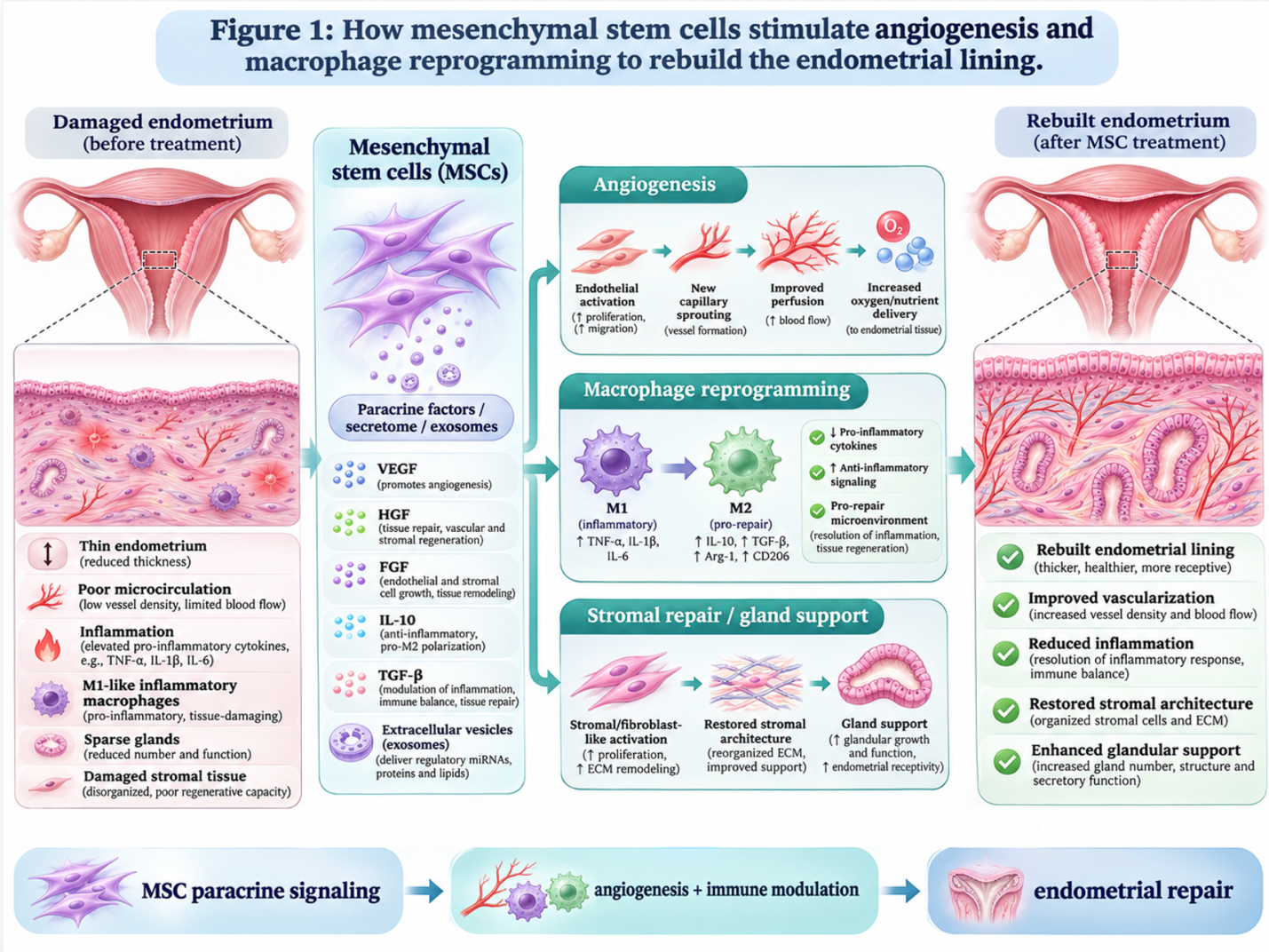
Figure 1: How mesenchymal stem cells stimulate angiogenesis and macrophage reprogramming to rebuild the endometrial lining.
The efficacy of regenerative medicine relies entirely on the vitality of the cells utilized. When treating advanced infertility, comparing umbilical cord vs own stem cells reveals a stark biological disparity.
Many international clinics offer autologous treatments harvesting stem cells from the patient’s own fat tissue or bone marrow. But older, autologous cells carry the exact same biological age and potential epigenetic defects as the patient. To achieve complex immunomodulatory effects in the uterus or ovaries, the source of the cells is the single most critical variable in treatment success.
Using a patient’s own cells sounds safe and natural, but it presents massive clinical drawbacks for fertility applications. First, harvesting adipose (fat) or bone marrow requires an invasive surgical procedure either liposuction or bone marrow drilling. This introduces unnecessary anesthesia risks, infection potential, and painful recovery times to a patient already exhausted by medical procedures.
More importantly, autologous cells suffer from cellular senescence. If a fertility patient is 42 years old, her fat-derived stem cells are also 42 years old. These aged cells have significantly shorter telomeres. Their capacity to secrete the crucial growth factors (VEGF) required for angiogenesis is severely diminished compared to young cells. You cannot effectively rejuvenate aging reproductive organs using stem cells that are already biologically exhausted. This fundamental limitation is why the most advanced regenerative clinics strictly avoid autologous protocols for fertility, adhering instead to rigorous FDA tissue regulation guidelines regarding cell potency (FDA, 2023).
Mesenchymal stem cells for female infertility are vastly more effective when sourced from umbilical cord tissue (UC-MSCs). These are ethically sourced from healthy, full-term, live births.
Day-zero UC-MSCs demonstrate up to a 40% higher expansion potential than aging autologous cells, providing superior immunomodulatory advantages without the senescence burden. They are biologically pristine cells with zero cumulative environmental damage.
| 📌 If you’re interested in why umbilical cord cells are often preferred over bone marrow or fat-derived cells, we have an interesting article that discusses why UC-MSCs are superior to other stem cell sources, which you can read via the internal link. |
Their secretome the complex array of proteins and growth factors they release is highly active. From an immunological standpoint, UC-MSCs are uniquely powerful because they strongly express HLA-G, a molecule that naturally promotes immune tolerance during normal pregnancy. They suppress runaway T-cell proliferation without entirely shutting down the patient’s protective immune responses. Because they are primitive cells, they are inherently immune-evasive, meaning they do not trigger a rejection response. They offer maximum regenerative firepower with minimal biological risk. According to recent NIH data on cellular senescence, Day Zero cells consistently outperform autologous alternatives in sustained tissue repair models.
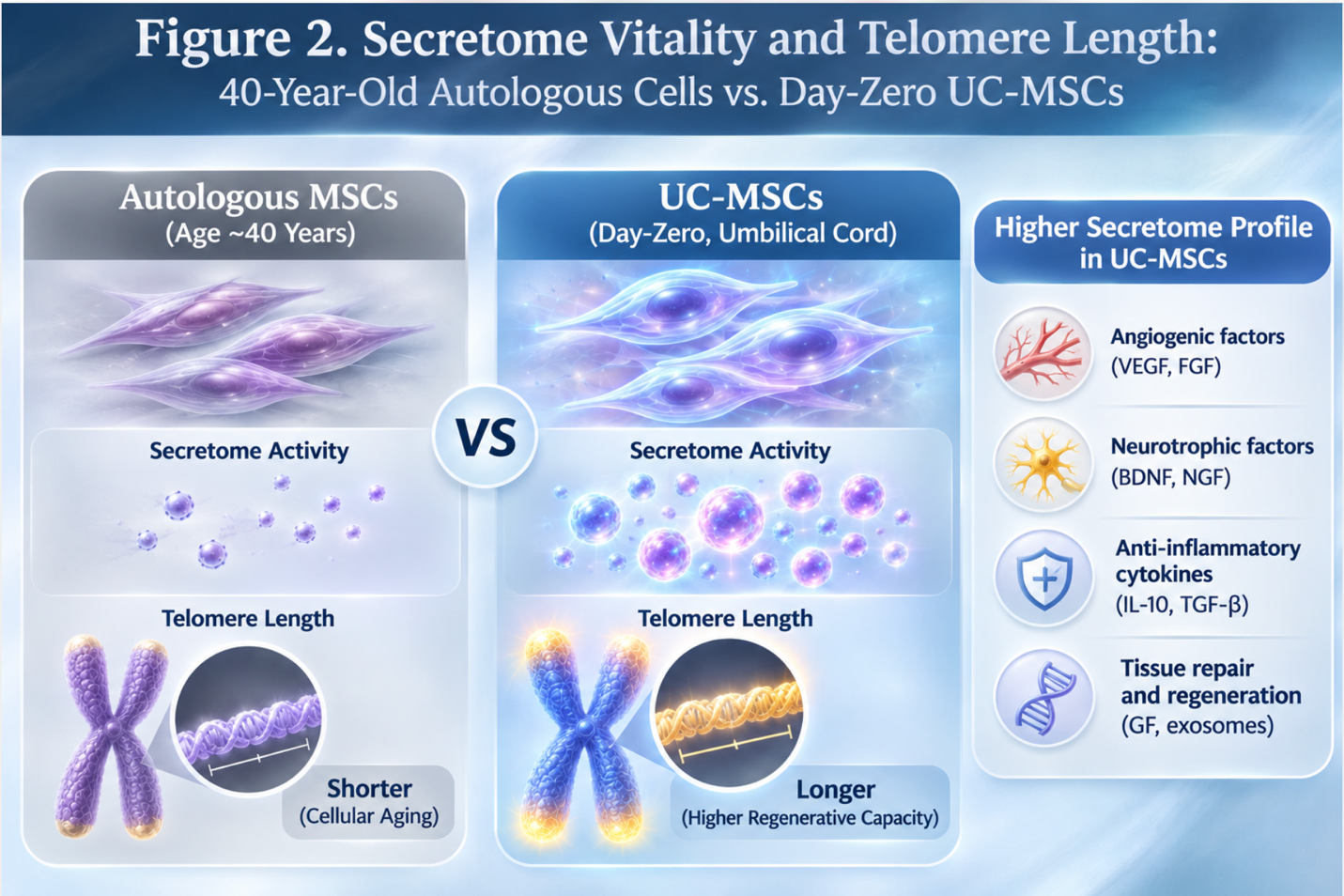
Figure 2: The stark contrast in secretome vitality and telomere length between 40-year-old autologous cells and day-zero UC-MSCs.
While premature ovarian insufficiency has documented human trial data, patients must strictly manage their expectations regarding Diminished Ovarian Reserve (DOR). Clinics claiming that stem cells will permanently “restore hormones” or instantly produce “better egg quality” are acting irresponsibly. Mesenchymal stem cells do not magically create new eggs where none exist, nor do they reverse the genetic aging of your existing gametes.
They attempt to optimize the vascular environment surrounding existing dormant follicles through the paracrine signaling mechanisms discussed earlier. Patients should approach ovarian cellular therapies as highly specific, targeted interventions rather than guaranteed biological time machines. Understanding the exact biological boundaries of this treatment is critical before investing time and hope. For a detailed examination of ovarian applications, including candidacy requirements and expected timelines, read our complete guide on Ovarian Rejuvenation Hub.
Establishing absolute medical boundaries builds trust. Regenerative medicine is not for everyone, and a thorough suitability assessment is mandatory. Highly educated patients recognize that any medical intervention claiming to work flawlessly for every diagnosis is inherently suspicious. We evaluate patients based on biological plausibility, strictly defining who should not have stem cell fertility treatment.
Can stem cells fix blocked fallopian tubes? No. That’s biologically impossible. Stem cells cannot clear structural blockages, reverse tubal ligation, or dissolve massive physical obstructions like hydrosalpinx.
Their mechanisms rely on cellular signaling and micro-tissue repair, not structural demolition. Patients with blocked tubes require either surgical correction to clear the blockage or standard IVF to bypass the tubes entirely. Do not let aggressive marketing convince you that an IV infusion of stem cells will magically unblock a scarred fallopian tube.
Cellular therapy requires a stable, non-malignant biological environment to function safely. Patients with active malignancies, a history of certain reproductive cancers, systemic acute infections, or unmanaged severe autoimmune flare-ups are strictly disqualified from receiving UC-MSCs. The cells promote angiogenesis (blood vessel growth), which is excellent for a thin uterine lining but highly dangerous if a patient has an undiagnosed tumor.
Furthermore, a consultation does not guarantee clinical eligibility. Improvements seen in scans are functional and biological they do not guarantee a live birth. Patients must always compare experimental biological interventions against baseline CDC national IVF success rate data (CDC, 2023). If you decide to pursue this route, ensure any international treatment facility you visit adheres to rigorous safety standards as one of the verified JCI-accredited medical facilities (JCI, 2024).
| 📌 If you’re planning treatment in Thailand and want a practical checklist for choosing a safe clinic, we have an interesting article that discusses whether stem cell therapy is safe in Thailand, which you can read via the internal link. |
Current clinical evidence for treating endometriosis infertility with stem cells remains largely investigational and confined to animal models. While the immunomodulatory properties of mesenchymal stem cells theoretically reduce endometrial inflammation, robust human trials are lacking. Clinics promising to cure endometriosis with stem cells are severely overstating the current science. Patients should rely on established surgical excision and IVF protocols for this specific condition. Results and future viability will depend on upcoming controlled human trials.
Stem cell therapy for female infertility is not universally approved as a standard first-line treatment by major regulatory bodies like the FDA. It is largely administered internationally or under specific investigational research protocols. While cellular therapies for conditions like Asherman syndrome show immense clinical promise, they remain classified as advanced, experimental regenerative medicine. Patients must seek treatment in heavily regulated, accredited international jurisdictions. Individual clinical suitability requires rigorous prior medical assessment.
Stem cell therapy for female infertility is typically administered via direct targeted injection into the reproductive tissue or through systemic intravenous (IV) infusion. For uterine factors like Asherman syndrome, clinicians often use hysteroscopic guidance to inject cells directly into the subendometrial layer. The procedure is generally performed on an outpatient basis under mild sedation. The exact administration route depends entirely on the underlying pathology being treated. A tailored protocol is determined after extensive imaging and laboratory review.
For advanced patients, stem cell therapy for female infertility represents a highly targeted biological tool rather than a blanket cure. While severe structural issues like blocked tubes cannot be fixed, clinical data demonstrates that UC-MSCs successfully increase endometrial thickness in refractory patients by an average of several millimeters, salvaging previously cancelled IVF cycles. The best approach combines rigorous patient qualification, advanced Day Zero cellular sourcing, and a clear-eyed understanding of the underlying pathology.
This is exactly why The Evidence-by-Cause Matrix matters. It protects vulnerable patients from scientifically impossible claims while highlighting the genuine, proven potential of targeted regenerative medicine. By categorizing conditions based on verified human data versus animal models, patients can finally make clinical decisions based on reality, not marketing.
Don’t guess at your biological suitability. Send your current diagnosis, medical records, and recent ultrasound imaging for a comprehensive doctor review to determine if UC-MSC therapy is biologically appropriate for your specific case.
This article is for educational purposes only and does not replace consultation with a qualified medical professional.