Our Services
Others
- DFPP
- Shockwave
- IV Drip

Among the most challenging complications of diabetes, diabetic wounds and in particular diabetic foot ulcers (DFUs) are worthy of careful consideration. These wounds can run deep and be long-lasting, with significant effects on a person’s mobility, independence and quality of life. While basic wound care is still paramount, most treatments only address symptoms and do not rehabilitate the body’s natural healing capabilities. Diabetic wound healing is one of regenerative medicine besides stem cell therapy in Thailand, which has been increasingly important over the past few years. Rather than treating the symptoms of a wound like products bandaging over an injury, this approach aims to cure it by optimising the biological environment within cells at their root.
Diabetes presents a special set of issues in terms of wound healing which the normal healing process breaks down. Wound healing goes through a series of stages like inflammation, tissue production and then remodeling in healthy individuals. What we see in diabetics is that this process is often impaired.
Biological elements play a role in this condition which includes:
Consequently, which leads to wounds existing in long-term inflammation stage, interfering with normal tissue recovery. It explains why, despite continued treatment, many patients heal slowly and/or incompletely.
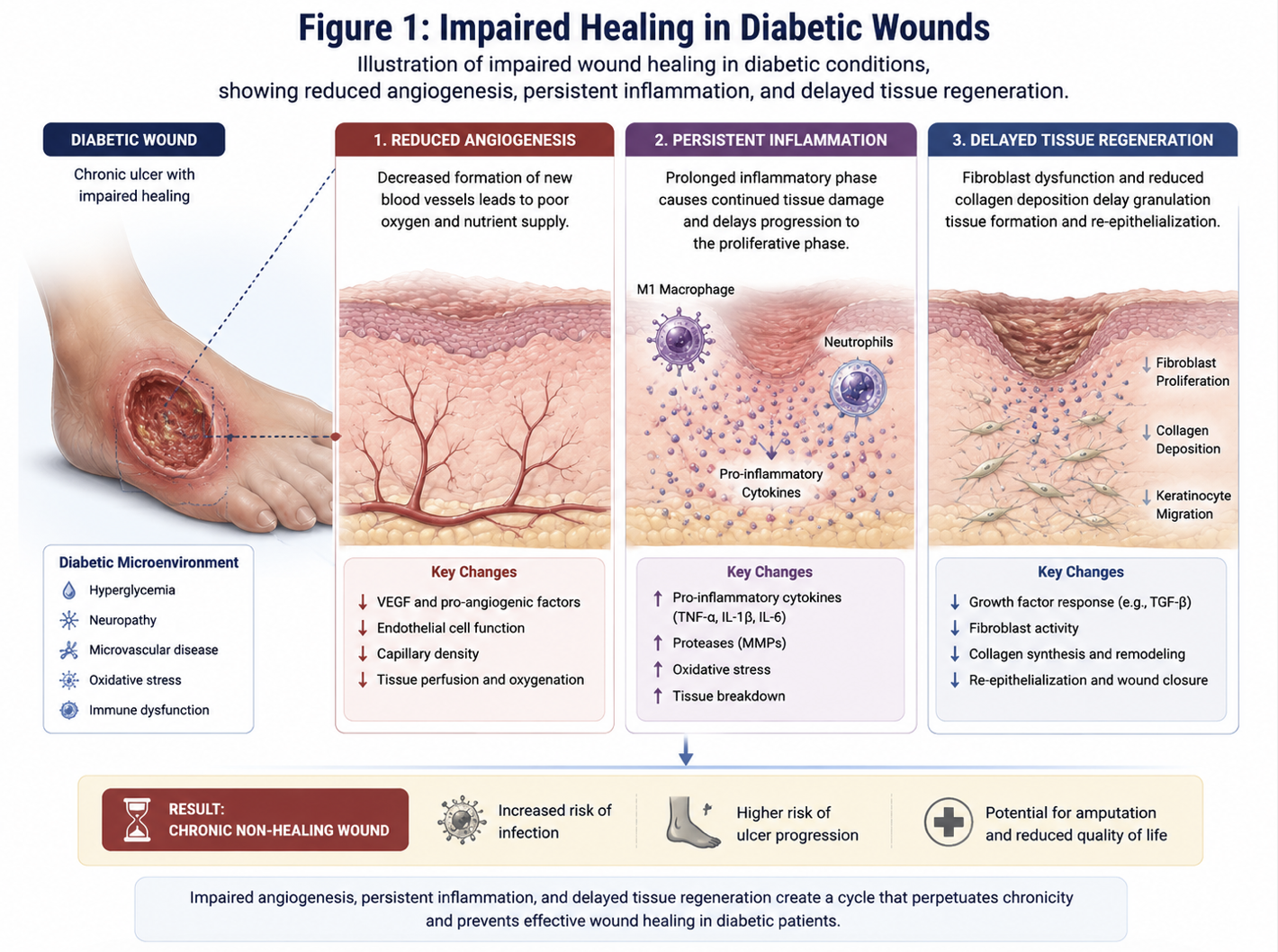
In that which we must look at is the fact that present therapies are limited in what they do. As for routine wound care we do what is to be done which is to clean the wound, apply a dressing, control infection and offload. While those actions are basic and very much needed what we must also see is that they do not in fact deal with the root biological issues. We may through medication for example relieve pain or an infection but we do not see that which improves cellular function or tissue repair.
Also, management can be complicated over the long term for these reasons:
So, there is an increased demand for treatment techniques that are more than just skin deep.
Using stem cell therapy or regenerative medicine that involves innovative strategies aimed at enhancing the natural healing processes of body can give relief from these conditions. The use of mesenchymal stem cells (MSCs) is particularly umbilical cord-derived MSCs has been one of the most studied options. Such cells are thought to exert most of their effects via cell signaling as opposed to directly replacing injured tissue. They secrete bioactive molecules, including growth factors and cytokines, that can modulate the healing milieu.
Investigators are studying potential supportive effects that may include:
Stem cell therapy thus aims to shift chronic wounds towards a more active state of healing by targeting these mechanisms.
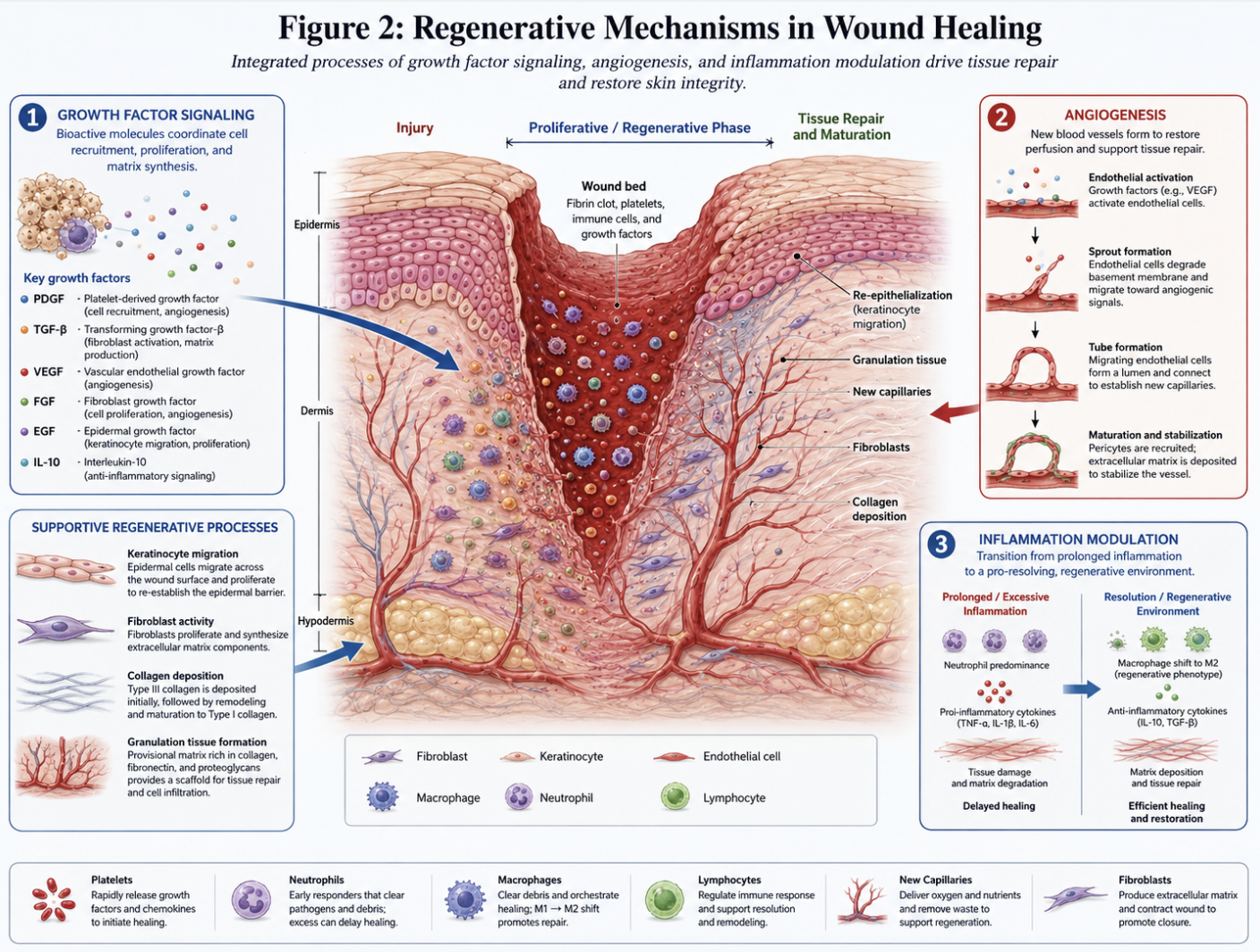
Regenerative medicine, including chronic wound treatments, has nowmti become an established destination in Thailand. The first, and most fundamental reason, is that there are specialized clinics available who practice this form of regeneration in combination with modern medical care.
Patients may consider Thailand because of the following:
It is important to note that these therapies are often provided in conjunction with traditional care, not as a substitute.
Diabetic wounds are a complex, multifaceted medical scenario characterized by impaired healing, persistent inflammation and decreased regenerative potential. Conventional therapies are very important in controlling signs and symptoms, and preventing its complications but it does not completely addresses the biological della malattia. Another emerging regenerative approach is stem cell therapy in Thailand that aims to support the wound environment on a cellular level. Although these therapies are still investigational and results may vary, they represent a new direction toward more integrative and biologically informed approaches to treatment.”
This approach is relatively new for many patients and serves as an adjunct in hopes of improving healing potential, minimizing complications and optimizing quality of life.