Our Services
Others
- DFPP
- Shockwave
- IV Drip


For those asking, “is stem cell therapy for knees worth it,” the answer hinges not on marketing claims, but on biological compatibility and rigorous patient selection. Clinicians and patients alike are exhausted by the relentless hype surrounding regenerative clinics. We need objective data, not brochures. This guide applies The Biological Suitability Framework a three-factor assessment evaluating cellular viability, joint microenvironment, and clinical regulation to strictly assess UC-MSC efficacy, realistic expectations for stem cell knee treatment, and Thailand’s medical logistics.
| 📌 If you’re interested in why the percentage of living cells matters so much at the time of treatment, we have an interesting article that discusses the importance of cell viability in UC-MSC stem cell therapy, which you can read via the internal link. |
Answering “is stem cell therapy for knees worth it” requires evaluating your specific osteoarthritis grading against hard clinical data using The Biological Suitability Framework.
Umbilical Cord Mesenchymal Stem Cells (UC-MSCs), derived from Wharton‘s Jelly, fundamentally modulate local immune microenvironments rather than acting as mere structural building blocks. Understanding this mechanism forms the first pillar of The Biological Suitability Framework, discarding the outdated myth that injected cells simply become brand-new cartilage.
| 📌 If you’re interested in why umbilical cord cells are often preferred over bone marrow or fat-derived cells, we have an interesting article that discusses why UC-MSCs are superior to other stem cell sources, which you can read via the internal link. |
So, how do they actually function? Unlike autologous bone marrow extractions which require a painful hip aspiration and yield cells that degrade in potency as patients age UC-MSCs rely on paracrine signaling. They release secretomes that execute phenotypic macrophage reprogramming. UC-MSCs secrete bioactive molecules that promote the switch from a pro-inflammatory to a tissue-repairing macrophage population with studies demonstrating a substantial increase in M2 tissue-repairing macrophages within the joint capsule. This shifts the joint from a hostile, degenerative state to a stabilized one. For patients asking, “should I try stem cell therapy for knee pain,” the answer lies in whether you need systemic inflammation control or severe structural repair.
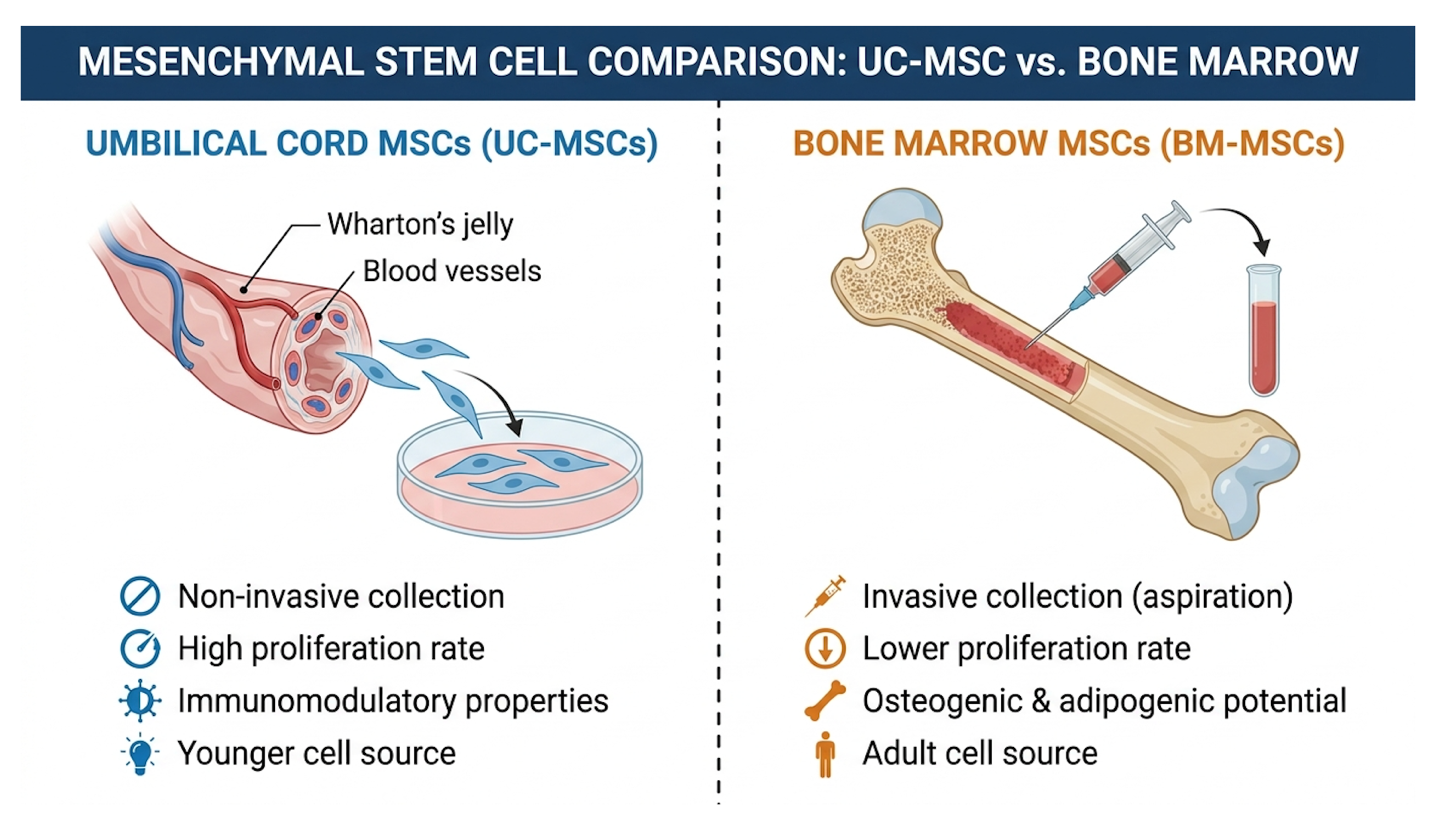
Figure 1: UC-MSCs maintain higher proliferative capacity and secrete more potent anti-inflammatory cytokines than older autologous cells.
You can’t ignore the regulatory guardrails. In Western markets, isolating and expanding these cells triggers intense oversight. Reviewing the FDA consumer warnings regarding unapproved stem cell therapies reveals that outside of specific cord blood applications, these biologics remain under strict scrutiny. Additionally, robust NIH studies on Wharton’s jelly properties confirm that while their immunomodulatory potential is massive, commercial clinics frequently overstate their ability to physically regrow worn-out joints.
| 📌 If you’re planning treatment in Thailand and want a practical checklist for choosing a safe clinic, we have an interesting article that discusses whether stem cell therapy is safe in Thailand, which you can read via the internal link. |
The clinical efficacy of UC-MSCs for osteoarthritis relies entirely on mitigating chronic inflammation, not reversing severe, decades-long anatomical degradation. We have to separate subjective pain relief from objective structural repair if we want to set realistic benchmarks for success.
Let’s look at the actual data. What counts as success after a stem cell knee injection? Usually, it’s a dramatic drop in pain scores not a pristine, youthful MRI. A rigorous 12-month clinical trial on UC-MSC cartilage regeneration recorded significant improvements in WOMAC scores for knee osteoarthritis patients. Patients receiving hUC-MSCs demonstrated a 40-50% improvement in WOMAC pain scores over 12 months with no severe adverse events proving that inflammation control, not a brand-new joint, is the primary clinical benefit. While some extracellular matrix synthesis occurs, total structural repair of degraded joints isn’t supported by broad evidence. You’re buying functional mobility and time, not a new knee.
Patients constantly ask if they can skip rehab. The blunt truth? Pairing a stem cell knee injection with dedicated physical therapy is absolutely non-negotiable. Do I still need physiotherapy after a stem cell knee injection? Yes, mechanical loading stimulates the newly modulated cellular environment, and muscle atrophy surrounding an arthritic knee won’t fix itself just because the internal inflammation dropped. The Mayo Clinic’s evaluation of experimental orthopedic stem cell treatments stresses that mesenchymal stem cell injections for orthopedic conditions are still considered largely experimental outside of specific clinical trials. Success requires treating the injection as a biological catalyst, not a standalone fix.
Clinical assessments typically measure initial functional improvements between 3 to 6 months post-injection. The biological integration of UC-MSCs and subsequent modulation of the joint’s inflammatory microenvironment requires substantial time to take effect. For instance, peak structural and pain-reduction markers frequently hit at the 12-month interval in extensive clinical trials. Individual results vary significantly based on baseline osteoarthritis severity, metabolic health, and strictly following post-procedure rehabilitation protocols. Expect a gradual reduction in stiffness rather than overnight relief.
For patients with advanced grade IV (bone-on-bone) osteoarthritis, biological interventions generally offer symptom management rather than structural restoration. Without existing cartilage scaffolding, UC-MSCs cannot magically regenerate a complete joint space. Data indicates that while severe pain and inflammation may decrease, these patients typically remain eventual candidates for surgical joint replacement. You must demand a rigorous radiological assessment prior to any medical travel to confirm your specific joint viability.
For patients evaluating regenerative medicine, determining “is stem cell therapy for knees worth it” means trusting evidence over sales pitches. UC-MSC therapy provides a targeted biological mechanism to reduce joint inflammation, with trials demonstrating significant improvements in WOMAC scores at 12 months (NIH). However, the most effective approach demands accurate baseline assessment rather than relying on commercial promises.
Applying The Biological Suitability Framework prevents medical travel errors by forcing patients to critically evaluate cellular science, joint viability, and regulatory accreditation—like strict JCI standards before committing to foreign clinics.
Take your comprehensive radiological findings and treatment history to a qualified orthopedic clinician. Demand an objective eligibility assessment, trial conservative therapies first, and only pursue biologics when the data aligns with your specific pathology. Do not book a flight until you have an independent, local physician review your MRIs and clear you for both the procedure and the travel involved.