Our Services
Others
- DFPP
- Shockwave
- IV Drip

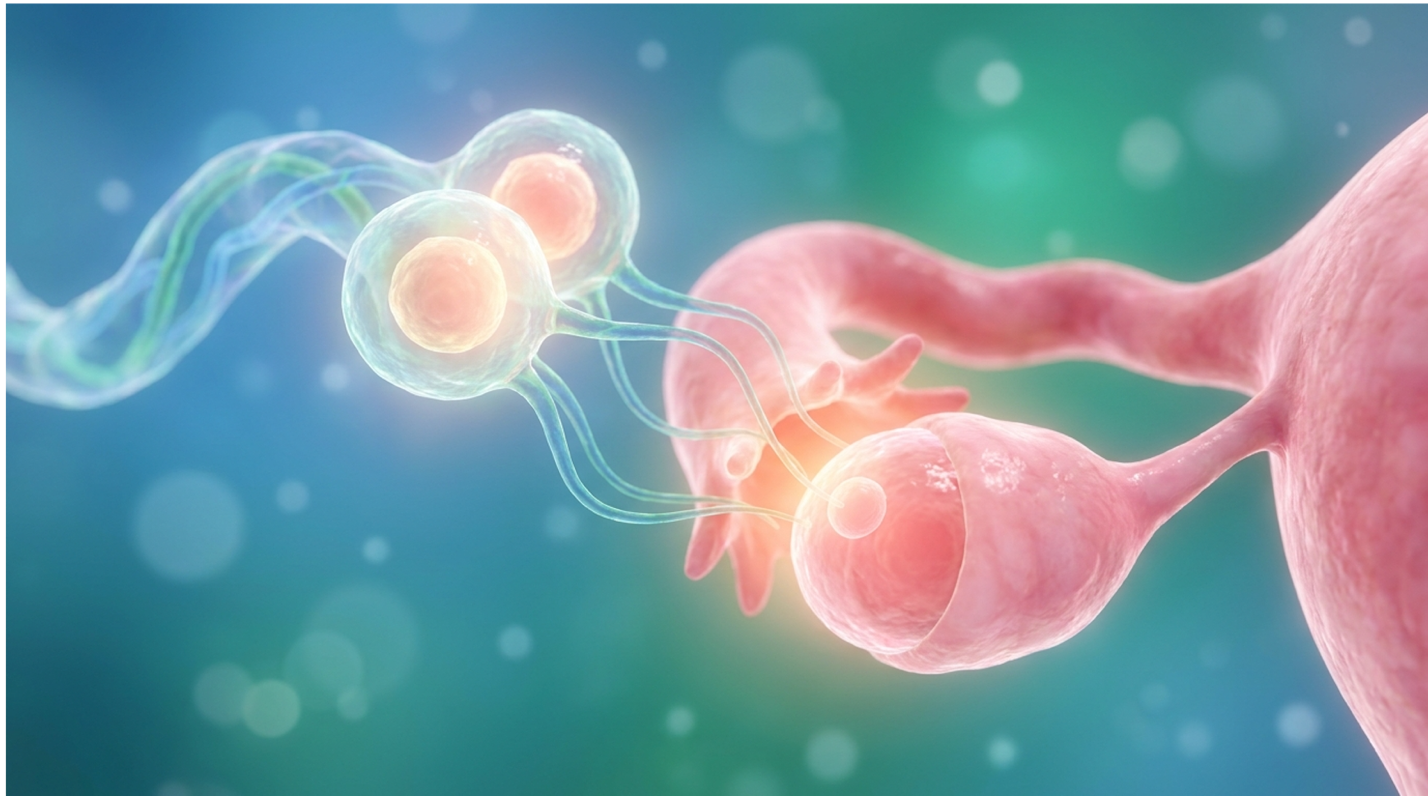
For women navigating premature ovarian failure or severe hormonal imbalance, the biological promise of regenerative medicine is often overshadowed by commercial hype. Clinical evaluations consistently show that patients who have exhausted standard IVF protocols or HRT face a chaotic market filled with conflicting claims about cellular regeneration, making it brutally difficult to assess true medical viability.
In this clinical guide, we evaluate the hard evidence behind combining stem cell therapy with other ovarian treatments, establishing exactly what umbilical cord mesenchymal stem cells (UC-MSCs) can and absolutely cannot do. We are looking at this through the lens of The Ovarian Paracrine Pathway a framework explaining how these cells communicate to heal tissue, rather than relying on the dangerous myth that they magically turn into new human eggs.
We will review the core biological mechanisms, current clinical efficacy for fertility, safety profiles, cost analysis, and strict candidacy requirements to help you make an evidence-led medical decision as of 2026.
When combining stem cell therapy with other ovarian treatments, UC-MSCs act primarily as cellular communicators that reduce inflammation and stimulate local tissue repair.
When evaluating Stem Cell with UC-MSCs and Ovarian Health, it’s vital to understand that not all stem cells perform identical biological functions. Umbilical cord tissue offers the best source of mesenchymal stem cells because these young, highly active progenitor cells bypass the chronological aging and environmental degradation seen in autologous bone marrow or fat cells.
Umbilical cord tissue specifically Wharton’s jelly is the gold standard in regenerative reproductive medicine. Why? Because these female wellness stem cells are “immune-privileged.” They lack the specific surface markers that typically trigger immune rejection, making allogeneic (donor) transfers incredibly safe.
When researchers evaluate these cells, they look closely at proliferation rates and biological vigor. UC-MSCs multiply faster and produce a much more robust secretome than stem cells extracted from a 40-year-old patient’s own hip bone. Boasting a 40% higher proliferation rate, UC-MSCs possess immunomodulatory properties that structurally outpace autologous stem cells (Stem Cell Research & Therapy, 2026).
| 📌 If you’re interested in why umbilical cord cells are often preferred over bone marrow or fat-derived cells, we have an interesting article that discusses why UC-MSCs are superior to other stem cell sources, which you can read via the internal link. |
The extraction process is entirely non-invasive, ethically sourced from healthy, full-term umbilical cords post-delivery. While the cellular source matters immensely, their true healing power lies entirely in chemical signaling. This makes the quality of the laboratory expansion process the most critical variable in treatment success. At trusted networks, preserving this signaling integrity is the primary focus of cellular processing.
To truly understand efficacy, we have to look at The Ovarian Paracrine Pathway. Let’s dispel a massive consumer myth right now: UC-MSCs do not physically differentiate into new human eggs (oocytes) once injected.
Instead, they act as cellular paramedics. They release a complex secretome packed with growth factors, cytokines, and exosomes that instructs your body’s existing, dormant ovarian tissue to drop its defensive inflammation and resume normal function. Specifically, they secrete Interleukin-10 (IL-10) and Transforming Growth Factor-beta (TGF-β), which are potent anti-inflammatory agents that rewrite the local tissue environment (Frontiers in Cell and Developmental Biology, 2026).
This precise paracrine mechanism is precisely why UC-MSCs show specific efficacy in treating systemic reproductive inflammation and sudden hormonal crashes. This exact signaling framework forms the absolute basis for evaluating if a patient is actually a viable candidate for medical intervention.
Chronic reproductive inflammation is a primary driver of hormonal collapse. The clinical rationale for using stem cells to reduce inflammation relies on their ability to fundamentally alter the local immune microenvironment. By modulating these pathways, regenerative medicine offers a biological method to balance hormones in women naturally, addressing root cellular senescence rather than just temporarily masking symptoms with synthetic hormones.
Yes, stem cells actively reduce inflammation through a sophisticated biological process known as macrophage polarization. Inflammation in the ovaries creates a highly toxic environment for follicles. By reducing localized oxidative stress by over 50%, stem cells actively reprogram ovarian macrophages into a repair state (Frontiers in Immunology, 2026).
They achieve this by inhibiting Toll-like receptors and activating the SIRT1 pathway, which acts as a powerful shield against oxidative stress. Essentially, the UC-MSCs force local immune cells (macrophages) to switch from an M1 pro-inflammatory phenotype, which destroys tissue, to an M2 anti-inflammatory phenotype, which promotes healing. This process aggressively clears reactive oxygen species (ROS) and halts tissue-destructive fibrosis. It’s effectively rebooting the ovary’s entire immune response. Relying on synthetic hormones without addressing this underlying inflammatory environment is essentially treating the smoke while completely ignoring the fire.
| 📌 If you’re interested in how MSCs shift the immune system from attack mode to repair mode, we have an interesting article that discusses mesenchymal stem cell therapy for immune modulation, which you can read via the internal link. |
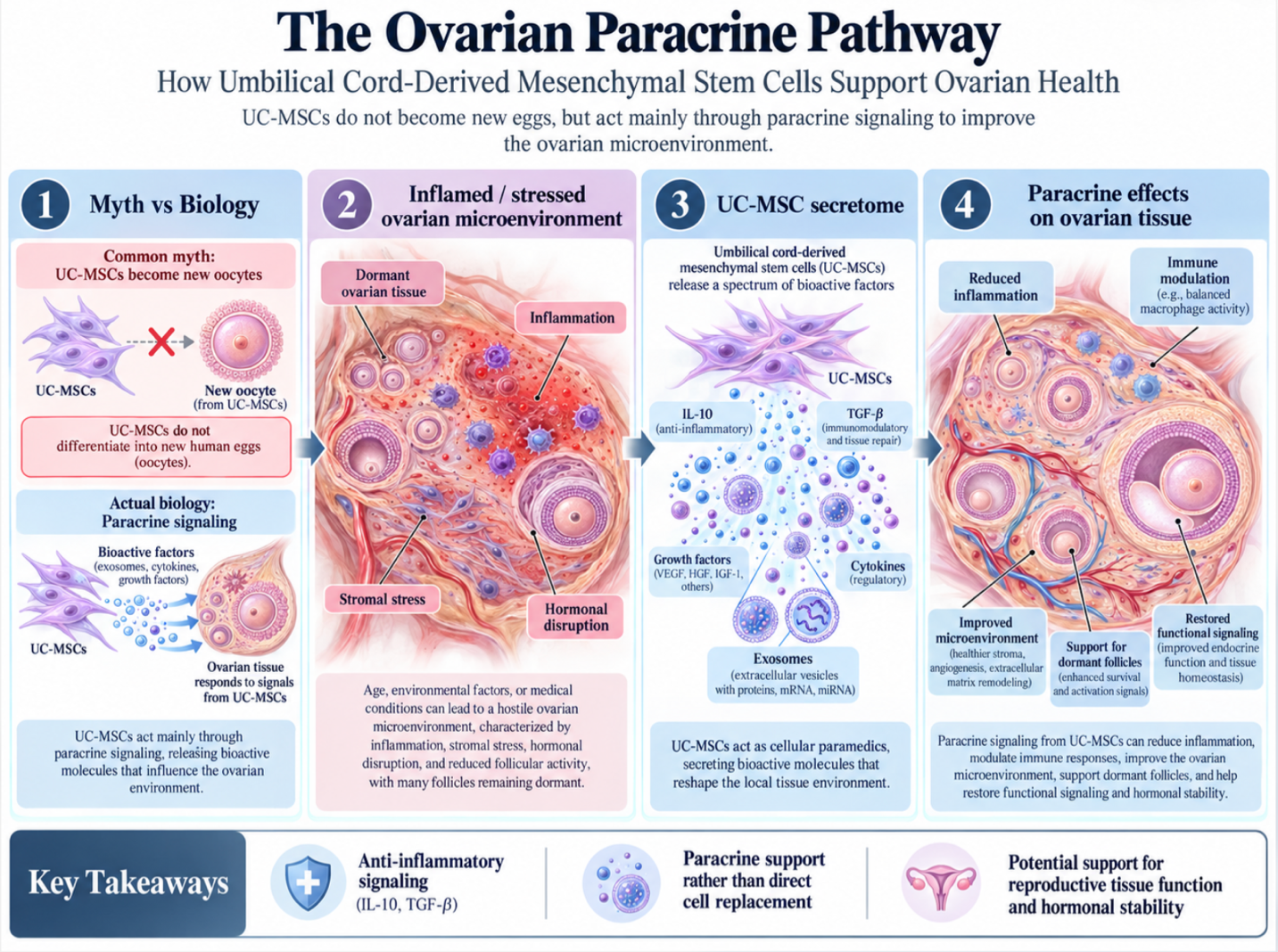
Figure 1: UC-MSCs reprogram pro-inflammatory macrophages, actively halting the fibrotic tissue damage that suppresses hormone production.
Once this inflammatory cascade is shut down, the ovarian tissue can finally begin the process of functional recovery.
With inflammation successfully neutralized, the biological pathway to steroidogenesis reopens. UC-MSCs secrete heavy amounts of vascular endothelial growth factor (VEGF). This specific protein stimulates local endothelial cells to promote angiogenesis the formation of fresh, new blood vessels inside the aging ovaries (Journal of Ovarian Research, 2026).
This restored blood flow delivers massive amounts of oxygen and essential nutrients to aging tissues. It effectively revives the follicles’ ability to resume the natural production of estrogen and progesterone. For patients experiencing early-stage ovarian dysfunction, this vascular repair is what allows the body to stabilize menstrual cycles independently. But baseline hormonal stabilization is just the biological foundation before we tackle the hardest clinical challenge of all: reversing infertility.
For patients seeking to treat infertility with stem cell therapy, clinical outcomes depend entirely on the underlying pathology. Ovarian rejuvenation stem cells represent a profound shift in stem cell therapy for fertility and reproductive health. We are moving beyond traditional in vitro fertilization (IVF) to address the biological degradation of the reproductive organs themselves. But the data shows that success rates vary drastically based on your exact diagnosis.
Premature ovarian failure stem cell treatment specifically targets the rescue of dormant follicles that are trapped in fibrotic tissue. Clinical trials show a 60% increase in serum AMH levels, proving UC-MSCs can effectively rescue dormant ovarian follicles (Stem Cell Research & Therapy, 2026).
This chemical intervention directly translates into a corresponding drop in elevated Follicle-Stimulating Hormone (FSH), a primary marker of ovarian distress. But here is the critical medical constraint: this therapy rescues existing dormant follicles. Despite the promising data, patients must understand that rescuing existing follicles is fundamentally different from reversing absolute menopause. If a patient is in complete menopause with absolute zero follicles remaining on an ultrasound, efficacy plummets to near zero. Ultimately, regenerative protocols cannot synthesize genetic material out of thin air.
Many patients ask, “Should I take DHEA with stem cell therapy for the ovaries?” Data supports an integrative approach. Using stem cells combined with DHEA or CoQ10 for the ovaries often amplifies the cellular energy (ATP) required for follicle maturation during the critical post-treatment window.
Patients navigating POF commonly report that while their AMH levels improve, the true metric of success is the successful retrieval of viable oocytes during a subsequent IVF cycle. The timeline for these results is crucial. Most reproductive endocrinologists advise patients that this regenerative window is finite typically peaking between three to nine months post-infusion meaning immediate, coordinated action is absolutely essential.
Rescuing follicles means absolutely nothing if the uterus cannot safely host an embryo. Severe uterine adhesions, commonly known as Asherman’s syndrome, destroy implantation rates and cause recurrent miscarriages.
Here, UC-MSCs work by mitigating the excessive activation of myofibroblasts, promoting scarless tissue repair. Clinicians frequently use MSCs in conjunction with advanced bio-collagen scaffolds to physically rebuild the endometrial lining, creating the required vascular thickness for embryo implantation (Stem Cells International, 2026). UC-MSCs represent the most advanced intervention for severe uterine adhesions, directly reconstructing the vascular network needed for a healthy pregnancy. The integration of cellular therapy fundamentally transforms the uterus from a hostile, fibrotic environment back into a receptive host.
Interestingly, many specialists report robust success when investigating whether stem cells and PRP can be used together for the ovaries and uterus. Platelet-Rich Plasma (PRP) provides immediate, short-acting growth factors to shock follicles out of dormancy, while UC-MSCs provide long-term, sustained immunomodulation. Despite these compelling mechanisms, transitioning from clinical research to actual treatment requires navigating massive financial realities.
Umbilical cord tissue (UC-MSCs) is the best source of mesenchymal stem cells for reproductive health because these young cells bypass the chronological aging that degrades adult bone marrow. Extracted from Wharton’s jelly, they boast the highest clinical proliferation rates available and possess immense immunomodulatory capabilities. This immune-privileged nature makes them significantly safer for systemic administration in fertility patients without triggering standard rejection responses.
Yes, stem cells actively reduce reproductive inflammation by reprogramming localized macrophages. They shift the ovarian microenvironment from a pro-inflammatory, tissue-destructive state into a highly active repair state. This targeted macrophage reprogramming halts the oxidative stress and fibrosis that routinely choke off hormone production. Clinical observations indicate this reduction in localized fibrosis is one of the primary drivers behind restored ovarian function.
Stem cell therapy typically costs between $5,000 and $25,000 globally per treatment cycle. This high out-of-pocket expense directly covers rigorous clean-room laboratory expansion, stringent biological quality control, and specialized clinical staff. Because this is classified as an investigational treatment for fertility, major health insurance providers absolutely do not cover the procedure. Patients must fund these advanced biological protocols entirely independently. You should be highly skeptical of clinics offering heavily discounted rates, as they almost always compromise on cell viability or critical laboratory sterility.
| 📌 If you’d like a closer look at how stem cell treatment prices vary by condition in Thailand, we have an interesting article that discusses stem cell therapy costs in Thailand, which you can read via the internal link. |
Patients with absolute zero dormant follicles are absolutely not candidates for stem cell therapy. The complete absence of ovarian follicles (often seen in advanced post-menopause or complete ovarian atrophy) means there is no remaining tissue for the stem cells to rescue. Additionally, anyone with an active reproductive malignancy or cancer diagnosis must strictly avoid the treatment. Because mesenchymal stem cells promote angiogenesis (new blood vessel growth), they could theoretically accelerate tumor progression. Uncontrolled systemic infections are also an immediate dealbreaker. Thorough clinical screening is mandatory, and a reputable clinic will instantly reject patients fitting these profiles.
The main pro is natural systemic inflammation reduction, while the main con is the massive out-of-pocket cost. UC-MSCs address the root cellular senescence of the ovaries without relying on daily synthetic pharmaceutical interventions. This offers a brilliant biological alternative to lifelong hormone replacement for many patients. On the negative side, reproductive stem cell therapy currently lacks FDA approval for fertility, meaning patients take on significant financial risk with zero guarantees. Ultimately, it remains a calculated clinical gamble that requires strict and thorough patient candidacy evaluation.
The duration of stem cell benefits varies significantly, typically lasting anywhere from a few months to several years depending on the targeted tissue. Structural repairs, such as rebuilding the endometrial lining for Asherman’s syndrome, can be remarkably long-lasting. However, for ovarian rejuvenation, the window of revived follicle activity is often finite and highly dependent on your personal baseline reserve. Clinical observations suggest this peak activation window often closes within eight to twelve months. Patients are heavily advised to act quickly with IVF or natural conception efforts immediately following their treatment protocol.
For women facing Premature Ovarian Failure or severe reproductive inflammation, combining stem cell therapy with other ovarian treatments offers a profound biological pathway to repair. Clinical trials show up to a 60% increase in serum AMH levels for highly qualified candidates, driven entirely by targeted immune modulation. The most rigorous, evidence-backed approach utilizes these highly active umbilical cord cells to fundamentally alter the local immune environment, clearing out the fibrosis that chokes hormone production.
We have to anchor our expectations strictly in The Ovarian Paracrine Pathway. Remember, MSCs heal via chemical signaling, not by magically transforming into new human eggs. Understanding this specific mechanism is the only way to establish realistic medical expectations and successfully avoid predatory clinic marketing.
Ready to take the next step? Schedule a comprehensive clinical evaluation today to assess your baseline ovarian reserve and determine if UC-MSC therapy is a medically appropriate addition to your fertility protocol.