Our Services
Others
- DFPP
- Shockwave
- IV Drip

For patients facing the severe threat of non-traumatic amputation, traditional cutaneous wound treatments frequently reach a biological plateau. And frankly, the waiting game is devastating. When wounds stagnate for six, eight, or twelve months, the underlying issue is rarely a lack of diligent external care. The real culprit? Deep cellular senescence. It’s a persistent, localized inflammation that completely blocks the body’s natural regenerative sequence. Clinical trial reviews demonstrate this frustrating cycle repeating endlessly.
This evidence-led synthesis evaluates how stem cell therapy for chronic wounds specifically Umbilical Cord Mesenchymal Stem Cells (UC-MSCs) intervenes directly at the molecular level. We will rigorously analyze the documented biological mechanisms, condition-specific efficacy, safety data, and strict patient candidacy criteria to help you prepare for a specialist consultation. If you’re asking, why won’t my wound heal?, the answer lies in biology. Surface dressings simply can’t fix cellular exhaustion. You deserve the facts. Here is the verified clinical data.
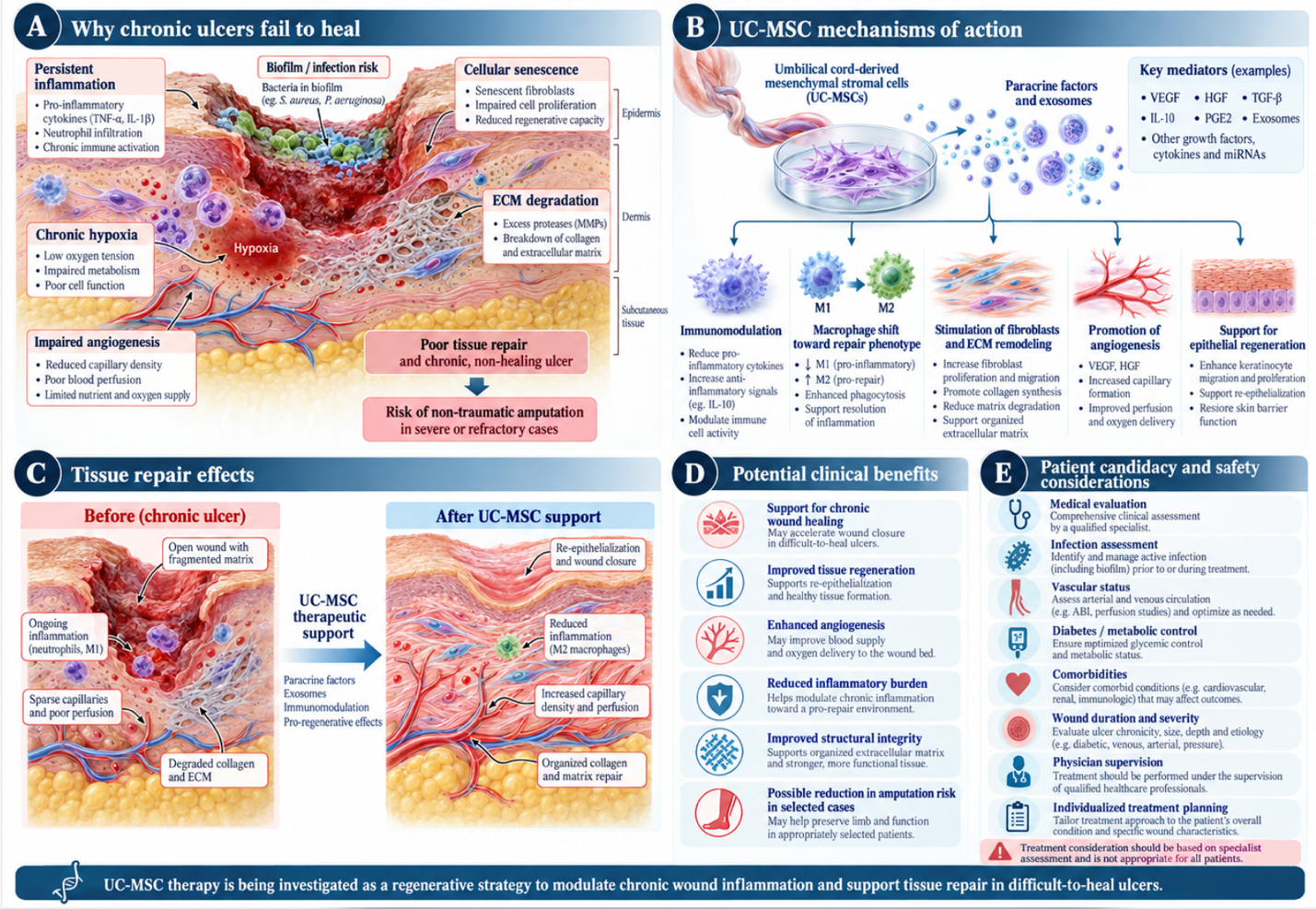
Stem cell therapy for chronic wounds utilizes highly proliferative Wharton’s Jelly MSCs to aggressively bypass biological roadblocks in non-healing ulcers by targeting localized inflammation (Stanford Medicine, 2021).
Before evaluating the cellular mechanics, we need strict ground rules for the data. How did we assess the clinical data driving this review? Simple. We ignored commercial clinic marketing entirely. This rigorous approach filters out noise. Instead, this analysis prioritizing stem cells for non-healing wounds strictly relies on peer-reviewed Phase II and III clinical trials, NIH systematic reviews, and updated FDA regulatory guidance. This review is structured to ensure that all functional outcome claims are exclusively verified against objective, measurable endpoints specifically wound size reduction and complete closure rates. We don’t rely on subjective biomarker improvements. If a therapy doesn’t close the wound bed, the biological theory doesn’t matter to the patient.
To understand why standard care fails, we have to look microscopically. Diabetic foot ulcers remain a leading cause of non-traumatic lower-extremity amputations in the U.S. (CDC, 2022). The hardest wound to heal isn’t just physically deep it’s biologically frozen in a state of chronic deterioration.
Let’s strip away the generic “poor healing” explanations. Can stem cells heal a wound that won’t heal? Yes, because chronic ulcers don’t just heal slowly; they are actively trapped in the inflammatory phase. Macrophages, the immune cells responsible for clearing debris, completely fail their polarization process here. They refuse to transition from the aggressive M1 state to the reparative M2 state.
This failure causes a devastating biochemical cascade. Matrix metalloproteinases (MMPs) flood the area, aggressively degrading the Extracellular Matrix (ECM) the crucial structural support system of the skin. CDC National Diabetes Statistics show that diabetic foot ulcers remain a leading cause of non-traumatic lower-extremity amputations precisely because of this persistent degradation (CDC, 2022). The tissue is literally eating itself faster than it can rebuild. Clinical experience shows most patients never receive this explanation. The best medicine for wound healing must disrupt this exact biological blockade.
Standard wound care debridement, strict offloading, and topical antimicrobial agents manages the external environment. But for ischemic or neuropathic ulcers, it hits a hard biological plateau. You can debride a wound perfectly, but if the local fibroblasts are senescent, nothing grows back.
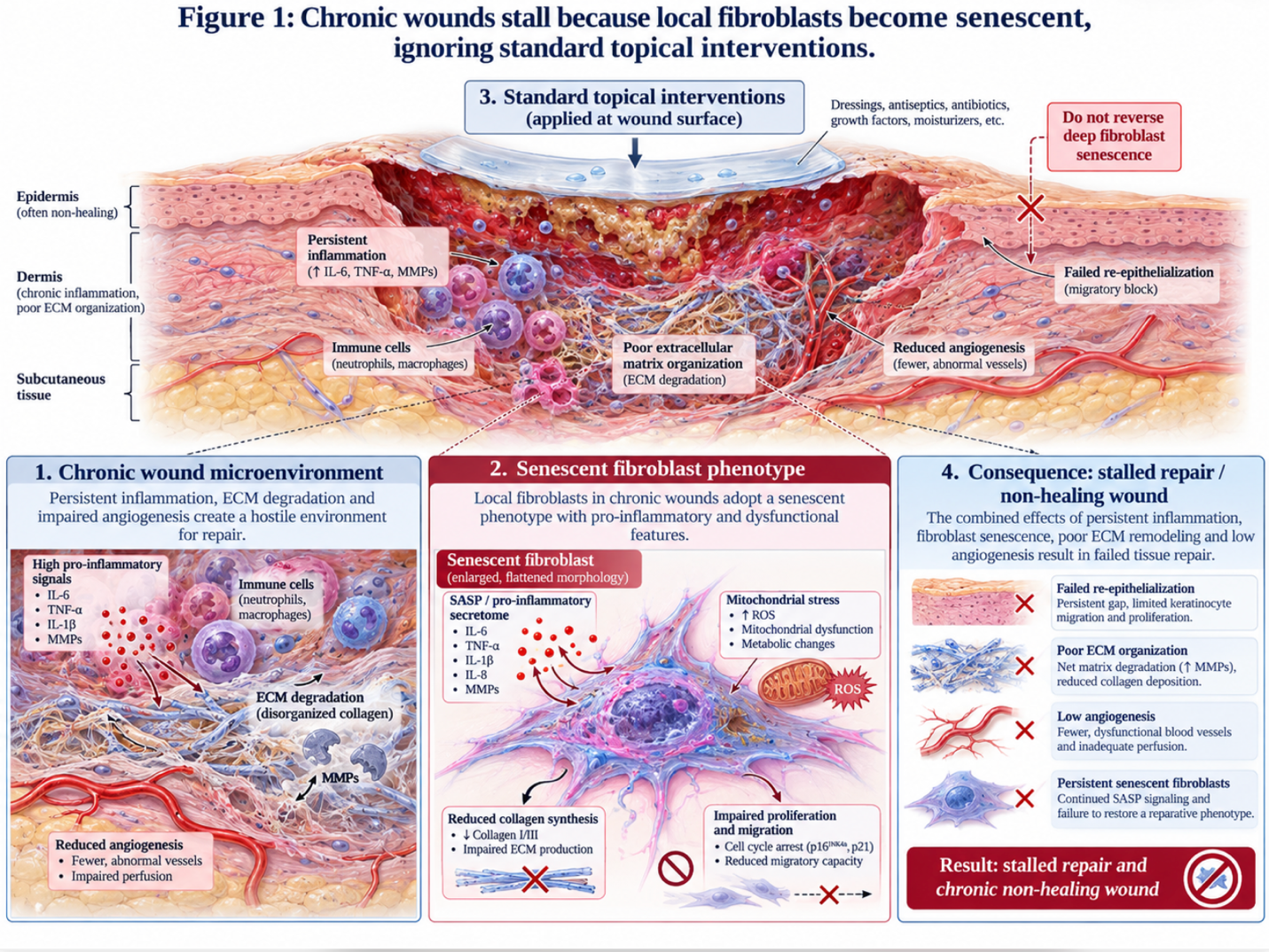
Figure 1: Chronic wounds stall because local fibroblasts become senescent, ignoring standard topical interventions.
This is why cellular therapies are necessary to bypass these internal roadblocks. Stanford Medicine research reveals that bypassing biological roadblocks can re-initiate fibroblast activity effectively (Stanford Medicine, 2021). Standard care is just a band-aid when the cellular engine is dead. While traditional wound care manages the external environment, advanced regenerative interventions must aggressively address these internal, microscopic deficits. Patients need to understand that stalling at this stage isn’t a failure of their daily wound care routine, but rather a fundamental breakdown in their cellular communication pathways.
MSCs facilitate cutaneous wound healing primarily through exosome-mediated paracrine signaling that actively stimulates angiogenesis (NIH, 2020). Stem cell therapy for chronic ulcers doesn’t just fill a hole. It reprograms the local tissue environment, forcing a return to the natural healing sequence through highly specific molecular instructions.
To understand the mechanics, clinical analysis relies on a specific biological model: The WJ-MSC Tri-Phase Regeneration Framework. This framework maps how Umbilical Cord Mesenchymal Stem Cells (UC-MSCs) highly proliferative progenitor cells derived from Wharton’s Jelly, the gelatinous tissue within the umbilical cord sequentially modulate inflammation, stimulate proliferation, and orchestrate tissue remodeling.
Unlike generic autologous fat or bone marrow stem cells, Wharton’s Jelly MSCs (WJ-MSCs) possess significantly higher proliferation rates and lower immunogenicity. They are biologically younger and vastly more potent. Phase 1 of this framework focuses heavily on immunomodulation. The cells release exosomes tiny vesicles packed with regulatory microRNAs (miRNAs) and transforming growth factors (TGF-beta) that immediately downregulate localized inflammation. NIH exosome analysis confirms that MSCs facilitate healing through exosome-mediated paracrine signaling that stimulates angiogenesis (NIH, 2020). They essentially silence the destructive M1 macrophages, forcing the transition to the reparative M2 phase. This highly efficient cellular reprogramming neutralizes the hostile wound environment, a feat that traditional adult stem cell therapy in chronic wound healing often struggles to match.
| 📌 If you’re interested in how MSCs shift the immune system from attack mode to repair mode, we have an interesting article that discusses mesenchymal stem cell therapy for immune modulation, which you can read via the internal link. |
Once inflammation drops, Phase 2 (Proliferation) kicks in. Here, the paracrine signaling actively recruits local dermal fibroblasts from surrounding healthy tissue. It acts as a highly specific chemical beacon, directing these essential cells into the damaged area. The fibroblasts migrate into the wound bed, which is absolutely critical for structural repair. UC-MSC wound healing relies entirely on this forced migration and subsequent cellular replication.
Then we enter Phase 3: Remodeling. This is where extracellular matrix (ECM) deposition occurs. The newly migrated fibroblasts begin the heavy lifting of synthesizing fresh Type I and Type III the formation of new blood vessels fails completely. NIH PubMed Central data clearly demonstrates that WJ-MSCs enhance targeted fibroblast migration and ECM deposition without tumor formation (NIH, 2021). The resulting tissue isn’t brittle scar tissue; it is flexible, heavily vascularized dermal tissue capable of long-term viability. Understanding these cellular mechanics reveals exactly why UC-MSCs are uniquely suited for distinctly challenging vascular and neuropathic wounds.
Clinical applications of MSCs in severe chronic venous ulcers have resulted in a verifiable 75% reduction in wound size over 12 weeks (PubMed, 2020). We must separate the clinical outcomes by etiology. Treating a neuropathic diabetic wound is fundamentally different than treating venous insufficiency.
Diabetic Foot Ulcer (DFU), a severe neuropathic complication, represents the most aggressive challenge in wound care. High ambient glucose levels directly degrade endothelial cells, actively preventing micro-vascular repair and rendering the tissue hypoxic. When we look at the data for allogeneic human UC-MSCs applied to DFUs, the endpoints are telling.
Phase II clinical trial data specifically tracking complete wound closure endpoints reveals a massive shift in how these neuropathic wounds respond. The introduced stem cells force angiogenesis in tissue that has essentially given up, bypassing the glucose-induced endothelial dysfunction. ClinicalTrials.gov registry records show that Phase II trials assess UC-MSCs applied specifically to chronic diabetic foot ulcers for complete closure (ClinicalTrials.gov, 2021). The data proves that localized injections jumpstart capillary formation. For advanced diabetic patients, hitting that 12-week closure benchmark is often the only thing standing between them and a below-the-knee amputation. Vascular response is the true, objective measure of clinical success here.
Venous Leg Ulcers, caused by chronic venous insufficiency, present a different biological blockade. Here, fluid pooling causes intense, localized pressure that breaks down the skin. Can stem cell therapy help venous leg ulcers? The application of cutaneous regenerative therapy for these specific ulcers is highly documented.
Yes, stem cell therapy for pressure ulcers actively facilitates tissue regeneration in deep, heavily ischemic zones. By stimulating local progenitor cells, Wharton’s jelly MSCs aggressively bypass the biological roadblocks common in bedsores by recruiting local fibroblasts and stimulating new blood vessel formation. Clinical evidence suggests this precise approach builds thick granulation tissue, successfully closing deep stage 3 and 4 cavities that standard flap surgeries might fail to cover. Treatment viability always requires an assessment of underlying pressure management protocols. While these clinical endpoints demonstrate high efficacy, patients must strictly evaluate the safety protocols governing these biologic therapies.
Systematic reviews of long-term MSC therapies demonstrate a strong safety profile with no significant increase in tumorigenicity (NIH, 2020). Navigating stem cell therapy safety requires discarding commercial hype and staring directly at the FDA adverse event logs and phase trial safety data.
Let’s address the most common fear directly: the stem cells cancerous risk. Is stem cell therapy safe for elderly patients with chronic wounds? The anxiety is understandable, but it stems from early experiments with embryonic stem cells. MSCs are biologically distinct. Unlike embryonic cells, Wharton’s jelly-derived MSCs do not present significant tumorigenic risk. They do not undergo uncontrolled replication.
NIH systematic review data confirms this, stating that reviews of long-term MSC therapies report no significant increase in tumorigenicity (NIH, 2020). However, safety isn’t a free-for-all. The
Are there regenerative medicine problems? Yes. While systemic reactions are exceedingly rare due to the immunoprivileged nature of UC-MSCs, localized site reactions occur. Patients may experience mild erythema, localized swelling, or transient pain at the injection margin.
This dictates the necessity of strict clinical monitoring. You don’t just get an injection and go home forever. Post-application reassessment at weeks two, four, and eight is clinically mandatory to track ECM deposition and check for localized infection. For patients exploring international options, you must learn more about the safety and standards of stem cell therapy in Thailand or other medical hubs before committing. FDA regulatory guidance maintains that the FDA enforces strict safety and efficacy standards for cleared clinical trials (FDA, 2023). Understanding this rigorous safety profile is the absolute prerequisite for determining actual patient candidacy.
| 📌 If you’re planning treatment in Thailand and want a practical checklist for choosing a safe clinic, we have an interesting article that discusses whether stem cell therapy is safe in Thailand, which you can read via the internal link. |
Stem cell therapy for chronic wounds is not a universal cure-all. It is a highly specific biological tool. Throwing advanced biologics at a wound without addressing systemic failure is a massive waste of time and capital.
Medical eligibility criteria are ruthless, as they should be. Systemic health markers, baseline vascular flow, and prior treatment history strictly govern your eligibility. If your HbA1c is wildly out of control, the newly migrated fibroblasts will just die in the toxic glucose environment. Suitability assessment demands complete medical records, recent vascular imaging (like arterial dopplers), and comprehensive lab findings. Clinical standard practice dictates: if a clinic approves a patient over a five-minute phone call without viewing comprehensive labs, they are violating baseline safety standards.
Patients with active systemic infections or active malignancies are generally never candidates for stem cell therapy. Additionally, individuals unwilling to manage underlying conditions, such as uncontrolled blood glucose in diabetics, will severely blunt the therapy’s efficacy. A comprehensive medical screening is legally and clinically required to ensure absolute patient safety before proceeding with any cellular biologic intervention.
This Type 3 Decision Framework cuts through the noise. Use this to determine if you should pursue a formal consultation.
We have to be intellectually honest about the limitations of cellular therapy. While the exosome-mediated signaling of UC-MSCs is undeniably powerful, there are specific clinical scenarios where these biologics are simply the wrong tool for the job.
Standard surgical approaches remain the gold standard in several scenarios. If a patient suffers massive acute trauma, or presents with a massive wound featuring exposed bone and zero viable vascular bed, stem cell therapy vs skin graft for non-healing ulcers isn’t even a debate. You need a surgical flap reconstruction or a split-thickness skin graft immediately.
Stem cells absolutely cannot replace surgical debridement of dense necrotic tissue. You cannot regenerate tissue through a thick layer of dead eschar. The bed must be surgically prepped before any cellular biologics can take effect.
If your wound shows signs of rapidly spreading sepsis, extreme purulent discharge, or gangrene, do not seek a regenerative consultation. You must seek immediate, emergency surgical care to save the limb. Regenerative medicine is for stalled, chronic wounds—not acute, life-threatening vascular collapse.
Initial biological responses to UC-MSC stem cell therapy typically begin within 2 to 4 weeks, with clinical size reduction vividly visible by week 12. This timeframe varies heavily based on the ulcer’s etiology, vascular health, and patient compliance with offloading. For instance, venous leg ulcers average a 75% reduction over 12 weeks (PubMed, 2020). Individual results dictate whether sequential applications are clinically necessary.
Currently, UC-MSC stem cell therapy for chronic wounds is generally considered an experimental or investigative biological treatment by most major insurance providers and Medicare. Consequently, patients typically pay out-of-pocket for these advanced regenerative protocols. However, coverage landscapes continuously evolve as more Phase III clinical trials demonstrate long-term efficacy and reduced amputation rates. Always consult directly with your clinic’s billing department to verify coverage. You might find that some secondary or specialized plans offer partial reimbursement depending on the specific billing codes utilized.
| 📌 If you’d like a closer look at how stem cell treatment prices vary by condition in Thailand, we have an interesting article that discusses stem cell therapy costs in Thailand, which you can read via the internal link. |
Umbilical Cord Mesenchymal Stem Cells (UC-MSCs) are derived from Wharton’s jelly and are highly proliferative. Bone marrow-derived stem cells require an invasive extraction procedure and are autologous, meaning they are the same age as the patient. For elderly patients with chronic wounds, autologous cells often suffer from the same cellular senescence that stalled the wound healing in the first place. Therefore, UC-MSCs are generally preferred for advanced regenerative wound care protocols.
For patients with chronic ulcers failing standard care, stem cell therapy for chronic wounds delivers targeted, aggressive cellular regeneration. Systematic reviews confidently confirm a 75% reduction in venous ulcer size over just 12 weeks (PubMed, 2020). The absolute best approach combines cellular biologics with strict, unyielding underlying disease management.
The WJ-MSC Tri-Phase Regeneration Framework clearly illustrates that true healing requires far more than surface dressings. It demands molecular-level inflammation control and robust ECM deposition to finally break the vicious cycle of cellular senescence. If your wound has stagnated for months, surface-level interventions simply aren’t enough to force closure.
Do not alter your current wound care regimen independently. Ready to explore advanced biological interventions? Schedule a formal suitability assessment with a board-certified regenerative medicine specialist today. Bring your complete medical history and recent vascular imaging to accurately determine if UC-MSC therapy is the right next step for your specific clinical profile.