Our Services
Others
- DFPP
- Shockwave
- IV Drip

Systemic lupus erythematosus, often called SLE or lupus, is one of the most complex autoimmune diseases. It can affect the skin, joints, blood, kidneys, nervous system, lungs, heart, and daily energy level. For some patients, lupus is mild and mainly causes fatigue, rashes, and joint pain. For others, it becomes a serious condition involving the kidneys, blood vessels, inflammation, or repeated flares that interrupt normal life.
This is why many patients search for stem cell therapy for lupus in Thailand. They are not only looking for symptom relief. They are often looking for a deeper way to support immune balance, reduce inflammatory stress, protect organ function, and improve quality of life while continuing proper rheumatology care.
At Vega Medical Services in Bangkok, UC-MSC stem cell therapy for systemic lupus erythematosus is best understood as a supportive and investigational regenerative approach. It should not be described as a cure for lupus. It should not replace hydroxychloroquine, steroids, immunosuppressants, biologics, kidney care, or regular monitoring by a rheumatologist.
A more realistic way to explain UC-MSC stem cell therapy is this: mesenchymal stem cells may help regulate immune overactivity, calm inflammatory signaling, support tissue repair pathways, and create a more balanced internal environment in selected patients with autoimmune disease.
SLE is an autoimmune disease. In a healthy immune system, immune cells help defend the body against infection. In lupus, the immune system becomes misdirected and may attack the body’s own tissues. This can cause inflammation in different organs and systems.
One reason lupus is difficult to manage is that it does not look the same in every patient. Some people have skin rashes, mouth ulcers, hair loss, joint swelling, and fatigue. Others may develop anemia, low white blood cells, low platelets, chest pain, kidney inflammation, neurological symptoms, or abnormal immune blood tests.
Lupus often moves in cycles. A patient may feel stable for a period of time, then experience a flare. A flare may involve worsening fatigue, joint pain, fever, rash, swelling, protein in the urine, or changes in blood markers such as anti-dsDNA antibodies and complement levels.
Because SLE can affect many organs, treatment must be individualized. The main goal is not only to reduce symptoms today, but also to prevent long-term organ damage.
Lupus is not a simple inflammatory condition that can be treated once and forgotten. It usually requires long-term monitoring because disease activity can change. Even when symptoms feel mild, blood tests or urine tests may show signs of inflammation.
Standard lupus treatment may include hydroxychloroquine, corticosteroids, immunosuppressive medicines, biologic therapies, kidney-protective care, blood pressure control, sun protection, and lifestyle adjustments. For lupus nephritis, treatment may be more intensive because kidney inflammation can lead to proteinuria, reduced kidney function, and long-term renal damage.
These treatments remain important. However, some patients still struggle with recurrent flares, steroid side effects, medication intolerance, fatigue, inflammation, or persistent immune activity. This is one reason regenerative medicine has gained attention as an additional area of research.
Stem cell therapy is not meant to replace standard care. Its possible role is supportive: helping the body move toward better immune regulation and tissue repair.

UC-MSC stem cell therapy are umbilical cord-derived mesenchymal stem cells. They are commonly sourced from Wharton’s jelly, the soft tissue inside the umbilical cord, after healthy birth and donor screening. These cells are not embryonic stem cells. They are also not taken from the patient’s own bone marrow or fat.
UC-MSC stem cell therapy are widely studied in regenerative medicine because they are young, active in cellular signaling, and known for immune-modulating properties. In autoimmune conditions like SLE, this is important because the issue is not only tissue damage. The deeper issue is immune dysregulation.
UC-MSC stem cell therapy do not simply “turn into” new kidney cells, skin cells, or joint tissue after infusion. Their main potential effect is believed to come from paracrine signaling. This means the cells release biological messages such as cytokines, growth factors, extracellular vesicles, and other signaling molecules that may influence immune cells and repair pathways.
For lupus patients, the goal is to support a healthier immune environment, not to claim a complete immune reset or permanent cure.
In lupus, several parts of the immune system may become overactive or poorly regulated. B cells may produce autoantibodies. T-cell signaling may become imbalanced. Inflammatory cytokines may remain elevated. The body may have difficulty clearing immune complexes, which can contribute to organ inflammation.
MSC stem cell therapy are being studied because they may interact with multiple immune pathways at the same time. This is different from medicines that target one pathway or one molecule. UC-MSC stem cell therapy may help regulate T-cell activity, influence B-cell behavior, support regulatory T-cell activity, reduce inflammatory cytokine signaling, and encourage a more balanced immune response.
This broad immune-modulating effect is one reason MSC stem cell therapy is being studied in autoimmune disease. However, broad support does not mean guaranteed results. Lupus is highly individual, and response may depend on disease stage, organ involvement, medication history, inflammation level, kidney status, and overall health.
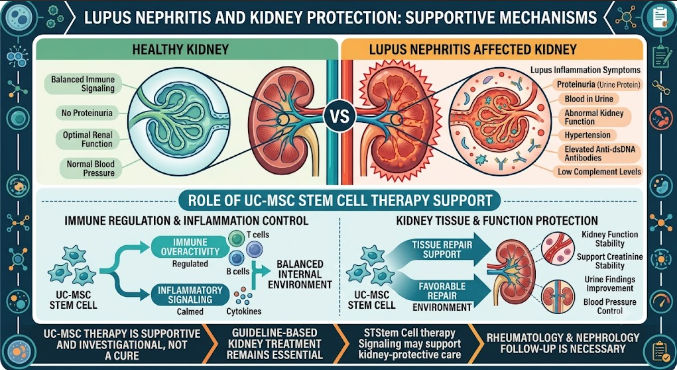
One of the most serious forms of SLE is lupus nephritis. This occurs when lupus inflammation affects the kidneys. Patients may not always feel obvious kidney symptoms at first. Instead, doctors may detect protein in the urine, blood in the urine, abnormal kidney function, swelling, high blood pressure, or changes in immune markers.
Kidney involvement requires careful medical care. A rheumatologist and nephrologist may recommend urine testing, blood tests, kidney imaging, or kidney biopsy depending on the case. Treatment may include steroids, mycophenolate, cyclophosphamide, calcineurin inhibitors, biologics, and blood pressure medication.
UC-MSC stem cell therapy is being studied in lupus nephritis because MSC stem cell therapy may support immune regulation, reduce inflammatory signaling, and encourage a more favorable repair environment in damaged tissues. Some studies and clinical reviews have reported improvements in disease activity markers, proteinuria, and immune profiles in selected patients. Still, the evidence is not strong enough to claim that UC-MSC stem cell therapy can replace guideline-based kidney treatment.
For lupus nephritis patients, the most responsible approach is combination thinking: standard kidney-protective treatment remains essential, while regenerative support may be considered only after medical review.
In some autoimmune diseases, a patient’s own stem cells may not function normally. Research has suggested that MSC stem cell therapy from patients with SLE may show impaired repair or immune-regulating behavior. This is one reason healthy donor-derived MSC stem cell therapy are often discussed in lupus research.
Allogeneic UC-MSC stem cell therapy come from screened donors rather than from the patient’s own inflamed or autoimmune environment. In theory, this may provide a more consistent source of young, active cells with stronger signaling potential.
That said, cell source alone is not enough. Safety depends on donor screening, laboratory standards, cell identity testing, sterility testing, viability, handling, transport, physician oversight, and patient selection. Patients should always ask how the clinic manages these steps before treatment.
Patients with lupus often want to know what changes they may realistically look for after treatment. The answer depends on the patient’s disease pattern.
Some patients may hope to support fatigue, joint discomfort, flare frequency, inflammatory markers, immune balance, or general resilience. Patients with kidney involvement may focus on proteinuria, creatinine stability, urine findings, blood pressure, and complement or anti-dsDNA trends. Patients with skin or vascular symptoms may look for changes in rash activity, circulation, or inflammatory burden.
These goals must be monitored carefully. Subjective improvement is important, but lupus also requires objective follow-up. Blood tests, urine tests, physician assessment, medication changes, and disease activity scores may all help show whether the condition is moving in the right direction.
UC-MSC stem cell therapy should not be promised to stop all flares, normalize all blood tests, reverse kidney damage, or remove the need for medication. The best goal is supportive improvement within a structured medical plan.
Lupus patients should not stop prescribed medication without their doctor’s guidance. Suddenly stopping steroids, immunosuppressants, hydroxychloroquine, or kidney medication may increase the risk of flare or organ damage.
A safe regenerative plan should respect the role of standard care. Rheumatology treatment helps control disease activity. Nephrology care protects kidney function. Dermatology may help skin disease. Cardiology may be needed if inflammation affects the heart or blood vessels. Nutrition, sleep, stress management, and sun protection also matter.
UC-MSC stem cell therapy, when considered, should be positioned as an additional supportive approach. It may fit best when the patient has already been diagnosed, has medical records available, understands the investigational nature of therapy, and continues appropriate specialist follow-up.
Not every lupus patient is suitable for stem cell therapy. A more suitable candidate may be someone with stable enough general health for treatment, clear diagnosis, available medical records, and realistic expectations. Patients with recurrent inflammatory activity, fatigue, joint symptoms, immune imbalance, or selected lupus nephritis cases may ask whether UC-MSC stem cell therapy has a supportive role.
More caution is needed if the patient has active severe infection, unstable kidney failure, uncontrolled blood pressure, serious blood clotting disorder, active cancer, severe anemia, pregnancy, uncontrolled heart disease, or very active organ-threatening flare that requires urgent hospital treatment.
Before treatment planning, the medical team should review:
This review helps the doctor decide whether regenerative support is reasonable or whether the patient needs urgent conventional treatment first.
Because lupus is an immune disease, safety questions are especially important. Patients should not choose a clinic only because it promises dramatic results. They should ask practical questions about the cells, donor screening, testing, and medical supervision.
Useful questions include:
A responsible clinic should answer clearly and avoid claiming that stem cells cure lupus or replace medication.
Lupus is unpredictable. Some patients respond well to treatment changes, while others flare despite careful care. This is why realistic expectations are essential.
After UC-MSC Stem Cell therapy, some patients may monitor energy, joint pain, flare pattern, medication tolerance, skin symptoms, sleep quality, and overall function. For patients with kidney involvement, follow-up may include urine protein, creatinine, eGFR, blood pressure, complement levels, anti-dsDNA, and physician assessment.
Changes may not appear immediately. Autoimmune activity often shifts gradually. Some patients may notice improvement over weeks or months, while others may have limited response. A flare can still happen after treatment, especially if lupus is highly active or standard medication is reduced too quickly.
Stem cell therapy should be viewed as a supportive tool, not a guarantee.
Thailand has become a destination for regenerative medicine because international patients often want coordinated consultation, treatment planning, and supportive care in one trip. For autoimmune patients, clear communication and medical preparation are especially important.
At Vega Medical Services in Bangkok, UC-MSC stem cell therapy for SLE is discussed with a focus on immune support, inflammation balance, safety review, and realistic goals. Patients are encouraged to send medical records before consultation, especially blood tests, urine tests, kidney reports, medication lists, rheumatology notes, and any history of lupus nephritis.
The clearer the medical picture, the more responsible the treatment plan becomes.
Systemic lupus erythematosus is a complex autoimmune disease that requires long-term medical care. Standard rheumatology treatment remains the foundation of lupus management, especially for patients with kidney involvement or organ-threatening disease.
UC-MSC stem cell therapy is being studied because of its potential role in immune modulation, inflammation balance, tissue-support signaling, and repair pathways. For selected lupus patients, it may be considered as a supportive and investigational option alongside proper medical care.
The right question is not, “Can stem cells cure lupus?” A better question is, “What type of lupus activity does this patient have, which organs are involved, and is there a realistic role for UC-MSC support within a safe treatment plan?”
When lupus care is guided by evidence, medical review, and honest expectations, regenerative medicine can be discussed responsibly without replacing the treatments that patients still need.