

Advances in regenerative medicine are transforming how many complex diseases are approached, particularly those involving dysfunction of the immune system. One of the most promising innovations is the use of stem cells to regulate immune responses. Rather than simply suppressing symptoms, stem cell–based immune modulation seeks to restore balance within the immune system itself. This strategy is being explored for a wide range of conditions, including autoimmune disorders, chronic inflammatory diseases, immune deficiencies, complications following organ transplantation.
Among the different stem cell types studied for immune-related therapies, mesenchymal stem cells (MSCs) have attracted significant scientific attention. These cells are valued not only for their ability to contribute to tissue repair but also for their remarkable capacity to influence immune function. Umbilical cord–derived mesenchymal stem cells (UC-MSCs), in particular, are widely researched due to their strong immunomodulatory properties and their relatively low risk of immune rejection.
Unlike conventional immunosuppressive drugs that broadly inhibit immune activity, stem cell-based therapies have the unique ability to either dampen or support immune responses depending on what the body requires. This adaptive capability allows them to help restore immune balance while still preserving the body’s natural defense mechanisms.
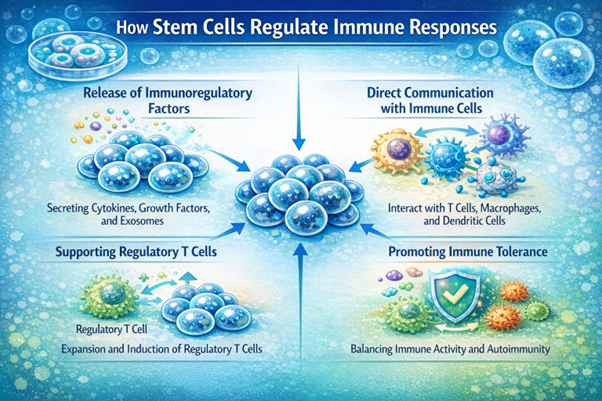
How Stem Cells Regulate Immune Responses
Release of Immunoregulatory Factors: Stem cells can reduce the activity of pro-inflammatory immune cells. By decreasing the signals that drive inflammation, stem cells help create a biological environment that supports healing and tissue recovery. This process is especially valuable in diseases where persistent inflammation damages healthy tissues over time.
Direct Communication with Immune Cells: Beyond the molecules they secrete, mesenchymal stem cells can also interact physically with immune cells. These cell-to-cell interactions influence how immune cells develop, activate, and function.
Stem cells are capable of interacting with many types of immune cells, including T lymphocytes, B lymphocytes, natural killer (NK) cells, macrophages, and dendritic cells. Through these interactions, stem cells can alter immune cell behavior and guide immune responses in a more balanced direction.
Supporting Regulatory T Cells: Stem cells can promote the expansion and functional activity of regulatory T cells. By strengthening this population of immune regulators, stem cell therapy helps stabilize immune reactions and prevents the uncontrolled responses that lead to tissue damage.
Promoting Immune Tolerance: A particularly valuable feature of stem cell therapy is its ability to encourage immune tolerance. Immune tolerance refers to the immune system’s capacity to recognize certain cells or tissues without launching a destructive response against them.
Stem cell therapy offers an alternative strategy by helping the immune system become more tolerant of transplanted tissues. By reducing immune reactivity and encouraging tolerance mechanisms, stem cells may help decrease the likelihood of transplant rejection while reducing the need for powerful medications.
Clinical Applications of Stem Cell–Based Immune Modulation
Autoimmune Diseases: Stem cells help suppress the activity of immune cells that target healthy tissues while simultaneously increasing regulatory T cell populations. This dual action may reduce disease activity and improve symptoms. Clinical studies investigating stem cell therapies for autoimmune disorders have reported encouraging outcomes, including reductions in inflammation, improvements in physical function, and decreased reliance on conventional medications. These findings suggest that stem cells may help recalibrate immune function rather than simply suppress it.
Chronic Inflammatory Conditions: Stem cells can interrupt the cycle by releasing anti-inflammatory molecules and suppressing overactive immune pathways. In gastrointestinal conditions, for instance, stem cell therapies have been investigated for their ability to promote healing of damaged intestinal tissues and reduce inflammatory flare-ups. Stem cell treatments may offer fewer systemic side effects while still addressing the underlying inflammatory processes.
Organ Transplantation: Research suggests that administering stem cells before or shortly after transplantation may improve graft acceptance and long-term organ survival. In some cases, this approach may allow physicians to reduce the dosage of conventional immunosuppressive drugs.
Immune Deficiency Disorders: Stem cell therapies also play an important role in treating conditions where the immune system is weakened or unable to function properly. Stem cells serve as the foundation for regenerating a new and functional immune system. By producing healthy immune cells, stem cell transplants can restore immune defenses and provide long-term disease correction.
Conclusion
The use of stem cells to regulate immune activity represents a major advancement in modern medicine. Mesenchymal stem cells, particularly those derived from umbilical cord tissue, offer a versatile platform for influencing immune responses in complex diseases.
Through their ability to release anti-inflammatory molecules, communicate directly with immune cells, enhance regulatory immune pathways, and promote tolerance, these cells can restore balance within the immune system. This capability has important implications for treating autoimmune disorders, chronic inflammatory diseases, transplant rejection, and immune deficiencies.
Stem cell-based immune modulation is likely to become an increasingly important component of regenerative medicine. In the future, these therapies may provide more personalized and effective strategies for managing immune-related diseases while reducing reliance on conventional immunosuppressive treatments.