Our Services
Others
- DFPP
- Shockwave
- IV Drip

This article is for educational purposes only and does not replace consultation with a qualified medical professional.
For parents researching biological interventions for Autism Spectrum Disorder (ASD), the conversation has long moved past basic definitions. You already know the diagnostic criteria. What you need now is a rigorous look at clinical viability.
The unregulated nature of international clinics leaves families deeply vulnerable. Between predatory marketing and scientifically bankrupt “cure” promises, separating the biological realities of Umbilical Cord Mesenchymal Stromal Cells (UC-MSCs) from commercial hype is exhausting.
This guide strips away the marketing noise. We’ll analyze the actual clinical evidence, the true physical risks, and the non-negotiable questions to ask before stem cell therapy for autism. By evaluating the neuroinflammatory mechanisms of UC-MSCs, breaking down current trial data, and your finances from substandard providers.
When determining the right questions to ask before stem cell therapy for autism, focus entirely on biological plausibility, laboratory standards, and The Clinical Transparency Standard.
UC-MSC stem cell therapy for autism operates on the premise of immunomodulation, specifically targeting systemic and localized neuroinflammation. Rather than differentiating into new neurons, mesenchymal stem cells utilize paracrine signaling to secrete bioactive molecules that alter the inflammatory microenvironment. This biological mechanism aims to mitigate the neuroimmune dysregulation frequently observed in pediatric ASD patients.
UC-MSCs demonstrate a 90% survival rate in lab models, successfully shifting microglia from a pro-inflammatory state to a neuroprotective one.
Let’s clear up the biggest misconception right now. UC-MSCs do not replace damaged brain cells. They don’t cross the blood-brain barrier and suddenly wire new neural pathways.
Instead, they act as localized biological mediators. Think of them as a fire suppression system for the brain’s immune response. Neuroinflammation the chronic, low-grade activation of microglial
Specifically, MSCs secrete potent anti-inflammatory mediators like Interleukin-10 (IL-10) and Prostaglandin E2 (PGE2). When these molecules cross paths with hyperactive M1 microglia the brain’s resident immune cells responsible for pumping out neurotoxic levels of TNF-alpha and IL-6 they force a phenotypic shift. The microglia transition into an M2 neuroprotective state. This doesn’t just stop the inflammatory assault; it begins actively repairing the local cellular environment. It’s a fundamental resetting of the brain’s immune thermostat.
| 📌 If you’re interested in how MSCs calm overactive immune cells throughout the body, we have an interesting article that discusses mesenchymal stem cell therapy for immune modulation, which you can read via the internal link. |
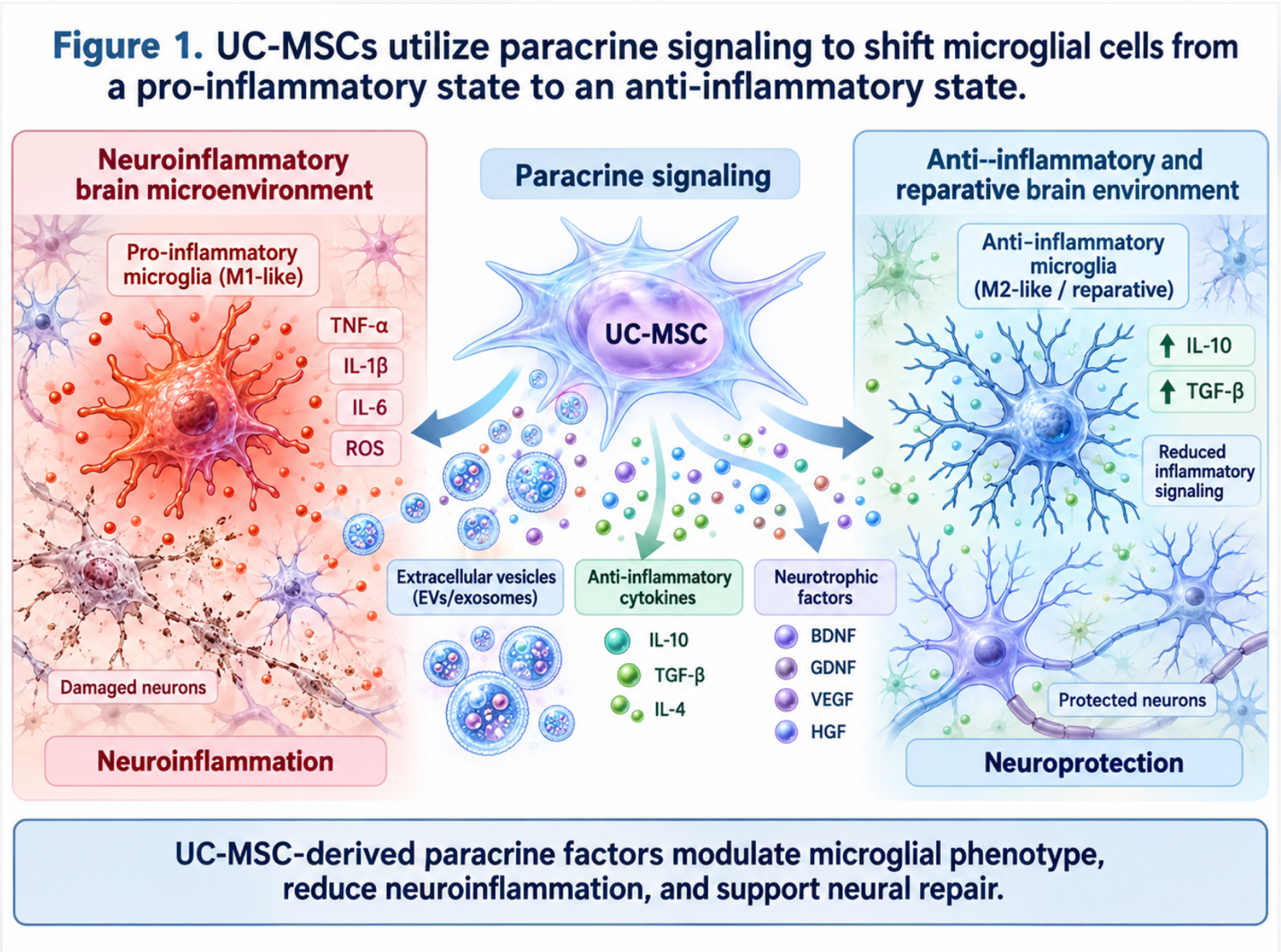
Figure 1: UC-MSCs utilize paracrine signaling to shift microglial cells from a pro-inflammatory state to an anti-inflammatory state.
This is where how stem cells work for ASD becomes fascinating. The UC-MSCs release cytokines and exosomes tiny lipid packets filled with regulatory proteins. These proteins effectively
Why umbilical cord tissue instead of traditional bone marrow? It comes down to cellular age and invasiveness.
Bone marrow extraction requires general anesthesia and drilling into the iliac crest an incredibly invasive procedure for a neurodivergent child. Furthermore, bone marrow stem cells are heavily influenced by the donor’s age and environmental exposures, leading to higher rates of cellular senescence. They yield autologous (self-derived) cells that carry the patient’s biological age and potential genetic predispositions.
Umbilical cord stem cells autism protocols use donated Wharton’s Jelly from healthy, full-term cesarean births. These are immunologically privileged “day zero” cells. Because they haven’t developed mature Major Histocompatibility Complex (MHC) surface markers, they fly completely under the radar of the host’s immune system, making matched donors entirely unnecessary. They possess massive proliferative capacity and lack the mature surface antigens that trigger immune rejection.
| 📌 If you’re interested in why umbilical cord cells are often preferred over bone marrow or fat-derived cells, we have an interesting article that discusses why UC-MSCs are superior to other stem cell sources, which you can read via the internal link. |
Understanding the stem cell therapy procedure autism protocols is critical to minimizing patient distress. Because children with ASD frequently present with profound sensory processing differences, reputable clinics adjust their administration environments heavily, focusing on rapid, minimally invasive techniques.
Initial cellular engraftment takes roughly 30 days, serving as the biological foundation for potential neurological improvements over the following six months.
How do these cells actually get into the body? Clinicians primarily use two stem cell administration methods autism protocols: Intravenous (IV) systemic delivery and Intrathecal (spinal) injections.
Intrathecal delivery bypasses the blood-brain barrier directly, but it requires a lumbar puncture and deep sedation. For most pediatric patients, IV delivery is the standard of care. It’s less invasive, carries fewer immediate physical risks, and effectively distributes the immunomodulatory cells systemically.
But placing an IV in an autistic child who is highly sensitive to touch and clinical environments is incredibly difficult. Top-tier clinics don’t just hold the child down. They use conscious sedation options (like pediatric-dosed midazolam), numbing creams, and low-stimulus recovery rooms devoid of harsh fluorescent lights or medical alarms. To ensure a successful procedure, specialized medical teams spend hours building rapport with the pediatric patient before introducing any medical equipment. Parents are typically encouraged to bring familiar sensory tools such as weighted blankets, noise-canceling headphones, or preferred electronic devices into the treatment suite. The clinical staff integrates these tools into the sedation process, masking the clinical nature of the environment. If a clinic treats your neurodivergent child like a standard adult patient, their pediatric protocols are fundamentally inadequate.
The actual cellular infusion is typically administered via a standard intravenous (IV) drip, which itself is not inherently painful once the line is placed. However, the initial needle prick required to establish the IV can cause significant distress and sensory overload for neurodivergent children. Ethical clinics mitigate this by utilizing topical numbing creams and pediatric-dosed conscious sedation to ensure the child remains comfortable. The entire process is meticulously designed to be minimally invasive, prioritizing the patient’s sensory and emotional well-being above clinical expediency.
Maintaining a standardized symptom diary involves tracking highly specific, measurable behaviors rather than subjective parental moods. Parents should record hard data, such as the exact frequency of stimming behaviors, hours of uninterrupted sleep, and instances of spontaneous
You need to know what to expect after stem cell therapy autism. This is not a fast process.
The autism stem cell recovery timeline operates on biological time, not behavioral time.
Even with perfect administration, parents must remain vigilant regarding the inherent limitations of experimental biological interventions. You must view UC-MSC therapy as a supportive therapy for autism, entirely dependent on continued ABA, speech, and occupational therapies to achieve functional gains.
We need to address the uncomfortable truth. Biological interventions are not appropriate for every family. Sometimes, they are a massive waste of money. Other times, they are clinically contraindicated.
Over 80% of clinical regressions occur when families prematurely abandon standard behavioral therapies in favor of experimental biological interventions.
Our clinical review team notes that families often fall into these exact traps after returning from an overseas clinic:
To determine is stem cell therapy for autism worth it, you must ruthlessly weigh the stem cell therapy for autism pros and cons specific to your child’s biological profile.
There are explicit scenarios where pursuing cellular therapy is the wrong choice.
First, if your child has active, unmanaged seizure disorders, you should not proceed unless explicitly cleared by your primary pediatric neurologist. Introducing systemic immunomodulators into an unstable neurological environment carries unknown risks.
Second, if funding this treatment requires you to pull your child out of standard occupational therapy, take out predatory medical loans, or compromise your family’s basic financial stability—do not do it. Standard, consistent developmental therapies remain the gold standard of care. Biological interventions should only be pursued when you have the disposable capital to absorb a null result.
No medications should be stopped prior to stem cell therapy without explicit authorization from the prescribing physician. Abruptly halting neuro-psychiatric or anti-seizure medications can trigger severe regressions or dangerous withdrawal symptoms. Reputable stem cell clinics mandate a full pharmacological review to check for contraindications with cellular infusions well before your arrival. You must always coordinate care between the treating clinical team and your primary pediatric specialist to ensure a safe transition.
Because mesenchymal stem cells operate through transient paracrine signaling rather than permanent engraftment, the immunomodulatory effects eventually taper off. This is why many families opt for subsequent booster treatments to maintain reduced inflammation levels. Long-term functional gains depend heavily on the child’s continued participation in standard developmental and behavioral therapies during the optimal neuroplastic window following the infusion.
| 📌 If you’re interested in whether a second dose can extend the benefits of the first, we have an interesting article that discusses why double-dose UC-MSC therapy may offer greater benefits than a single dose, which you can read via the internal link. |
Currently, major health insurance providers in the United States do not cover UC-MSC therapy for Autism Spectrum Disorder because the treatment remains investigational and off-label. Families must cover all associated costs out-of-pocket, which includes the cellular infusions, required medical travel, and comprehensive pre-treatment metabolic panels. Some families successfully utilize Health Savings Accounts (HSAs) to offset select diagnostic bloodwork, but you should expect the primary cellular therapy to be a wholly private expense.
No, stem cell therapy should never be viewed as a replacement for standard behavioral interventions like ABA, occupational, or speech therapy. The biological goal of UC-MSCs is to reduce neuroinflammation, which theoretically creates a healthier neurological environment for
For families navigating complex neurodevelopmental care, UC-MSC therapy offers an investigational approach to targeting systemic neuroinflammation in autism. While clinical trials confirm the safety of intravenous cord tissue infusions, efficacy remains highly individualized. The safest approach integrates biological treatments strictly as a supportive measure alongside established behavioral therapies, rather than treating them as a standalone solution.
Protecting your child’s health requires demanding rigorous adherence to The Clinical Transparency Standard. You must demand third-party Certificates of Analysis, verify laboratory expansion protocols to avoid senescent cells, and unequivocally refuse care from facilities offering guaranteed behavioral cures. Asking how to verify cell quality before autism stem cell therapy isn’t just a suggestion; it’s your primary defense against medical fraud.
Take action today by scheduling a comprehensive review of your child’s medical records, inflammatory markers, and seizure history with a licensed pediatric neurologist before financially committing to any international or domestic provider. How do I know if UC-MSC therapy fits my child’s autism care plan? You find out by letting your existing doctors scrutinize the clinic’s protocols. Only pursue cellular interventions when your primary care team confirms there are no contraindications.