

Aging is a complex biological process which sees the progressive accumulation of cell damage, increase in inflammation and reduction of regenerative capabilities. These changes play a role in the development of chronic disease and functional decline in many organ systems. In recent years research in regenerative medicine has put forth that Mesenchymal stem cells (MSCs) from umbilical cord tissue (UC-MSCs) may play a role in either reversing or delaying biological aging. Also it is the stem cells’ immune modulatory, anti-inflammatory paracrine actions which may bring about tissue repair and maintain homeostasis that is of interest. In this review we talk about the bio markers of aging, also we look at the shortcomings of present anti aging treatments and put forth the case for UC-MSC based therapy which we present as a very promising therapeutic approach for healthy aging.
Introduction
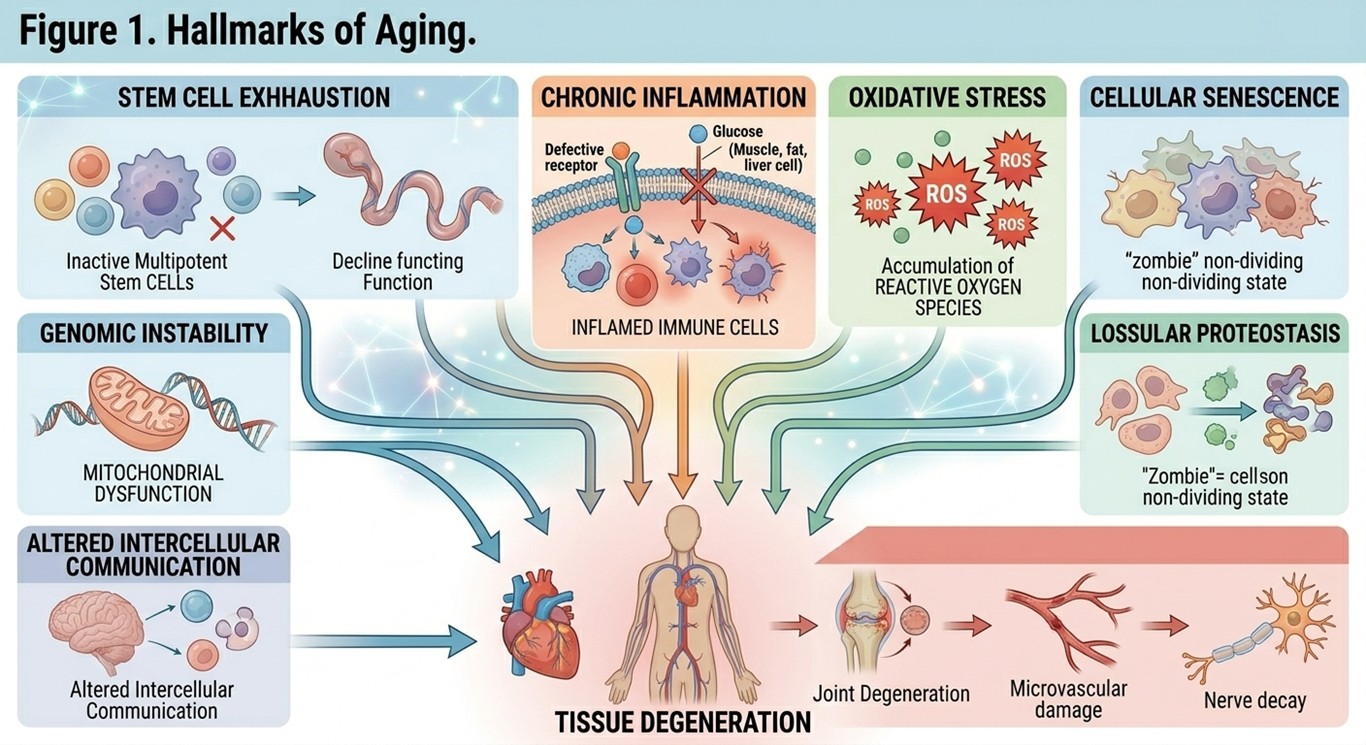
Aging is a process which sees a progressive loss of function in cellular and systemic elements. Genomic instability, cellular senescence, mitochondrial dysfunction and chronic low grade inflammation (inflammaging) are what we see as the hallmarks of aging. These processes play a role in the pathophysiology of age related diseases which include cardiovascular disease, neurodegeneration, metabolic disorders and musculoskeletal degeneration
Traditional age related treatments which include lifestyle change and micronutrient supplementation or drug therapy are for the most part put toward slowing down the process of function decline instead of bringing cells back to homeostasis. Also we are seeing a growth in the field of regenerative medicine which focuses on repair and increasing biological resilience.
The umbilical cord is a stem cell reservoir for many post-natal progenitor cells, and umbilical cord–derived mesenchymal stem cells (UC-MSCs) have arisen as potential candidates in this regard owing to their accessibility, proliferative capacity, and immunomodulatory profile.
- Biological Mechanisms of Aging
Aging is mediated by molecular and cellular events that displace tissue homeostasis. Key mechanisms include:
Cellular aging
The cells have entered a permanent growth arrested state and they begin to secrete a variety of pro-inflammatory factors which is the senescence associated secretory phenotype (SASP).
Chronic Inflammation Response
Chronic low level inflammation causes damage to and impairs function in all organ systems.
Oxidation Stress
Reactive oxygen species (ROS) accumulate to cause cell death which in turn plays a role in DNA mutation incidence and also in reduction of mitochondrial function.
Stem Cell Exhaustion
Endogenous stem cell populations progressively diminish in number and dysfunctionality, compromising the tissue-repairing capacity of the body.
Extracellular Matrix (ECM) Remodeling
Changes in ECM Structure Impact Tissue Integrity, Elasticity, and Cellular Signaling.
These dysregulated processes cumulatively lead to loss of physiological reserve and increased vulnerability to diseases.
Limitations of Conventional Anti-Aging Approaches
Traditional strategies for the amelioration of aging include lifestyle changes, dietary supplementation and pharmacological agents targeting metabolic and inflammatory pathways. These strategies may offer some benefits in slowing aspects of aging but they don’t reverse cellular damage, or restore regenerative capacity.
While pharmacological approaches impart their effects through single pathways, aging is a complex process mediated by multiple biological systems. Furthermore, most interventions do not have tissue repair or functional cellular population restoration capabilities.
This has raised interest in approaches targeting aging at a systems biology level, especially those that can modulate the cellular microenvironment.
UC-MSCs in Regenerative Medicine
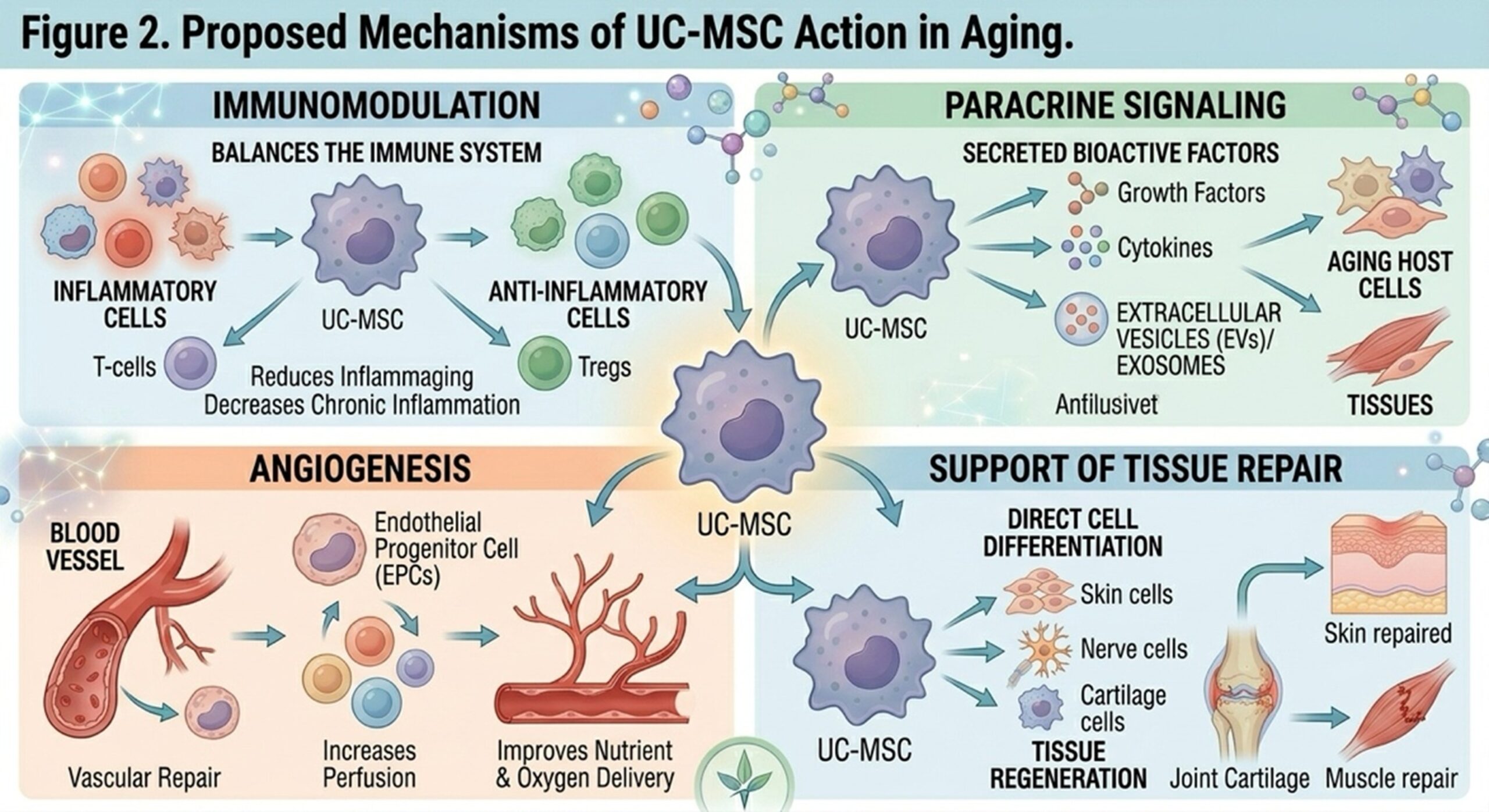
Umbilical cord–derived mesenchymal stem cells (UC-MSCs) are currently a major focus of study as potential agents in regenerative medicine. These cells are known for their unique capacity to secrete numerous bioactive substances that can act on surrounding tissues. Instead of realizing their functions mainly by direct differentiation, UC-MSCs function through the paracrine signaling environment, secreting:
- Growth factors
- Cytokines
- Extracellular vesicles (including exosomes)
- These factors might have several biological effects:
- Immunomodulation
UC-MSCs involved in regulating immune responses by attenuating pro-inflammatory cytokines activities and enhancing anti-inflammatory pathways.
- Anti-inflammatory Effects
Lowering systemic inflammation could mitigate “inflammaging,” a major cause of age-related decline.
- Tissue Repair and Regeneration
This response can be mediated by UC-MSC-derived signaling factors that have the potential to assist in positive cellular repair pathways (e.g., anti-inflammatory phenotypes) and promote recovery of injured tissues.
- Angiogenesis
Angiogenesis may enhance oxygen and nutrients delivery to the tissue.
- Modulation of Cellular Senescence
There is emerging evidence that MSC-derived factors can modulate senescence-related pathways and promote cellular function.
Taken together, these results imply that UC-MSCs have the potential to support biological processes that are consistent with healthy aging.
Clinical Translation and Applications
The clinical interest in UC-MSC–based therapies has rapidly increased, with being tested for a diverse group of age-related diseases. Some include musculoskeletal degeneration, neurodegenerative diseases and metabolic disorders.
In clinical practice it is common to use UC-MSCs in systemic routes (notably intravenous infusion), this also allows interaction with multiple organ systems. A major area is their ability to modulate systemic inflammation and affect tissue microenvironments.
Regression facilities, like those found in Thailand, have been created to deliver regenerative therapies as mines that requisition the laboratory with medical specialists.
Future Perspectives
The use of UC-MSCs for studying aging indicates a new frontier in moving from a biomarker-based approach to regenerative and systems approaches to longevity. Future research directions include:
- Understanding molecular mechanisms leading to MSC-mediated rejuvenation
- Optimizing dosing and delivery strategies
- Evaluating long-term safety and efficacy
- Exploration of cell-free therapies like exosome-based approaches
Progresses in these fields could possibly build up a personalized regenerative approach for sustaining tissue functionality and delaying age-associated dysfunction.
Conclusion
Aging is a complex multifactorial process characterized by the progressive decline of cellular and tissue function. Cellular approaches at cellular level Conventional anti-aging strategies offer limited ability to restore biological integrity at the molecular level.
Umbilical cord–derived mesenchymal stem cells (UC-MSCs) have been considered an attractive option in regenerative medicine because of their immunomodulatory and paracrine capacities. UC-MSC–based approaches may promote healthier aging by influencing inflammation, cellular repair, and tissue homeostasis.
These therapy are considered investigational and must be studied further to delineate their clinical use. Regenerative medicine will remain an active field and may emerge as a foundational component of longevity strategies in the coming years.