

UC-MSCs Pediatric growth stem cell therapy Bangkok unique biological mechanisms
Human development during the formative years of childhood is a complex biological symphony regulated by the endocrine system and cellular signaling. When this intricate process is disrupted the resulting growth failures can lead to profound physical and psychological challenges that persist throughout adulthood. Pediatric growth disorders often stem from growth hormone deficiencies or genetic syndromes that hinder skeletal maturation. While conventional medicine has focused primarily on hormonal replacement many children remain non-responsive or face significant side effects. This necessitates a shift toward regenerative medicine where UC-MSCs offer a novel biological pathway. Utilizing stem cell therapy Bangkok has become a focal point for families seeking advanced cellular interventions to address the root causes of developmental stagnation providing a regenerative foundation that traditional pharmaceuticals cannot replicate.
1.Pathophysiological mechanisms and the impact of developmental stagnation
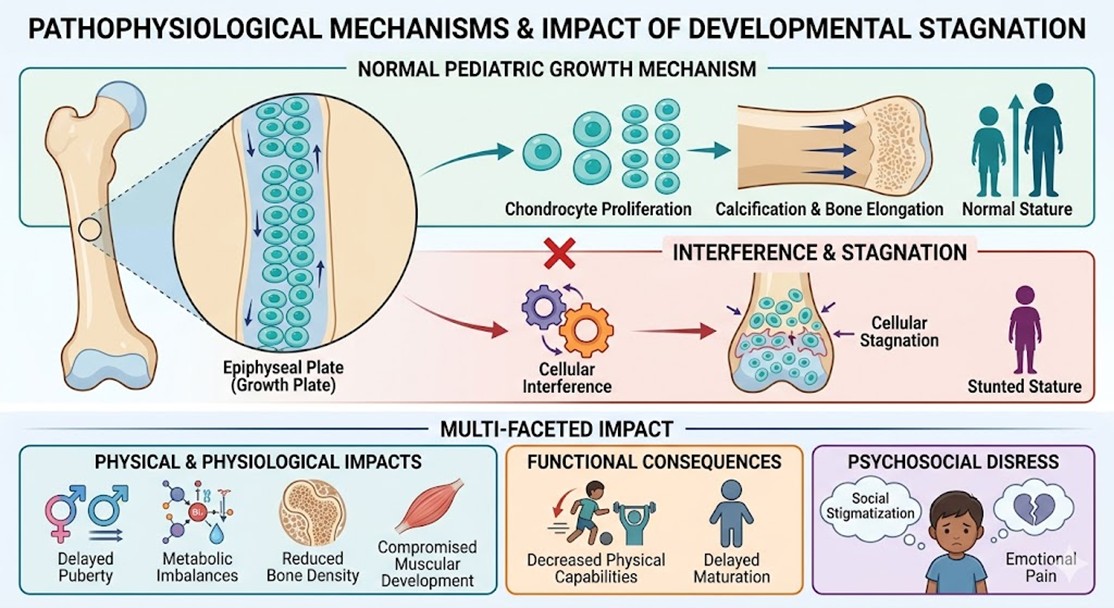
The biological mechanism of Pediatric growth is centered around the epiphyseal plate located at the ends of long bones. Here chondrocytes undergo rapid proliferation and eventual calcification to extend bone length. Any interference with this cellular turnover results in stunted stature and delayed maturation. Beyond the physical height deficit these conditions often involve delayed puberty and metabolic imbalances. The impact on a child’s life is multifaceted leading to decreased physical capabilities and significant emotional distress due to social stigmatization. When the body’s natural signaling for bone elongation is muted the physiological gap requires a potent biological catalyst to restart the maturation process. This cellular stagnation often leads to secondary health complications including reduced bone density and compromised muscular development during critical growth windows.
2.Traditional therapeutic approaches and inherent clinical limitations
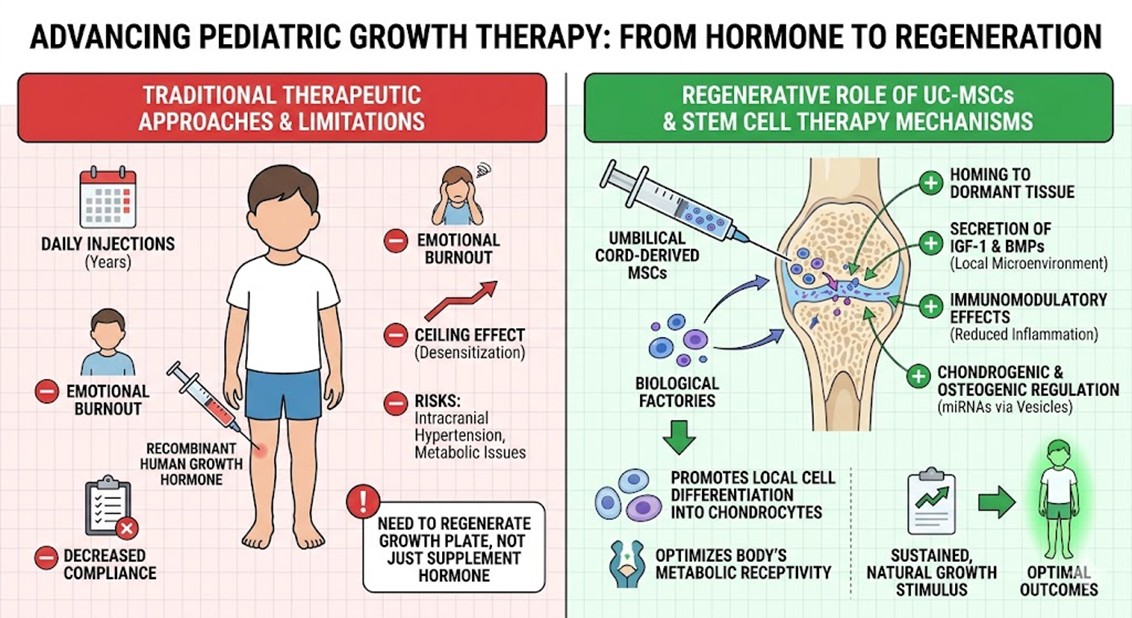
Currently the primary clinical approach to growth disorders involves the administration of recombinant human growth hormone. While effective for specific deficiencies this treatment requires daily injections over many years which can be taxing for pediatric patients. Furthermore, traditional therapy is limited by the ceiling effect where the body eventually becomes desensitized to the hormone. There are also documented risks including intracranial hypertension and potential links to future metabolic issues. These constraints highlight a desperate need for a therapy that does not just supplement a single hormone but instead regenerates the cellular environment of the growth plate itself. Many patients also experience emotional burnout from the rigorous injection schedules leading to decreased compliance and suboptimal outcomes over long periods of treatment.
3.The regenerative role of UC-MSCs and mechanisms in stem cell therapy Bangkok
This is where the integration of UC-MSCs introduces a paradigm shift in regenerative pediatrics. Unlike systemic hormones these cells act as biological factories capable of homing to damaged or dormant tissues. In the context of Pediatric growth, the mechanism involves the secretion of insulin-like growth factor 1 and various bone morphogenetic proteins directly into the local microenvironment. These cells possess unique immunomodulatory properties that reduce systemic inflammation which is often a hidden culprit in stunted growth. By promoting the differentiation of local progenitor cells into active chondrocytes stem cell therapy Bangkok provides a dual-action benefit. It simultaneously stimulates the growth plate and optimizes the body’s metabolic receptivity to its own natural growth signals effectively bypassing the limitations of synthetic hormone injections. Furthermore, these cells secrete extracellular vesicles that contain essential microRNAs responsible for regulating the transcription factors involved in chondrogenesis and osteogenesis. This paracrine activity ensures that the skeletal system receives a sustained growth stimulus that is more natural and biologically compatible than isolated hormone therapy.
4.Future trends and the strategic importance of medical innovation in Thailand
Thailand has emerged as a global epicenter for regenerative medicine particularly in the application of mesenchymal cell treatments. The trend for seeking stem cell therapy Bangkok is driven by a combination of world-class medical infrastructure and a regulatory environment that fosters clinical innovation. Thailand’s leading medical facilities utilize advanced clean-room technologies for cell cultivation ensuring that the potency and purity of the cells meet international standards. Parents often choose this destination because it offers access to cutting-edge science that is integrated with a holistic patient care model. The future of Pediatric growth treatments in the region is leaning toward personalized cellular cocktails where therapy is tailored to the specific epigenetic markers of the child ensuring maximum efficacy and safety. The expertise found in the Thai medical community regarding UC-MSCs is unmatched providing a bridge between laboratory research and clinical success. By integrating advanced diagnostics with cellular biology Thailand offers a unique advantage for international patients who seek the most effective regenerative interventions available today.
In summary the landscape of Pediatric growth intervention is moving away from the narrow focus of hormonal supplementation and toward a more comprehensive regenerative model. The use of UC-MSCs represents a sophisticated method of addressing developmental delays at the cellular level offering hope where traditional paths have failed. By leveraging the unique regenerative properties of these cells’ clinicians can stimulate bone growth and metabolic health with fewer risks and higher precision. As stem cell therapy Bangkok continues to refine these protocols the potential for children to achieve their full biological height and developmental health becomes a more attainable reality. The integration of advanced cellular signaling with established pediatric care ensures that the next generation can grow without the limitations of past medical constraints. This holistic advancement ensures that every child has the opportunity to benefit from the most advanced biological science available today through the power of UC-MSCs and innovative regenerative techniques.