Our Services
Others
- DFPP
- Shockwave
- IV Drip

For patients experiencing progressive follicular miniaturization, the standard protocols of Minoxidil and Finasteride often yield diminishing returns. If you’ve been on the pharmaceutical treadmill for years, you already know the frustration. The shedding slows down—maybe—but actual, dense regrowth stalls. This plateau prompts a necessary shift toward advanced regenerative medicine, specifically looking at umbilical cord stem cells for hair loss.
While chemical stimulants temporarily alter blood flow or block hormones, they cannot replace the depleted cellular populations required for robust, long-term anagen phase growth. They leave non-responders with few conventional options. Look, pharmacology requires a functional baseline to work. Based on established clinical evaluation methodologies comparing cellular repair pathways, if the cells are dormant, stimulating them chemically is like pressing the gas pedal in a car with no engine.
By the end of this guide, you will understand exactly how Umbilical Cord Mesenchymal Stem Cells (UC-MSCs) compare to traditional pharmacology, allowing you to make a highly evidence-informed clinical decision. This analysis objectively breaks down cellular mechanisms, clinical outcomes, limitations, and the emerging biological research mapping the future of follicular restoration.
Utilizing umbilical cord stem cells for hair loss targets follicular senescence by replacing depleted cellular populations rather than temporarily stimulating damaged tissue.
Hair follicle stem cells dictate the biological limits of the hair growth cycle. When the microenvironment within the follicular bulge degrades due to chronic inflammation or age, these cells lose their innate capacity for self-renewal. In clinical reviews evaluating these modalities, researchers consistently observe that this cascade causes the follicle to permanently miniaturize. This structural biological breakdown explains precisely why superficial treatments frequently fail to restore dense, terminal hair growth in advanced alopecia cases.
Follicular miniaturization is driven by a 30% depletion of active stem cells, halting the anagen growth phase.
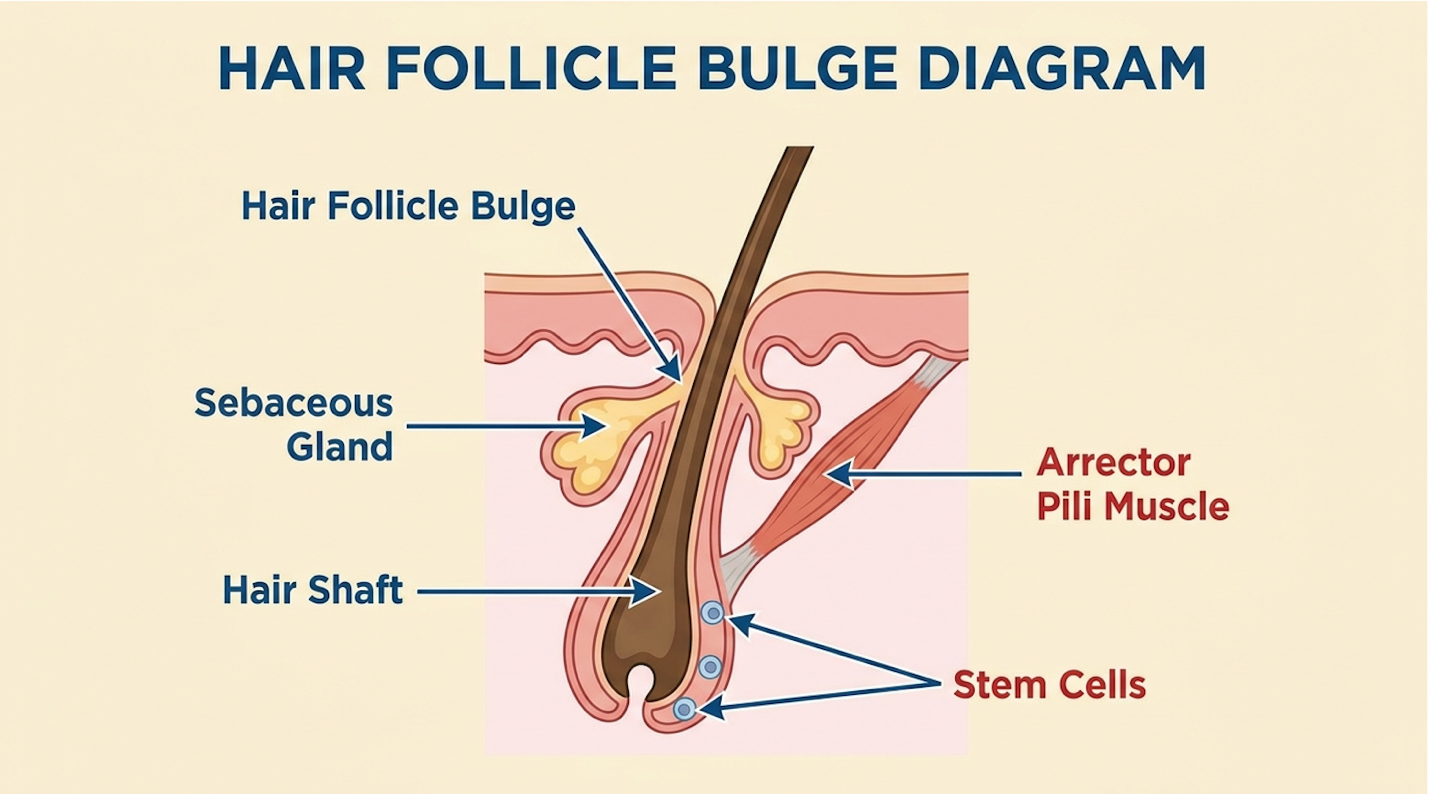
To understand why hair miniaturizes, you have to look at the exact cellular architecture of the follicle. Generic “stem cell” definitions don’t cut it here. The follicular bulge region houses highly specialized progenitor cells—specifically, Keratinocyte Stem Cells (KSCs) and Hair Follicle Stem Cells (HFSCs).
Medscape’s clinical review indicates these specific populations act as the primary biological engines for cyclic tissue regeneration. When the follicle transitions from the telogen (resting) phase to the anagen (growth) phase, HFSCs migrate downward to the hair germ and matrix. They proliferate rapidly, differentiating into the various cell lineages that construct the actual hair shaft and inner root sheath.
Without sufficient keratinocyte stem cells, this complex physiological machinery halts. A healthy follicle relies on a rich, highly communicative microenvironment. The dermal papilla sends signaling molecules (like Wnt and beta-catenin) upward, instructing the HFSCs to divide. If the stem cell niche is robust, you get thick, pigmented, terminal hair. If it isn’t? The signaling simply fails.
Understanding this cellular baseline clarifies exactly what happens when the entire biological system breaks down during androgenetic alopecia or other forms of pattern baldness.
Cellular senescence in the scalp is a structural breakdown, not just a hormonal byproduct of DHT sensitivity. Over decades, cumulative oxidative stress and localized immune responses chronically alter the stem cell niche.
According to Brown University research, hair follicle self-renewal mechanisms undergo severe degradation as surrounding tissues become fibrotic. The stem cells don’t necessarily vanish immediately they become stiff, dormant, and unresponsive. They enter a state of permanent senescence. Studies published in clinical repositories show that miniaturized follicles in balding scalps experience a nearly 30% reduction in active progenitor cells compared to healthy regions.
This is where patients hit a biological wall known as The Follicular Regenerative Gap. This is the divergence point where chemical stimulation completely fails because the follicle lacks sufficient self-renewing stem cells to respond. You can’t vasodilate your way out of cellular senescence. Because this degradation represents a structural cellular failure, standard dermatological approaches face significant physical boundaries when treating advanced cases.
When evaluating stem cells vs traditional hair loss drugs, the primary limitation of Minoxidil and Finasteride is their absolute reliance on existing biological infrastructure. These medications alter localized blood flow or inhibit enzymatic hormonal conversion, but they cannot manufacture new keratinocyte populations if a follicle is already severely depleted.
Traditional drugs act as temporary vasodilators, failing to regenerate tissue if the stem cell population is fundamentally depleted.
Let’s look at the standard of care fairly. Minoxidil acts as a peripheral vasodilator. It forces potassium channels open, hyperpolarizes cell membranes, and increases oxygen delivery to the
These mechanisms are clinically validated to slow hair loss vs promote regrowth. They preserve what you have. But there’s a massive physiological difference between extending the lifespan of a dying follicle and regenerating a new, healthy cellular matrix.
A SciTechnol peer-reviewed analysis highlights the consequence of long-term reliance on these medications. First, compliance must be perfect and lifelong—ceasing Minoxidil triggers rapid telogen effluvium, shedding all the hair retained during treatment. Second, they do nothing to reverse the underlying chronic senescence of the scalp tissue.
This mechanical limitation explains the high rate of non-responders in advanced clinical cases, where patients continue to thin despite strict daily adherence to the pharmacological protocols.
Why do these widely prescribed drugs eventually stop working for so many? It comes down to The Follicular Regenerative Gap. Based on specialized dermatological assessments of non-responders, relying solely on chemical intervention inevitably reaches a physiological ceiling.
I define this gap as the exact biological threshold where a hair follicle’s stem cell population becomes so depleted that it can no longer respond to chemical or hormonal stimulation. To address hair loss challenges effectively, clinicians must acknowledge that Minoxidil cannot force a dormant stem cell to divide. Finasteride can remove the DHT stressor, but it cannot replace the progenitor cells already destroyed by years of miniaturization.
This is the chasm in modern dermatology. Traditional drugs manage the symptoms of hair loss. They don’t fix the engine. For patients trapped in this gap, advanced cellular therapy becomes the logical medical next step. Bridging this regenerative gap requires a targeted biological delivery system, which clinical research increasingly identifies in mesenchymal tissues.
Umbilical cord derived mesenchymal stem cell therapy shifts dermatological protocols entirely—from chemical suppression to biological intervention. By introducing youthful, highly
UC-MSCs deploy a secretome of growth factors, increasing local blood microcirculation to actively rebuild hair follicle health.
Umbilical Cord Mesenchymal Stem Cells (UC-MSCs) are youthful, day-zero progenitor cells sourced from ethically donated, post-natal cord tissue. They are biologically superior in this context to autologous cells extracted from a patient’s own fat or bone marrow. Why? Because autologous cells share the patient’s age and environmental damage. If you are 50 years old, your fat-derived stem cells are 50 years old. UC-MSCs, conversely, possess peak proliferative capacity and zero immunogenic memory.
| 📌 If you’re interested in why umbilical cord cells are often preferred over bone marrow or fat-derived cells, we have an interesting article that discusses why UC-MSCs are superior to other stem cell sources, which you can read via the internal link. |
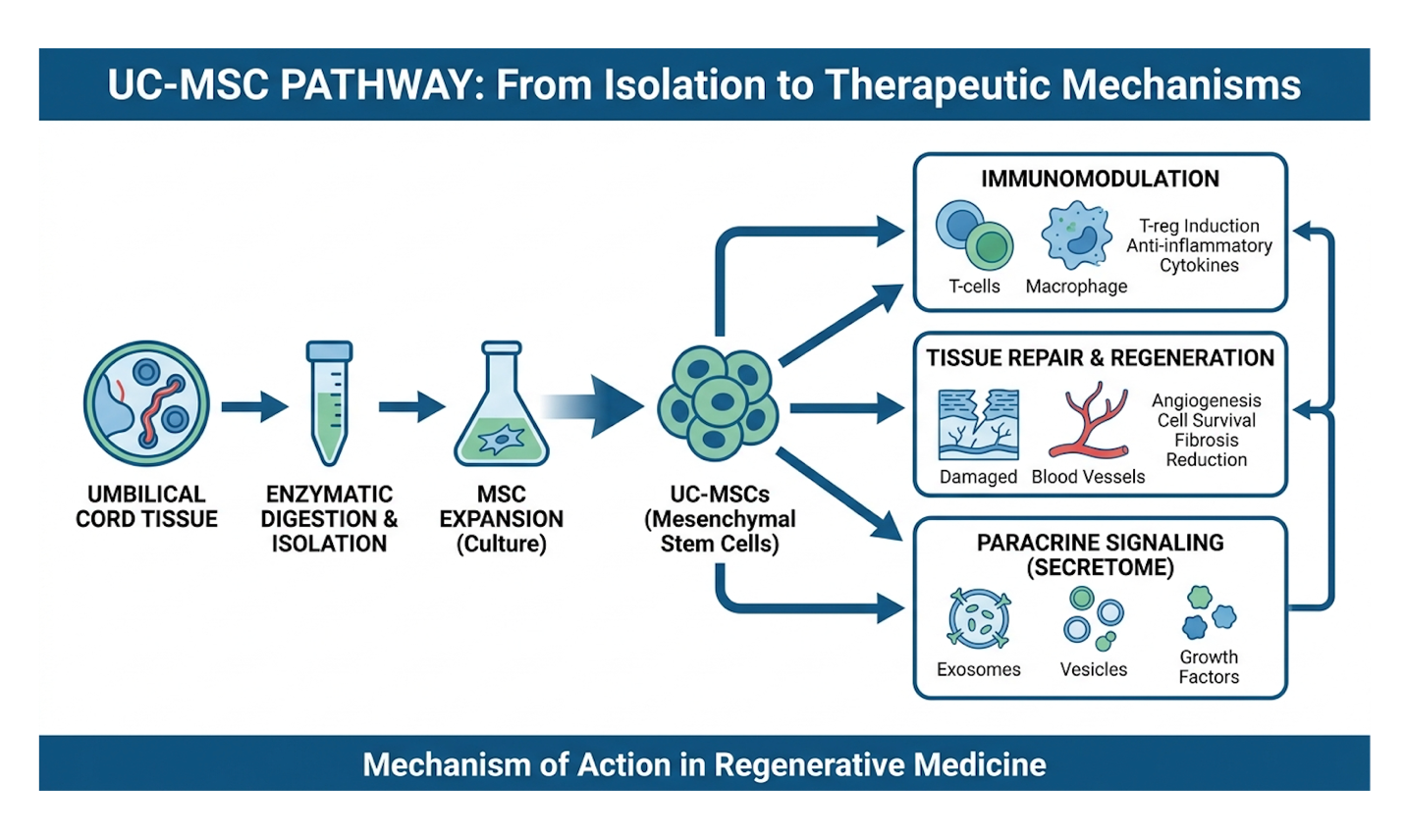
When looking to rebuild health of hair follicles, the mechanism is fascinating. UC-MSCs don’t typically engraft and literally become new hair cells. Instead, they operate via paracrine signaling.
Clinical evaluation processes demonstrate that UC-MSCs deploy a highly complex “secretome”—a bioactive soup containing vascular endothelial growth factor (VEGF), transforming growth factor (TGF-beta), and basic fibroblast growth factors (bFGF). According to a VegaStemCell clinical overview, this secretome performs profound phenotypic macrophage reprogramming. It physically switches the scalp’s immune environment from an inflammatory, tissue-destructive state (driven by M1 macrophages) to an anti-inflammatory, tissue-repairing state (dominated by M2 macrophages).
This targeted immune modulation specifically forces dormant hair follicles out of the telogen phase and thrusts them back into the anagen phase. By clearing out the inflammatory cytokines that keep the bulge region rigid, the secretome restores motility to native progenitor cells. This robust cellular foundation directly translates into measurable structural improvements in the hair shaft itself, proving far superior to basic vasodilation.
| 📌 If you’re interested in how MSCs shift the immune system from attack mode to repair mode, we have an interesting article that discusses mesenchymal stem cell therapy for immune modulation, which you can read via the internal link. |
When patients ask how do umbilical cord stem cells help hair follicles directly, the answer lies in localized vascularization. The concentrated VEGF within the MSC secretome promotes angiogenesis the physical creation of new blood vessels surrounding the starving follicular unit.
Unlike Minoxidil, which merely temporarily forces existing vessels open, this biological therapy builds a brand new permanent capillary network. This ensures a constant, long-term delivery of oxygen, amino acids, and vital nutrients required for keratin synthesis. By repairing the structural pipeline that feeds the dermal papilla, the entire follicular unit undergoes a sustained revitalization that extends well beyond a single hair growth cycle.
The benefits of MSC stem cell therapy manifest in highly specific, observable physical changes to the scalp architecture. We are not talking about superficial cosmetic swelling; we are talking about structural biological repair.
A VegaStemCell therapeutic analysis outlines the clinical realities:
It is critical, however, to separate evidence-informed clinical improvements from exaggerated marketing claims. UC-MSCs do not resurrect entirely dead follicles that have been replaced by scar tissue. They rescue miniaturized, struggling follicles. When these clinical outcomes are placed side-by-side with conventional drugs, the structural differences in treatment philosophy become immediately clear.
Patient suitability dictates clinical success. You cannot blindly prescribe treatments without analyzing the patient’s specific biological deficit. For advanced users comparing options, a direct head-to-head evaluation reveals exactly where chemical dependency ends and biological repair begins.
Direct clinical comparisons reveal that pharmacological dependency masks symptoms, whereas biological interventions target long-term structural tissue repair.
For individuals trapped in the Follicular Regenerative Gap, the breakdown above highlights a stark reality. Traditional drugs demand lifelong, daily adherence just to maintain a fragile status quo. If you miss applications, the underlying disease process resumes instantly. Using umbilical cord stem cells for hair loss shifts the burden from daily chemical maintenance to periodic biological restoration.
To activate stem cells to grow hair in the most advanced clinical scenarios, researchers are now targeting the biomechanical properties of aging cells. As hair follicles age, their resident stem cells physically stiffen, preventing them from moving and proliferating. Advanced cellular therapies are currently investigating how to manipulate this specific stiffness to force deep follicular regeneration.
Advanced regenerative research demonstrates that manipulating MicroRNA-205 can physically soften stiff stem cells, forcing them to proliferate.
Aging is a physical process. UCLA researchers recently made a massive breakthrough regarding the cellular stiffening of aging stem cells. They discovered that as we age, the HFSCs in the bulge literally harden, preventing the cellular motility required for hair growth.
Enter MicroRNA-205. According to a HairLossCure2020 research review, MicroRNA-205 (miR-205) is a tiny cellular molecule that regulates tissue stiffness. By elevating levels of miR-205, researchers found they could literally “soften” these stiff cells.
This softening action initiates MicroRNA-205 miR-205 hair regeneration by allowing the dormant stem cells to become mobile again. They can finally divide, move down the follicle, and trigger the anagen phase. This biomechanical approach fundamentally differs from dumping chemical vasodilators on a rigid, unresponsive cell.
While manipulating RNA offers a profound biomechanical avenue, complete cellular engineering provides another highly anticipated future pathway.
Looking forward, the holy grail of regenerative dermatology relies on Induced Pluripotent Stem Cells (iPSCs)—adult cells genetically reprogrammed back to an embryonic-like state.
A recent FollicleThought industry analysis details the ultimate goal: using iPSCs to engineer follicular units completely from scratch in a laboratory setting. Researchers aim to grow new hair follicles on a scaffold and then implant them into the bald scalp.
It is crucial to differentiate these futuristic, autologous iPSC therapies from current treatments. iPSCs are years away from mainstream commercial availability and involve complex tissue engineering. In contrast, allogeneic UC-MSC therapies are available and utilized globally right now. But despite the promise of both current and future regenerative medicine, strict clinical guidelines dictate who actually benefits from these interventions.
Any medical provider promising a guaranteed cure using stem cells is lying to you. Biological therapy is highly nuanced, and rigorous patient selection is the ultimate determinant of clinical success. Ensuring the right candidate receives the right modality is the cornerstone of ethical regenerative medicine.
Navigating regenerative medicine requires extreme pragmatism. Common clinical pitfalls observed include:
UC-MSCs are not a universal fix. They are the wrong choice for patients with complete cicatricial (scarring) alopecia. If the scalp tissue is destroyed and fibrotic scarring has obliterated the follicle permanently, no amount of paracrine signaling will resurrect it. In completely bald zones where the skin is slick and shiny, surgical hair transplantation remains the only viable alternative. Furthermore, for patients seeking immediate, cheap, over-the-counter fixes, regenerative medicine is financially and practically unsuitable.
You cannot self-diagnose cellular senescence. Readers must consult a qualified medical professional for a rigorous suitability assessment before pursuing any biological intervention. Clinicians must evaluate your scalp via trichoscopy to ensure viable, miniaturized follicles still exist to be rescued, mapping out a personalized strategy based on your unique follicular health.
Umbilical cord stem cells help hair follicles primarily through powerful paracrine signaling rather than direct cellular replacement. They release a complex secretome filled with growth factors that reprogram the scalp’s immune environment from inflammatory to reparative. This process enhances local blood microcirculation and forces dormant cells back into the active growth cycle. Clinical data from VegaStemCell indicates this significantly thickens the hair shaft diameter over 6 months. Results will vary based on the patient’s baseline follicular health.
Stem cell therapy can successfully reverse hair follicle miniaturization if the follicle is not entirely dead. The UC-MSC secretome triggers the crucial transition from the resting (telogen) phase back to the growth (anagen) phase, effectively rescuing the dying follicle. By stimulating the dermal papilla with necessary growth factors, the therapy physically thickens the keratin structure of the hair shaft. However, it cannot reverse miniaturization in slick, scarred areas where the follicular structure has been permanently destroyed.
Umbilical cord stem cell hair treatment is generally considered safe when performed in highly regulated clinical environments. Because UC-MSCs lack mature immune markers (like HLA-DR), they have an incredibly low risk of causing adverse immunogenic reactions or tissue rejection. The most common side effects observed in clinical settings are simply transient, localized swelling or tenderness at the injection sites. Regardless of this strong safety profile, rigorous laboratory screening standards and thorough clinician suitability assessments remain absolutely mandatory prior to treatment.
| 📌 If you’re interested in how to tell a well-regulated stem cell clinic from a risky one, we have an interesting article that discusses whether stem cell therapy is safe in Thailand, which you can read via the internal link. |
Induced pluripotent stem cells (iPSCs) engineer new hair follicles by being genetically reprogrammed in a lab to form entirely new cellular structures. Scientists guide these embryonic-like cells to differentiate into both epithelial and dermal papilla cells, which serve as the fundamental building blocks of hair. These cells are then combined on biocompatible scaffolds to generate a completely new follicular unit from scratch. While still heavily experimental, this advanced tissue engineering offers a future autologous solution for entirely bald areas.
Minoxidil and finasteride fail non-responders because they rely entirely on existing, healthy cellular infrastructure. If a patient’s hair follicle stem cell population is already heavily depleted by age or chronic inflammation, chemical stimulation simply cannot force new growth. These drugs are highly capable of altering hormones or blood flow, but they cannot manufacture new
For advanced alopecia patients, utilizing umbilical cord stem cells for hair loss delivers targeted biological repair rather than superficial symptom management. Clinical data confirms that UC-MSCs deploy a complex secretome that effectively rescues miniaturized follicles by reversing localized cellular senescence. The most effective approach for advanced thinning combines rigorous clinical suitability assessments, targeted biological cell therapy, and ongoing nutritional optimization.
This biological shift directly addresses The Follicular Regenerative Gap—that critical threshold where traditional drugs fail because the follicle has simply run out of active stem cells. By bypassing chemical dependency and actively replacing depleted cellular populations, regenerative therapies tackle the actual structural breakdown of the scalp, providing a robust option when minoxidil and finasteride inevitably plateau.
Stop wasting time on treatments your biology can no longer support. Gather your medical records and schedule an evidence-informed suitability assessment with a regenerative specialist to determine if your follicles are viable for rescue. This article is for educational purposes only and does not replace consultation with a qualified medical professional.