Our Services
Others
- DFPP
- Shockwave
- IV Drip

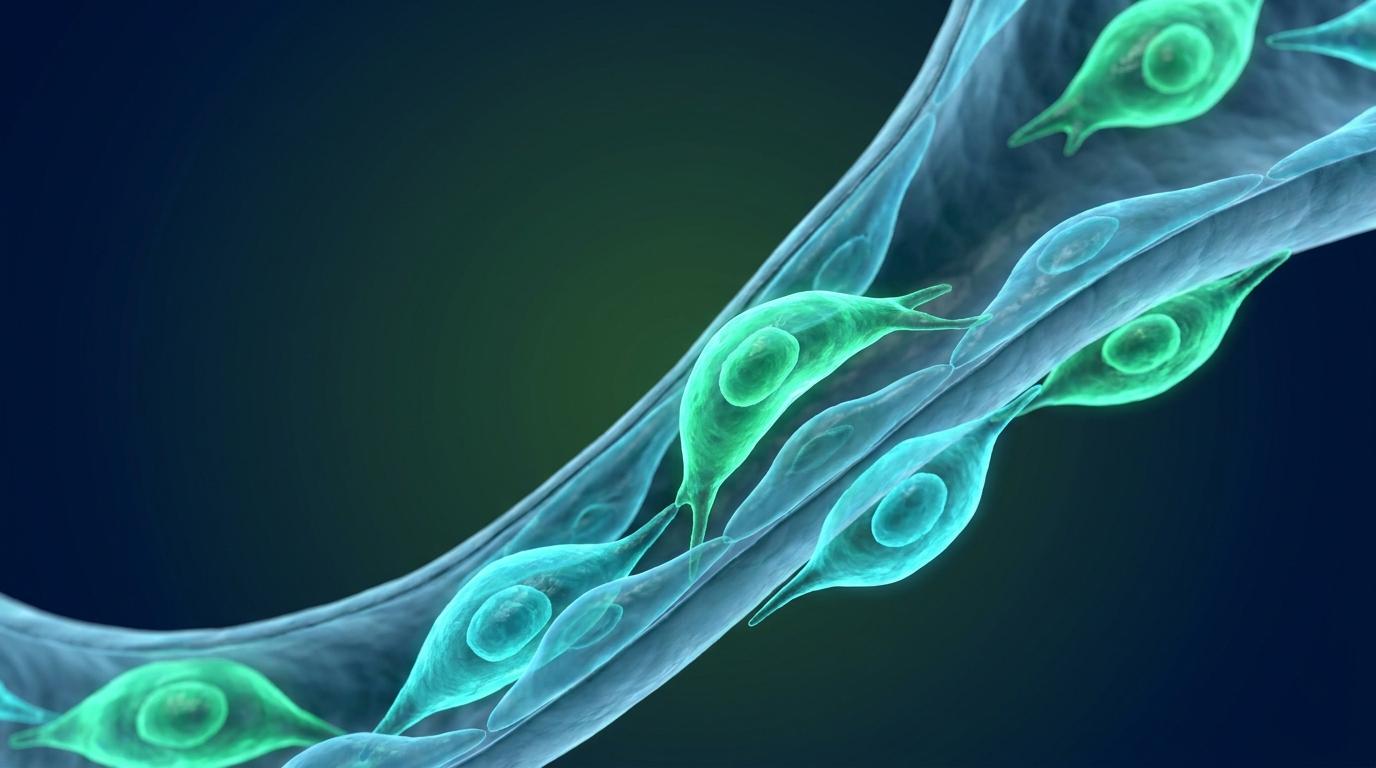
Stem cell therapy for erectile dysfunction is attracting interest because it aims at a different goal from conventional ED treatment. Tablets such as sildenafil or tadalafil improve the erectile response for a period of time, while regenerative research asks a harder question: can damaged blood vessels, smooth muscle and nerve pathways be repaired well enough to improve spontaneous erectile function? That idea is scientifically plausible, but it is not yet the same thing as a proven cure.
For patients considering stem cell treatment for erectile dysfunction in Thailand, the most important distinction is between promising research and established medical care. Thailand has a sophisticated private healthcare sector and is actively developing its regulatory framework for advanced therapy medicinal products, but that does not mean every stem cell procedure advertised by a clinic is approved, standardized or proven for ED. A careful patient should therefore evaluate the diagnosis, the cell product, the physician, the laboratory process and the evidence behind the proposed treatment before paying for a procedure.
Sources: Thai FDA: Road to ATMPs (2026) | FDA: Regenerative medicine consumer information
Erectile dysfunction is not a single disease. It can arise from vascular disease, diabetes, smoking, medication effects, low testosterone, pelvic surgery, nerve injury, psychological factors or a combination of these. This matters because stem cell therapy for erectile dysfunction is mainly being studied as a regenerative approach for organic ED, particularly when blood-vessel or nerve damage is involved. It is not a logical first treatment for a man whose primary problem is performance anxiety, untreated hormonal disease or a medication side effect.
Current European guidance still places phosphodiesterase type 5 inhibitors (PDE5 inhibitors) such as sildenafil and tadalafil as first-line therapy for most men with ED. Vacuum devices, intracorneal injections and penile prostheses remain established options depending on severity and patient preference. Low-intensity shockwave therapy may be considered for selected men with mild vasculogenic ED, but stem cells remain under investigation rather than routine first-line care.
Sources: EAU 2026: Management of Erectile Dysfunction | AUA Erectile Dysfunction Guideline
Most research on stem cell therapy for ED has focused on mesenchymal stromal or stem cells derived from tissues such as adipose tissue or bone marrow. The intended mechanism is not simply that injected cells become replacement penile tissue. Much of the scientific interest centers on paracrine signaling cells may release growth factors and signaling molecules that influence inflammation, blood-vessel formation, smooth-muscle health and nerve recovery.
In practical terms, researchers are trying to improve the biological environment of the corpora cavernosa – the erectile tissue that must relax, fill with blood and trap that blood to produce a firm erection. Potential targets include endothelial function, angiogenesis, fibrosis and cavernous nerve injury. These mechanisms are especially relevant to ED associated with diabetes or recovery after radical prostatectomy, where vascular and neurological damage can coexist.
Sources: PubMed: Advances in stem cell therapy for ED | PubMed: Stem-cell regenerative medicine as applied to the penis
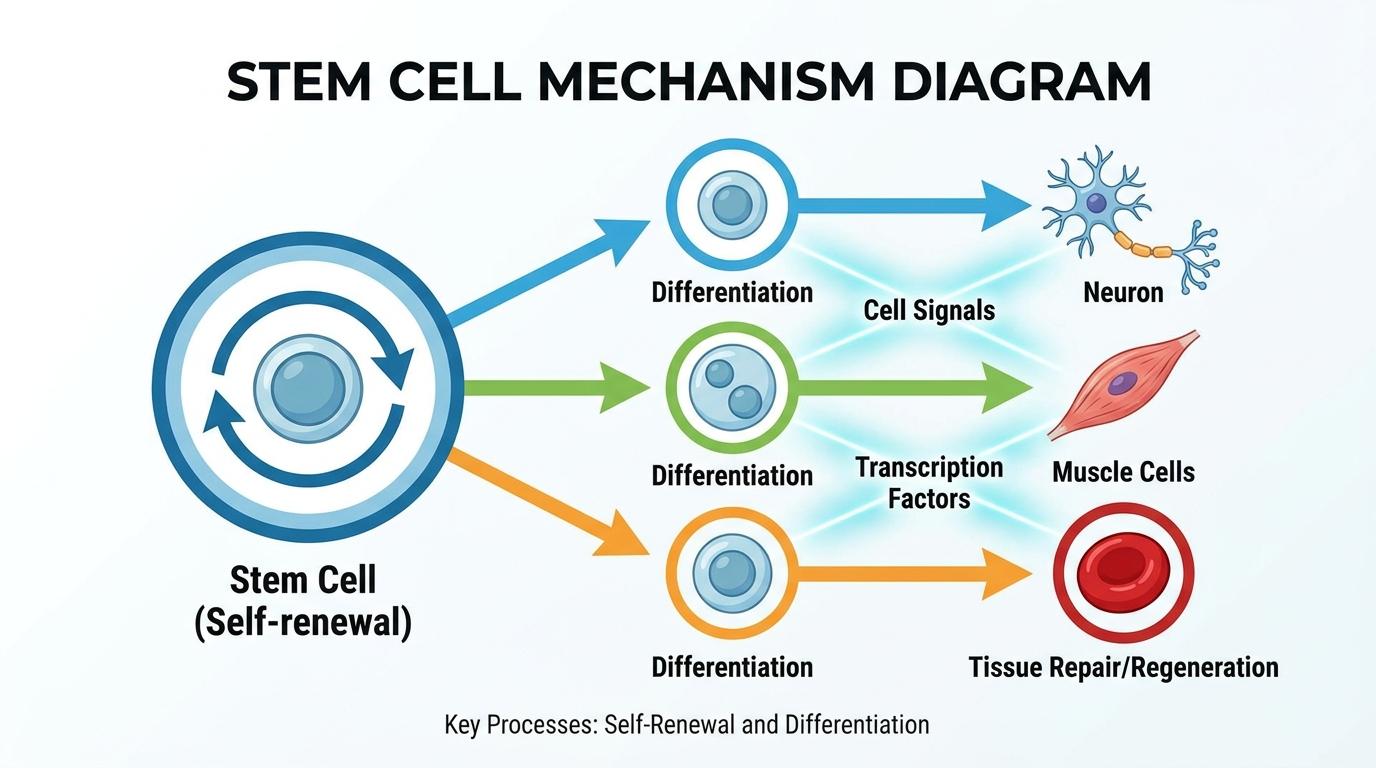
Illustration: stem cells may influence tissue repair through cell signaling and regenerative pathways; the diagram is conceptual rather than proof of clinical efficacy in ED.
The answer is encouraging but still uncertain. A 2023 systematic review of human trials found that stem cell therapy showed promise for organic ED, but the studies used different cell types and protocols and frequently lacked standardized control groups. A 2026 systematic review and meta-analysis reached a similar conclusion: preliminary clinical findings suggest possible improvement in erectile function, yet the overall certainty remains low because the evidence comes largely from early-phase studies with small samples, heterogeneous patients and limited follow-up.
This is why claims such as ‘90% success’, ‘permanent recovery’ or ‘guaranteed natural erections’ should be treated cautiously. Researchers have not established one best stem cell source, one optimal dose, one ideal number of injections or a predictable duration of benefit. A patient may improve, fail to improve, or require additional standard ED treatment. There is not yet enough high-quality evidence to predict individual outcomes reliably.
Sources: PubMed 2023 systematic review | PubMed 2026 systematic review and meta-analysis | European Society for Sexual Medicine position review
No. Stem cell therapy for erectile dysfunction is not FDA approved in the United States. The FDA states that the stem cell products currently approved in the U.S. are blood-forming stem cells derived from umbilical cord blood for disorders affecting the hematopoietic system; those approvals do not extend to ED. The agency also warns that many regenerative products are marketed for conditions without evidence of FDA approval.
The American Urological Association likewise classifies intracorneal stem cell therapy for ED as investigational. This distinction matters for medical tourists: a clinic saying that its laboratory, device, company or cell-processing platform is ‘FDA registered’ is not the same as the specific ED treatment being FDA approved.
Sources: FDA Consumer Alert on Stem Cells and Exosomes | AUA ED Guideline – stem cell therapy investigational
There is no single ‘latest treatment’ that has replaced established ED care. The current landscape is better understood as a ladder. PDE5 inhibitors remain first-line for many men. Intracorneal medication, vacuum erection devices and penile prostheses are established alternatives. Low-intensity shockwave therapy has a limited role for selected vasculogenic ED patients, while PRP and stem cell approaches remain regenerative therapies under active study.
| Treatment | Main purpose | Evidence status | Typical role |
| PDE5 inhibitors | Increase erectile blood-flow response | Established | First-line for many men |
| Intracavernosal injections | Directly relax erectile tissue | Established | Alternative first-line or second-line |
| Vacuum erection device | Mechanically draws blood into the penis | Established | Drug-free option |
| Low-intensity shockwave | Attempts vascular remodeling | Limited/selected use | Some vasculogenic ED patients |
| PRP / P-Shot | Autologous platelet growth factors | Insufficient evidence | Clinical-trial context preferred |
| Stem cell therapy for ED | Investigational tissue repair/regeneration | Investigational | Research / carefully evaluated experimental care |
| Penile prosthesis | Mechanical erectile rigidity | Established | Refractory ED or patient preference |
The phrase stem cell P-Shot cost can be confusing because a P-Shot traditionally refers to platelet-rich plasma (PRP) prepared from the patient’s own blood. PRP contains platelets and growth factors; it is not a stem cell product. A clinic may offer PRP and stem cells in the same package, but combining them does not make the two therapies interchangeable.
This distinction is clinically important. The European Association of Urology states that evidence for PRP in primary organic ED is currently insufficient for a routine recommendation and advises that intracavernosal PRP be used only in a clinical-trial setting. Patients comparing Bangkok packages should therefore ask exactly what is being injected: PRP, autologous cells, donor-derived cells, exosomes, or a combination.
Stem cell therapy for Peyronie’s disease is even less established than stem cell therapy for ED. Peyronie’s disease involves fibrotic plaque formation in the tunica albuginea, which can cause curvature, pain, shortening and erectile difficulty. Cell therapy has been explored because of its possible anti-fibrotic and regenerative effects, but current human evidence is small and heterogeneous.
A 2024 European Society for Sexual Medicine systematic review concluded that cell therapy may have potential in both ED and Peyronie’s disease, while emphasizing low-quality evidence, methodological variability and a lack of long-term data. A clinic should not present stem cells as a proven way to straighten the penis or remove plaque.
Sources: PubMed: Cell therapy for male sexual dysfunctions | PubMed: Stem-cell regenerative medicine and Peyronie’s disease
There is no official national price for stem cell therapy for erectile dysfunction in Thailand, and advertised packages are difficult to compare because clinics use different cell counts, sources and bundled treatments. Current public Bangkok pricing illustrates the spread: one clinic advertises packages starting around THB 59,900 for a 5-million-cell program bundled with one P-Shot and one shockwave session, with higher-cell packages listed at THB 99,000 and THB 149,900. Another Bangkok clinic advertises a THB 55,000 session described as stem cell therapy for ED combined with PRP and shockwave.
For comparison, a standalone P-Shot may be advertised from around THB 12,900. These prices are commercial examples, not an official market average and not evidence that the underlying therapy is clinically proven. The meaningful questions are what the product contains, where it was processed, whether the dose is documented, who performs the injection, and what follow-up is included.
Sources: HE Clinic public pricing | MENHANCE P-Shot pricing | Male Enhancement Clinic Bangkok pricing
Search results for best stem cell clinic Thailand or stem cell clinic Bangkok often prioritize marketing strength rather than clinical evidence. Instead of choosing by testimonials, celebrity endorsements or the largest advertised cell count, patients should ask for documentation.
Sources: Thai FDA ATMP regulatory development | FDA patient guidance on regenerative products
Small clinical studies have generally reported tolerable short-term safety, but that should not be interpreted as proof of long-term safety. Potential concerns include injection-site pain, bleeding, infection, inflammatory reactions, contamination during cell processing, immune reactions with some products and uncertainty about unwanted tissue behavior. The exact risk depends heavily on the source and manipulation of the cells.
The U.S. FDA has documented serious adverse events with unapproved regenerative medicine products in other clinical contexts, including infections and tumor formation. Those warnings are not evidence that every ED stem cell procedure will cause these outcomes, but they show why cell source, manufacturing quality and regulatory oversight matter.
Sources: FDA: Important patient information on regenerative therapies | PubMed 2025 safety and efficacy meta-analysis
There is no medically guaranteed method to increase penile blood flow permanently with one injection. Erectile circulation reflects overall endothelial and cardiovascular health. For men with vasculogenic ED, the most durable strategy begins with controlling the factors that damage blood vessels: smoking, poorly controlled diabetes, high blood pressure, obesity, inactivity and abnormal lipids. These changes can improve vascular function and reduce cardiovascular risk, although they do not guarantee complete reversal of ED.
For men who need a dependable long-term mechanical solution after other therapies fail, a penile prosthesis can provide reliable rigidity, but it does not restore natural blood-vessel function. Stem cells are being studied precisely because researchers hope to achieve true biological repair, but that goal has not yet been proven as a permanent outcome in routine clinical practice.
Early human studies suggest that some men may experience improved erectile-function scores or vascular measures, but the evidence remains low-certainty. Protocols vary widely and long-term durability is not established. Stem cell therapy for ED should therefore be viewed as investigational rather than a proven replacement for standard treatment.
There is no single best treatment for every patient. PDE5 inhibitors are first-line and effective for many men. Intracavernosal injections are highly effective in appropriate patients, and penile prostheses provide very high satisfaction for men with refractory ED. Stem cells are not currently the most proven or most successful standard treatment because the evidence is still developing.
Regenerative approaches such as low-intensity shockwave therapy, PRP and stem cell therapy are among the newer areas of interest, but they do not all have the same evidence. Stem cell therapy remains investigational, while shockwave has a limited guideline-supported role in selected vasculogenic ED patients.
In Thailand, publicly advertised commercial packages can range from roughly THB 55,000 to THB 150,000 or more depending on the claimed cell count and bundled therapies. A P-Shot alone may cost far less because PRP is a different procedure. Patients should compare what is actually included rather than comparing headline prices.
There is not enough evidence to say that stem cell therapy permanently cures ED. Research is examining whether cellular therapy can improve blood-vessel and nerve function, but long-term durability and the need for repeat treatment remain uncertain.
No. The evidence is preliminary. Research suggests possible anti-fibrotic and regenerative effects, but current studies are too small and heterogeneous to establish stem cells as a standard treatment for Peyronie’s disease.
Stem cell therapy for erectile dysfunction is one of the more interesting areas of regenerative urology, but its promise needs to be separated from the way it is sometimes marketed. The science provides a plausible reason to study cell-based repair of endothelial tissue, smooth muscle and cavernous nerves, and early human trials have produced encouraging signals. At the same time, major guidelines continue to classify the treatment as investigational because the field lacks standardized protocols, large, randomized trials and dependable long-term data.
For a patient considering stem cell therapy for ED in Bangkok or elsewhere in Thailand, the safest approach is to start with a proper urological diagnosis and then evaluate the proposed regenerative procedure with the same rigor used for any other medical treatment. Ask what is being injected, where it comes from, how it is processed, what evidence supports that exact protocol, what the realistic alternatives are and how complications will be managed. A credible clinic should be comfortable answering those questions without promising a permanent cure.
Sources: EAU 2026 Erectile Dysfunction Guideline | PubMed 2026 Stem Cell Therapy for ED meta-analysis | Thai FDA: ATMP regulatory framework