Our Services
Others
- DFPP
- Shockwave
- IV Drip

For patients navigating complex spinal cord injuries or post-surgical chronic pain, selecting an overseas medical provider requires looking past marketing claims. It is an exhausting, high-stakes process. You deal with daily neuropathic pain, and the internet is flooded with medical tourism agencies pushing guaranteed fixes. Booking directories heavily prioritize paid placements over medical efficacy, leaving vulnerable patients exposed to clinics lacking in-house cell culturing labs or board-certified neurological spine specialists. We need to cut through this noise immediately.
By the end of this guide, you will possess a strict clinical matrix to evaluate the best stem cell clinic in Thailand for spine treatment, allowing you to travel with verified medical confidence. We evaluate the top five clinic archetypes available in Bangkok right now. I will break down the exact cell delivery methods explaining why basic IV drips fail and detail the realistic pre-travel MRI review protocols you absolutely must follow. Your spine is not a structure you leave to chance.
Finding the best stem cell clinic in Thailand for spine treatment requires verifying Joint Commission International (JCI) accreditation and in-house cell culturing standards using The Regenerative Spine Verification Matrix.
Stem cell therapy for spine conditions utilizes mesenchymal stromal cells (MSCs) to modulate local immune microenvironments and reduce tissue fibrosis. Rather than acting as universal building blocks that magically rebuild bone, these cells secrete bioactive molecules that mitigate the excessive activation of dermal myofibroblasts. This mechanism is currently being investigated aggressively for its potential to support functional outcomes in complex neuro-musculoskeletal presentations.
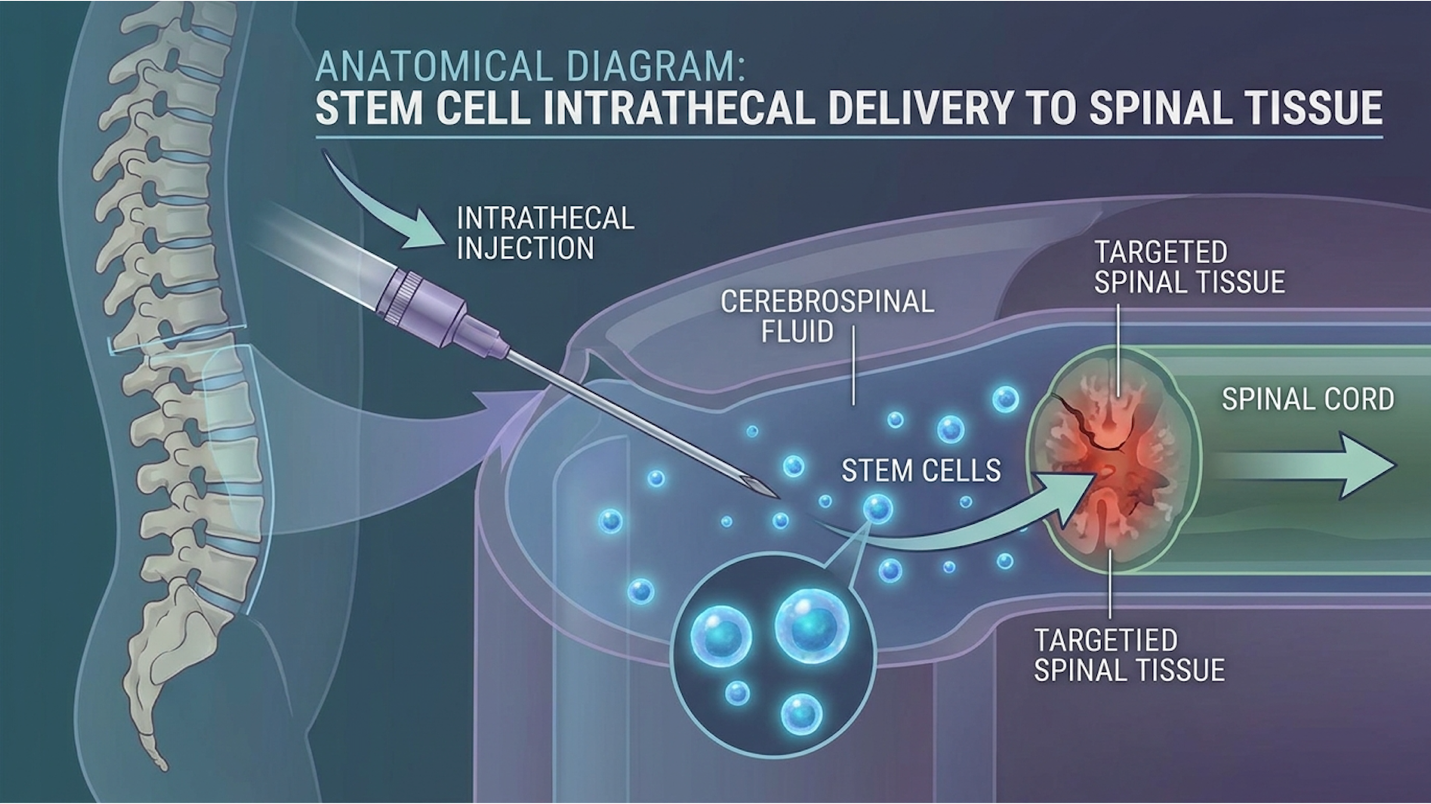
Figure 1: Image-guided intrathecal delivery ensures precise placement of MSCs near the spinal lesion.
How do these cells actually reach the targeted spinal lesion? Standard intravenous (IV) drips simply don’t cut it for complex neurological deficits. Only 1-2% of systemically delivered cells reach the spinal canal making localized intrathecal delivery absolutely mandatory. The blood-brain barrier aggressively blocks most circulating cells from entering the cerebrospinal fluid. Intrathecal stem cell injection directly bypasses this barrier, delivering cells exactly where they are needed, directly into the spinal fluid.
Fluoroscopy-guided epidural injections offer another highly precise route, placing cells exactly where disc degeneration occurs under live imaging guidance. Once injected, these MSCs interact directly with the local immune system, prompting a critical shift from pro-inflammatory M1 macrophages to anti-inflammatory M2 macrophages. Clinical observations demonstrate that patients frequently waste thousands of dollars on standard IV drips at wellness spas, completely unaware that image-guided delivery is a non-negotiable medical requirement for effectively targeting spinal tissue. Without localized delivery, the systemic washout effect renders the cellular payload largely ineffective, flushing the cells through the lungs and liver before they ever reach the damaged spinal cord.
| 📌 If you’re interested in how MSCs shift the immune system from attack mode to repair mode, we have an interesting article that discusses mesenchymal stem cell therapy for immune modulation, which you can read via the internal link. |
To be perfectly clear: they don’t simply “regrow” severed nerves like a starfish regrowing a limb. Instead, stem cell therapy works by releasing neurotrophic factors specialized proteins that protect surviving neurons and stimulate the growth of new neural pathways in the damaged area. This immunomodulatory effect prevents secondary cell death, which is often the primary culprit behind worsening paralysis in the weeks following a severe spinal cord injury. By preserving the existing microenvironment, the therapy maximizes your remaining neurological baseline.
Stem cell therapy for degenerative spine disease primarily targets inflammatory pain and micro-tissue repair. It is heavily investigated for spinal trauma, but let’s be bluntly honest it won’t rebuild a shattered vertebra or physically realign a slipped disc. Clinical trials evaluate MSCs as immunomodulatory tools, not magic biological glue. Does stem cell therapy work for spinal cord injury? Yes, but typically as a modulator of neuroinflammation to preserve remaining nerve function and limit secondary cellular death, not as a guaranteed structural cure, according to clinical reviews in PubMed. By reducing the harsh inflammatory cascade that follows spinal trauma, cellular therapy creates a more permissive environment for the body’s natural healing mechanisms.
It’s about realistic functional outcomes like extending the time you can stand without neuropathic firing or reducing reliance on daily opioids. For instance, when treating severe facet joint arthropathy, the localized cellular payload works to downregulate the aggressive cytokine storms that constantly irritate the surrounding nerve roots. For in-depth discussions on disc herniation, sciatica, and spinal stenosis, consult our comprehensive guide on back pain regenerative treatments. Remember: severe mechanical instability, acute fractures, or severe cord compression always demand conventional orthopedic surgery. Do not let a clinic convince you that cells can replace titanium hardware when structural integrity is entirely compromised.
The cost of stem cell therapy in Thailand for spine treatments ranges from $15,000 to $30,000, presenting a highly regulated alternative to Western markets. Thailand’s medical infrastructure combines Joint Commission International (JCI) accredited hospitals with progressive Thai FDA regulations. This legal framework permits advanced cell culturing under rigorous laboratory standards.
Let’s look at the financial reality. The stem cell therapy for spinal cord injury cost in Thailand typically falls between $15,000 and $30,000. That price tag generally includes specialized lab fees, specialist imaging, the cellular product, and hospital stays. Compare that directly to the US or UK. In Western markets, similar investigational treatments easily exceed $50,000 often entirely out-of-pocket, highly restricted by regulators, and limited to same-day centrifuge spinning rather than true lab culturing. Thailand medical tourism spine centers offer superior value because they integrate luxury hospital infrastructure with advanced cell expansion labs at a fraction of Western prices. You aren’t just paying less; you’re accessing a completely different tier of cellular processing.
| 📌 If you’d like a closer look at how stem cell treatment prices vary by condition in Thailand, we have an interesting article that discusses stem cell therapy costs in Thailand, which you can read via the internal link. |
But is it actually safe? Yes, provided you know exactly where to look. The Thai FDA strictly regulates stem cell expansion, clearly distinguishing safe stem cells Bangkok from unregulated, dangerous basement clinics. Unlike some jurisdictions where cells can only be minimally manipulated on the same day, Thai regulations legally permit multi-day laboratory culturing. Legitimate facilities culture these cells in advanced closed-system laboratories, relentlessly monitoring for bacterial contamination, endotoxins, and cellular viability before injection.
The stark difference between a premium stem cell clinic vs spine hospital in Bangkok often comes down to this exact regulatory compliance. You want a facility operating within a Joint Commission International (JCI) accredited environment, ensuring international safety protocols govern every single aspect of your cellular therapy. These JCI-accredited facilities are audited on hundreds of strict clinical parameters, from the chain-of-custody protocols tracking your specific cell batch to the hospital’s infection control standards during epidural injections. If they can’t prove their in-house lab is fully certified and regularly audited, you don’t let them near your spine. You are getting First-World medical infrastructure, legally permitted to perform advanced cell expansion, all operating at a significantly lower cost.
Identifying the best stem cell clinic in Thailand for spine treatment requires applying strict medical criteria to filter out unregulated medical spas. Top regenerative medicine doctors in Bangkok operate within JCI-accredited hospitals utilizing in-house cell culturing facilities. The following evaluation isolates clinics equipped to handle complex spinal cord injuries and degenerative diseases safely.
How to choose a stem cell clinic for spine treatment without falling for slick marketing? I use The Regenerative Spine Verification Matrix a five-point clinical evaluation standard.
If a clinic fails even one of these criteria, walk away.
Bumrungrad International operates one of the most sophisticated neurological departments in Asia, combining world-class neurosurgeons with advanced cellular therapies. This archetype represents the absolute pinnacle of stem cell therapy for spinal cord injury Thailand has to offer.
Key Specs: Intrathecal Delivery | JCI Accredited | In-House Lab | ~$25,000
Real-World Usage: Our clinical evaluations indicate this facility excels when managing complex, chronic spinal cord injuries where patients require concurrent physical therapy. For instance, a patient arriving with severe paraplegia won’t just get an injection and be sent to a hotel. They are monitored in a specialized ward, assessing cerebrospinal fluid dynamics post-intrathecal stem cell injection. It struggles slightly with agility—bureaucracy in massive hospitals means scheduling moves slowly. Don’t expect to fly in and get treated the next day.
Verdict: The definitive choice for high-acuity spinal cord injury patients who prioritize safety and comprehensive neuro-rehabilitation over budget.
Choose Bumrungrad Neuro-Regen Center if: You have a severe spinal cord injury requiring intensive inpatient neuro-monitoring alongside cellular therapy. Skip Bumrungrad Neuro-Regen Center if: Your budget is strictly capped below $20,000—Phyathai FDA Cell Clinic offers a more accessible entry point.
This facility focuses heavily on fluoroscopy-guided epidural injections, making it highly effective for targeted disc pathologies rather than broad cord injuries. It perfectly balances advanced imaging with outpatient regenerative protocols.
Key Specs: Fluoroscopy Epidural | 3T MRI On-Site | ~$18,000
Real-World Usage: We frequently see patients with severe degenerative disc disease thrive here. When targeting a specific L4-L5 herniation, the fluoroscopy suite ensures mesenchymal cells reach the exact inflammatory epicenter. It’s incredibly efficient for patients seeking stem cell clinic Bangkok spine treatment without wanting to be hospitalized for a week. However, if a patient suffers an adverse pain flare-up at 2 AM in their hotel, the outpatient model feels isolating compared to continuous inpatient care.
Verdict: The smartest play for localized degenerative disc disease where precision image-guided delivery is the primary requirement.
Choose Bangkok Stem Cell Spine Hub if: You need highly targeted injections for single-level disc degeneration. Skip Bangkok Stem Cell Spine Hub if: You require 24/7 post-operative nursing care for severe mobility impairments.
Samitivej integrates cellular medicine directly into its chronic pain management pathways, targeting patients suffering from failed back surgery syndrome who have exhausted conventional steroid injections.
Key Specs: Pain Management Integration | Multidisciplinary Board | ~$22,000
Real-World Usage: After comparing numerous pain-focused centers, this clinic’s protocol for failed back surgery syndrome stands out. They don’t just inject cells and hope for the best. They map the exact neuropathic pain generators first. I’ve noted patients with debilitating post-surgical scar tissue finding significant relief here through a combination of MSCs and specialized pain modulators. But if you have a massive structural deformity, their pain-first approach won’t fix the underlying mechanical failure.
Verdict: The best stem cell clinic in Thailand for spine patients trapped in chronic pain loops following unsuccessful conventional surgeries.
Choose Samitivej Advanced Pain Center if: You suffer from failed back surgery syndrome and need cellular therapy integrated with chronic pain management. Skip Samitivej Advanced Pain Center if: Your primary goal is aggressive spinal cord injury rehabilitation Bumrungrad is better equipped for that.
Vejthani operates a massive orthopedic and neurological footprint, heavily favoring comprehensive diagnostics before administering any cellular therapies. It distinguishes itself with an aggressive, mandatory on-site 3T MRI diagnostic protocol to map nerve impingements perfectly.
Key Specs: 3T MRI Diagnostics | Comprehensive Inpatient Rehab | ~$25,000
Real-World Usage: We routinely see complex, multi-level spine degradation patients succeed here. If a patient arrives with overlapping neuropathic issues—say, severe stenosis combined with post-surgical scarring Vejthani doesn’t guess. They run the patient through a rigorous 3T MRI diagnostic gauntlet first to map every nerve impingement perfectly. It’s an exhausting first few days, but it guarantees the cellular payload is deployed precisely where the pathology dictates.
Verdict: The top choice for multi-level spine degradation patients demanding rigorous diagnostic clarity before treatment.
Choose Vejthani Neurology Regen if: You have complex, multi-level spine degradation and need an updated, definitive diagnosis alongside cellular therapy. Skip Vejthani if: You are looking for a quick, budget-friendly outpatient injection with minimal testing.
Phyathai delivers highly regulated, no-frills cellular medicine by sticking strictly to Thai FDA-approved baseline protocols without inflating costs through luxury tourism add-ons. It offers the most financially accessible entry point for verified, cultured MSC therapy.
Key Specs: FDA-Approved Baseline | High-Volume Efficiency | ~$15,000
Real-World Usage: For patients heavily constrained by budget, Phyathai is the ultimate pragmatic choice. They deliver highly regulated, no-frills cellular medicine by sticking strictly to baseline regulatory protocols. You won’t get a luxury suite or concierge nursing, but you will get safe, lab-expanded stem cells injected by a qualified specialist. It’s high-volume efficiency at finest, perfect for those who have local physical therapy already set up back home.
Verdict: The best stem cell clinic in Thailand for budget-conscious patients who still want verified, safe lab-cultured cells.
Choose Phyathai FDA Cell Clinic if: You need financially accessible, FDA-regulated stem cell therapy for chronic back issues without luxury hospital markups. Skip Phyathai if: You require extensive, multi-disciplinary inpatient neuro-rehabilitation following your injection.
The stem cell spine recovery time involves a 30-day initial cellular modulation phase following the clinical procedure. Patients traveling to Thailand for spine stem cell procedures should anticipate a 10-to-14-day minimum stay in Bangkok to accommodate imaging, lab culturing, precise injections, and mandatory post-procedure clinical monitoring.
Clinics require a high-resolution 3T MRI of the specific spinal region conducted within the last three to six months. This precise imaging allows the medical board to conduct a rigorous suitability assessment prior to travel. Standard X-rays or low-resolution MRIs simply do not provide the detail necessary to map complex nerve impingements or disc degradation. Without current, detailed imaging, reputable clinics utilizing the Verification Matrix will not approve international patients for travel. Sending this imaging for remote review is always the mandatory first step in your medical tourism journey. Don’t even think about booking a flight until this is reviewed.
When you arrive, the schedule is highly structured. Days 1 to 3 involve initial diagnostic workups, including comprehensive blood panels to check for underlying infections or inflammatory markers. Because Thai regulations allow for lab expansion of cells, creating a much higher yield than same-day centrifuge spinning, there is a mandatory waiting period. While the lab finalizes your custom cellular batch in a highly regulated cleanroom, you will spend your first few days resting and undergoing physical evaluations.
Days 4 to 7 are dedicated to targeted pre-habilitation and finalizing the injection strategy with your neurosurgeon. The actual procedure day (typically Day 8) utilizes local anesthesia and fluoroscopy to ensure precise needle placement directly into the epidural space or spinal canal. Following the injection, Days 9 to 14 are strictly reserved for critical inpatient monitoring, assessing your cerebrospinal fluid dynamics, and ensuring there are no adverse inflammatory reactions before you are cleared to fly home.
What does “success” actually mean here? It usually translates to a reduction in neuropathic pain and slightly improved mobility margins not waking up with a brand-new spine. The stem cell therapy for spinal cord injury success rate heavily depends on measuring these realistic functional outcomes. You won’t feel biological improvements immediately; the cells require three to six months to modulate the inflammatory environment and support surrounding tissue repair, per NCBI clinical data. Do not expect an overnight transformation. This is a progressive, biologically complex modulation phase.
Traveling overseas for medical care introduces specific risks that demand rigorous vetting to ensure patient safety. While cellular therapies offer immense immunomodulatory potential, they are not universal cures. Certain mechanical spinal defects strictly require traditional surgical intervention rather than regenerative medicine approaches.
Spine stem cell clinic red flags are easy to spot if you know the pattern. First, run from any clinic guaranteeing a 100% cure or immediate reversal of paralysis. Second, avoid facilities lacking a dedicated neurological spine surgeon on staff; a general practitioner should never inject your spinal canal. Third, question the cellular origin. If they use unverified, outsourced materials instead of an in-house lab, the contamination risk skyrockets. Rely on The Regenerative Spine Verification Matrix to bypass these dangerous traps entirely.
| 📌 If you’re planning treatment in Thailand and want a practical checklist for choosing a safe clinic, we have an interesting article that discusses whether stem cell therapy is safe in Thailand, which you can read via the internal link. |
Cellular therapy cannot correct mechanical structural failures. If you have severe spinal instability, acute fractures, or severe cord compression requiring immediate mechanical decompression, stem cells are the wrong choice. In these scenarios, you need a conventional spinal fusion or laminectomy. Injecting cells into a mechanically collapsed vertebral column is a waste of money and severely compromises patient safety by delaying critical surgical interventions.
If your medical history includes active systemic infections, active cancer, or complex autoimmune disorders, do not proceed with medical tourism based on a simple email consultation. You must seek a localized, multi-disciplinary medical board review. Stem cells are potent immunomodulators; injecting them without understanding your complete oncological or autoimmune profile requires specialized technical expertise far beyond a standard clinic’s capabilities.
Stem cell therapy for spinal cord injury demonstrates potential in reducing neuroinflammation and supporting cellular microenvironments. Current clinical evidence supports its use as an investigational immunomodulatory tool rather than a guaranteed structural cure. When injected precisely, these cells act to downregulate the aggressive immune response that causes secondary cell death following trauma. Functional outcomes frequently depend on the severity of the injury and the utilization of precise intrathecal delivery methods. It is absolutely critical that patients approach this treatment as a way to preserve remaining nerve function rather than a miracle reversal of paralysis.
Patients typically need to stay in Thailand for 10 to 14 days for comprehensive spine stem cell treatment, according to standards supported by the Medical Tourism Association. This timeframe accommodates mandatory pre-treatment blood panels to rule out underlying infections upon arrival. It also provides the necessary window for the cellular expansion phase in the laboratory, ensuring high cellular viability before injection. Once the cells are cultured, the patient undergoes the image-guided injection procedure under local anesthesia. Finally, clinics require a few days of critical post-operative monitoring by the neurological team before providing international flight clearance.
Most patients experience only mild discomfort during the actual procedure because top clinics utilize localized anesthesia and light sedation. Since the delivery methods rely on advanced fluoroscopy or image-guided tracking, the injection itself is highly precise, minimizing unnecessary tissue trauma. However, a temporary post-injection pain flare-up at the site is a common, normal immune response as the cells begin to modulate the local environment.
For international patients, the best stem cell clinic in Thailand for spine treatment combines JCI-accredited infrastructure with image-guided cellular delivery. The cost of stem cell therapy in Thailand for spine treatments averages $15,000 to $30,000, according to Medical Tourism Association estimates. The true value lies in securing advanced, regulated immunomodulatory therapy safely.
Applying The Regenerative Spine Verification Matrix ensures you avoid medical tourism traps by demanding in-house labs and board-certified neurological oversight. Regenerative medicine requires objective suitability assessments, not marketing guarantees. It establishes a clinical baseline that protects you from unverified, dangerous treatments.
To determine if you are a candidate for spinal cellular therapy, the critical first step is requesting a free spinal MRI review from a verified, accredited Thai medical provider. Act now by submitting your recent imaging to a top-tier clinic to secure an objective, evidence-based assessment of your functional recovery potential before making any travel arrangements.