Our Services
Others
- DFPP
- Shockwave
- IV Drip

Current research into premature ovarian insufficiency (POI) and ovarian aging has forcefully shifted from symptom management to cellular repair. For decades, the standard of care has been a synthetic band-aid. Hormone Replacement Therapy (HRT) effectively masks the physiological fallout of a failing endocrine system, but it fundamentally ignores the root cellular senescence driving the decline. This article is for educational purposes only and does not replace consultation with a qualified medical professional.
Evaluating the rapidly advancing field of regenerative medicine can feel like navigating a minefield of conflicting commercial claims versus actual clinical realities. Marketing brochures frequently blur the lines, promising outright reversal of menopause or guaranteed follicular regeneration. But what does the hard data actually support? The clinical reality regarding follicle preservation, reduced granulosa cell apoptosis, and true cellular engraftment is vastly more nuanced and far more scientifically fascinating than a billboard ad suggests.
This evidence-led clinical guide objectively analyzes the exact biological mechanisms, strict efficacy benchmarks, and safety protocols of stem cell therapy for ovarian health. By focusing on verifiable data, we strip away the industry fluff.
And the scope of this goes far beyond just reproductive capability. We’ll examine cellular folliculogenesis, map out the systemic hormonal impacts that govern whole-body longevity, break down the rigid cost-benefit profiles, and establish uncompromising modern clinic evaluation standards.
UC-MSC stem cell therapy for ovarian health targets cellular senescence by reducing granulosa cell apoptosis and promoting folliculogenesis.
Stem cell therapy for ovarian health using UC-MSC stem cells relies on targeted paracrine signaling rather than direct cellular differentiation. When administered, these cells release a complex secretome rich in growth factors that mitigate tissue fibrosis and stimulate local microcirculation (Frontiers in Endocrinology, 2023). This biological mechanism presents a heavily scrutinized, evidence-informed intervention for patients facing premature ovarian decline.
To understand how this actually works, you have to separate Umbilical Cord Mesenchymal Stem Cells (UC-MSCs) from other, older cellular therapies. Not all stem cells are created equal. Hematopoietic stem cells (from bone marrow) or adipose-derived stem cells (from fat tissue) carry the age and epigenetic baggage of their adult donor. UC-MSCs, multipotent stromal cells derived exclusively from Wharton’s jelly in the umbilical cord, are entirely different. They are essentially pristine. Because they are neonatal, they possess massive telomere length, extremely high proliferative capacity, and an inherently immune-privileged nature. They practically lack the major histocompatibility complex (MHC) class II molecules that normally trigger aggressive immune rejection.
This brings us directly to folliculogenesis the maturation of the ovarian follicle. Ovaries don’t just “run out” of eggs out of nowhere; rather, the microenvironment becomes too hostile, oxidized, and fibrotic to support their survival and maturation. When UC-MSCs are introduced to this failing environment, they deploy a massive therapeutic payload known as the MSC secretome. This includes high concentrations of Vascular Endothelial Growth Factor (VEGF), Hepatocyte Growth Factor (HGF), and basic fibroblast growth factors (bFGF). These specific proteins stimulate quiescent dermal fibroblasts and essentially wake up the remaining ovarian reserve by heavily upregulating localized blood flow.
But here is where the industry marketing often lies. There’s a persistent, fundamental misconception regarding cellular engraftment. UC-MSCs do not physically “become” new eggs. They aren’t magic seeds. Think of them instead as highly advanced biological contractors. They perform phenotypic macrophage reprogramming. By secreting interleukin-10 (IL-10) and transforming growth factor-beta (TGF-β), they actively switch the ovarian microenvironment from a pro-inflammatory (M1) state to a highly anti-inflammatory, regenerative (M2) state. They fix the soil so the existing seeds can grow.
| 📌 If you’re interested in how MSCs shift the immune system from attack mode to repair mode, we have an interesting article that discusses mesenchymal stem cell therapy for immune modulation, which you can read via the internal link. |
This precise application of UC-MSC therapy for ovarian health is particularly vital for reversing extreme elasticity loss and senescent deterioration within the delicate ovarian tissue architecture. It is an intensely monitored process requiring high-viability cells.
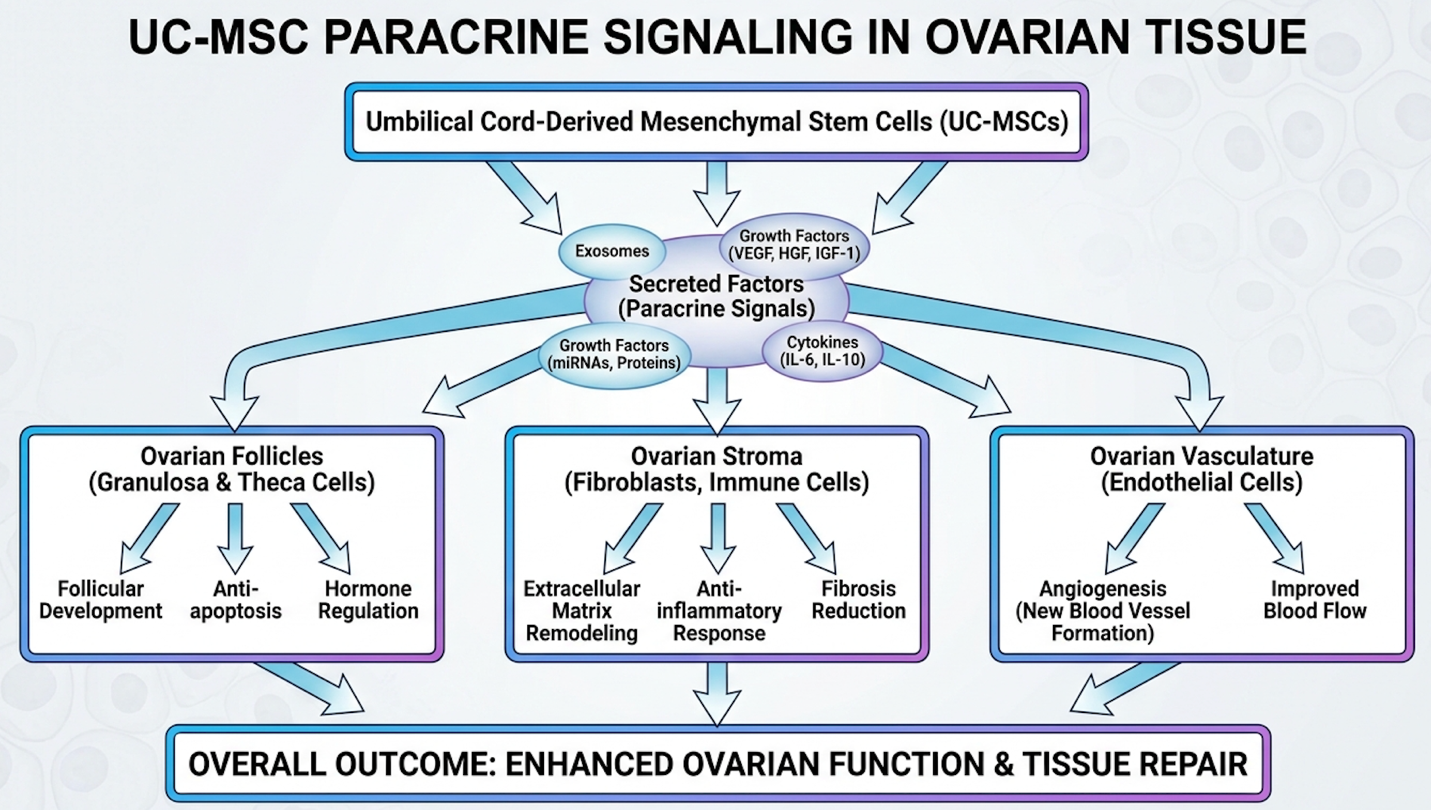
While basic UC-MSC applications focus on general tissue repair, specialized clinical protocols apply these exact mechanisms specifically to complex, aggressive reproductive disorders.
Premature Ovarian Insufficiency (POI), a condition characterized by the depletion of ovarian reserve before age 40, is a devastating clinical diagnosis. When seeking a Premature Ovarian Insufficiency treatment, the conventional medical establishment typically hands these patients a prescription for HRT and wishes them luck. But HRT is just synthetic symptom management. It does absolutely nothing to halt the underlying cellular apoptosis or rescue the remaining follicles from progressive degradation.
Enter the “Dual-Double Stem Cell Ovarian Therapy” concept. This isn’t just a simple IV drip. It leverages both targeted UC-MSCs and potentially other cellular derivatives sometimes utilizing dual-delivery methods via both intravenous systemic circulation and highly localized, ultrasound-guided ovarian injections. The core goal? Maximizing the therapeutic payload and enforcing structural repair precisely where the tissue is actively failing. A comprehensive clinical overview in Stem Cell Research & Therapy (2022) details how these targeted autologous and allogeneic approaches physically rebuild the stromal vascular fraction.
The biochemical heavy lifting here involves the SIRT1 metabolic pathway. Granulosa cells the somatic cells closely associated with the developing female gamete die off rapidly in POI due to oxidative stress and mitochondrial dysfunction. UC-MSCs heavily upregulate SIRT1 expression, which violently suppresses granulosa cell apoptosis. They systematically hunt down and clear reactive oxygen species (ROS), essentially acting as a biological shield to protect the fragile mitochondria within the remaining ovarian cells.
Clinical reviews have intensely scrutinized this protocol for patients dealing with stem cell therapy for chemotherapy-induced ovarian damage. Chemotherapy carpet-bombs the reproductive system. Suitability assessments for these specific POI protocols hinge entirely on whether there is any viable ovarian reserve left to rescue. If the stromal tissue is entirely necrotic, even the most advanced dual-double approach will fail to trigger a response.
The theoretical biology of these protocols is undeniably robust, but evaluating their true efficacy requires strict, unforgiving adherence to published clinical metrics and long-term patient monitoring.
When we look at the data, we have to demand objective, quantifiable markers. We look at Anti-Müllerian Hormone (AMH) levels, antral follicle count (AFC), and estradiol markers post-treatment. These are the undisputed gold standards in reproductive endocrinology. Recent data analyzing MSC efficacy in ovarian function recovery documented statistically significant stabilization in AMH levels and a measurable uptick in AFC for a tightly controlled subset of early-stage POI patients.
But patients need to understand the stark difference between a biological improvement and a functional clinical benefit.
Moving your AMH from 0.1 to 0.4 ng/mL is a massive biological improvement. It proves the stem cells for ovarian aging are actively modulating the microenvironment and stimulating dormant follicles. However, it does not guarantee a functional benefit meaning it doesn’t guarantee you will
Furthermore, timelines matter immensely in regenerative medicine. Cellular regeneration is not a pharmaceutical switch you flip overnight. Follow-up durations in these clinical models consistently indicate that true functional changes take between 3 and 6 months to visibly manifest. The tissue has to literally rebuild its vascular networks from scratch.
Crucially, the biological improvements observed in these localized ovarian metrics do not occur in isolation; they trigger a massive, interconnected cascade of systemic physiological changes.
The benefits of regenerative medicine extend far beyond localized tissue repair. Through The Ovarian-Systemic Axis, restoring local ovarian function cascades into broad stem cell therapy longevity benefits. By utilizing UC-MSCs to revitalize the ovarian microenvironment, patients experience an endogenous hormonal stabilization that directly influences vascular, skeletal, and neurological integrity across the entire body (National Institute on Aging parameters).
To truly grasp what regenerative therapy accomplishes, we must look through the lens of The Ovarian-Systemic Axis a physiological framework explaining how localized UC-MSC ovarian regeneration restores systemic hormonal homeostasis, driving secondary longevity benefits.
The medical community has historically treated the ovaries strictly as reproductive organs. This is a clinically flawed perspective. The ovaries are central endocrine regulators. They are the command center for female metabolic health. When premature ovarian decline hits, it doesn’t just strip away fertility. It triggers aggressive systemic aging and metabolic dysfunction.
Estrogen depletion is a systemic wrecking ball. Without it, osteoclast activity skyrockets, rapidly destroying bone density. Lipid profiles skew atherogenic, dramatically increasing cardiovascular risk and arterial stiffness. Cognitive fog and neurological decline set in as vital neuroprotective hormones completely vanish from the bloodstream.
By promoting local ovarian tissue repair and reducing dangerous fibrosis, UC-MSCs don’t just fix the ovary they act as a catalyst to reboot this entire systemic axis. Unlike conventional HRT, which lazily drips a steady synthetic hormone substitute into the bloodstream, cellular therapy attempts to wake up the body’s own endogenous production factory. It restores the natural, pulsatile release of hormones that synthetic patches simply cannot biologically replicate.
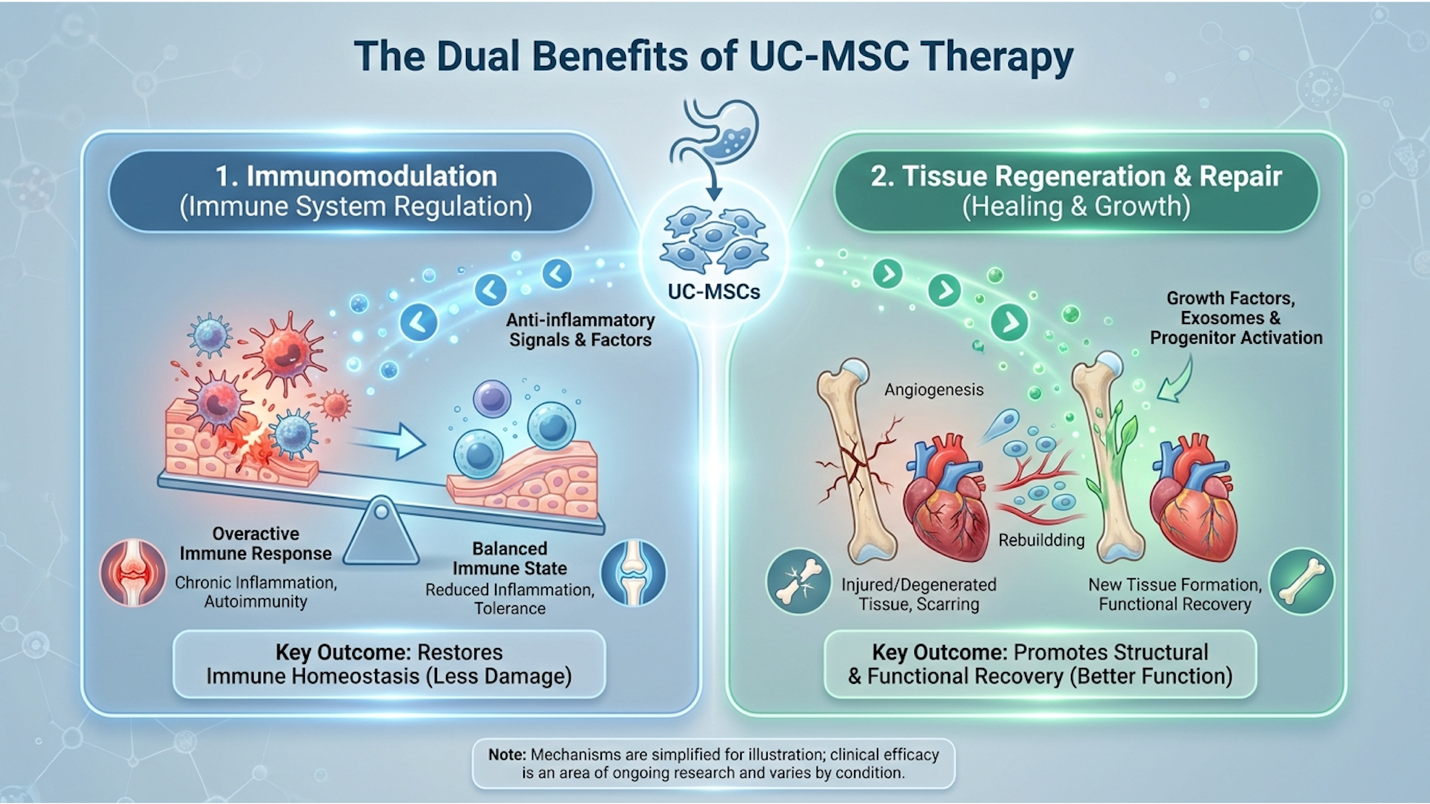
Once this vital endocrine feedback loop is stabilized, the true anti-aging properties of the therapy become clinically observable and biochemically verifiable.
When we talk about anti-aging at the cellular level, we are talking about controlling tissue-transforming growth factor signaling and managing progressive oxidative stress. As the body ages, dermal myofibroblasts become hyperactive, laying down rigid, fibrotic scar tissue instead of healthy, pliable cells. UC-MSC secretomes actively mitigate this excessive activation, promoting scarless tissue repair across various organ systems and slowing systemic degradation.
They also act as highly efficient vascular engineers. They secrete powerful angiogenic factors that force the robust growth of new capillary networks, drastically enhancing local blood
This brings up a persistent patient question: “What can stem cells currently fix or cure?”
Clinical evidence is clear on this front. They do not “cure” aging. The concept of an anti-aging cure is a biological impossibility and a hallmark of predatory clinic marketing. However, they intensely modify the biological markers of senescence. They do this by actively promoting the clearance of reactive oxygen species and rapidly repairing mitochondrial membrane integrity across multiple cell lines.
When you apply a holistic approach to ovarian health, verified clinical data in regenerative biology shows a distinct stabilization of Follicle-Stimulating Hormone (FSH) and Luteinizing Hormone (LH). When these master pituitary hormones stop wildly fluctuating to compensate for failing ovaries, patients report profound shifts: deeper, restorative sleep architecture, aggressive metabolic regulation, and a remarkable reversal of the crushing fatigue associated with premature menopause.
These hormonal improvements subsequently protect the structural integrity of peripheral tissues.
Stem cell therapy can biologically modify the rate of ovarian aging by fundamentally altering the local immune microenvironment. Ovarian aging is driven by chronic low-grade inflammation, commonly referred to as “inflammaging,” combined with severe, cumulative oxidative stress.
By performing phenotypic macrophage reprogramming, UC-MSCs switch the tissue from a destructive, pro-inflammatory (M1) state to a healing, anti-inflammatory (M2) state. This biochemical process actively preserves the existing extracellular matrix and delays aggressive follicle depletion. Furthermore, these cells secrete powerful immunomodulatory factors that suppress the overactive immune responses frequently observed in early-stage POI.
While this advanced intervention does not permanently halt aging, it significantly decelerates the fibrotic degradation of the ovaries, offering patients a critical window of preserved endocrine function. Long-term maintenance protocols are often required to sustain these anti-aging benefits as natural cellular senescence ultimately continues over the ensuing decades.
| 📌 If you’re interested in whether a second dose can extend the benefits of the first, we have an interesting article that discusses why double-dose UC-MSC therapy may offer greater benefits than a single dose, which you can read via the internal link. |
The physical manifestations of this therapy are highly measurable and clinically profound. Endogenous estrogen recovery is non-negotiable for protecting osteoblast function. Osteoblasts build bone. When the ovaries fail, osteoblasts shut down, and the bone-eating osteoclasts take over, leading straight to osteopenia and osteoporosis. Stabilizing the Ovarian-Systemic Axis forces the osteoblasts back to work, physically mitigating fracture risks associated with POI.
Then there is the cutaneous regeneration. Patients frequently seek out female wellness regenerative medicine for the aesthetic byproduct. UC-MSC secretomes are loaded with cytokines that directly promote the synthesis of extracellular matrix proteins specifically collagen type I, fibronectin, and elastin. This biochemically rebuilds skin texture from the inside out, restores elasticity, and aggressively improves dermal hydration without topical interventions.
Furthermore, robust clinical analysis of secondary physical benefits notes the rapid degradation of erratic melanin transcription factors. This modulation significantly reduces age-related hyperpigmentation, leading to a visibly more even skin complexion over a 6-month post-treatment window. Improved hormonal tone also preserves lean muscle mass, directly combatting the sarcopenia that accelerates during rapid endocrine failure.
While the biological potential of umbilical cord stem cells for ovarian health is vast and scientifically validated, patients must harshly ground their expectations in the practical realities of treatment logistics and the required financial investment.
Evaluating the MSC stem cell therapy cost requires analyzing the specific cell preparation, the strict regulatory compliance of the facility, and the complexity of the delivery protocol. Before undergoing formal suitability assessments, patients must clearly understand that regenerative medicine involves a significant financial investment, variable efficacy benchmarks, and inherent biological risks strictly monitored by bodies like the FDA and NIH.
Let’s address the pricing directly. Real, clinical-grade MSC stem cell therapy costs typically range between $5,000 and $25,000 per protocol globally. If you find a clinic offering this for $1,500 in a strip mall, you are likely receiving dead cells, saline, or highly degraded platelet-rich plasma (PRP) deceptively labeled as a high-dose stem cell treatment.
| 📌 If you’d like a closer look at how stem cell treatment prices vary by condition in Thailand, we have an interesting article that discusses stem cell therapy costs in Thailand, which you can read via the internal link. |
Why is the legitimate price tag so exceptionally steep? It comes down to cellular logistics and biological safety. True UC-MSCs require specialized, ethically sourced harvesting from carefully screened umbilical cords. From there, they undergo rigorous laboratory expansion in highly controlled ISO-7 certified cleanrooms to cultivate therapeutic doses often reaching 50 to 100 million viable cells per infusion. Then add the costs of uncompromising cold-chain transport, exhaustive infectious disease screening, and expensive third-party flow cytometry required to explicitly prove cell viability before injection.
When patients ask about the most successful stem cell therapy, the objective answer remains orthopedic applications. Joint and cartilage repair have the most robust, decades-long data pools in modern medicine. Ovarian regeneration, while highly promising and showing massive biological efficacy in current ClinicalTrials.gov registered studies, is still considered advanced or investigational in many Western jurisdictions.
You have to look heavily at patient suitability. A “good candidate” is someone in the early stages of POI, who still possesses an adequate remaining ovarian reserve, and is generally under the age of 45. The stem cells have existing tissue to signal to. A “poor candidate” is someone with total ovarian failure, severe chromosomal abnormalities (like Turner Syndrome), or someone who has been fully menopausal for over a decade. In those cases, the tissue architecture is too far gone for paracrine signaling to matter.
And as previously noted, stem cell therapy for ovarian decline may yield incredible improvements in biomarker labs (AMH, FSH), but this efficacy benchmark does not equal a guaranteed pregnancy.
Even among the most ideal candidates, the fundamental biological nature of cellular therapy carries specific medical risks that must be fully acknowledged and prepared for.
There are serious stem cell therapy downsides, and any clinician who tells you it is “100% safe” is fundamentally ignoring medical ethics.
First, there are acute physical risks: localized inflammation, cramping, or minor bleeding at the injection site, especially if highly invasive ultrasound-guided ovarian injections are utilized. Second, there is a distinct risk of severe immune reaction or life-threatening sepsis if the cells are improperly screened, handled with broken cold-chain logistics, or cultured in unaccredited, contaminated labs. Third, there is the theoretical risk of inappropriate cellular proliferation. While pure UC-MSCs do not form teratomas (unlike embryonic stem cells), using non-MSC lines or unverified, poorly characterized derivatives carries unpredictable tumor risks.
It’s critical to understand the distinction regulatory bodies make. The FDA approves specific hematopoietic therapies (derived from cord blood) for aggressive blood cancers. Investigational UC-MSC protocols for anti-aging or ovarian health do not carry this exact approval for broad commercial use.
Ultimately, the most common downside in regenerative medicine isn’t biological it’s financial. It’s the high risk of non-response. A patient spends $20,000, endures the travel, goes through the complex protocol, and simply fails to achieve a functional clinical benefit because their localized tissue damage was simply too severe to repair.
Because patient safety is so intrinsically tied to laboratory standards, the geographical location and international accreditation of the treating clinic are absolutely paramount.
Determining the best place in the United States for stem cell therapy requires a sobering understanding of domestic regulatory frameworks versus international medical capabilities. Because the FDA strictly regulates the laboratory expansion of stem cells, many comprehensive
The FDA’s “minimally manipulated” rule (21 CFR 1271) dictates that clinics in the US can generally only harvest your own cells (autologous), spin them in a centrifuge, and inject them back into you on the same day. They cannot culture or expand them to the tens of millions of cells required for systemic, high-dose regeneration.
Because of this, patients seeking true lab-expanded allogeneic UC-MSCs often travel to advanced medical sectors in jurisdictions like Panama, Mexico, or Colombia.
When evaluating these clinics, the International Society for Stem Cell Research (ISSCR) recommends enforcing a strict, 5-point clinical checklist:
This aggressive regulatory divide entirely explains the highly publicized medical tourism patterns of prominent public figures seeking advanced care.
The navigational queries dominate search engines: “Where did Kim Kardashian get her stem cells?” or “Where does Joe Rogan recommend?” Famous people stem cell therapy cases provide
Athletes like Kobe Bryant and Peyton Manning utilized these therapies, often flying to Germany or Panama. Why? Because they required targeted, lab-expanded, highly concentrated localized injections for rapid musculoskeletal repair that US regulations simply didn’t allow at the time.
Conversely, wellness figures and celebrities like Kim Kardashian typically utilize systemic IV protocols aimed specifically at anti-aging, controlling systemic inflammation, and preserving dermal and ovarian health over time.
While it’s fascinating to see high-profile adoption, individual patients cannot base complex medical decisions on celebrity endorsements. You must rely entirely on objective diagnostic data, your personal hormonal panels, and a cold, hard look at your own biological baseline.
The reality of cellular regeneration is that it has a strict biological ceiling. Stem cells to improve ovarian blood flow are highly effective in early decline, but recognizing the absolute limitations of this intervention is the hallmark of informed, evidence-based medicine.
The FDA and EMA continuously issue stark warnings regarding unapproved regenerative medicine claims that prey on vulnerable patients. Three specific pitfalls dominate this space. First, assuming that all unverified international clinics use viable cells many inject dead biological matter due to completely broken cold-chain logistics. Second, believing that MSCs can somehow reverse menopause after total, absolute follicle depletion has occurred. Third, equating the miraculous success seen in murine (mouse) animal models directly to guaranteed human outcomes. Biology simply does not scale that cleanly.
There are distinct clinical scenarios where conventional interventions are the superior, evidence-backed medical choice. If a patient presents with complete, decade-long ovarian failure, the tissue recommended by ACOG to protect bone and heart health, combined with IVF utilizing donor eggs for fertility, remains the undisputed standard of care. Sometimes, you just have to accept the biological baseline and pivot to what medically works.
Patients with complex, overlapping morbidities must not jump straight into regenerative medicine without clearance. If you have an active malignancy, severe undiagnosed autoimmune flare-ups, or are currently undergoing active rounds of gonadotoxic chemotherapy, you must seek formal consultations with your primary oncologist or endocrinologist before pursuing UC-MSC therapy. Stem cell therapy for PCOS (Polycystic Ovary Syndrome) also requires highly specialized oversight, as introducing powerful growth factors to an already hyper-stimulated ovarian environment requires immense clinical caution and incredibly precise dosing.
Ovarian decline is primarily caused by natural cellular aging, genetic factors, or medical treatments like chemotherapy, which forcefully accelerate granulosa cell apoptosis. UC-MSC stem cell therapy helps by delivering concentrated growth factors directly to the failing ovarian microenvironment. These secreted proteins reduce localized inflammation and actively stimulate dormant follicles to resume normal cellular function. Clinical trials indicate potential, measurable improvements in AMH levels.
Yes, stem cells can support ovarian recovery after chemotherapy by mitigating the severe fibrotic damage caused by gonadotoxic drugs. Chemotherapy induces massive oxidative stress and targeted cellular apoptosis in delicate ovarian tissue. UC-MSCs utilize the SIRT1 pathway to rapidly clear reactive oxygen species and restore mitochondrial integrity in those damaged cells. Early clinical data shows immense promise for fertility preservation. Suitability, however, depends heavily on the specific chemotherapeutic agents used and the exact time elapsed since treatment.
The best supplements for ovarian health to support stem cell protocols include high-absorption Coenzyme Q10 (CoQ10), Vitamin D3, and Zinc. CoQ10 is absolutely critical for mitochondrial energy production within the oocyte, beautifully complementing the metabolic cellular repair initiated by MSCs. Vitamin D regulates AMH signaling and systemic immune function, while Zinc supports optimal, rapid cellular division. While widely adopted in contemporary nutritional consensus studies, patients must still consult their endocrinologist before beginning high-dose supplementation.
When administered in strictly regulated, specialized clinical environments, UC-MSC therapy for the ovaries demonstrates a strong safety profile. Umbilical cord-derived mesenchymal stem cells are inherently immune-privileged, carrying an exceptionally low risk of rejection or graft-versus-host disease. The primary risks involve minor infection at the injection site or severe complications arising from poor laboratory sterility protocols. Ensuring the clinic utilizes ISO-certified cleanrooms completely mitigates most severe adverse events.
For patients navigating the crushing realities of premature ovarian insufficiency, stem cell therapy for ovarian health offers an evidence-informed intervention that moves entirely beyond temporary symptom masking. Clinical reviews firmly demonstrate that UC-MSC paracrine signaling drastically reduces granulosa cell apoptosis and can measurably improve structural ovarian metrics (NCBI). The most effective, medically sound approach combines rigorous patient suitability assessments, verified lab-expanded MSCs from accredited facilities, and continuous endocrine monitoring.
This localized cellular repair initiates The Ovarian-Systemic Axis, proving that restoring ovarian function isn’t just about preserving fertility it is a massive catalyst for systemic longevity. By re-establishing the body’s natural, endogenous hormonal feedback loops, patients achieve critical secondary stabilization in bone density, complex cardiovascular health, and vital neuro-muscular integrity.
Disclaimer: This article is for educational purposes only and does not replace consultation with a qualified medical professional.
Take Action: Patients seeking to seriously evaluate their eligibility should immediately compile recent hormonal panels (AMH, FSH, Estradiol) and detailed pelvic ultrasounds to present during a formal, data-driven evaluation with a board-certified regenerative medicine specialist.