Our Services
Others
- DFPP
- Shockwave
- IV Drip

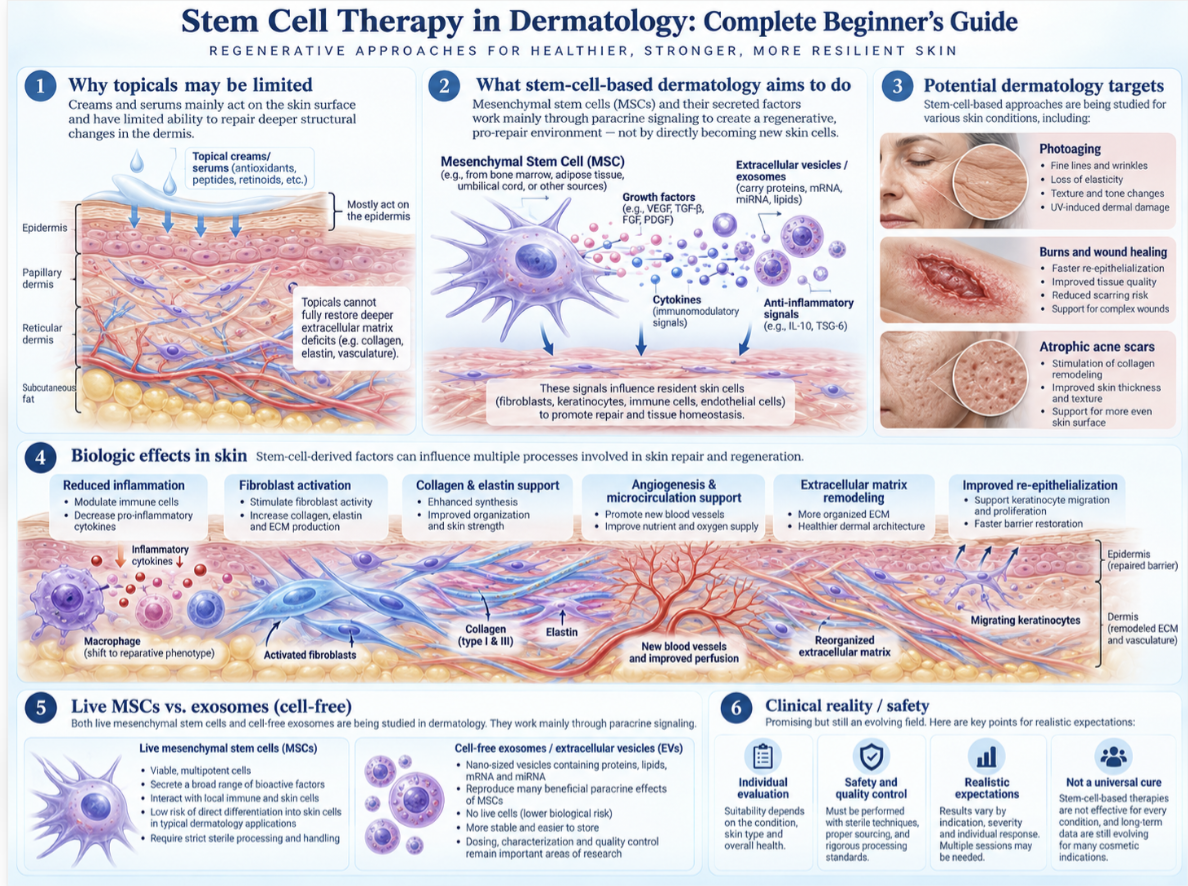
For individuals struggling with premature photoaging, severe burns, or stubbornly deep atrophic acne scars, traditional topical treatments often fail because they only address the skin’s surface. You slather on creams and serums, yet the underlying structural deficits remain untouched. Without actively addressing the extracellular matrix, deep tissue repair is biologically impossible which leads to wasted time and money on superficial fixes that just wash off. In this complete guide, you will learn the exact biological mechanics, safety profiles, and clinical realities of stem cell therapy in dermatology so you can make evidence-informed treatment decisions for your skin. We will strip away all the cosmetic marketing hype, exploring everything from live mesenchymal stem cells in dermatology to advanced cell-free exosomes, focusing strictly on verified cellular science and factual outcomes.
This article is for educational purposes only and does not replace consultation with a qualified medical professional.
Stem cell therapy in dermatology utilizes cellular derivatives to stimulate collagen production and dermal repair (PubMed, 2023).
Stem cell dermatology is the practice of using biological materials to trigger structural tissue repair at the cellular level. Unlike chemical peels that merely remove surface layers, regenerative treatments use biological cellular signaling to rebuild the extracellular matrix from within (PubMed, 2023). This approach addresses aging and scarring at their biological root.
Action: Ask providers if they utilize live mesenchymal stem cells or cell-free exosomes—outcomes and risks differ significantly before booking a consultation.
To understand how this works in clinical practice, we rely on The Dermal-Cellular Synergy Model a framework distinguishing between a superficial cosmetic glow and deep structural tissue repair. Imagine your skin is a massive construction site requiring organized labor. Mesenchymal Stem Cells (MSCs, multipotent cells capable of cellular repair) act as the site project managers. Meanwhile, exosomes (cell-free vesicles that facilitate cellular communication) are the exact text messages sending precise instructions to your dermal fibroblasts to start producing fresh collagen.
You absolutely need this communication network for true regeneration to occur. When patients seek out exosomes skin rejuvenation, they are explicitly opting for the signaling vesicles without the live cells themselves. Extensive clinical research heavily supports this biological mechanism. A landmark study evaluating cell-free alternatives for reducing photoaging found that exosomes provide a powerful cell-free alternative to live stem cell transplants (2021). Adipose-Derived Stem Cells (ADSCs) can increase collagen synthesis and dermal thickness by up to 30% (PubMed, 2023), meaning patients see structural thickening of thinning skin rather than just temporary surface hydration.
Mesenchymal stem cells calm skin inflammation through paracrine signaling and phenotypic macrophage reprogramming. Essentially, they secrete potent anti-inflammatory proteins that shift surrounding immune cells from an aggressive, pro-inflammatory state to an active healing state.
This creates a localized biological environment highly conducive to deep tissue repair rather than continued immune attack. This mechanism explains their investigational use in chronic irritations and severe barrier dysfunctions. By silencing the aggressive immune response, the dermis can finally dedicate its biological energy toward synthesizing structural collagen.
Let’s clear up a massive misunderstanding immediately. You have likely seen expensive over-the-counter creams boasting “apple stem cells” or “orchid stem cells.” Plant versus human stem cells for skin simply isn’t a fair fight. Plant stem cells cannot interact with human cellular pathways. They completely lack the complex secretomes necessary for human tissue regeneration.
While plant extracts do provide solid antioxidant benefits, they absolutely cannot trigger human fibroblasts to generate new collagen. Don’t pay premium medical prices expecting clinical-grade regeneration from a topical plant extract. They just don’t possess the biological hardware to communicate with human skin.
Stem cell anti-aging treatments strategically target specific structural deficits in the skin, from general volume loss to severe scarring. Clinical applications are highly condition-specific; treating superficial photoaging requires entirely different cellular delivery methods than regenerating tissue for deep atrophic acne scars (PubMed, 2019). Thorough suitability assessments perfectly match your specific condition to the appropriate medical procedure.
Dermatologists take a highly customized, dual approach depending on the exact severity of the tissue damage. For generalized surface photoaging, a stem cell microneedling facial creates thousands of microscopic channels. This allows essential growth factors to penetrate deeply and stimulate elastin production across the entire facial canvas.
Action: Ensure your provider matches the application method (microneedling versus direct injection) to your specific skin condition during your initial assessment.
But for deep stem cells for acne scars (atrophic acne scars, which are deep dermal depressions caused by profound tissue loss), clinicians must pivot. Targeted, localized injections are utilized to rebuild the missing extracellular matrix directly from the bottom up. It’s a localized structural intervention rather than a broad surface sweep, ensuring the biological material is deposited precisely where the tissue collapsed.
The clinical data backing these precise applications is incredibly compelling for patients struggling with textural irregularities. Recent clinical trials on atrophic acne scarring show remarkable long-term results when combining treatments. Pairing microneedling with human stem cell-derived media can improve atrophic acne scarring by up to 60% after three sessions (2019).
Beyond standard aging concerns, emerging medical studies are actively exploring stem cells for vitiligo and stem cell therapy hair loss dermatology as areas of ongoing clinical study. The standard medical implementation generally requires three distinct sessions spaced several weeks apart to maximize the cellular signaling cascades without overwhelming the localized immune response.
Stem cell therapy is definitely not an eraser for all dermatological conditions. Severe, active inflammatory acne will not respond optimally and may actively worsen if the skin barrier is repeatedly compromised during treatment. Furthermore, highly advanced structural sagging requires surgical lifting, not just cellular thickening.
If a provider promises that stem cell therapy for an inflammatory skin condition will miraculously resolve an active autoimmune flare-up overnight, you need to walk away. Cellular therapy works best on stable, calm tissue that is biologically ready for active regeneration. Always discuss these structural limitations directly with a qualified clinician.
Stem cell facial results unfold gradually over several months as the skin’s biological infrastructure physically rebuilds itself. While patients often report an immediate improvement in surface hydration, clinical trials for stem cell skin rejuvenation indicate that true extracellular matrix remodeling requires 12 to 24 weeks to mature (PubMed, 2020).
Action: Document your skin’s baseline with standardized medical photography—cellular remodeling is gradual and subtle to accurately assess your progress at the 6-month mark.
Understanding this precise clinical timeline completely prevents severe patient disappointment. Your skin relies heavily on fibroblasts (the biological cells responsible for producing collagen) to do the actual heavy lifting. They do not operate on an overnight schedule.
| Recovery Stage | Visible Changes | Cellular Activity |
| Week 1 | Reduced inflammation | Acute healing |
| Month 1 | Improved texture | Initial signaling |
| Month 3 | Collagen synthesis visible | Fibroblast activation |
| Month 6 | Peak structural repair | Matrix remodeling |
The overall longevity of stem cell facial results varies drastically based on lifestyle factors, sun exposure, and natural chronological aging. However, when properly administered, these structural improvements can often last 18 to 24 months before maintenance is required.
Let’s look at the hard medical data behind the aesthetic hype. A comprehensive clinical analysis evaluating MSC aesthetic outcomes demonstrates that measurable dermal thickening peaks exactly at month six. True collagen synthesis and tissue remodeling following regenerative therapy typically requires 3 to 6 months to become visibly apparent (PubMed, 2020).
This timeline completely contradicts many enthusiastic stem cell therapy dermatology reviews found online, where patients routinely mistake immediate post-procedure swelling for permanent structural volume. Real cellular restructuring requires time for the body to weave new collagen fibers into the existing dermal matrix.
Here’s where we must return to The Dermal-Cellular Synergy Model. That immediate, unbelievable “glow” seen in hundreds of stem cell skin rejuvenation before and after photos on social media? That is almost always acute procedural inflammation combined with intense topical hydration serums.
It is absolutely not instant cellular regeneration. Real repair requires immense patience and strict clinical monitoring. True cellular synergy takes three to six full months to become visibly apparent to the naked eye. If a clinic promises you will look a full decade younger by this Friday, they are aggressively selling you a temporary optical illusion. Genuine dermal regeneration is a marathon, not a sprint.
Determining if stem cell therapy is safe for skin requires evaluating both the biological source of the cells and the regulatory compliance of the clinic. The FDA strictly regulates biological products, and as of 2026, there are no FDA-approved stem cell or exosome therapies specifically designated for cosmetic dermatological use (FDA).
Action: Request the FDA Investigational New Drug (IND) application number—if a clinic aggressively claims FDA approval for cosmetic stem cells—to verify their clinical trial legitimacy.
Patients frequently wonder about the exact sources of the biological material. The primary difference lies in the harvesting method and the biological age of the extracted cells. Fat-derived stem cells are harvested directly from the patient’s own tissue via liposuction, ensuring a perfect genetic match.
Conversely, umbilical cord cells are donated and processed in laboratories, possessing a younger biological age with potentially higher proliferation rates. Your physician must strictly dictate which cell type suits your specific safety profile and treatment goals. Regarding the regulatory status of exosome products, there are absolutely no FDA-approved exosome products specifically designated for anti-aging use.
Not everyone is a viable candidate for regenerative aesthetics. Explicit medical contraindications exist for a very good reason. Individuals with active systemic infections, certain severe autoimmune disorders, or a personal history of skin malignancies are strictly not suitable candidates for cellular treatments.
Administering active growth factors to someone with a history of skin cancer presents highly serious risks of accelerating abnormal cell growth. A comprehensive pre-treatment suitability assessment performed by a board-certified physician is completely non-negotiable. Patient safety must always supersede cosmetic ambition. You can read more regarding the safety of stem cell therapy in Thailand and international clinical standards.
The average stem cell facial cost heavily reflects the rigorous laboratory processing required to harvest, purify, and store viable biological materials safely. Because these are elective regenerative procedures, they are not covered by health insurance, requiring patients to budget strictly for entirely out-of-pocket medical expenses (ASPS, 2026).
Action: Request a fully itemized procedural quote separating consultation fees, biological material costs, and facility fees prior to any major financial commitment.
The actual price of stem cell skin rejuvenation varies dramatically based on the delivery method and the geographical location of the clinic. Topical exosome microneedling often ranges from $800 to $1,500 per session. Direct live-cell injections represent the much higher tier of both complexity and cost.
Looking at the average costs of stem cell facial procedures, because regenerative dermatology is elective, clinical treatments typically range from $5,000 to $10,000 out-of-pocket (ASPS). Financing stem cell facials via medical credit is a common approach for patients aiming to manage these substantial upfront costs over time.
Vetting your medical provider is the single most important step in safe clinical implementation. A Board-Certified Dermatologist (a physician with specialized medical training in comprehensive skin health) should directly oversee the entire process. When consulting, you must ask mandatory safety questions.
Where exactly is your biological material sourced? What is the verified cell viability count upon arrival? Can you easily provide the laboratory’s independent certificate of analysis? Asking these somewhat uncomfortable questions about their biological supply chain protects your long-term health and your financial investment.
How do you effectively vet a stem cell dermatology clinic near me, or even internationally? Finding the best dermatologist for stem cell therapy means rigorously looking for board certification and completely avoiding medical spas operating without direct physician oversight.
If a clinic offers “guaranteed cures” or advertises expiring, high-pressure discounts on biological materials, you should walk away immediately. Bargain shopping for biological injections often leads to catastrophic, irreversible complications. Always prioritize medical credentials over a suspiciously low price tag.
Stem cell therapy primarily treats structural deficits like atrophic acne scars, severe photoaging, and generalized thinning skin. By delivering potent growth factors directly to the dermis, it prompts fibroblasts to actively synthesize new collagen. Clinical evidence suggests varying degrees of success depending entirely on the severity of the initial tissue damage. Data (PubMed, 2019) shows improvements in scarring up to 60%. Always consult a certified medical professional to thoroughly determine your individual treatment suitability.
While evidence for collagen synthesis is strong, many cosmetic applications remain clinically investigational. Extensive peer-reviewed research proves that MSCs and exosomes stimulate dermal fibroblasts in controlled clinical settings (PubMed, 2026). However, the FDA has not granted specific aesthetic approval for these cellular products as of this year. Ongoing trials continue to evaluate long-term efficacy and standardized dosing protocols. Always discuss the experimental nature of these elective procedures with a qualified, board-certified dermatologist beforehand.
Cellular therapies can assist in normalizing pigment production, though they are rarely the primary treatment for hyperpigmentation. Exosomes and MSCs help regulate melanocyte activity by generally calming the localized inflammatory responses that trigger excess pigment. However, lasers and chemical peels usually offer faster, more targeted clearance for stubborn dark spots. Clinicians often use regenerative fluids as a post-laser healing adjunct rather than a standalone brightening treatment. You should combine these therapies only under strict medical supervision.
Patients generally experience mild to moderate discomfort, heavily mitigated by topical medical-grade numbing creams. Prior to the procedure, clinicians apply a strong anesthetic to the entire treatment area, which requires about thirty minutes to take full effect. During the actual microneedling or injection phase, you might feel a scratchy sensation or mild pressure, but severe pain is incredibly rare. Post-procedure, the skin typically feels tight and warm, remarkably similar to a moderate sunburn. Over-the-counter pain relievers are usually sufficient for any lingering discomfort during the first twenty-four hours.
For beginners navigating regenerative medicine, stem cell therapy in dermatology offers profound structural tissue repair rather than just a temporary cosmetic glow. By utilizing sophisticated biological signaling, these treatments can significantly improve atrophic scars and photoaging. However, true collagen synthesis takes 3 to 6 months to mature. The most effective approach combines informed patient patience with rigorous clinical execution.
Remember The Dermal-Cellular Synergy Model when evaluating your treatment options. True cellular repair absolutely demands strict clinical standards, sterile laboratory biologicals, and direct physician oversight. Do not be fooled by over-the-counter plant stem cell creams that literally cannot biologically communicate with your skin’s fibroblasts.
Schedule your formal suitability assessment today with a board-certified dermatologist to determine if regenerative therapy fits your needs. Bring your complete medical history, specifically outline your functional skin goals, and demand transparent answers about biological sourcing before ever agreeing to an elective regenerative procedure.