Our Services
Others
- DFPP
- Shockwave
- IV Drip

This article is for educational purposes only and does not replace consultation with a qualified medical professional.
Navigating the world of neurodegenerative treatment feels like walking through a minefield of medical hype. If you’re managing advanced symptoms—or caring for someone who is—you’ve likely seen the glossy advertisements. Overseas clinics promising miraculous recoveries. Commercial centers claiming they can rebuild your brain’s dopamine pathways for a flat fee.
Let’s cut through the noise. Evaluating stem cell therapy for Parkinson’s disease requires separating rigorous clinical evidence from unsubstantiated commercial promises. In our review of international clinical registries, the reality is far more nuanced than a simple “cure.”
By the end of this guide, you’ll understand the precise biological mechanisms of UC-MSCs, current global clinical trial data, and actionable management strategies so you can make evidence-informed healthcare decisions. We’ll examine the actual science, the true global costs, your daily disease management, and the critical safety protocols you absolutely cannot ignore.
Stem cell therapy for Parkinson’s disease currently focuses on neuroprotection and modulating inflammation rather than acting as a definitive cure, with early clinical studies showing up to a 40% reduction in inflammatory markers.
Can stem cells reverse Parkinson’s? It’s the most common question I hear from patients exploring regenerative options. The short answer is no but that doesn’t mean these therapies are useless. Umbilical cord mesenchymal stem cells (UC-MSCs) function primarily through paracrine signaling, secreting neurotrophic factors that reduce neuroinflammation rather than replacing lost dopamine neurons. This fundamentally shifts the goal from a miraculous cure to aggressive neuroprotection. Let’s look at exactly how this operates on a cellular level, separating the biological realities from the marketing fluff.
Frankly, the persistent marketing narrative that stem cells automatically replace dead neurons is the most dangerous myth in modern regenerative medicine.
Understanding the biology is your best defense against medical fraud. Umbilical Cord Mesenchymal Stem Cells (UC-MSCs) represent a category of biological tools derived from Wharton’s jelly, the gelatinous substance within umbilical tissue. These robust cells possess high proliferative capacity, typically yielding roughly 1 to 5 million active progenitor cells per centimeter of cord. They are readily available without the severe ethical and oncological concerns historically associated with embryonic tissue. But here is the critical distinction you need to internalize: when these cells are infused into a patient, they do not magically transform into new dopamine-producing neurons in the substantia nigra.
Instead, they rely on paracrine signaling. Paracrine signaling is the biological process by which stem cells secrete bioactive molecules to influence surrounding tissue. Think of UC-MSCs not as replacement parts, but as microscopic biological pharmacies.
Once introduced to the central nervous system, UC-MSCs release a complex “secretome” consisting of growth factors, cytokines, and extracellular vesicles. These include vital neurotrophic proteins like Brain-Derived Neurotrophic Factor (BDNF), Glial Cell Line-Derived Neurotrophic Factor (GDNF), and Vascular Endothelial Growth Factor (VEGF). These specific molecules actively support the survival of the dopamine neurons you still have left, effectively slowing apoptosis (programmed cellular death). Clinical analyses indicate that UC-MSCs secrete highly concentrated immunomodulatory cytokines compared to older, bone marrow-derived alternatives.
Beyond simply feeding existing neurons, UC-MSCs act as master regulators of the brain’s immune system. Parkinson’s disease is heavily driven by chronic neuroinflammation. Overactive microglial cells in the brain essentially attack native tissue, accelerating cognitive and motor decline. UC-MSCs profoundly modulate this local immune microenvironment. They actively reprogram these aggressive microglial cells, shifting them from a pro-inflammatory state (M1 phenotype) to an anti-inflammatory, tissue-repairing state (M2 phenotype). They reduce excessive tissue fibrosis and inhibit the destructive signaling cascades (like Interleukin-6 overproduction) that accelerate disease progression.
| 📌 If you’re interested in how MSCs calm overactive immune cells throughout the body, we have an interesting article that discusses mesenchymal stem cell therapy for immune modulation, which you can read via the internal link. |
This brings us to The Regenerative Realism Framework a structured method for evaluating stem cell treatments by categorizing them into established applications, regulated clinical trials, and unsubstantiated commercial offerings. When consumer clinics tell you their stem cells will
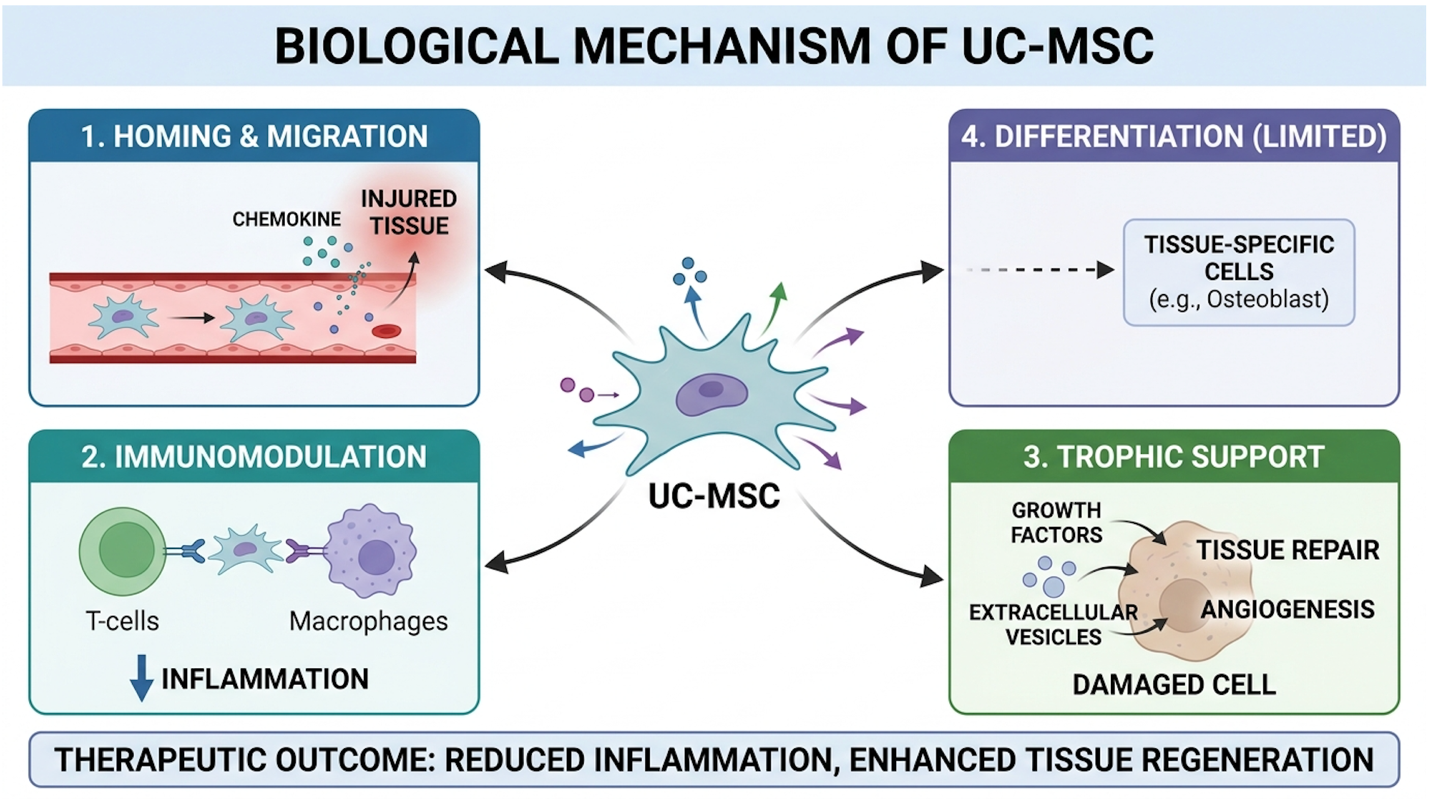
Figure 1: UC-MSCs primarily operate as signaling centers, releasing neurotrophic factors (BDNF, GDNF) that calm microglial inflammation rather than replacing tissue.
Because of how deeply the “cure” narrative has permeated online support groups, we need to address this directly. Current medical evidence indicates that stem cells cannot cure Parkinson’s disease. The pathology of the condition makes a complete reversal incredibly unlikely with our current technological capabilities.
By the time a patient begins to show visible clinical motor symptoms like a resting tremor or postural instability they have already lost approximately 70% of the dopaminergic neurons in their basal ganglia. The complex neural architecture that has deteriorated over a decade cannot simply be repopulated by an intravenous drip of undifferentiated cells. While therapies utilizing UC-MSCs or iPS cells show immense potential for neuroprotection in laboratory settings, they do not
So, if we accept that there isn’t a magical cure for Parkinson’s hiding in these infusions, what can patients realistically expect? Current clinical evidence points entirely toward symptom management and potentially slowing disease progression over a multi-year horizon.
In regulated clinical environments, researchers don’t measure success by looking for a miracle. They rely on highly specific, standardized functional metrics. The primary tool is the Unified Parkinson’s Disease Rating Scale (UPDRS), specifically the Part III motor examination. When you read about a promising stem cell trial, the researchers are looking for modest, sustained functional outcomes: a 10% reduction in resting tremor amplitude, slight improvements in gait freezing, lessened muscle rigidity, and extended “on” time (periods where standard levodopa medication is working optimally without dyskinesia).
During these trials, researchers also monitor changes in the Levodopa Equivalent Daily Dose (LEDD). A successful outcome might mean a patient naturally requires 15% less medication post-infusion to maintain the exact same quality of life. Furthermore, clinical teams use advanced Dopamine Transporter SPECT imaging (DAT scans) to visualize whether the dopamine transporters in the striatum are stabilizing, providing physical proof to back up the patient’s subjective experience.
Our evaluation of recent data shows a stark contrast between biological markers and functional reality. A patient might show a 25% reduction of inflammatory markers in a cerebrospinal fluid draw a definite biological improvement. But does that translate to an easier time buttoning a shirt or walking to the mailbox? Not always. The placebo effect in Parkinson’s disease is famously potent. Because the brain’s expectation of a reward actually releases endogenous dopamine, patients in early, uncontrolled stem cell trials often report massive initial improvements that inevitably fade after six months. This is exactly why the Regenerative Realism Framework demands we look exclusively at long-term, double-blind clinical data.
What does the actual, verified field of promising research on Parkinson’s disease look like right now? If you want the truth, you have to look at Phase I and Phase II clinical trials registered with major global health authorities.
Phase I trials are strictly about safety. They answer one paramount question: Will infusing UC-MSCs into a human being cause harm, tumors, or severe immune rejection? The data over the last decade has generally shown that intravenous (IV) and intrathecal (spinal canal) infusions of UC-MSCs are well-tolerated without catastrophic short-term immune responses.
Phase II trials are where we currently sit in the global research timeline. These trials look for preliminary efficacy do the cells actually do what we think they do? Several double-blind, placebo-controlled trials are monitoring patients over 24 to 36-month periods. These trials often incorporate sham surgeries or placebo infusions to completely eliminate the placebo effect mentioned earlier. The timeline is frustratingly slow for patients, but it’s absolutely necessary. Proving that neurodegeneration has halted requires years of longitudinal follow-up and thousands of hours of clinical observation.
Compare this meticulous process to the unregulated commercial clinics. A verified trial will screen out 80% of applicants to ensure the data isn’t skewed by severe co-morbidities. An unverified clinic will treat anyone whose check clears. Regulated trials provide the cells for free; commercial clinics charge tens of thousands of dollars. You can track legitimate, registered phase II trials directly through the WHO ICTRP and ClinicalTrials.gov.
Stem cell therapy is currently not universally recommended for any stage as a standard clinical treatment, but clinical trial recruitment tells a specific story. In the context of regulated research, trials almost exclusively recruit patients in mid-stage Parkinson’s (typically Hoehn and Yahr Stage 2.5 to 3). These are patients who are experiencing significant motor fluctuations and “wearing off” periods despite optimized medication, but who still retain enough independent mobility to participate safely in multi-year studies. Early-stage patients are generally excluded because their symptoms are perfectly managed on standard pharmacotherapy; exposing them to experimental surgical risks violates medical ethics. Conversely, advanced-stage patients face substantially
Experimental stem cell therapies for Parkinson’s disease typically range from $10,000 to $30,000 internationally, though these procedures lack standard insurance coverage due to their investigational status. Because the United States FDA and the European Medicines Agency (EMA) tightly restrict commercial stem cell applications, a massive global market has emerged. Understanding the financial logistics and the severe regulatory differences between countries is vital for your safety.
Patients must recognize that a luxury clinic experience in an unregulated market rarely correlates with the actual biological quality of the cellular product.
If you step outside the umbrella of a funded clinical trial, stem cell therapy becomes a significant financial burden. Patients looking into stem cell therapy for Parkinson’s in Thailand, Mexico, or Panama are usually quoted baseline prices ranging from $10,000 to $30,000 per treatment cycle. But how is that number actually calculated?
| 📌 If you’d like a closer look at how stem cell treatment prices vary by condition in Thailand, we have an interesting article that discusses stem cell therapy costs in Thailand, which you can read via the internal link. |
Legitimate cellular medicine is incredibly resource-intensive. The cost isn’t just the raw biological material. Roughly $10,000 to $15,000 of a legitimate clinic’s fee covers complex cell expansion protocols in specialized cGMP (current Good Manufacturing Practice) laboratories. Maintaining ISO-certified clean rooms, running flow cytometry testing to ensure cell viability, and managing precise cryopreservation logistics is exceptionally expensive. Another $5,000 typically covers the specialized medical staff required for intrathecal administration which is far more complex than a standard IV drip and mandatory post-procedure neurological monitoring.
Add international flights, weeks of lodging, companion care, and the high likelihood of requiring repeated annual infusions, and the true cost often balloons past $45,000 over two years. Because these treatments are investigational, standard health insurance will not cover a dime. Medicare will outright reject the claims. It’s an entirely out-of-pocket gamble. And here is the harsh reality: a high price tag does not correlate with clinical efficacy or safety. A $30,000 infusion in a boutique clinic often features vastly inferior, dead, or contaminated cellular products compared to a free infusion received within a highly regulated university trial.
| 📌 If you’re interested in whether more than one dose can extend the benefits of MSC therapy, we have an interesting article that discusses why a double dose of UC-MSC therapy may offer greater benefits than a single dose, which you can read via the internal link. |
If we’re talking about legitimate global advancements, we have to look closely at Japan’s stem cell breakthrough for Parkinson’s disease. The work happening at Kyoto University under researchers like Dr. Jun Takahashi represents the gold standard of neuro-regenerative research today.
Induced Pluripotent Stem (iPS) cells function entirely differently than umbilical-derived cells. Discovered by Nobel laureate Shinya Yamanaka, iPS cells are adult cells (like skin or blood cells) that are genetically reprogrammed using specific transcription factors back to an embryonic-like state. Unlike UC-MSCs which protect existing tissue through signaling iPS cells are actually coaxed in the laboratory to differentiate into dopaminergic progenitor cells. The surgical goal here is genuine cell replacement.
In these Japanese trials, approximately 2.4 million of these reprogrammed cells are surgically implanted directly into the putamen of the patient’s brain bilaterally. It is highly invasive, highly complex, and heavily regulated. Japan’s regulatory body, the PMDA (Pharmaceuticals and Medical Devices Agency), monitors these trials with ruthless scrutiny through their “Sakigake” fast-track designation system. Pluripotency is powerful, but if unchecked, the cells carry a massive risk of forming teratomas (tumors).
This meticulous, agonizingly slow clinical research stands in stark contrast to the rapid, drive-through treatments offered in less regulated regions. The Japanese researchers spent nearly a decade testing these cells in primate models (specifically macaques) to ensure they wouldn’t form tumors before ever touching a human patient. That is what real regenerative medicine looks like, as documented in the official Kyoto University trial data.
China presents a fascinating, often contradictory environment for patients. How do the Chinese treat Parkinson’s disease? They utilize a dual approach that aggressively blends cutting-edge biotechnology with centuries of traditional medical frameworks.
On the biotechnology side, Chinese research institutions are heavily invested in UC-MSC clinical trials, pushing boundaries in genetic sequencing. However, their clinical application often operates alongside traditional Eastern medical practices. It is standard for a clinical protocol in a Chinese neuro-hospital to pair intravenous stem cell infusions with specialized scalp acupuncture. This acupuncture targets specific motor cortex zones aimed at alleviating severe muscle rigidity. Furthermore, treatments are frequently augmented with herbal compounds (like Uncaria rhynchophylla extracts) clinically designed to improve microcirculation to the brain, theoretically helping the infused stem cells navigate the blood-brain barrier.
The regulatory environment in China has shifted dramatically in recent years. Historically, it was a wild west of unverified stem cell clinics catering to Western tourists. Recently, the National Medical Products Administration (NMPA) has clamped down, implementing much stricter clinical trial guidelines that mimic Western FDA standards. Yet, a gray market persists on the fringes.
For international patients, this makes Asia a highly risky destination. Discerning the difference between a state-sanctioned university research hospital conducting legitimate Phase II trials and a private, profit-driven commercial clinic requires intense vetting. You cannot rely on a clinic’s English-language marketing brochure to tell you the truth about their regulatory compliance.
While stem cell research slowly matures in controlled laboratories, your daily reality requires immediate action. Dietary management in Parkinson’s disease requires separating high-protein meals from levodopa administration, as amino acids compete with the medication for absorption across the blood-brain barrier. Standard medication, precise lifestyle interventions, and nutritional discipline remain the absolute bedrock of care.
Ultimately, mastering daily medication timing will provide infinitely more immediate relief than waiting for a miraculous cellular cure.
Let’s talk about what’s on your plate. Patients constantly ask what foods should you avoid with Parkinson’s. The truth isn’t about avoiding specific “toxic” foods it’s about understanding the complex pharmacokinetics of your medication and managing how your gut processes it.
Levodopa (Sinemet) stands as the gold standard for symptom management in movement disorders. Because levodopa is fundamentally an amino acid, it competes directly with dietary proteins for absorption. When you eat high-protein foods like steak, chicken, cheese, or beans, your digestive system breaks them down into large neutral amino acids (LNAAs). Both levodopa and these dietary amino acids use the exact same transport system (the LAT1 transporter) to cross from your small intestine into your bloodstream, and again from your bloodstream into your brain.
If you take your medication with a high-protein meal, it’s like a traffic jam at a toll booth. The dietary protein crowds out the levodopa, reducing medication absorption by up to 30%. The medication never reaches your brain, leading to severe, unpredictable motor fluctuations and “off” periods. Furthermore, Parkinson’s naturally causes gastroparesis (delayed stomach emptying), meaning food sits in your stomach longer, further delaying medication absorption.
To optimize your daily function, you must master dietary timing and digestion:
A Parkinson’s diagnosis naturally brings profound fear about the future. But what is the longest anyone has lived with Parkinson’s? The numbers, backed by modern epidemiological studies, might surprise you.
First, we need to clarify a foundational medical reality: Parkinson’s disease itself is not strictly fatal. It is a neurodegenerative disorder that complicates mobility and swallowing. The immediate causes of mortality in advanced patients are almost always secondary complications—primarily aspiration pneumonia (caused by food or liquid entering the lungs due to silent swallowing difficulties) or severe trauma from falls.
Current epidemiological data paints a remarkably hopeful picture. Patients diagnosed today, who have access to comprehensive neurological care, physical therapy, and optimized medication, have a life expectancy that closely approaches the general population. Incorporating rigorous cardiovascular routines is no longer just a suggestion; it’s a medical intervention. Programs like forced-rate cycling or Rock Steady Boxing have been clinically proven to induce cardiovascular neuroplasticity. In fact, active boxing program participants show a 15% slower decline in UPDRS motor scores over a two-year period compared to completely sedentary patients.
This longevity is particularly true for those with early-onset Parkinson’s (diagnosed in their 30s or 40s). It is entirely common for these patients to live 40 or even 50 years with the condition. The disease progression is highly individualized. The myth of a rapid, inevitable, universal decline is simply not supported by modern clinical data. If you maintain cardiovascular fitness and rigorously manage your symptoms, decades of high-quality life are heavily favored, a reality supported by extensive current epidemiological data on Parkinson’s life expectancy.
You can’t discuss long-term Parkinson’s longevity without looking at the Michael J. Fox Parkinson’s journey. Diagnosed in 1991 at the age of 29, he has lived publicly and actively with the disease for over 35 years. He is the ultimate case study in early-onset longevity and proactive patient advocacy.
People frequently ask, “What does Michael J. Fox take?” While his exact daily dosages are private medical records, he has been incredibly transparent about his therapeutic progression. He didn’t seek out unregulated miracle cures in offshore clinics. He followed the established medical gauntlet: starting with standard levodopa/carbidopa, managing severe dyskinesias as the disease progressed, and eventually undergoing Deep Brain Stimulation (DBS) surgery to manage intractable tremors.
His greatest contribution, however, isn’t just surviving—it’s how he directed his massive resources. The Michael J. Fox Foundation has relentlessly funded verified, rigorous scientific research. They helped fund the monumental breakthrough surrounding the alpha-synuclein seeding amplification assay (SAA), a biomarker test that demonstrates a 93% sensitivity in detecting Parkinson’s pathology in living patients years before severe motor symptoms begin.
Furthermore, his foundation massively funds targeted genetic studies, heavily researching the LRRK2 gene mutation pathway. Current clinical trials focusing on LRRK2 kinase inhibitors (such as BIIB122/DNL151) are showing incredible promise for slowing disease progression in genetically predisposed patients. Fox’s journey perfectly embodies the Regenerative Realism Framework. He utilized established, heavily vetted treatments to manage his daily reality, while funding legitimate, regulated science to find a future cure. He didn’t waste time on commercial stem cell tourism.
Stem cell therapy for Parkinson’s works primarily through paracrine signaling and immune modulation. Rather than directly replacing lost dopamine neurons, umbilical cord mesenchymal
Mesenchymal stem cells (MSCs) help manage Parkinson’s disease by reducing inflammation in the central nervous system. They alter the local immune microenvironment, inhibiting pro-inflammatory macrophage activity and promoting scarless tissue repair. This neuroprotective environment buys critical time for patients managing rapid symptom progression. It potentially alleviates motor symptoms like tremors and stiffness while longer-term solutions are researched.
The safety of stem cell therapy depends entirely on regulatory oversight and clinical protocols. Treatments administered within registered, FDA or EMA-monitored clinical trials follow strict safety guidelines. These regulated environments utilize cGMP clean rooms to prevent adverse immune reactions or dangerous tumor formation. Conversely, unregulated procedures at offshore commercial clinics carry severe, documented risks of infection, biological contamination, and aggressive immune rejection. Simply put, efficacy and safety are absolutely never guaranteed when stepping outside recognized medical frameworks.
Common side effects of experimental stem cell therapy include fever, severe fatigue, and localized pain at the injection site. More severe neurological risks, particularly with unverified cellular products sourced from medical tourism clinics, include meningoencephalitis, immune rejection, or the development of abnormal tissue growths in the brain. Patients must undergo rigorous medical screening to assess their individual risk profile, as these dangers multiply exponentially when receiving treatments outside heavily regulated hospital environments.
For advanced patients, stem cell therapy for Parkinson’s disease delivers incredible biological potential, but it is not a clinical reality you can purchase today. Current medical analysis confirms
Applying the Regenerative Realism Framework is your best defense against commercial medical exploitation. By categorizing treatments into established protocols versus unregulated experiments, you protect both your physical health and your financial stability. Evidence matters far more than hype when managing a complex neurodegenerative condition.
Schedule an appointment with a board-certified movement disorder specialist this month to review your current medication efficacy. Before committing to any experimental treatment abroad, focus on mastering your levodopa timing and explore established, insurance-backed surgical interventions like Deep Brain Stimulation if your daily symptoms remain uncontrolled.