Our Services
Others
- DFPP
- Shockwave
- IV Drip

Stem Cell Therapy Bangkok Thailand for Knee and Back Pain: Understanding the Load Chain Behind Chronic Pain
Knee pain and back pain are usually discussed as separate conditions. A patient sees one doctor for the knee, another doctor for the spine, and sometimes receives two different explanations that do not fully connect. But in real life, the body does not move in separate parts. The knee, hip, pelvis, lower back, muscles, nerves, and walking pattern all influence one another.
This is why chronic knee and back pain should be understood as a load-chain problem, not just two painful locations. A painful knee may change the way a patient walks. A stiff lower back may limit hip movement and increase stress across the knee. Weak hip muscles may allow the pelvis to drop during walking, placing extra load on both the lumbar spine and the knee joint.
For patients searching for stem cell therapy Bangkok Thailand, this difference matters. The question is not simply whether regenerative care can be used for knee pain or back pain. The better question is whether the pain generator has been identified correctly, whether the tissue environment is still modifiable, and whether the patient’s movement chain can support long-term improvement.
The existing article discusses stem cell therapy as a regenerative approach for knee and back pain, including broad statements about cartilage regeneration, disc repair, inflammation reduction, nerve modulation, and mobility improvement. Those ideas should be written more carefully so the article sounds medically mature rather than promotional.
The Knee and Back Often Share One Mechanical Story
Many patients notice that knee pain and back pain appear together. Sometimes knee pain comes first. The patient begins to limp, avoids bending the knee, or shifts body weight to the opposite side. Over time, the lower back works harder to compensate. In other patients, back pain comes first. The spine becomes stiff, hip extension decreases, and the knees absorb more awkward force during walking, standing, or stairs.
This relationship is not only a clinic observation. A systematic review on knee osteoarthritis and low back pain found clinical and biomechanical links between the two conditions, supporting the idea that knee and back symptoms may interact rather than exist as isolated problems.
That is why stem cell therapy Bangkok Thailand for knee and back pain should not be described as one simple package. A combined pain pattern requires a combined diagnostic map.
Pain Location Is Not the Same as Pain Source
A patient may point to the knee, but the pain may be influenced by the hip, lumbar spine, meniscus, subchondral bone, or nerve irritation. A patient may complain of back pain, but part of the problem may be altered gait from knee osteoarthritis.
This is where many treatment pages become too simple. They treat pain location as diagnosis.
A more careful evaluation asks:
Where does the pain begin?
Does it travel down the leg?
Is there numbness or weakness?
Does the knee swell?
Does back pain worsen with sitting, bending, or walking?
Does the patient limp?
Does one side carry more weight than the other?
For stem cell therapy Bangkok Thailand , this type of pain mapping is essential because regenerative support should follow the tissue problem, not just the symptom label.
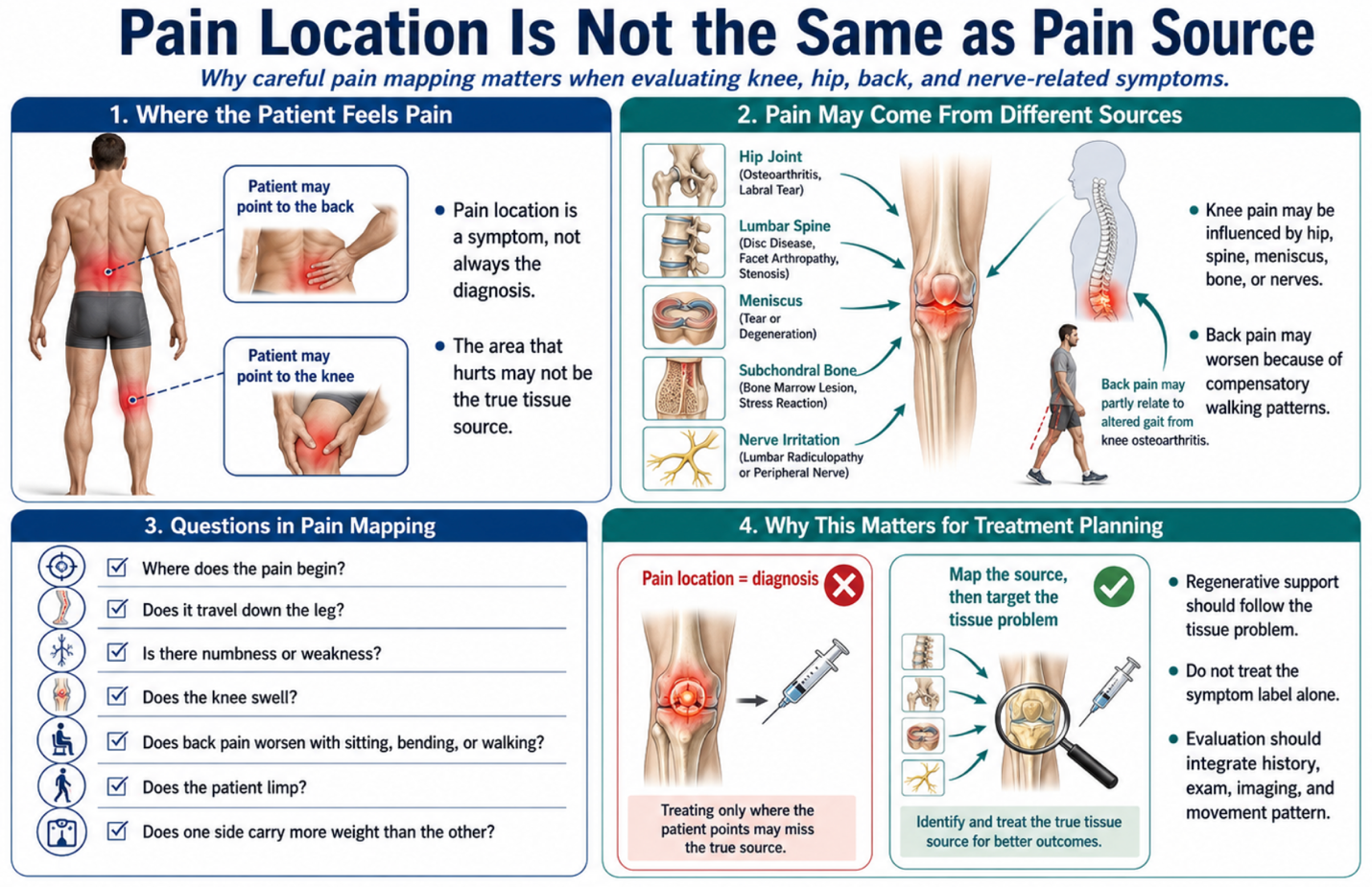
Figure 1: How Symptom Mapping Improves Musculoskeletal Treatment Planning
Knee Osteoarthritis Is More Than Cartilage Wear
Knee osteoarthritis is commonly explained as cartilage degeneration. That is only part of the story. The painful knee may also involve synovial inflammation, meniscus degeneration, subchondral bone stress, bone marrow lesions, ligament strain, osteophytes, abnormal nerve signaling, and weakness of the muscles that protect the joint.
Clinical studies on mesenchymal stem cell therapy for knee osteoarthritis have shown encouraging signals in selected patients. A 2025 systematic review and meta-analysis of randomized controlled trials reported that MSC therapy may improve pain and function scores in knee osteoarthritis, while outcomes still varied by study design, protocol, and patient factors.
That is the key point. Evidence should not be translated into a promise that every knee will regenerate. For stem cell therapy Bangkok Thailand , the better message is that regenerative support may be discussed when the knee still has a modifiable biological environment.
A knee with early-to-moderate osteoarthritis is different from a knee with severe bone-on-bone collapse. A swollen knee is different from a mechanically deformed knee. A knee with preserved movement is different from a knee with major stiffness and instability.
Back Pain Needs Its Own Diagnosis
Low back pain can come from many structures. The disc is one possible source, but not the only one. Back pain may involve facet joints, sacroiliac joints, spinal ligaments, paraspinal muscles, spinal stenosis, nerve root irritation, discogenic inflammation, or central pain sensitization.
This matters because “disc degeneration” on MRI does not always prove that the disc is the only pain generator. Some patients have visible disc degeneration but limited pain. Others have severe pain with more subtle imaging findings.
A 2025 review on cell-based therapies for intervertebral disc degeneration described the field as active but still limited by incomplete mechanisms, lack of standardized cell products, and the need for stronger long-term safety and efficacy evidence.
For stem cell therapy Bangkok Thailand , this means back pain should not be marketed as simple “disc repair.” It should be discussed through diagnosis, imaging, symptoms, neurological findings, and realistic clinical goals.
The Disc Pain Environment Is Biologically Active
A healthy disc has limited blood supply and limited nerve presence. In degeneration, the disc environment may change. Matrix breakdown, inflammation, neovascularization, nerve ingrowth, and cytokine signaling may make the disc more pain-sensitive.
This is why discogenic back pain is not just a mechanical problem. It can also be an inflammatory and biochemical problem.
However, this does not mean regenerative care can reliably rebuild every disc. That would be too strong. A more responsible statement is that cell-based approaches are being studied for their interaction with disc inflammation, extracellular matrix balance, tissue stress, and pain-related molecular signaling.
This phrasing is safer, more human, and more credible than saying stem cells “repair discs.”
Why a Knee Treatment May Not Fix Back Pain
If the knee is the main driver of altered gait, improving knee pain may reduce back strain. But that does not always happen. If the back has its own discogenic, facet, stenotic, or nerve-related problem, treating only the knee may leave the back pain unchanged.
The opposite is also true. If back pain causes guarding, reduced hip mobility, or nerve-related weakness, the knee may remain overloaded even after a knee-focused treatment.
This is why stem cell therapy Bangkok Thailand should be discussed as part of a clinical sequence. Sometimes the knee should be addressed first. Sometimes the back should be addressed first. Sometimes neither should be treated until gait, hip control, weight, or neurological symptoms are reviewed.
A good treatment plan is not always the most aggressive one. It is the one that identifies the primary driver.
The Hip and Pelvis Are Often the Missing Link
The hip and pelvis sit between the knee and the lumbar spine. When this region is weak or stiff, both the knee and back can suffer.
Weak gluteal muscles can allow the pelvis to drop. Limited hip extension can increase lumbar compensation. Poor hip rotation can affect knee tracking. Tight hip flexors can keep the lumbar spine under extension stress. These problems do not look dramatic on MRI, but they often shape how pain behaves day to day.
This is why rehabilitation remains important even when regenerative medicine is considered. A biologic signal cannot fully overcome poor mechanics if the patient continues to move in a way that overloads the same tissues.
For stem cell therapy Bangkok Thailand , this is a useful and honest message: regenerative support may help selected tissues, but movement quality determines how those tissues are loaded afterward.
Pain Improvement Should Be Measured, Not Assumed
Pain can improve for many reasons. The treatment may help. Rehabilitation may help. Rest may help. The natural course of symptoms may shift. The patient may feel better because they are being monitored carefully. This is especially true for injection-based therapies, where expectation and clinical context may influence pain reporting.
A 2025 systematic review found that contextual factors may account for part of the pain and function improvement seen in MSC injection studies for knee osteoarthritis.
This does not mean improvement is not real. It means outcomes should be measured with care.
For knee pain, useful measures include walking distance, stair ability, swelling frequency, range of motion, pain during weight-bearing, and WOMAC or KOOS scores. For back pain, useful measures include sitting tolerance, standing tolerance, walking tolerance, leg symptoms, sleep quality, medication use, and Oswestry Disability Index.
For combined knee and back pain, gait may be one of the most useful outcomes. If the patient walks better, loads both legs more evenly, and moves with less guarding, the entire chain may improve.
Evidence for Back Regenerative Care Is Still Early
Stem cell therapy Bangkok Thailand for discogenic low back pain is still an evolving area. Early studies are important, but they should not be stretched into large clinical promises.
The field still needs clearer patient selection, standardized cell preparation, durable outcome data, imaging correlation, and long-term safety follow-up. This is especially important because low back pain is not one diagnosis. A treatment that may be reasonable for discogenic pain may not be suitable for nerve compression, severe stenosis, spinal instability, or advanced deformity.
This is why stem cell therapy Bangkok Thailand should be described as physician-guided supportive regenerative care, not as a guaranteed solution for all back pain.
When Standard Care Should Come First
Some symptoms need urgent or specialist attention before regenerative care is discussed. Progressive leg weakness, new loss of bladder or bowel control, severe numbness, fever, suspected infection, unexplained weight loss, cancer history with new severe pain, fracture concern, inability to bear weight, or rapidly worsening neurological symptoms should not be treated as routine knee or back pain.
The same caution applies to severe knee deformity, advanced bone-on-bone arthritis, major instability, severe spinal stenosis, or disc herniation with neurological deficit.
The FDA states that regenerative medicine therapies have not been approved in the United States for orthopedic conditions such as osteoarthritis, disc disease, back pain, knee pain, hip pain, neck pain, shoulder pain, or tendonitis. Regulations differ by country, but careful medical language is still important.
Where Stem Cell Therapy Bangkok Thailand Fits
Stem cell therapy Bangkok Thailand may be discussed for selected patients when knee and back pain involve tissues that remain biologically and mechanically modifiable. For the knee, this may include joint inflammation, cartilage stress, synovial irritation, or subchondral bone-related pain. For the back, this may include discogenic inflammation, matrix stress, or pain-related tissue signaling.
A More Honest Way to Talk About Results
Patients want less pain. They want to walk more easily. They want to sleep better, climb stairs, sit longer, stand longer, and reduce medication use. These are meaningful goals.
But results should be described realistically. Some patients may report improvement in pain, mobility, stiffness, or activity tolerance. Others may have limited response because of advanced degeneration, poor mechanics, nerve compression, obesity, metabolic disease, severe deformity, or inadequate rehabilitation.
For stem cell therapy Bangkok Thailand , realistic goals may include reduced inflammatory pain, better movement tolerance, improved rehabilitation participation, and better quality of life in selected cases. It should not be promoted as guaranteed cartilage regrowth, guaranteed disc repair, or guaranteed avoidance of surgery.
Conclusion
Knee and back pain often belong to the same movement story. A painful knee can change gait and increase spinal load. A painful spine can alter hip movement and increase knee stress. Weak hips, poor pelvic control, inflammation, disc degeneration, knee osteoarthritis, nerve sensitivity, and compensation patterns can all interact.
For patients researching stem cell therapy Bangkok Thailand , the most useful discussion is not whether regenerative care can treat two painful areas at once. The better discussion is whether the true pain generator has been identified, whether the tissue environment remains modifiable, and whether the patient’s movement chain can support recovery.
Regenerative cell-derived signaling may be relevant to selected knee and back conditions because it is being studied in relation to inflammation, extracellular matrix balance, immune modulation, and tissue repair environments. However, it should not be described as a cure, a guaranteed disc repair method, a guaranteed cartilage regrowth treatment, or a replacement for orthopedic or spine care when those are clearly needed.
Responsible regenerative musculoskeletal care is not about chasing every painful area. It is about reading the body’s load chain carefully, choosing the right target, and helping the patient move better with realistic expectations.
FAQ
Can knee pain and back pain be connected?
Yes. Knee pain can change walking mechanics and increase stress on the lower back. Back pain can also reduce hip mobility and change how force passes through the knee.
Is stem cell therapy Bangkok Thailand a cure for knee and back pain?
No. Stem cell therapy Bangkok Thailand should not be described as a cure. It may be discussed as supportive regenerative care for selected patients after medical evaluation.
Can stem cell therapy repair spinal discs?
Guaranteed disc repair should not be claimed. Cell-based therapies for disc degeneration are still being studied, and long-term evidence remains limited.
Can one treatment help both knee and back pain?
Sometimes a combined plan may be discussed, but only after identifying the main pain generator. Knee-driven back compensation is different from spine-driven knee overload.
What should be checked before treatment?
Important checks include knee imaging, spine imaging when needed, gait pattern, neurological symptoms, swelling, range of motion, walking tolerance, body weight, medication use, previous injections, previous surgery, and rehabilitation history.
When should standard care come first?
Urgent or specialist care is important for progressive weakness, numbness, loss of bladder or bowel control, suspected infection, fracture concern, severe deformity, inability to bear weight, or rapidly worsening neurological symptoms.