Our Services
Others
- DFPP
- Shockwave
- IV Drip

The global aesthetic market is rapidly shifting from superficial topical treatments to structural regenerative medicine, with Thailand emerging as the primary clinical destination for these procedures. But let’s be blunt the proliferation of generic “anti-aging” marketing obscures the strict biological requirements needed for genuine cellular regeneration. This leads many patients to invest in scientifically baseless therapies, chasing unrealistic results from a serum bottle.
This analysis evaluates the clinical mechanisms of stem cells in aesthetic medicine, distinguishes proven cellular therapies from cosmetic marketing, and outlines the regulatory logistics for pursuing a legitimate stem cell beauty treatment in Thailand. This framework examines the biological science, contrasts clinical procedures with topical alternatives, and provides an
Advancements in stem cell beauty treatment in Thailand rely on the clinical application of Umbilical Cord Mesenchymal Stem Cells (UC-MSCs) rather than superficial topical serums.
Stem cell rejuvenation therapy utilizes targeted cellular derivatives to repair cutaneous damage at the molecular level. Unlike superficial cosmetic treatments, the clinical application of Umbilical Cord Mesenchymal Stem Cells (UC-MSCs) directly mitigates tissue fibrosis and promotes scarless tissue repair. This makes aesthetic stem cell therapy in Thailand a structural intervention rather than a cosmetic mask. The distinction between true cellular regeneration and superficial cosmetic plumping defines the modern aesthetic frontier.
Clinical protocols demonstrate that patients frequently misunderstand the cellular mechanisms at play. These biological therapies do not simply replace aging skin cells one-for-one. Instead, their remarkable regenerative ability stems from paracrine signaling.
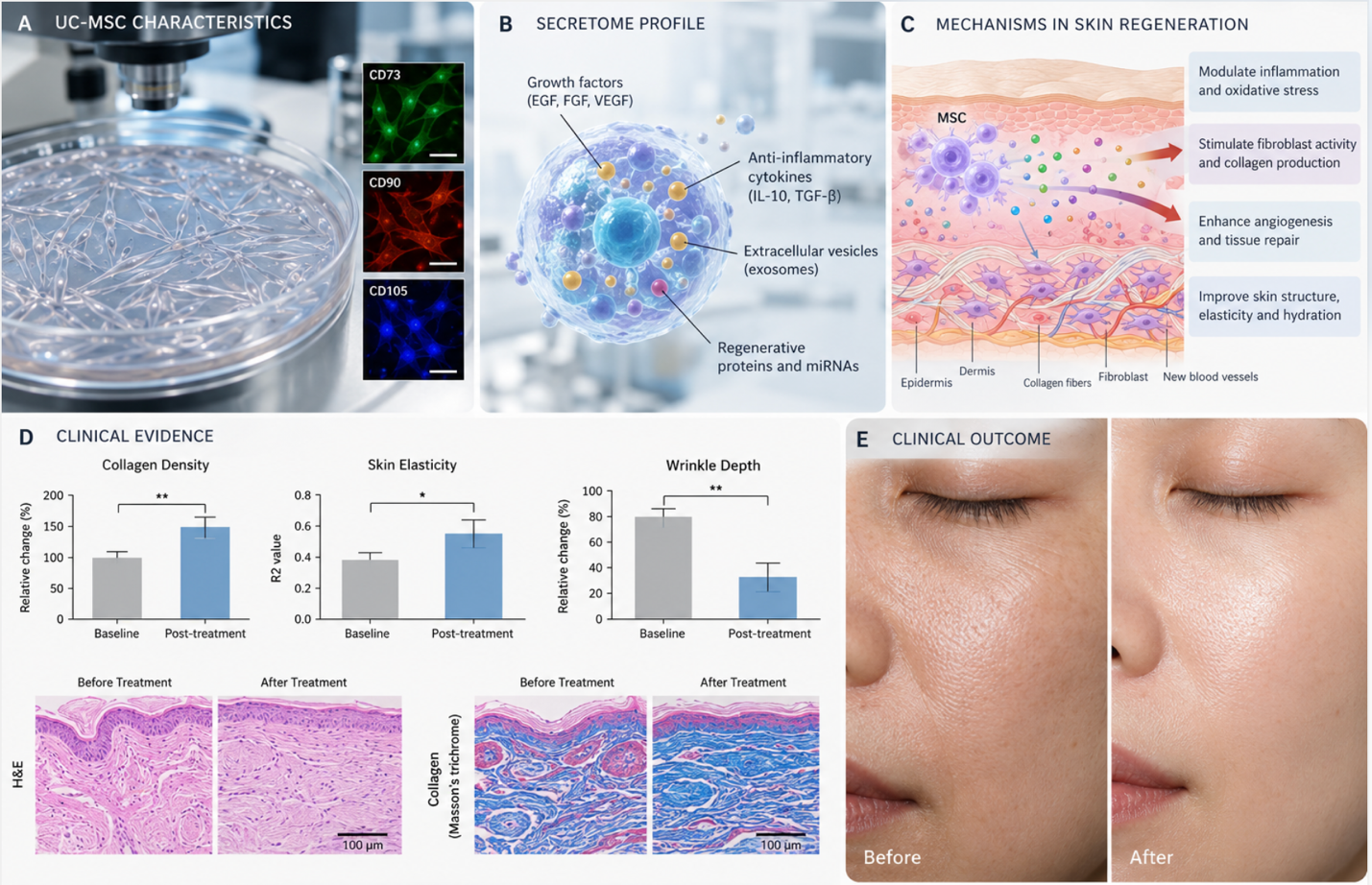
Umbilical Cord Mesenchymal Stem Cells (UC-MSCs) operate as biological directors. Once injected, they secrete a highly complex payload of bioactive molecules epidermal, vascular, and UC-MSCs secrete bioactive molecules that stimulate quiescent fibroblasts, thereby increasing essential collagen and elastin synthesis.
This isn’t marketing fluff. It is a quantifiable biological process extensively documented in clinical research on paracrine signaling. By activating specific healing networks, notably the ERK MAPK signaling pathway for angiogenesis (creating new blood vessels) and the SIRT1 pathway for protecting existing cells against oxidative stress, this cellular intervention rebuilds the biological scaffolding of youthful tissue. The SIRT1 pathway specifically functions as a biological shield, neutralizing reactive oxygen species (ROS) that degrade remaining collagen. By activating this pathway, UC-MSCs not only build new tissue but actively defend the existing matrix from further environmental degradation. That is exactly how clinical stem cell therapy works on a biological level.
But here’s the catch and it points directly to an overarching concept we will explore shortly, The Regenerative Efficacy Barrier. For this complex signaling to occur, live, viable human cells must be successfully delivered past the skin’s defense mechanisms. You aren’t getting this from a jar. While these molecular mechanisms are well-documented in clinical settings, the commercial skincare market often misrepresents them, necessitating a clear distinction between topical applications and medical procedures.
So, how long do stem cell beauty results last? The structural synthesis heavily outlasts traditional cosmetic interventions because it fundamentally alters the cellular environment itself. Injectable hyaluronic acid fillers just sit in the tissue, holding water until the body eventually metabolizes them. UC-MSCs, conversely, trigger phenotypic macrophage reprogramming.
Translation? They shift the local tissue state from a pro-inflammatory (aging, degrading) phase to an anti-inflammatory (repairing, building) phase. Clinical observations from top-tier Thai hospitals suggest this structural synthesis continues for months after the initial treatment. The newly synthesized collagen matrix doesn’t just disappear when the injected cells die off. Stem cell injections longevity relies on this prolonged extracellular matrix reconstruction.
That said, expectations must remain grounded. The treatment doesn’t freeze time. It reverses some existing cellular senescence, but chronological aging will inevitably continue. The durability of stem cell injections longevity depends heavily on lifestyle, sun exposure, and baseline metabolic health. Understanding these profound structural changes highlights the absolute inadequacy of over-the-counter products claiming regenerative properties.
The Regenerative Efficacy Barrier defines the physiological limit of topical cosmetics. While plant stem cells in skincare provide antioxidant benefits to the skin’s surface, their massive molecular weight prevents them from crossing the stratum corneum to interact with human dermal tissue. Consequently, structural rejuvenation requires the clinical administration of human-derived cells. Human skin evolved specifically to keep foreign biological material out, creating a permanent threshold between cosmetic application and medical intervention. Molecules larger than 500 Daltons simply cannot penetrate this epidermal shield. Aesthetic consumers must recognize that applying botanical extracts to the skin’s surface cannot mathematically equal injecting live human cells into the dermis.
Cosmetic brands love selling plant stem cells. Apple, rose, edelweiss you name it. But here is the uncompromising biological truth. Plant stem cells in topical skincare function strictly as antioxidants and cannot cross the stratum corneum to replace human cells.
The 500-Dalton rule dictates that molecules larger than 500 Daltons simply cannot penetrate the epidermal barrier. Most plant stem cells in skincare are significantly larger than this threshold. Even when cosmetic chemists attempt to encapsulate these plant cells in liposomes or nano-emulsions, the cellular machinery remains fundamentally incompatible with human biology. Dermal fibroblasts do not possess the receptor sites required to receive signaling from plant material. It’s an evolutionary mismatch. They sit on the surface. Yes, they neutralize free radicals. Yes, they condition the stratum corneum. But they don’t talk to fibroblasts.
Patients frequently expend thousands of dollars attempting to cross the Regenerative Efficacy Barrier with a $300 cream. It is biologically impossible. When asking injection vs topical stem cell , the science is unequivocal. Overcoming this efficacy barrier requires shifting from the cosmetic counter to the clinical suite.
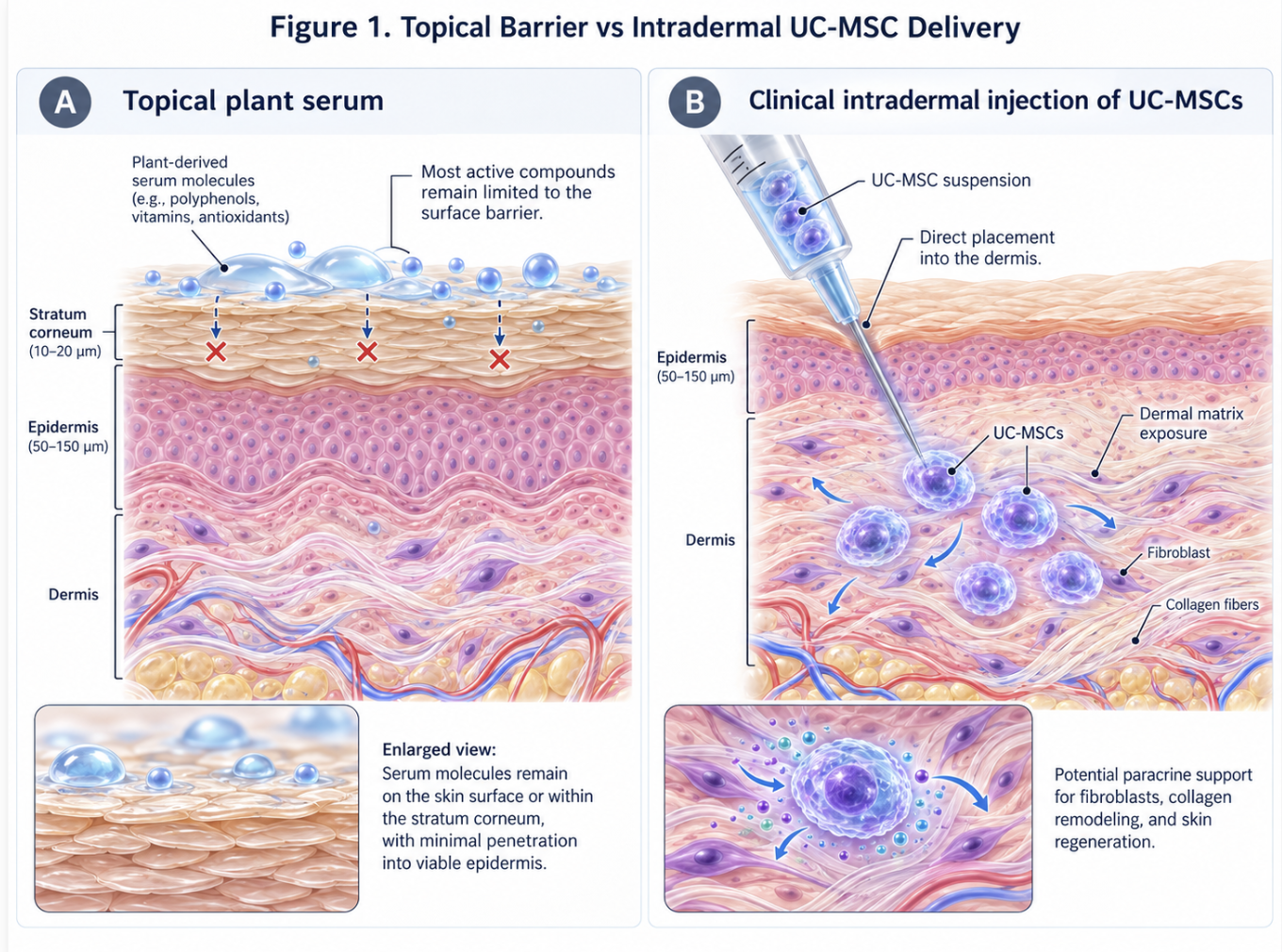
Figure 1: Topical plant serums remain trapped above the stratum corneum, while clinical injections deliver UC-MSCs directly into the dermal matrix.
Why do clinical injections succeed where creams fail? Because they entirely bypass the skin’s armor. Clinical stem cell therapy involves direct injection or deep micro-needling delivery systems, depositing live UC-MSCs straight into the dermal layer.
But simply bypassing the barrier isn’t enough. Human-to-human cellular communication is required. Live, bioactive human UC-MSCs are the only cells capable of docking with host cell receptors to release their secretomes. Think about the logistics here. A jar of plant stem cell serum
Stem Cell Therapy for Facelifts represents a biological tissue restoration rather than mechanical tissue manipulation. Unlike traditional surgical interventions that cut and stretch senescent skin, Mesenchymal Stem Cell Therapy focuses on re-densifying the dermal matrix and enhancing local vascularity. This biological tissue restoration yields structural improvements without the associated surgical trauma. The shift away from scalpel-based lifting reflects a broader medical preference for treating the root biological causes of aging rather than just its visible symptoms.
High-net-worth individuals are increasingly abandoning the surgical facelift. Traditional facelifts have obvious limitations: severe surgical trauma, high risk of adverse immune reactions, and weeks of painful downtime. Worse, they often create an unnatural aesthetic tension that infamous “pulled” look resulting from stretching senescent skin over an aging bone structure.
A stem cell facelift offers natural-looking facial rejuvenation because it addresses the underlying biological deterioration. A stem cell facelift utilizing UC-MSCs enhances local microcirculation and promotes skin density improvements without surgical excision.
The procedure doesn’t stretch the skin; it fundamentally thickens it. Patients constantly ask: can stem cells improve skin tone and brightness? Absolutely. Furthermore, the localized reduction in tissue fibrosis and the regulation of melanin help clear up age spots an effective stem cell treatment for pigmentation and melasma that surgery can’t touch. The cellular repolarization specifically targets the inflammatory pathways causing hyperpigmentation. Achieving these outcomes, however, relies entirely on the quality of the mesenchymal cells and the medical protocols governing their use.
So what actually happens in the chair? First, extracting and preparing the UC-MSCs occurs in a heavily regulated bio-lab. In the clinic, patients undergo local anesthesia before the physician executes a precise injection mapping across the face and neck, focusing heavily on stem cell therapy for skin brightening, volume restoration, and texture refinement. The physician carefully administers the biologics grid-by-grid to ensure uniform cellular distribution.
Clinical best practices heavily favor youthful UC-MSCs over autologous fat-derived stem cells. If a patient is 55 years old, their fat-derived stem cells are also 55 years old, having accumulated DNA damage over a lifespan. UC-MSCs provide a blank slate of highly potent, uncorrupted cellular machinery for Mesenchymal Stem Cell Therapy.
| 📌 If you’re interested in why umbilical cord cells are often preferred over bone marrow or fat-derived cells, we have an interesting article that discusses why UC-MSCs are superior to other stem cell sources, which you can read via the internal link. |
The results timeline is crucial to understand. Patients won’t look 20 years younger when leaving the clinic. Neovascularization the growth of new blood vessels—and collagen matrix synthesis take 8 to 12 weeks to visually manifest. During the initial two weeks, patients typically experience mild dermal plumping driven by local hydration and micro-inflammation. However, the true structural remodeling begins around week six. By month three, the newly formed vascular network actively nourishes the upper dermal layers, returning a permanent rosy hue to senescent skin.
The full aesthetic outcome, characterized by lifted contours and dramatically reduced laxity, peaks between six to nine months post-procedure. Typically, patients undergo one comprehensive session, followed by potential booster treatments every 12 to 18 months. It is a delayed but deeply structural reality, drastically different from the instant gratification of dermal fillers. Due to stringent regulations governing biologics in Western countries, patients are increasingly looking to specialized international medical centers to access these protocols.
Thailand has established a highly regulated, internationally accredited infrastructure for regenerative medicine. By combining rigorous laboratory standards with state-of-the-art clinical facilities, medical travel to Thailand for regenerative medicine offers access to advanced UC-MSC therapies that remain heavily restricted or cost-prohibitive in North American and European
Is regenerative aesthetics in Bangkok actually safe? Yes, provided patients know exactly how to vet the facilities. Thailand’s Ministry of Public Health enforces rigorous laboratory standards for biologics, making safe stem cell therapy highly viable.
| 📌 If you’re planning treatment in Thailand and want a practical checklist for choosing a safe clinic, we have an interesting article that discusses whether stem cell therapy is safe in Thailand, which you can read via the internal link. |
The Thai FDA strictly regulates the culturing, expansion, and administration of human cells. The regulatory body mandates rigorous ISO 14644-1 cleanroom classifications for all cellular expansion procedures. This advanced infrastructure means the air quality, sterility, and handling protocols mirror those of advanced pharmaceutical manufacturing facilities in Switzerland or the United States. Reputable Bangkok stem cell clinics operate strictly partnered, ISO-certified laboratories staffed by board-certified hematologists and regenerative medicine specialists. Clinics operating outside this hospital-grade environment are routinely audited and shut down.
But—and this is a massive qualifier—patients must separate licensed medical hospitals from unregulated wellness spas. Legitimate clinics must provide transparent, third-party flow cytometry reports proving cell viability and count before injection. Quality control is non-negotiable for safe stem cell therapy in Thailand. Administering poorly handled biologics risks severe infection or immune rejection. This stringent regulatory environment ensures patients aren’t just getting cheaper treatments, they are receiving legitimate medical care.
The financial modeling for cellular therapy heavily incentivizes medical travel. Why do patients travel to Thailand for stem cell beauty treatment? The pricing is fundamentally disruptive to Western medical monopolies. In the United States or the UK, comprehensive UC-MSC intravenous and localized aesthetic treatments can easily exceed $25,000 to $40,000 if patients can even find a clinic legally permitted to perform them with expanded cells.
In Thailand’s top-tier international hospitals, the cost of stem cell therapy in Thailand typically runs 40% to 60% less. This isn’t because they are cutting corners on safety. The price difference stems from lower administrative overhead, specialized localized bio-labs that don’t rely on massive import fees, and aggressive government-subsidized medical tourism initiatives.
The logistics of medical travel also heavily favor the patient. Even when factoring in comprehensive pre-op blood panels, business-class flights, and two weeks in a five-star Bangkok recovery hotel while the lab processes the biologics, the holistic cost of medical travel remains significantly lower.
Despite these advantages, ethical clinical practice requires a thorough understanding of the treatment’s limitations and patient suitability.
Patient safety heavily dictates the viability of cellular therapy applications. Financial capacity alone does not qualify a patient for regenerative procedures, underscoring the absolute necessity of rigorous clinical gatekeeping and evidence-informed medical screening.
Medical tourists frequently encounter specific logistical and clinical pitfalls. The most dangerous risk involves booking a stem cell beauty treatment in Thailand at a boutique “wellness spa” that lacks proper bio-storage capabilities. Proper cryogenic storage maintains high cell viability rates, making accredited laboratory infrastructure the critical factor in regenerative safety.
If the clinic isn’t maintaining strict cryogenic temperature control, the cells die. Patients end up paying $10,000 for an injection of dead organic matter. Another frequent pitfall is expecting immediate surgical-level tightening. Patients fail to grasp the biological timeline of collagen synthesis, which takes months to visibly tighten tissue. Lastly, never assume all “stem cells” are equal. Always demand the certificate of analysis detailing the exact cell count, viability percentage, and source tissue before agreeing to any procedure.
| 📌 If you’re interested in why the percentage of living cells matters so much at the time of treatment, we have an interesting article that discusses the importance of cell viability in UC-MSC stem cell therapy, which you can read via the internal link. |
Using stem cells for facial rejuvenation is not a magic bullet. Evidence-informed suitability assessments represent a mandatory prerequisite for clinical stem cell applications. Reputable Thai
Growth factors accelerate cellular division, meaning potent secretomes must never be introduced into an environment harboring malignant cells. Just because funds are available doesn’t mean a patient is a candidate. A preliminary consultation doesn’t guarantee eligibility, nor does it promise guaranteed aesthetic improvement.
Clinical stem cell therapies primarily address structural dermal concerns including severe elasticity loss, deep permanent wrinkles, and uneven skin tone driven by cellular senescence. By utilizing UC-MSCs, the treatment promotes the synthesis of collagen type I and elastin. It has also demonstrated efficacy in mitigating excessive tissue fibrosis and regulating melanin transcription, which assists with persistent pigmentation issues. Ultimately, individual functional outcomes depend heavily on the patient’s biological baseline.
Umbilical Cord Mesenchymal Stem Cells (UC-MSCs) are currently the preferred cellular source for advanced aesthetic treatments in top-tier clinics. Unlike autologous fat-derived stem cells, which age concurrently with the patient, UC-MSCs offer an abundant source of highly active, youthful progenitor cells. These cells possess complex secretomes that secrete high volumes of vital growth factors necessary for robust extracellular matrix repair and neovascularization. Furthermore, they are highly immunoprivileged, carrying an exceptionally low risk of triggering an adverse immune response.
Evidence suggests that the application of UC-MSCs significantly accelerates cutaneous wound healing following ablative laser resurfacing or deep chemical peels. The cells perform phenotypic macrophage reprogramming, shifting the local tissue environment from a pro-inflammatory,
When performed in regulated, accredited medical facilities, UC-MSC applications typically present a low risk of significant adverse immune events due to their immunoprivileged nature. However, temporary side effects may include localized swelling, mild erythema (redness), and injection site tenderness. Severe complications are exceedingly rare but can occur if biological materials are improperly processed or administered in unsterile, non-clinical environments. Always consult a qualified clinician to assess individual risk.
For aesthetic patients, stem cell beauty treatment in Thailand delivers structural skin regeneration via UC-MSC paracrine signaling. By dramatically increasing collagen type I synthesis and improving local microcirculation, these targeted cellular therapies restore youthful dermal density at a fraction of Western medical costs. The best approach combines strict medical vetting, understanding cellular biology, and aggressively avoiding unregulated spas that sell hope instead of science.
Patients must deeply respect The Regenerative Efficacy Barrier. Remember, topical plant serums absolutely cannot cross the epidermis to remodel tissue, regardless of their marketing claims. That biological reality makes direct clinical, injectable intervention the only scientifically viable method for actual cellular rejuvenation.
Take the first step toward genuine cellular rejuvenation by compiling your comprehensive medical records. Schedule a specialized regenerative consultation today to determine clinical suitability, seeking an evidence-informed assessment from an accredited, internationally recognized Thai hospital. Demand cell viability reports, verify their lab certifications, and approach the entire process with the rigorous clinical skepticism it deserves.