Our Services
Others
- DFPP
- Shockwave
- IV Drip

Autism Spectrum Disorder (ASD) is a complex neurodevelopmental condition marked by difficulties in communication, social interaction, and repetitive behaviors. Behavioral and educational therapies remain the foundation of care, but many families continue researching stem cell therapy in Thailand and elsewhere because they’re looking for something that addresses the inflammation, immune imbalance, and oxidative stress that often accompany ASD not just the behaviors those biological factors produce.
Umbilical cord–derived mesenchymal stem cells (UC-MSCs) have drawn growing global attention as a potential supportive therapy for autism. These cells are harvested ethically from donated umbilical cords after healthy births, and researchers value them for their ability to modulate the immune system, calm inflammation, and support neuronal repair.
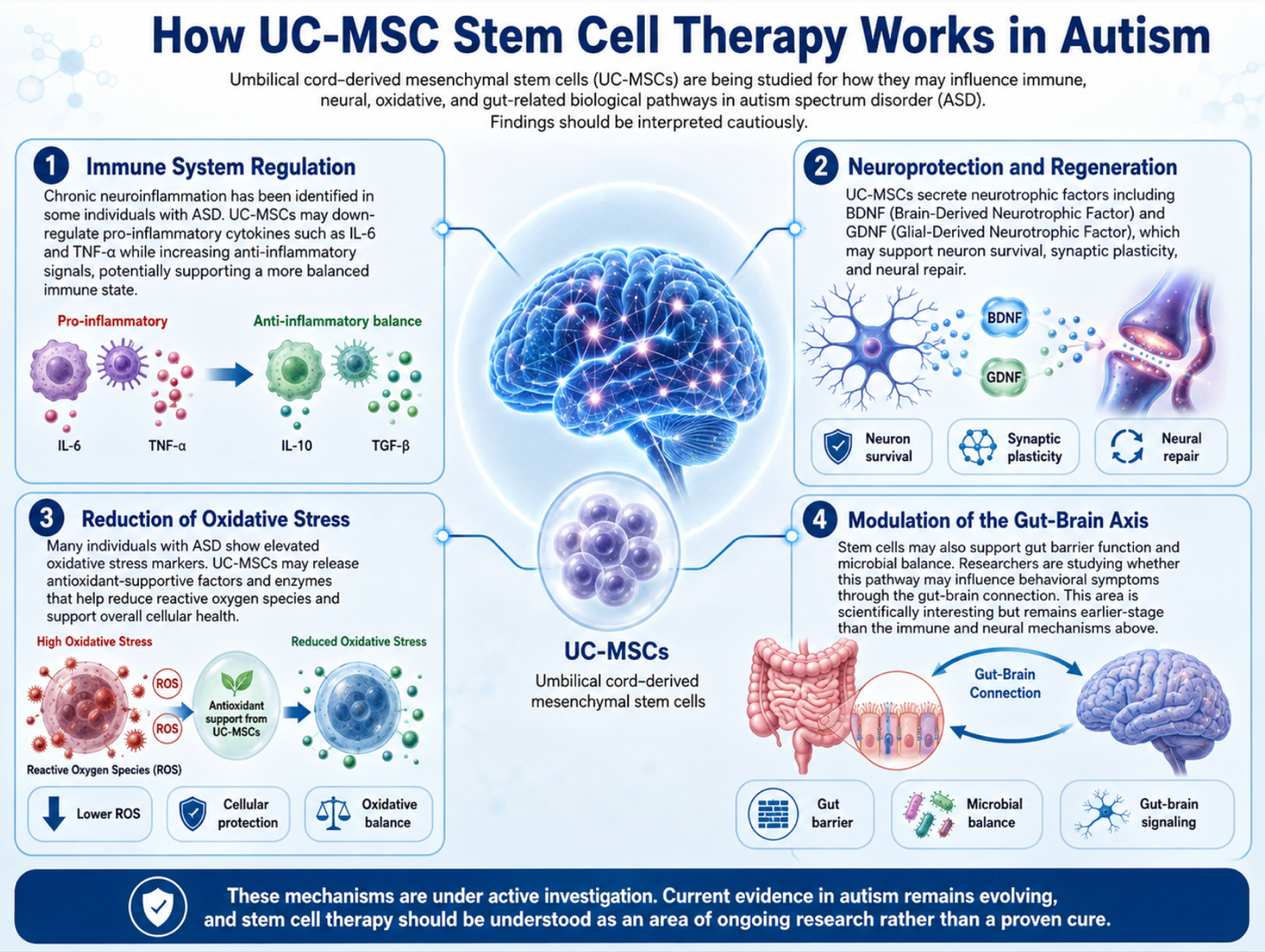
How UC-MSC Stem Cell Therapy Works in Autism
Immune System Regulation
Chronic neuroinflammation has been identified in some individuals with ASD. UC-MSCs can down-regulate pro-inflammatory cytokines like IL-6 and TNF-α while increasing anti-inflammatory signals, which researchers believe may help restore a more balanced immune state.
Neuroprotection and Regeneration
UC-MSCs secrete neurotrophic factors including BDNF (Brain-Derived Neurotrophic Factor) and GDNF (Glial-Derived Neurotrophic Factor) that support neuron survival, synaptic plasticity, and neural repair.
Reduction of Oxidative Stress
Many individuals with ASD show elevated oxidative stress markers. UC-MSCs release antioxidants and enzymes that may help reduce reactive oxygen species and support overall cellular health.
Modulation of the Gut-Brain Axis
Stem cells may also support gut barrier function and microbial balance, which researchers are studying as a possible pathway influencing behavioral symptoms through the gut-brain connection an area of real scientific interest, though still earlier-stage than the immune and neural mechanisms above.
What the Clinical Evidence Actually Shows
A Landmark Cord Blood Trial
A Phase II randomized clinical trial led by Dawson and colleagues, published in The Journal of Pediatrics in 2020, evaluated intravenous umbilical cord blood infusion in 180 children with ASD. The trial found the infusions were safe and well tolerated, with children without co-occurring intellectual disability showing significantly greater improvement in communication skills compared to placebo. It’s worth being precise about what this trial actually tested: cord blood infusion, which contains a broader mix of cell populations, not an isolated UC-MSC product specifically an important distinction often blurred in less careful summaries of this research.
An Early Combined-Cell Study
A 2013 open-label trial by Lv and colleagues, published in the Journal of Translational Medicine, tested combined cord blood mononuclear cells and UC-MSC transplantation in 37 children with autism across three groups. Children receiving the combination treatment plus rehabilitation showed greater improvement than those receiving rehabilitation alone. As an early, non-randomized, unblinded trial with a small sample, its authors themselves flagged these design limitations a good early signal, not confirmatory evidence.
A Larger Meta-Analysis
A 2021 systematic review and meta-analysis in Stem Cell Reviews and Reports pooled data from 11 trials covering 461 patients, reporting measurable improvement on standardized behavioral scales including the Autism Behavior Checklist (ABC) and Childhood Autism Rating Scale (CARS). The individual trials involved were mostly small, which is reflected in wide confidence intervals around some outcome measures.
A Word About Research Quality in This Field
Not every UC-MSC autism study has held up to scrutiny. At least one previously published UC-MSC safety study in this exact field was formally retracted in 2021 after publication a reminder that this remains an actively evolving research area where not every early finding survives further review. That’s not a reason for alarm, but it is a reason to favor larger, replicated studies over any single paper, and to be skeptical of sources that cite research without checking whether it still stands.
Real-World Outcomes Families Commonly Report
Families exploring stem cell therapy for autism frequently describe changes in daily functioning, including:
Better eye contact and engagement
Calmer behavior and fewer meltdowns
More responsive communication
Enhanced sleep patterns and concentration
Reduction in repetitive behaviors
These accounts are worth taking seriously they’re consistent across enough families to be a genuine signal. But they’re anecdotal by nature: without a placebo comparison, it’s difficult to separate the treatment’s specific contribution from concurrent behavioral therapy or natural developmental change. Reading these reports alongside the clinical trial data above, rather than instead of it, is the honest way to weigh them.
Safety and Ethical Considerations
UC-MSCs are considered low-risk and are ethically sourced from donated umbilical cords following healthy births. Reputable cells are screened for pathogens and cultured under Good Manufacturing Practice (GMP) conditions before clinical use.
Reported adverse events across UC-MSC autism studies are generally rare and mild transient fever or fatigue being the most common. Long-term monitoring in peer-reviewed research has not shown tumor formation, immune rejection, or major systemic complications. That said, families should seek treatment only from clinics following international standards, maintaining sterile processing, and providing licensed medical supervision not every provider marketing this therapy meets that bar.
Current Challenges and Future Directions
Regulatory Status
Stem cell therapy for autism is still considered experimental worldwide, and no regulatory body has approved it as a standard autism treatment.
Standardization
Protocols for cell dose, delivery route (intravenous vs. intrathecal), and treatment frequency vary considerably between clinics a real barrier to comparing outcomes across studies and providers.
Individual Response
Not every child responds equally, which underscores the need for personalized protocols, honest expectations, and continued research rather than one-size-fits-all treatment claims.
What’s Next: Exosome-Based Approaches
Researchers are increasingly exploring MSC-derived extracellular vesicles (exosomes) cell-free particles that may deliver regenerative signals without live cells. This next-generation approach could improve both safety and accessibility, though it remains earlier-stage than cell-based UC-MSC therapy itself.
Autism Stem Cell Therapy in Bangkok
Stem cell therapy in Thailand, and Bangkok specifically, has become one of Asia’s leading destinations for regenerative medicine. The city’s medical infrastructure, international patient services, and specialized clinics have made it an accessible option for families researching UC-MSC therapy for autism.
Clinics in Bangkok often integrate stem cell therapy with occupational, behavioral, and speech therapy rather than offering it as a standalone treatment an approach that reflects how the clinical research itself is designed, combining cell therapy with structured rehabilitation rather than treating it in isolation.
Frequently Asked Questions
Does UC-MSC therapy cure autism?
No. It’s studied as a way to support the biological factors inflammation, immune imbalance, neural connectivity associated with autism, not as a cure. It’s meant to complement, not replace, established behavioral and developmental care.
What does the actual clinical research show?
A 2020 Phase II trial (180 children) found cord blood infusion safe with communication improvements in a subgroup. A 2013 trial (37 children) found early signals with combined cord blood and UC-MSC treatment. A 2021 meta-analysis of 11 trials (461 patients) found measurable improvement on standardized behavioral scales. None represent definitive, large-scale proof.
Is stem cell therapy for autism safe?
Reported adverse events are generally mild and temporary across published studies, with no documented tumor formation or immune rejection in long-term monitoring. That said, research quality varies at least one relevant study in this field was retracted after publication, which is why treatment should only be sought from clinics following international safety and manufacturing standards.
What’s the difference between cord blood and UC-MSC therapy?
Cord blood infusion uses a broader mix of cell populations from umbilical cord blood, while UC-MSC therapy uses mesenchymal stem cells specifically isolated from umbilical cord tissue. Both have been studied in autism research, sometimes separately and sometimes in combination.
Why do families consider stem cell therapy in Thailand for autism specifically?
Stem cell therapy in Thailand combines specialized regenerative medicine physicians, GMP-certified laboratories, and integrated rehabilitative care, making it a credible option for families researching UC-MSC therapy for ASD internationally particularly in Bangkok’s cluster of regenerative medicine clinics.
Making an Informed Decision
Stem cell therapy using UC-MSCs represents one of the more actively researched regenerative approaches for Autism Spectrum Disorder today not a cure, but a genuinely studied avenue for addressing inflammation, immune imbalance, and neural connectivity alongside standard care. Families interested in this treatment should consult physicians specializing in regenerative medicine and pursue treatment only within regulated, ethical, and scientifically transparent programs. If you’re trying to understand whether stem cell therapy in Thailand has a place in your child’s care plan, book a consultation with Vegastemcell for an assessment grounded in your child’s specific situation.
For more infomation you can reach me directly on WhatsApp or Email. Here’s our official link:
WhatsApp :+66982509599
Email : vegastemcell@gmail.com