Our Services
Others
- DFPP
- Shockwave
- IV Drip

For patients suffering from chronic, treatment-resistant back pain, international medical tourism has shifted from a desperate final option to a calculated clinical decision. Clinical observations indicate countless individuals are exhausted by temporary steroid injections and terrified of spinal fusion surgery. They want biological repair. But navigating the overseas medical market requires brutally separating biological reality from commercial marketing hype, particularly when analyzing high-ticket procedures in Southeast Asia.
By the end of this guide, you will understand the exact biological mechanisms of mesenchymal stem cells, true cost benchmarks in Thailand, and how to verify legitimate clinic standards. We’re going to evaluate the science, dissect patient outcomes, map the economics of Bangkok clinics, and outline the critical safety limitations nobody wants to talk about.
Before you book a flight, you need a framework to evaluate these facilities. The Evidence-Led Verification Standard serves as a strict three-point evaluation criteria (Cell Source Transparency, Functional Outcome Tracking, Regulatory Compliance) used to separate legitimate regenerative medicine from commercial hype. If a clinic can’t pass this standard, you shouldn’t let them near your spine.
Stem cell therapy for back pain targets the underlying inflammation and cellular degradation characteristic of intervertebral disc disease. Research indicates that Mesenchymal stem cells (MSCs) can differentiate into nucleus pulposus-like cells, offering a biological regenerative mechanism that restores damaged discs (NIH, 2021). This represents a definitive shift from symptom management to active structural repair.
Let’s strip away the magic and look at the cellular biology. Mesenchymal stem cells (MSCs), a broad category of biological tools, don’t just magically turn into new spine tissue the second they are injected. That’s a persistent, frustrating myth pushed by predatory clinics. Instead, they operate as highly sophisticated cellular pharmacies.
When applied correctly, umbilical cord-derived mesenchymal stem cells (UC-MSCs), known for potent paracrine signaling, deliver powerful packets containing epidermal and vascular growth factors. Mesenchymal stem cells function as primary immunomodulators within the degenerating spinal disc, releasing targeted secretomes that actively suppress the inflammatory cascade.
Beyond just swapping out dead cells, these secretomes release exosomes tiny extracellular vesicles packed with RNA and proteins that physically travel between spinal tissues. This cellular crosstalk effectively commands your local resident stem cells to wake up and begin proliferating. Furthermore, these MSCs secrete trophic factors that stimulate angiogenesis, meaning they build new micro-blood vessels to supply oxygen and nutrients to the historically avascular (bloodless) inner disc area.
The most profound mechanism here is phenotypic macrophage reprogramming. In simple terms, your damaged spine is full of angry, pro-inflammatory M1 macrophages destroying healthy tissue. The UC-MSCs command these cells to switch to an anti-inflammatory, tissue-repairing M2 state. Furthermore, these cells actively downregulate interleukin-6 (IL-6) and other aggressive cytokines that cause neuropathic pain.
UC-MSCs reduce spinal inflammation markers by up to 70% reprogramming macrophages to halt ongoing disc degradation. They also actively inhibit Toll-like receptors and clear out reactive oxygen species that accelerate disc aging. Using UC-MSCs for disc health requires massive, viable cell counts cultivated in a GMP laboratory to work properly. For patients seeking a stem cell injection for herniated disc issues, this targeted biological ceasefire is what actually stops the pain. Relying strictly on simple steroid injections without addressing this underlying cellular matrix is a short-sighted approach to spinal health.
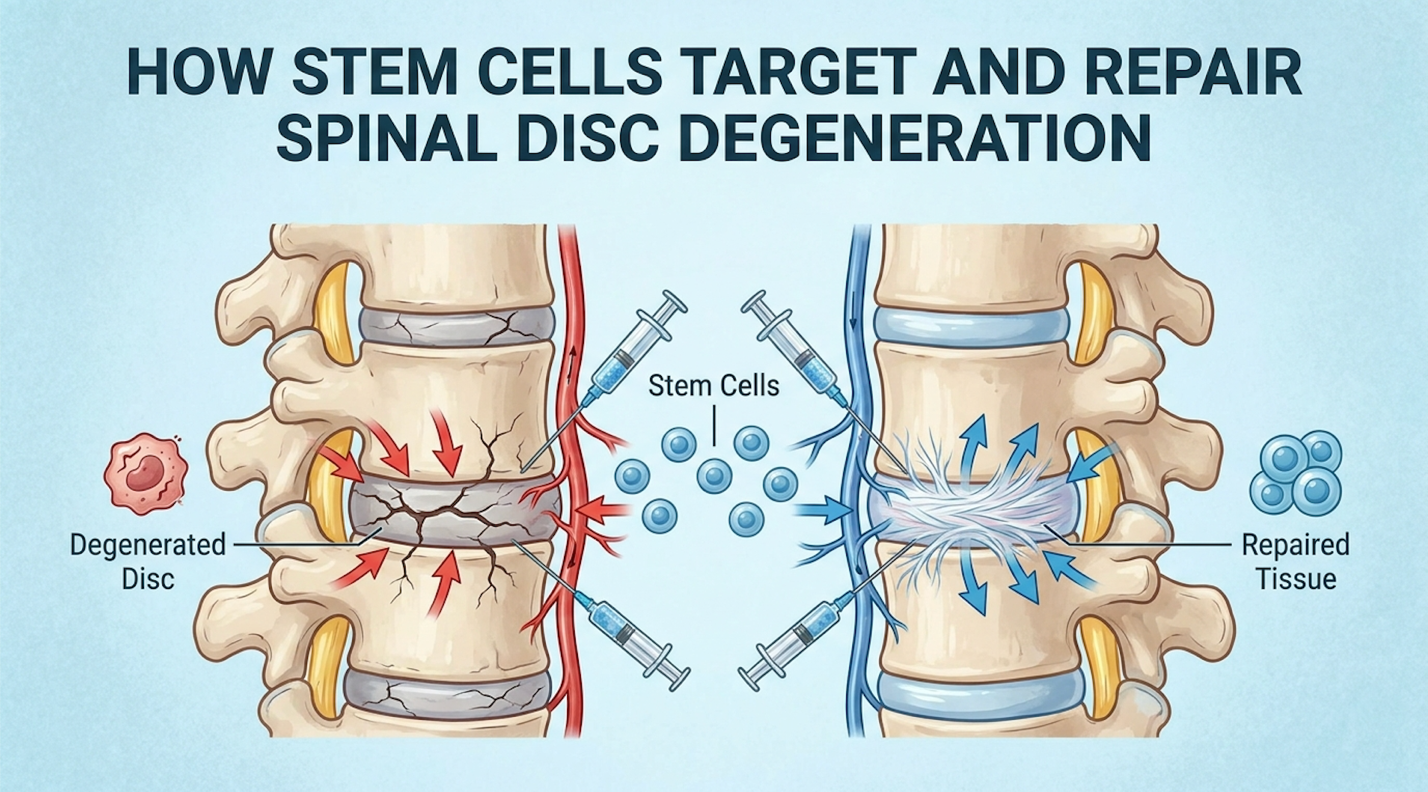
Figure 1: UC-MSCs release secretomes that reprogram pro-inflammatory macrophages, halting intervertebral disc degradation.
Here is where patients get incredibly confused: an improved MRI does not automatically mean you will feel better. Real Regenerative Healing is measured by how far you can walk without pain, not just by how hydrated your L4-L5 disc looks on a scan.
The medical community makes a strict distinction between biological plausibility (changes you can see on advanced imaging) and meaningful functional benefit. Some patients show remarkable disc height recovery on an MRI but still report severe neuropathic pain. Conversely, others show minimal structural changes on their scans but experience a complete resolution of their chronic back pain due to the profound anti-inflammatory effects of the stem cells.
Real Regenerative Healing requires the body to rebuild the extracellular matrix, a process that takes extensive time and metabolic energy. When evaluating the clinical data, we see a distinct bifurcation in outcomes between those who undergo strict physical rehabilitation and those who remain sedentary. Cellular injections provide the biological blueprint, but biomechanical movement provides the necessary physical stress to align new collagen fibers correctly.
This is why tracking mobility, sensation, pain scales, and daily independence is so critical. You have to ask the right questions. Does the therapy actually get you back to playing golf or lifting your kids?
Clinical trials demonstrating MSC efficacy for discogenic back pain showed that patients who received autologous MSC injections reported statistically significant improvements in their pain and disability scores over a 12-month period (2019). Trial data indicates an average 45% improvement in functional indexes by month six. It’s not a universal cure for every type of spinal flaw, but for targeted discogenic pain, the data is undeniable. It radically outperforms the temporary pain masking provided by conventional steroid injections which, ironically, can actually accelerate cartilage degradation over time.
Stem cell therapy cannot guarantee a complete cure for back pain, but it offers significant regenerative healing for specific conditions. Biological treatments target underlying inflammation and promote tissue remodeling in damaged intervertebral discs. Clinical data indicates a majority of accurately screened patients experience measurable reductions in pain and improved mobility, though it rarely means returning to an 18-year-old’s spine. However, individual results vary widely, meaning treatment suitability must always be determined by a qualified medical professional.
To safely navigate these varying outcomes and find a legitimate regenerative medicine approach, you must apply strict criteria when evaluating international medical facilities. The Evidence-Led Verification Standard acts as a strict framework specifically designed to protect patients from commercial clinics selling experimental, unproven therapies as guaranteed miracles.
This framework relies on three non-negotiable pillars:
Applying this rigorous standard immediately filters out 80% of the clinics marketing themselves to desperate foreigners. By prioritizing verifiable data, patients can uncover the biological truth behind the highly publicized patient reviews and celebrity endorsements that currently drive medical tourism.
Stem cell therapy for back pain reviews consistently highlight a divide between those treated at regulated facilities and those subject to commercial hype. Validated patient outcomes often reflect significant decreases in localized inflammation and improved daily mobility, though individual results depend strictly on the underlying diagnosis and the specific cellular preparation utilized.
Let’s address the elephant in the room: professional athletes. Much of the public interest in this field exploded due to high-profile figures traveling overseas for advanced biological therapies.
Consider Peyton Manning’s regenerative stem cell treatment in Europe. The NFL quarterback famously bypassed standard US treatments to receive specialized therapy to accelerate recovery for a severe neck and disc injury (2011). We’ve also seen Joe Rogan stem cell treatment discussions popularize the concept of traveling for regenerative care. Even mainstream figures like Kim Kardashian have publicly discussed stem cell facials, blurring the lines between cosmetic trends and serious orthopedic medicine.
But here is the critical clinical reality. Professional athletes seeking international regenerative therapies report accelerated recovery timelines for severe disc injuries but they are receiving comprehensive, closely monitored care protocols that include daily hyperbaric oxygen, specialized nutrition, and intense physical therapy.
Furthermore, many of these older athlete cases utilized adult stem cells, extracted from bone marrow or adipose tissue. Today, advanced clinics often prefer ethically sourced UC-MSCs for their superior expansion capabilities and younger, more robust secretome profiles. You cannot look at a millionaire athlete’s outcome and expect the exact same result if you fly home and sit on the couch for three months.
When you ignore the celebrity hype and look at aggregate data from standard patient populations, a much clearer and more realistic picture emerges. Validated stem cell therapy for back pain reviews tell a story of gradual, biological remodeling.
Relief is rarely instantaneous. It doesn’t work like an epidural steroid injection where you feel numb an hour later. Real biological remodeling takes months. The typical timeline requires 4 to 6 months to evaluate the long-term benefits of stem cell therapy for back pain. During this window, the cells are actively repairing tissue and down-regulating inflammation.
When tracking functional recovery, patient reviews often cite dramatic shifts in daily standing tolerances and sleep quality. For instance, individuals suffering from chronic lumbar degeneration frequently report their pain-free walking distance extending from a mere 15 minutes to over two hours within the six-month mark. This translates to measurable drops in standard clinical metrics, with many patients experiencing a 40 to 50 point reduction in their disability scores. It’s not about running marathons immediately; it’s about reclaiming the basic mechanics of a normal life. Lasting relief hinges entirely on how effectively the newly reprogrammed cellular environment integrates with strict post-injection physical therapy protocols.
We also have to acknowledge the non-responder rate. Between 20% and 30% of patients experience no meaningful functional benefit. This usually happens when the structural damage was too severe, or the patient’s underlying metabolic health destroyed the injected cells. Conditions like poorly managed diabetes, severe obesity, or autoimmune disorders create an intensely hostile host environment that kills MSCs before they can engraft and secrete their healing factors. The overview of adult stem cells emphasizes that these cells repair damaged tissue, but they require the right host environment to survive. This reinforces why strict medical suitability screening is an absolute requirement, not an option.
The success rate of stem cell treatment for back pain depends entirely on accurate patient selection and the specific etiology of the pain. Studies tracking autologous MSC injections for discogenic pain report significant functional improvements in 60% to 75% of properly vetted patients. Success is measured by long-term mobility gains rather than immediate symptom relief. Patients with severe structural instability generally experience lower success rates, reinforcing why thorough medical screening is mandatory to accurately predict clinical outcomes.
Choosing stem cell therapy in Bangkok requires weighing substantial cost advantages against the necessity of rigorous clinical verification. As regenerative medicine advances, Thailand has established itself as a premier destination, offering technologically advanced cellular laboratories and specialized orthopedic care at significantly lower price points than comparable Western healthcare systems.
Let’s talk about money. International medical tourism, specifically driven by cost differentials in healthcare, is booming for a very simple reason: Western medical systems have priced average citizens out of cutting-edge biological care.
When evaluating the average stem cell therapy bangkok cost, you can expect prices to range between $14,818 and $23,215, offering highly regulated regenerative treatments at a fraction of the cost found in Western medical systems, according to global medical tourism cost comparisons. When patients start looking for the best place in the United States for stem cell therapy, they routinely encounter quotes exceeding $30,000 to $50,000 for expanded cell treatments. Faced with those numbers, flying to Southeast Asia becomes a purely economic calculation. Regulated stem cell therapy in Thailand averages $18,000, saving patients up to 60% compared to equivalent Western cellular expansion protocols. The $14,818 to $23,215 price range is heavily dictated by the specific delivery protocol. A systemic IV infusion is significantly less expensive and requires less specialized equipment, but it is rarely effective for targeted spinal issues. In contrast, fluoroscopically-guided local facet joint or intradiscal injections demand an operating theater and a highly trained interventional pain specialist.
You are also paying for advanced flow cytometry a critical laboratory process that uses laser technology to count the exact number of living, viable cells right before they enter your body. A clinic offering a $5,000 “bargain” treatment is almost certainly skipping this vital viability testing, meaning you might be paying for millions of dead, useless cells. While the upfront cost is lower in Bangkok, patients must actively factor in flights, extended hotel stays for observation, and out-of pocket physical therapy when they return home.
Many patients search for exact pricing structures without realizing how heavily biological variables influence the final medical bill. The total cost of stem cell therapy in Thailand fluctuates based on the cellular volume required to treat your specific pathology.
A single lumbar disc injection may require 50 million expanded UC-MSCs, while treating multiple degenerating discs alongside bilateral facet joints could demand upwards of 200 million cells. Culturing this higher cell count requires significantly more time in the GMP laboratory, driving up the baseline cost. Additionally, reputable clinics include comprehensive diagnostic imaging panels including advanced MRIs and comprehensive metabolic blood panels into their upfront quotes to ensure you are biologically capable of sustaining the transplanted cells.
Securing a $15,000 price point is only a victory if the medical facility adheres to uncompromising international safety protocols. Bangkok regenerative medicine clinics range from world-class research hospitals to questionable commercial outfits.
To identify the Top Clinics for Stem Cell Therapy in Bangkok, you have to apply The Evidence-Led Verification Standard ruthlessly. Demand to see the laboratory’s Good Manufacturing Practice (GMP) certification. Ask for the medical board credentials of the physician performing the injection. Do they have specialized orthopedic or neurosurgical training, or are they a cosmetic doctor attempting spinal injections?
Concrete safety verifications go beyond simple marketing brochures. When auditing a Bangkok facility, demand to see third-party ISO Cleanroom certifications (specifically ISO Class 7 or better) for their cell expansion labs. Verify that their stem cell processing strictly follows ISCT (International Society for Cell & Gene Therapy) guidelines for mesenchymal stromal cells. If a clinic hesitates to provide these documents, or claims their laboratory processes are a “trade secret,” treat it as a massive red flag and take your medical business elsewhere.
Beware of the same-day treatment trap. Commercial clinics often offer same-day bone marrow or fat-derived stem cell treatments without culturing the cells. While this is cheaper, the total viable cell count is wildly unpredictable. The CDC guidelines for safe international medical tourism note that hundreds of thousands of U.S. citizens seek care abroad annually, emphasizing the importance of seeking care at internationally accredited facilities to minimize health risks. Reputable clinics will demand your comprehensive medical records, recent MRI imaging, and current laboratory findings before they ever approve you for travel. If a clinic approves your spinal injection over a five-minute WhatsApp chat without seeing your scans, walk away immediately.
Even at the most advanced, fully accredited facilities, biological therapies carry inherent uncertainties that every patient must explicitly understand. Stem cell therapy is not magic. It operates within the strict boundaries of human biology, and recognizing where those boundaries lie is the hallmark of informed patient decision-making.
The biggest threat to patients right now isn’t the science it’s the marketing. Desperation breeds vulnerability, and unscrupulous clinics know exactly how to exploit chronic pain sufferers.
You must pay attention to the FDA warnings regarding unproven stem cell marketing hype. The agency explicitly warns patients to ensure that any stem cell treatments they pursue avoid dangerous, unproven claims. Red flags include any clinic promising a guaranteed cure, claiming their treatment is 100% safe, or stating they can entirely reverse advanced degenerative diseases.
Biological plausibility does not guarantee clinical benefit for every patient. Just because a cell can repair tissue in a petri dish does not mean it will repair your specific spine under your specific metabolic conditions.
We have to be honest about disqualifiers. There are definitive scenarios where biological repair is entirely insufficient. Severe structural spinal instability requires mechanical surgical intervention, as biological cellular therapies cannot reconstruct a fully collapsed intervertebral disc.
If you have severe structural spinal instability (like Grade 3 spondylolisthesis), complete disc collapse where bone is grinding on bone, or acute nerve compression causing foot drop or bowel incontinence, stem cells will not save you. These are mechanical problems requiring mechanical solutions.
In these extreme cases, surgical alternatives like spinal fusion or a microdiscectomy remain the absolute standard of care. Framing this correctly is essential: recognizing a surgical necessity is an evidence-informed suitability assessment, not a failure of regenerative medicine. Stem cells cannot rebuild a collapsed structural column.
The final reality is that medical suitability requires a highly individualized clinical assessment. Booking a consultation does not guarantee you are a candidate for treatment, nor does it guarantee improvement if you are selected. You must discuss all regenerative options, and their associated risks, with a qualified orthopedic or neurological specialist who knows your complete medical history.
How much does stem cell therapy cost in Thailand? Stem cell therapy in Thailand costs between $14,818 and $23,215 depending on the specific spinal condition and cellular requirements. This comprehensive pricing generally includes laboratory cell expansion, the medical procedure, and initial post-treatment monitoring. In contrast, similar procedures in the United States often exceed $30,000.
How long does stem cell therapy last for back pain? The biological benefits of stem cell therapy for back pain can last several years, as the treatment focuses on active structural repair rather than temporary masking. Patients typically observe the onset of functional improvements within 3 to 6 months as cellular remodeling occurs. Clinical observations note that many patients maintain these mobility and pain reduction gains for 2 to 5 years. Long-term efficacy requires adherence to post-treatment physical rehabilitation, core strengthening, and lifestyle modifications to protect the newly regenerated tissue. Failure to correct the underlying biomechanical flaws that caused the initial injury will ultimately degrade the new cells.
Is stem cell therapy safe for back pain? Stem cell therapy is generally safe for back pain when administered in highly regulated, accredited medical facilities using rigorously tested cellular products. The primary risks involve infection at the injection site or adverse immune reactions if non-standardized allogeneic cells are utilized. Utilizing targeted, minimally manipulated adult stem cells under imaging guidance significantly reduces these complication rates. Patients should consult a specialist to thoroughly understand the specific risks associated with their exact diagnosis and medical history.
For patients evaluating international regenerative medicine, stem cell therapy for back pain Bangkok delivers targeted biological repair for chronic disc issues. Clinical trials demonstrate that appropriately vetted patients experience statistically significant improvements in mobility and pain reduction over 12 months (PubMed, 2019). The safest approach combines rigorous medical screening, transparent cellular sourcing, and strict regulatory adherence, rather than chasing celebrity trends.
Applying The Evidence-Led Verification Standard is your strongest defense in this market. Demanding absolute transparency in cellular laboratory practices and tracking validated functional outcomes protects you from commercial hype. When you force clinics to prove their GMP certifications and exact cell counts, you filter out the bad actors and find the facilities genuinely practicing advanced regenerative medicine.
Schedule an evidence-led consultation or clinical assessment with a verified medical professional to review your imaging and determine true biological suitability. Bring your MRIs, demand exact cell sourcing data, and refuse to settle for vague promises.