Our Services
Others
- DFPP
- Shockwave
- IV Drip

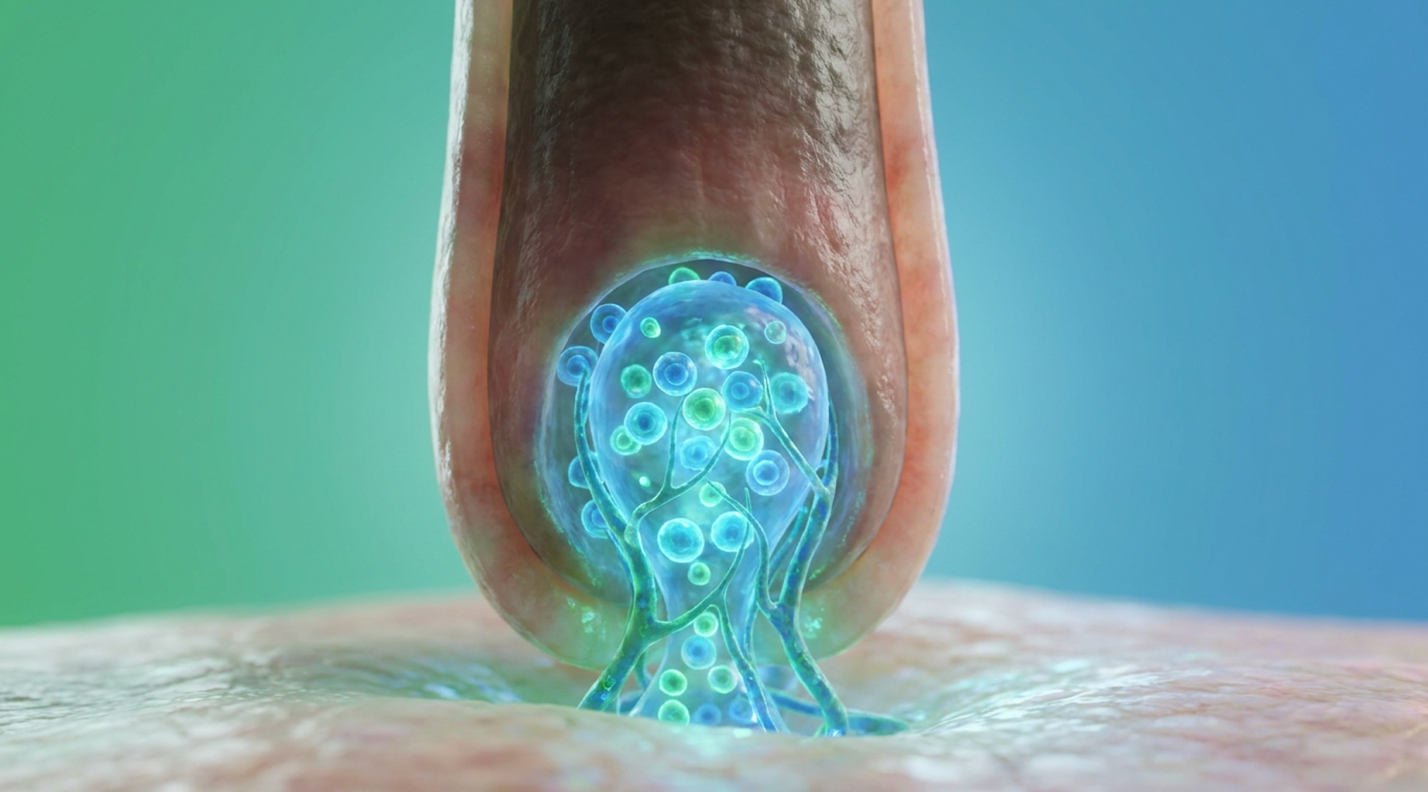
For patients navigating advanced hair loss management, isolated medical therapies often plateau. Minoxidil and finasteride remain the undisputed foundation of androgenetic alopecia treatment. But what happens when the results stall? Clinical reviews of patient case studies indicate that stopping medical therapy leads to rapid regression, yet pushing the same stagnant protocol yields nothing but frustration.
While the internet is flooded with predatory clinics touting standalone “miracle” stem cell cures, the clinical reality is far more nuanced. Treating stem cells as a permanent replacement for DHT blockers often results in severe clinical disappointment. Instead, integrating regenerative interventions provides a targeted mechanism for stalling follicular senescence without compounding systemic side effects.
This clinical guide breaks down how highly effective combination therapy for hair loss sequentially integrates derived stem cells, traditional medications, and distinct pathways for finasteride-intolerant patients. We analyze the exact biological mechanisms, current 2026 clinical efficacy data, and present a strict 12-month maintenance protocol based on rigorous regenerative medicine standards.
Effective combination therapy for hair loss strategically integrates derived stem cells with vasodilators (minoxidil) and DHT blockers (finasteride) to support existing follicles rather than generate new ones.
Regenerative hair loss treatment through stem cell therapy relies on paracrine signaling to rescue miniaturized follicles, not the de novo creation of new hair structures. When integrated into combination therapy, cellular derivatives enhance the microvascular environment while standard medications manage systemic androgen levels. The synergy between these modalities is what actually moves the needle for patients suffering from aggressive thinning, addressing both the vascular starvation and hormonal attacks simultaneously.
Let’s clear up the biggest misconception in regenerative medicine right now. Stem cells do not resurrect dead hair follicles. They just don’t.
Derived stem cells multipotent cells isolated via micro-biopsy from your scalp skin or abdominal adipose tissue are extracted, centrifuged to isolate the regenerative payload, and injected back into thinning areas. In modern clinical practice, there are two primary extraction pathways. The first utilizes Adipose-Derived Stem Cells (ADSCs) harvested through a minor abdominal liposuction. The second, increasingly popular pathway is the Rigenera protocol, which isolates Human Follicle Stem Cells (HFSCs) by taking tiny 2.5mm punch biopsies directly from the DHT-resistant occipital scalp. Both methods process the harvested tissue through an FDA-cleared centrifuge to isolate the stromal vascular fraction (SVF) a dense liquid suspension containing highly concentrated cellular signaling agents.
Once introduced to the scalp, these mesenchymal stem cells initiate a massive paracrine effect. They actively detect the hypoxic, androgen-ravaged environment of the miniaturized follicle. In response, they secrete large volumes of vascular endothelial growth factor (VEGF) and fibroblast growth factor (FGF), which directly target the bulge region of the hair follicle.
The biological cascade here is highly specific. VEGF stimulates angiogenesis literally building new micro-capillary networks to feed the starving dermal papilla, reversing the vascular strangulation caused by DHT. Simultaneously, FGF pushes the quiescent dermal fibroblasts out of the telogen (resting) phase and forces them into the anagen (growth) phase. essentially waking up dormant, miniaturized hair follicles that are still alive but failing to produce terminal hairs. Derived stem cells increase vascular endothelial growth factors by up to 30% a critical biological boost for nourishing existing miniaturized follicles rather than generating new ones.
This data fundamentally shifts how we view the procedure. If an area of your scalp is completely bald and slick, the follicular structures have likely fibrosed and died. No amount of cellular signaling will grow hair in a biological graveyard. Without a living dermal papilla, this signaling cascade has no receptor to bind to. It just washes over dead tissue.
Mesenchymal stem cells require a living, albeit struggling, host follicle to stimulate. Clinical evidence indicates that the primary mechanism of paracrine signaling in hair follicles revolves around reversing miniaturization and thickening the hair shaft caliber, not generating new follicular units from scratch. The extracellular matrix remodeling provided by the cells optimizes the local tissue environment, expanding the dermal papilla. However, it cannot halt the ongoing systemic androgenic attacks on its own, necessitating a rigorously combined medical protocol.
This brings us to The Regenerative Tri-Therapy Protocol a sequenced clinical pathway combining regenerative cell injections, continuous vasodilation, and systemic DHT blocking. You cannot just inject stem cells and walk away.
Research published in leading dermatology journals highlights the synergistic effects of vasodilators and cellular therapies, proving that independent treatments yield inferior long-term stabilization. The protocol demands precise pharmacological timing. Should you pause minoxidil before stem cell injections? Yes. Clinical guidelines strictly dictate stopping topical minoxidil 48 hours pre-procedure. The alcohol and propylene glycol base in topical solutions can severely irritate the fresh micro-puncture sites, triggering unwanted inflammation that might compromise stem cell survival and integration.
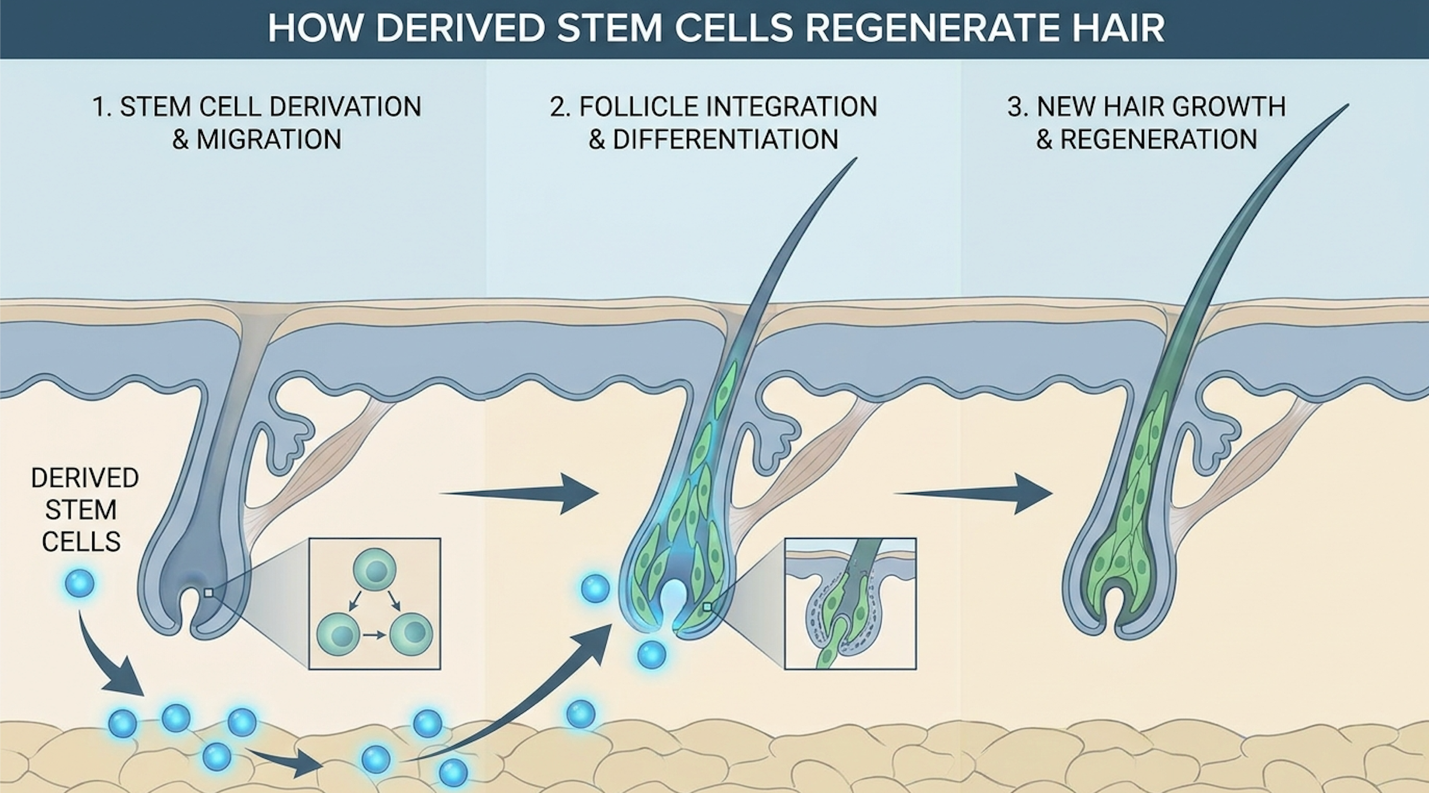
What about finasteride? Must it be stopped? Absolutely not : Finasteride, an established Type II 5-alpha reductase inhibitor, is the biological shield that protects your investment. If you inject stem cells to repair the tissue niche but stop finasteride, dihydrotestosterone (DHT) will immediately resume its attack on the newly stimulated dermal papillae. The synergy here is strictly mechanical: Stem cells repair the vascular niche and increase local growth factors. Minoxidil forces continuous vasodilation, artificially prolonging the anagen (growth) phase of the hair cycle. Finasteride neutralizes the underlying DHT trigger that causes the miniaturization in the first place.
Clinical consensus dictates that relying solely on cellular injections without a pharmacological backbone is a costly medical error. This tri-therapy approach is the undisputed best combination treatment for hair loss currently available, creating a comprehensive defense mechanism. However, the standard protocol relies heavily on finasteride, which presents a biological roadblock for specific patient demographics who cannot tolerate systemic androgen suppression.
Not everyone can tolerate systemic DHT blockers. Post-finasteride syndrome, while statistically rare, is a devastating reality for a subset of men who experience prolonged neurological and sexual side effects. Furthermore, women dealing with female pattern hair loss are often contraindicated for systemic 5-alpha reductase inhibitors entirely due to severe hormonal disruption risks and teratogenic properties.
So, what is the viable alternative to finasteride within a combination framework?
For these patients, clinicians strip the protocol back and rebuild it using a modified cellular approach. A targeted female pattern hair loss treatment relies heavily on stem cell therapy for deep tissue regeneration, paired directly with oral or topical minoxidil. Oral minoxidil at low doses (typically 1.25mg to 2.5mg for women) forces robust anagen phase retention. To replace the DHT-blocking capability of finasteride, clinicians often integrate non-steroidal antiandrogens like topical spironolactone, which acts as a localized competitive antagonist at the androgen receptor or adjuvant treatments like low-level laser therapy (LLLT) operating at the 650nm wavelength for photobiomodulation.
Pairing stem cell therapy directly with minoxidil effectively offloads the heavy lifting. Recent clinical studies on female pattern hair loss confirm the efficacy of mesenchymal stem cells in finasteride-contraindicated patients, showing an average 18% increase in hair caliber when combined with topical antiandrogens. Because you lack the systemic shield of a potent DHT blocker, the biological half-life of your results is shorter. Consequently, the frequency of stem cell maintenance boosters may need to shift from every 18 months to a tighter 8 to 12-month cadence to sustain the vascular support.
| 📌 If you’re interested in whether a second dose can extend the benefits of the first, we have an interesting article that discusses why double-dose UC-MSC therapy may offer greater benefits than a single dose, which you can read via the internal link. |
Analyzing the latest research on stem cell therapy for hair growth reveals a stark contrast between marketing claims and clinical reality. When patients desperately ask, “does stem cell hair restoration work?“, the evidence confirms efficacy solely for increasing density in existing miniaturized hairs, requiring disciplined integration with medical management to sustain long-term outcomes (WHO International Clinical Trials Registry Platform).
Let’s look at the hard data regarding how efficacy is actually measured in clinical settings.
In rigorous, double-blind, placebo-controlled trials tracking autologous micrografting over 12 months, researchers do not rely on subjective patient photos. Instead, they utilize digital phototrichograms to measure two explicit primary endpoints: hair density (measured in hairs/cm²) and hair shaft diameter (measured in µm). A comprehensive recent clinical review of autologous micrografting showed a 22% to 29% increase in hair density among Norwood 3 patients at the six-month mark. The trichoscopic evaluations consistently demonstrate a marked transition of fine vellus hairs into thicker, pigmented terminal hairs.
Demographic variance plays a massive role in these outcomes. Clinical data from 2026 indicates that patients suffering from diffuse vertex thinning (thinning at the crown) exhibit a far more robust vascular response to stem cell injections than those dealing with heavy frontal hairline recession. The frontal temporal zones often fibrose faster, rendering the follicles completely inactive and immune to paracrine signaling.
But there is a massive legal and biological caveat here.
Clinical trials show a 29% density increase at six months meaning patients must maintain DHT blockers to secure these vulnerable new cellular gains. When a clinic claims to offer an “FDA approved stem cell hair loss treatment,” they are deliberately playing semantics with federal law.
The US Food and Drug Administration (FDA) categorizes these treatments strictly based on their processing methods and intended use. The regulatory agency clears the devices (the centrifuges and micro-blades) used to separate the tissue. They do not, however, approve the procedure itself as a verified cure for androgenetic alopecia.
Under current FDA regulatory frameworks, autologous cellular treatments are classified under Section 361 as HCT/Ps (Human Cells, Tissues, and Cellular and Tissue-Based Products). To legally qualify for Section 361, the harvested cells must undergo “minimal manipulation” and be intended for “homologous use” (performing the same basic function in the recipient as in the donor). This means the clinic can legally extract your tissue, spin it in a centrifuge, and re-inject it on the exact same day.
However, if a clinic claims to take your stem cells, send them to a lab, culture them, and multiply them for weeks before injecting them back into your scalp, they are aggressively manipulating the cells. This immediately pushes the treatment into Section 351 classification, designating it as a biological drug. Section 351 drugs require a massive Investigational New Drug (IND) application and multi-phase clinical trials. Understanding this regulatory nuance protects you from being scammed by medi-spas promising guaranteed, lab-grown cures that are likely operating in violation of federal law.
Stem cell therapy is not a one-and-done miracle. It is a biological catalyst that requires a strict, chronically maintained hair loss treatment plan.
Here is what the 12-month maintenance cycle actually looks like in rigorous clinical practice:
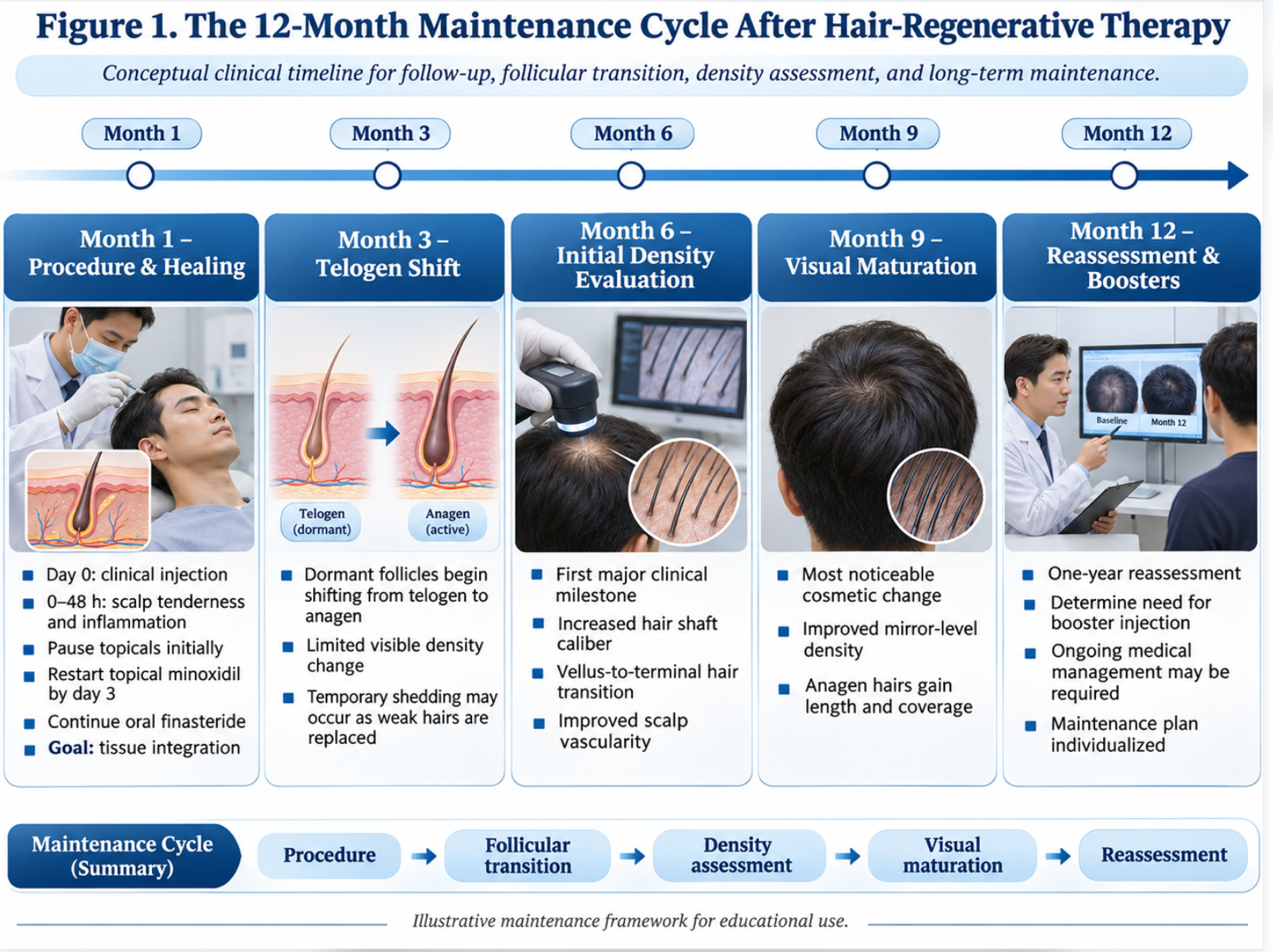
Patients constantly ask: what happens if you stop minoxidil after stem cell therapy?
The answer is brutal. The prolonged anagen phase artificially supported by the minoxidil completely collapses. The newly fortified hairs, suddenly stripped of their vascular support and potassium channel opening, crash simultaneously into telogen effluvium. You will experience a massive, terrifying shed within four to eight weeks, potentially wiping out all the costly gains achieved through the cellular injections.
For patients unwilling to commit to continuous medical maintenance, or those completely devoid of active follicles upon initial evaluation, the clinical calculus shifts heavily toward surgical interventions.
When evaluating stem cell hair transplant vs fue, the fundamental distinction lies in tissue availability. While traditional hair transplant procedures surgically relocate DHT-resistant follicular units to barren scalp areas, regenerative therapies require an existing, living follicular structure to rescue. This biological absolute dictates the entirely different candidate profiles for each intervention.
Follicular Unit Extraction (FUE) is a highly invasive microsurgical grafting technique that operates on a very simple premise: supply and demand. Using titanium micro-punches (typically ranging from 0.75mm to 0.9mm in diameter), the surgeon extracts terminal, DHT-resistant hairs from the safe donor area (the occipital region at the back of your head). These grafts are physically implanted into microscopic recipient sites created at the receded hairline or slick bald crown. FUE physically guarantees the placement of hair in areas where none currently exists.
Stem cell injections do no such thing. They rely entirely on the biological regeneration of what is already present beneath the skin.
Surgical FUE extracts over 2,000 grafts to fill barren zones whereas cellular therapy relies entirely on reviving the thousands of dormant structures already present. If you inject highly concentrated growth factors into a slick bald temple where the skin has become shiny and fibrosed, you are literally throwing your money away. Dermatological consensus highlights the absolute limitations of cellular therapy in glabrous (bald) scalp tissue.
Beyond mechanism, the practical constraints of FUE revolve around “donor capacity.” A human male only possesses roughly 6,000 to 8,000 viable lifetime grafts in their safe donor zone. Furthermore, during extraction, surgeons battle graft transection rates (accidental damage to the follicle during punch removal). Because donor hair is a finite resource, deploying stem cells early to thicken existing hair acts as a critical delay tactic, preserving those precious surgical grafts for later in life when baldness inevitably progresses.
To make this clinical distinction hyper-clear, we map the variables:
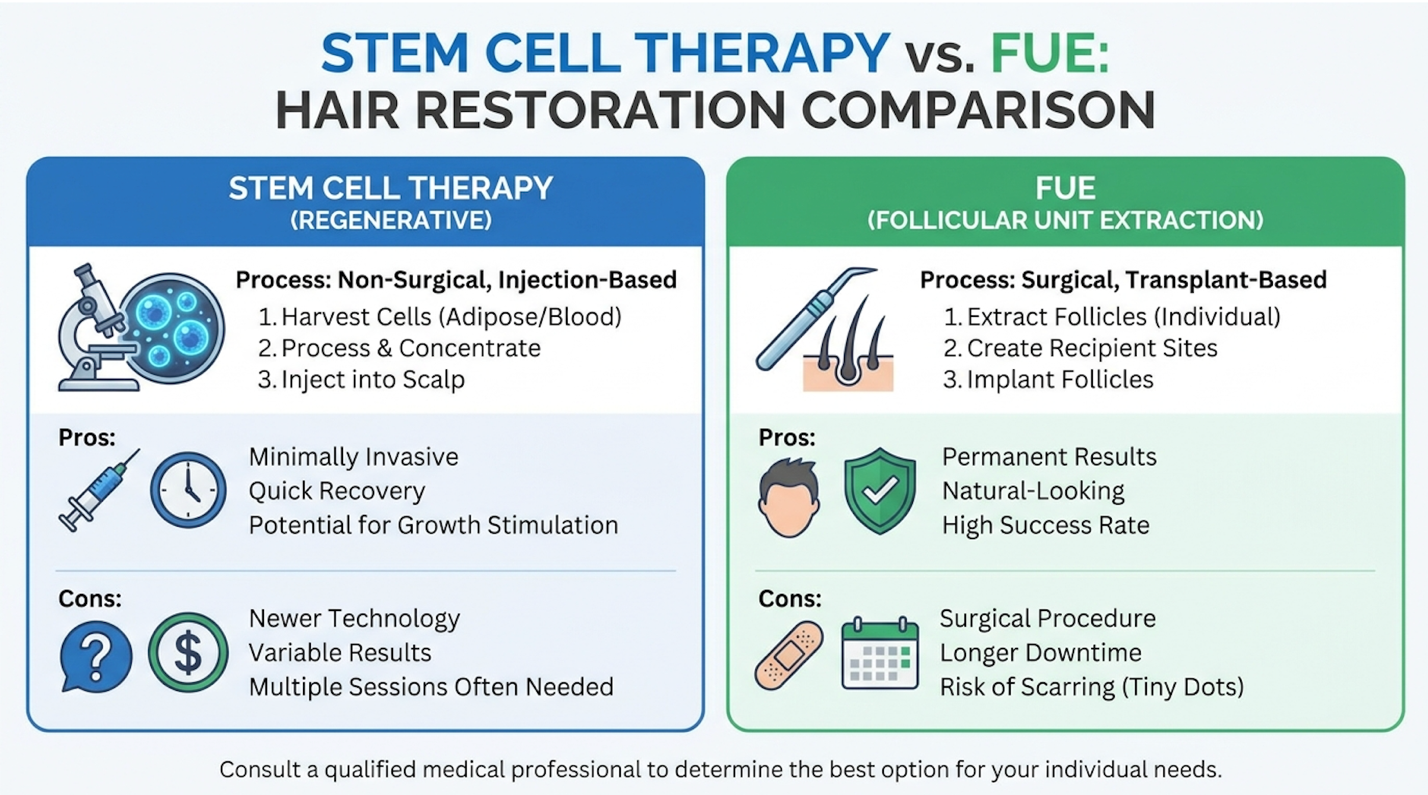
These mechanical differences translate directly into strict eligibility criteria based on the patient’s exact stage of hair loss.
Who actually benefits from what?
If you are a Norwood 2 or Norwood 3 on the male hair loss scale meaning you have diffuse thinning through the mid-scalp and a receding hairline, but no completely bald patches combination therapy is the best treatment for early hair thinning. Deploying stem cells alongside minoxidil and finasteride maximizes your native hair preservation. It pushes off the need for surgical trauma, donor area depletion, and heavy financial investment for years, if not decades. Similarly, women presenting with Ludwig Stage I or II diffuse thinning are ideal candidates for cellular rescue.
Conversely, if you are a Norwood 4 or above, featuring a completely bald crown or a heavily receded frontal band with shiny skin, you are an FUE candidate. The follicles in those slick zones are fibrosed. Dead. Stem cells will fail completely. Clinical staging guidelines explicitly outline intervention protocols based on the Norwood-Hamilton classification, prioritizing surgery for advanced staging.
However, there is an advanced clinical edge case where these two modalities cross paths: Adjuvant therapy. What if you’re already scheduled for an FUE transplant? Many top-tier regenerative clinics now utilize stem cell injections during the surgical FUE process. By injecting the stromal vascular fraction directly into the recipient site just prior to implanting the new grafts, the localized burst of VEGF accelerates angiogenesis. This rapidly builds a new blood supply for the freshly transplanted hairs, reducing ischemic reperfusion injury (tissue damage from lack of blood flow) and significantly boosting overall graft survival rates.
A frequent, highly dangerous question arises during surgical consultations: can stem cell therapy replace finasteride after an FUE transplant?
Absolutely not. Even post-FUE, the native hairs surrounding your newly implanted grafts are still hyper-susceptible to DHT. If you get a transplant, utilize stem cell therapy to boost the wound healing, but abandon your finasteride prescription, you will continue to lose your native hair behind the transplant zone. You will eventually be left with a bizarre, isolated island of transplanted hair surrounded by a receding tide of baldness. While stem cells improve the microvascular environment, they do not block systemic DHT. Continuing a DHT blocker is non-negotiable to prevent native shock loss.
Once clinical eligibility is firmly established between surgical and regenerative routes, patients must navigate the practical logistics of undergoing cellular treatment.
Executing a combination protocol requires precise logistical planning, from budgeting for the stem cell hair treatment cost to scheduling clinical visits. Unlike invasive surgeries, stem cell hair restoration recovery time is minimal, but the long-term success relies entirely on adherence to a customized hair loss treatment plan integrating daily medical maintenance. Securing a proper hair loss maintenance treatment strategy early is what prevents expensive clinical relapses down the road.
So, what actually happens on the day of the procedure?
You walk into the clinic, and tumescent local anesthesia is administered to the donor site. For hair loss treatments, this is usually the nape of the neck (for micro-grafting) or a small abdominal area (if using adipose-derived tissue). The clinician extracts a small micro-biopsy of tissue. This sample is placed into an FDA-cleared closed-system centrifuge spinning at roughly 3,000 rpm for several minutes. This specific speed isolates the mesenchymal stem cells and growth factors from the surrounding fat and red blood cells.
Within the same hour, this concentrated regenerative payload is drawn into syringes and micro-injected across your thinning areas. Standard procedural protocols dictate highly specific post-operative care and downtime guidelines to ensure maximum cellular survival.
The benefits and recovery of derived stem cells are overwhelmingly positive regarding lifestyle downtime. You will experience mild to moderate scalp tenderness for 24 to 48 hours. During this critical window, you cannot wash your scalp with harsh shampoos, use chemical styling products, or engage in heavy, sweat-inducing cardio, as increased blood pressure and perspiration can expel the injected fluid. By day three, you are clear to resume your topical minoxidil and return to normal life.
While the physical downtime is negligible, the long-term financial commitment requires careful evaluation.
Let’s talk about the money. Stem cell therapy is not cheap, and it is almost never covered by insurance because medical billing codes classify it as a cosmetic, investigational procedure.
Top-tier autologous treatments command a $5,000 average investment—making continuous medical maintenance non-negotiable to protect your financial and biological commitment. In the United States and the UK, the global average for a legitimate autologous stem cell session ranges from $3,000 to $8,000. This massive variance depends on the jurisdiction, the prestige of the medical provider, and the specific cell processing technology utilized (adipose vs. scalp punch).
But that is just the procedural cost. When budgeting for your stem cell hair treatment cost, you must calculate the Total Cost of Ownership (TCO) for a multi-year period. Adding the compounding costs of high-quality topical minoxidil (approximately $150-$250/year), prescription finasteride or dutasteride ($100-$300/year), and specialized shampoos or LLLT devices, your annual maintenance budget requires serious foresight.
| 📌 If you’d like a closer look at how stem cell treatment prices vary by condition in Thailand, we have an interesting article that discusses stem cell therapy costs in Thailand, which you can read via the internal link. |
To consolidate these logistics and biological realities, an overarching architectural plan dictates how these treatments deploy across varying severities.
We have to address the dark side of this industry. Because stem cell therapy exists in a complex regulatory gray area, the market is completely saturated with bad actors making impossible claims.
The biggest pitfall is falling for the “guaranteed cure” pitch. Regulatory agency warnings continually highlight the severe risks of unproven regenerative therapies marketed by unscrupulous medi-spas. If a clinic promises to regrow a full head of hair on a completely slick, bald scalp using only injections, walk out immediately. It is biologically impossible.
Secondly, beware of “off-the-shelf” stem cell vials. Legitimate autologous therapy requires extracting your own tissue on the exact same day. Injecting poorly regulated, mass-produced exosomes or allogeneic (donor) stem cells carries massive risks of contamination, immune rejection, or, frankly, paying thousands of dollars to inject inert dead fluid that does absolutely nothing for your follicles.
Sometimes, cellular therapy is simply the wrong move for your specific presentation.
If you are experiencing aggressive, rapid miniaturization where you are losing ground by the week, a stem cell injection will be like throwing a cup of water on a house fire. In these acute phases, you need an aggressive alternative to finasteride if it’s failing like oral dutasteride to halt the DHT cascade instantly. Standalone systemic medical therapy must take absolute precedence over cellular boosters during rapid flare-ups to stop the bleeding. And as stated previously, if the follicles are deeply fibrosed and dead, FUE is the only viable surgical alternative capable of restoring density.
Do not let a commissioned sales consultant diagnose your hair loss over a Zoom call.
You must seek a qualified regenerative medicine specialist or a board-certified dermatologist for this level of intervention. A legitimate expert will require comprehensive medical records, high-magnification scalp imaging (trichoscopy) to verify follicular life, and often a hormone blood panel prior to making any treatment recommendation. Clinics that approve all patients instantly over the phone are running a procedural mill, not a medical practice. Demand objective diagnostic data before letting anyone extract or inject tissue into your scalp.
| 📌 If you’re planning treatment in Thailand and want a practical checklist for choosing a safe clinic, we have an interesting article that discusses whether stem cell therapy is safe in Thailand, which you can read via the internal link. |
Stem cell therapy cannot entirely replace finasteride for patients suffering from active androgenetic alopecia. While stem cells improve the microvascular environment and thicken existing follicles, they do not block the systemic production of dihydrotestosterone (DHT). Continuing a DHT blocker ensures the newly fortified follicles are not immediately subjected to further miniaturization. Patients who cannot tolerate finasteride should consult a specialist for alternative non-steroidal antiandrogens.
You can and should continue using minoxidil after stem cell hair treatment to maximize follicular retention. Most clinical protocols recommend pausing topical applications for 24 to 48 hours post-injection to prevent scalp irritation at the puncture sites. Once the micro-wounds heal, resuming minoxidil acts synergistically with the cellular therapy by maintaining vasodilation and prolonging the anagen growth phase.
You should not stop finasteride before undergoing stem cell therapy unless explicitly directed by your physician. Finasteride does not negatively interact with the extraction or injection of autologous cellular derivatives. Maintaining consistent systemic DHT suppression is critical to preventing shock loss and stabilizing the follicular environment prior to regenerative stimulation. Pausing medication unnecessarily risks triggering telogen effluvium and compromising the procedure’s overall efficacy.
The best combination treatment for hair loss integrates daily medical management with periodic regenerative interventions. A highly effective clinical protocol combines an oral 5-alpha reductase inhibitor (like finasteride) to halt DHT, a vasodilator (minoxidil) to stimulate blood flow, and annual autologous stem cell injections to repair the dermal papilla tissue niche. Clinical evidence indicates this tri-therapy approach stabilizes loss better than monotherapy. Optimal combinations vary strictly based on patient gender, staging on the Norwood scale, and medication tolerance.
You maintain results after stem cell hair treatment by adhering to a strict, continuous medical regimen. Because cellular therapy does not alter your genetic predisposition to hair loss, integrating daily minoxidil and an appropriate DHT blocker is essential to protect the stimulated follicles. Clinical observations suggest scheduling follow-up assessments at 6 and 12 months. Additional booster injections may be required annually depending on individual progression rates.
If minoxidil is not working, the next step involves a comprehensive medical reassessment to target the biological shortcomings. Clinicians often escalate treatment by introducing oral finasteride or dutasteride to address aggressive DHT sensitivity that minoxidil cannot counteract. Alternatively, integrating regenerative approaches like stem cell therapy can revitalize dormant follicles that no longer respond solely to topical vasodilation. A scalp biopsy and hormone blood panel are strongly recommended before fundamentally altering your daily protocols. Patients should never compound medications without clinical guidance.
For men and women navigating advanced androgenetic alopecia, combination therapy for hair loss offers the highest probability of preserving native density. Clinical evidence confirms that while derived stem cells cannot generate new follicles on a bald scalp, they significantly thicken existing miniaturized hairs when utilized correctly (Journal of Clinical Investigation). The most effective approach integrates this biological enhancement with traditional medical management, treating hair loss as a multi-front biological war rather than a single skirmish.
Sustaining these improvements relies entirely on The Regenerative Tri-Therapy Protocol. By sequencing cellular injections with continuous vasodilation (minoxidil) and targeted DHT suppression (finasteride), patients can address the structural, vascular, and hormonal variables of hair loss simultaneously, avoiding the pitfalls and rapid regression rates associated with isolated, standalone treatments.
Determining your precise candidate profile requires objective clinical data, not guesswork. Initiate a free, comprehensive hair assessment via WhatsApp to evaluate your scalp photos, current medication tolerance, and blood work, allowing our medical specialists to architect a biologically sound 12-month maintenance plan tailored to your exact presentation.