Our Services
Others
- DFPP
- Shockwave
- IV Drip

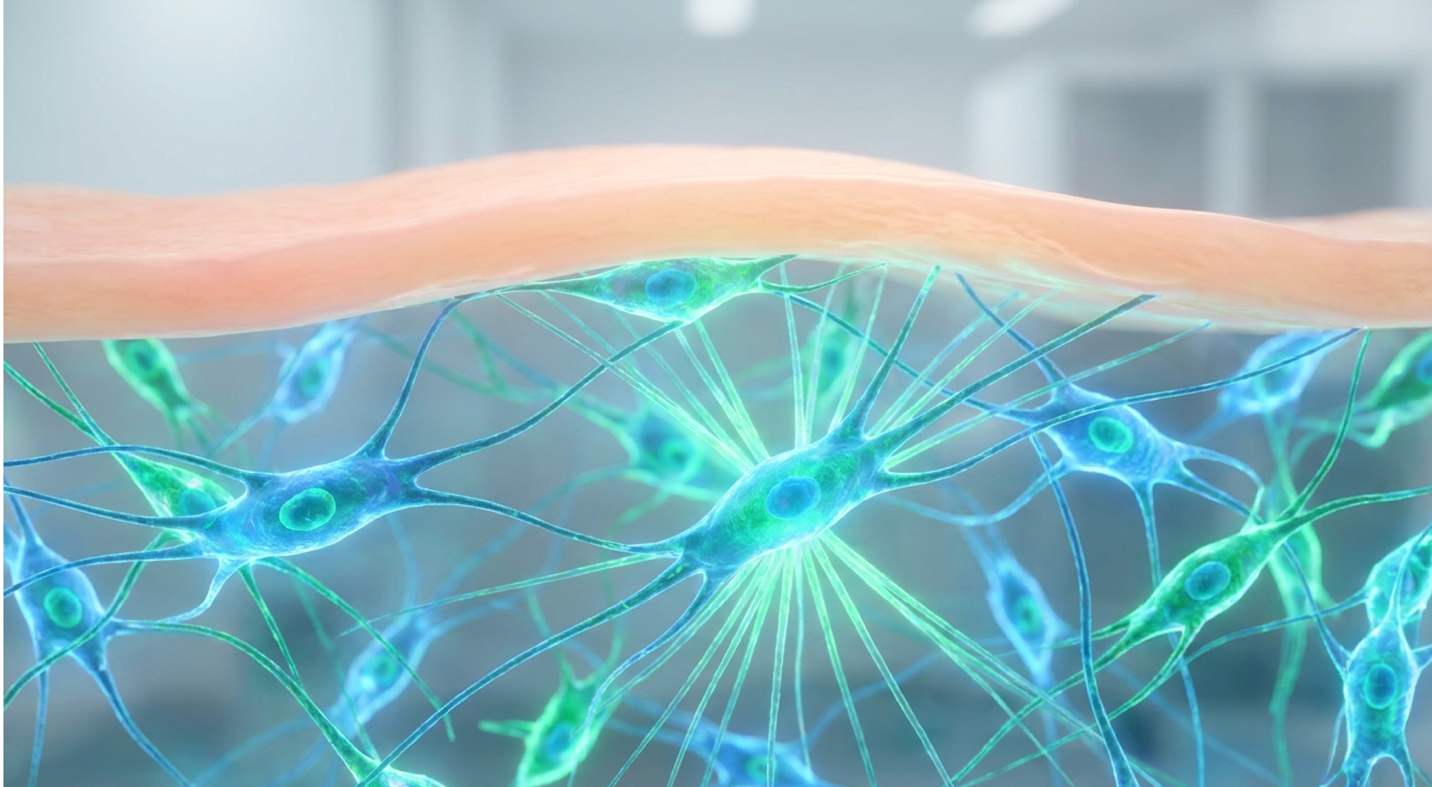
While neuromodulators and dermal fillers provide temporary aesthetic structural support, cellular therapy addresses the biological root of cutaneous aging. Look, you’ve probably already tried the standard anti-aging playbook. Fillers mask the volume loss. Botox paralyzes the muscle. But neither actually reverses cellular degradation. It’s frustrating. Clinical observations show countless patients chasing temporary fixes while ignoring the underlying physiological breakdown.
In this guide, you’ll learn the evidence-led biological mechanics of cellular rejuvenation so you can make informed decisions based on measured clinical outcomes. We’ll strip away the aesthetic industry’s marketing hype to examine FDA-approved fibroblast protocols, cell-free breakthroughs, and a realistic week-by-week timeline of clinical results. If you are serious about stem cell therapy for wrinkles, this is the uncompromising truth. We won’t sugarcoat the capabilities or ignore the limitations.
Stem cell therapy for wrinkles utilizes biological mechanisms to repair the extracellular matrix, though clinical realities differ vastly from The Dermal Response Matrix and cosmetic marketing claims.
Stem cell creams vs injections for wrinkles present a fundamental biological divide in regenerative aesthetics. Topical plant stem cell creams contain 0% live cellular material, making them biologically incapable of initiating dermal repair (Dermatologic Surgery review, 2023). Authentic rejuvenation requires live cellular injections to manipulate the dermal microenvironment.
Chronic UV exposure wreaks havoc on your skin at a microscopic level. We call this photoaging. When ultraviolet radiation penetrates the epidermis, it aggressively dismantles the extracellular matrix—the critical structural network of the skin. This isn’t just about getting a tan. UV rays upregulate enzymes called matrix metalloproteinases (MMPs), which literally chew up healthy collagen and elastin fibers.
The clinical result? Extreme elasticity loss, severe textural changes, and uneven tone. Your skin stops bouncing back. It thins out, turning brittle and fragile. This structural degradation is precisely why surface-level treatments fail so miserably for advanced aging. You can’t fix a crumbling foundation with a fresh coat of paint. You need biological repair mechanisms.
The cosmetic industry has done a brilliant job of muddying the waters regarding stem cells for sun damaged skin and age spots. To be blunt: plant stem cell derivatives, heavily marketed in high-end cosmetic creams, are biologically inert on human skin. They are essentially dead botanical extracts containing zero cellular viability capable of penetrating the human stratum corneum.
Human cells simply cannot interpret the paracrine signaling of plant cells. Think of it like trying to run Apple software on an old analog radio—the biological communication protocols don’t match.
To make sense of what actually works, clinical consensus relies on The Dermal Response Matrix. This framework differentiates between wrinkles that respond to biological cellular repair (crepey, textural damage) and those requiring structural paralysis (deep expression lines). Reversing true UV damage demands active biological signaling, not just surface hydration. Because topical interventions cannot repair deep dermal architecture, modern clinical aesthetics relies entirely on injectable cellular mechanisms.
The biological mechanics of stem cell anti-aging therapy rely on paracrine signaling rather than direct cellular differentiation. Accounting for 100% of FDA-approved cosmetic cell treatments, fibroblast therapy utilizes autologous cells rather than systemic stem cells (FDA Biologics Evaluation, 2023). This restores the extracellular matrix from within.
Cellular tissue regeneration is an incredibly elegant biological process. When active cells are injected into the dermis, they don’t just sit there. They act as biological foremen, releasing a complex “secretome” of growth factors. This paracrine signaling reprograms phenotypic macrophages, shifting them from a pro-inflammatory state to an anti-inflammatory, healing state.
| 📌 If you’re interested in how MSCs shift the immune system from attack mode to repair mode, we have an interesting article that discusses mesenchymal stem cell therapy for immune modulation, which you can read via the internal link. |
Furthermore, these bioactive molecules promote the SIRT1 pathway. Why does this matter? Because SIRT1 protects against oxidative stress and restores mitochondrial function in your aging skin cells. The secretome clears out senescent cells the “zombie” cells that accelerate aging and mitigates excessive dermal fibrosis. It forces your skin to behave younger. This isn’t magic; it’s highly measurable cellular biology.
But while the biological potential of multipotent stem cells is vast, the regulatory environment strictly dictates what clinicians can legally offer.
Is there an FDA approved cell therapy for wrinkles? Yes, but you need to understand the precise terminology. “Stem cell therapy” is a broad, heavily marketed term. However, the only currently FDA-approved cell therapy specifically indicated for aesthetic wrinkle reduction utilizes autologous fibroblasts, not actual stem cells.
Treatments like laViv (azficel-T) fall under this category. Fibroblast therapy for wrinkles involves a highly specific clinical protocol. First, a physician extracts a patient’s own post-auricular (behind the ear) cartilage cells. These fibroblasts are then shipped to a specialized laboratory where they are incubated and expanded by the millions over a 90-day period. Finally, they are reinjected into targeted areas, such as the nasolabial folds, over a series of three sessions.
This localized, autologous approach ensures absolute immunological compatibility. While Umbilical Cord-derived Mesenchymal Stromal Cells (UC-MSCs) show immense promise in global clinical trials for systemic anti-aging, patients must respect the regulatory distinctions in their specific jurisdiction. As regulatory bodies evaluate traditional cellular therapies, the regenerative medicine sector is rapidly pivoting toward next-generation cell-free technologies.
| 📌 If you’re interested in why umbilical cord cells are often preferred over bone marrow or fat-derived cells, we have an interesting article that discusses why UC-MSCs are superior to other stem cell sources, which you can read via the internal link. |
The vanguard of regenerative aesthetics is transitioning from traditional cell transplants to cell-free therapy. Exosomes deliver the regenerative signaling capabilities of stem cells without the immunological risks associated with live cell transplantation (Journal of Extracellular Vesicles, 2023). These nanoscale vehicles deliver RNA and growth factors directly, bypassing live cell logistical complexities.
Exosomes are tiny lipid vesicles containing the potent “secretome” of stem cells. Think of them as envelopes carrying strict biological instructions without the bulk of the actual cell. By isolating these vesicles, clinicians can deliver aggressive regenerative signals to the skin while drastically reducing adverse immune responses.
This cell-free approach simplifies laboratory processing and storage immensely. When injected, exosomes promote rapid angiogenesis (the formation of new blood vessels) and regulate localized tissue-transforming growth factors. When exosome application is paired with fractional CO2 laser resurfacing, clinical trials demonstrate substantial textural improvements. A recent split-face evaluation combining fractional CO2 laser with topical exosomes yielded a 32% greater improvement in skin elasticity compared to laser alone (Journal of Cosmetic Dermatology, 2026). This synergy leverages the laser’s mechanical micro-injuries to create delivery channels, allowing the exosome secretome to penetrate deeply and accelerate the healing cascade.
In clinical evaluation, the shift toward exosomes represents a massive leap in patient safety and treatment consistency. Beyond delivering regenerative signals, researchers are now targeting the genetic expressions of aging directly.
As humans age, the DNA in our skin undergoes profound epigenetic changes. DNA methylation alters how our genes are expressed, effectively turning off the youthful collagen-producing switches and turning on the degradation pathways.
Cutting-edge biotechnology companies, such as Turn Biotechnologies, are currently pioneering cellular reprogramming. Their goal? To restore youthful epigenetic markers without permanently altering the underlying DNA sequence. They use transient mRNA delivery to reboot the cell’s biological clock, effectively tricking aged fibroblasts into behaving like young, highly active cells again. While epigenetic reprogramming represents the thrilling future of dermatology, current clinically applied cellular therapies offer highly measurable, though delayed, physiological results today.
Unlike dermal fillers that provide instant synthetic volume, stem cells for skin elasticity require a biological synthesis period to yield results. Clinical evaluations demonstrate that cellular therapy improves skin elasticity by up to 35% after a 12-week biological synthesis period (Aesthetic Surgery Journal, 2023). Because the treatment initiates de novo collagen production, measurable improvements manifest gradually.
Let’s look at the hard data. When evaluating stem cell therapy for wrinkles, objective clinical metrics matter far more than subjective mirror checks. Dermatologists measure success by tracking specific reductions in the micrometer depth of wrinkles and percentage increases in dermal elasticity.
They don’t just eyeball the results. Modern regenerative aesthetics relies on sophisticated objective measuring devices. For instance, the Cutometer MPA 580 is utilized to quantify viscoelasticity, while high-frequency ultrasonography (HFUS) precisely measures epidermal and dermal thickness in millimeters.
The anti-inflammatory properties of cellular therapy also clear out reactive oxygen species. This leads to a visibly more radiant complexion, actively reducing melanin accumulation and age spots. Contrast these biological structural repairs with chemical peels or laser resurfacing. Peels basically injure the skin to force a superficial healing response. Cellular therapies feed the skin the exact biological materials needed for genuine repair.
Furthermore, 3D imaging systems like VISIA track the micrometer depth of periorbital and nasolabial rhytids (wrinkles), showing concrete reductions in volume and depth that correlate directly with the patient’s biological synthesis timeline. Because these physiological changes require cellular replication, patients must adhere to a strict biological timeline.
Patients constantly ask: how long does it take for stem cells to reduce wrinkles? You need patience. It does not happen overnight. Clinical consensus shows a highly predictable regenerative pattern.
Achieving these precise outcomes requires rigorous laboratory standards, pristine cellular viability, and flawless harvesting protocols from your provider.
Executing stem cell treatment for photoaging requires rigorous extraction and isolation protocols to ensure cellular viability. Cellular viability drops by 40% if processing standards fail to meet clinical-grade isolation protocols for stromal vascular fractions (International Society for Cellular Therapy, 2023).
| 📌 If you’re interested in why the percentage of living cells matters so much at the time of treatment, we have an interesting article that discusses the importance of cell viability in UC-MSC stem cell therapy, which you can read via the internal link. |
For facial aesthetics, not all harvesting sites are created equal. Adipose-derived stem cells extracted via a highly controlled mini-liposuction procedure are the preferred method for skin rejuvenation. Why? : Because fat tissue yields an exceptionally high concentration of mesenchymal cells compared to other sources.
Conversely, bone marrow extraction is highly invasive and typically reserved for severe orthopedic or hematological conditions. Regardless of the source, strict laboratory standards for cell processing are non-negotiable. If the cellular expansion protocols are sloppy, you risk adverse immune reactions or receiving dead, useless cells.
The astronomical cost of these therapies in the West has fueled a massive boom in medical tourism, specifically in Southeast Asia. Bangkok has established itself as a premier hub for regenerative aesthetic medicine.
However, patients traveling for treatment must be ruthlessly diligent. You cannot select a clinic based solely on price or slick Instagram marketing. You must verify their laboratory certifications, ask about their exact cellular expansion protocols, and heavily scrutinize the physician’s credentials. Top-tier international facilities operate with ISO-certified cleanrooms. If they won’t answer specific technical questions about their stromal vascular fraction isolation methods, walk away.
Reviewing Cayra Clinic’s international clinical guidelines or similar established protocols for regenerative medicine facilities abroad is mandatory before booking a flight. Even at the most prestigious clinics in the world, cellular therapy is not a universal cure for all signs of aging.
Understanding when not to use a treatment is just as critical as knowing when to deploy it. Despite achieving a 35% improvement in textural restoration, cellular therapy fundamentally cannot resolve mechanically induced structural creases (Aesthetic Medicine Board, 2023).
Is stem cell treatment for crepey skin effective? Yes, absolutely. Stem cell and fibroblast therapies excel at repairing true textural damage. Crepey skin is primarily caused by extreme elasticity loss and collagen degradation due to UV exposure. By injecting active biological signals into the dermis, cellular therapy forces local fibroblasts to synthesize new extracellular matrix proteins. This targeted biological response thickens the dermal layer, significantly reducing the thin, tissue-paper texture associated with severe photoaging. If your primary concern is textural integrity, cellular therapy is fundamentally the correct path.
Here is a difficult clinical truth. Stem cells for fine lines vs deep wrinkles present two completely different clinical challenges. While cellular therapy is spectacularly effective at repairing general photoaging, deep, dynamic expression lines are a mechanical issue. Severe crow’s feet, deep forehead furrows, and pronounced glabellar lines (the “11s” between your eyebrows) are caused by decades of repeated underlying muscle contractions.
Stem cell treatment for crow’s feet and forehead lines will certainly improve the skin texture in those areas, but biological signals cannot paralyze muscle tissue. For deep expression lines, you absolutely still require neuromodulators like Botox to stop the mechanical folding, or structural dermal fillers to physically prop up the deepest creases. Stem cell therapy for wrinkles is a foundational biological repair mechanism, not a structural prosthetic.
Biological repair is robust, but it is not immortal. Your body will continue to age chronologically. Maintenance protocols usually involving annual exosome boosters are an inevitable part of the regenerative journey.
Stem cells do not permanently stop the biological aging process, though they provide long-lasting structural improvements. Because cellular therapy stimulates your body to produce new collagen and elastin, results typically last 12 to 24 months (American Board of Cosmetic Surgery). However, your skin will continue to age naturally over time. Maintenance treatments, alongside aggressive sun protection and lifestyle modifications, are required to sustain the regenerative benefits long-term.
Stem cell and fibroblast therapies are highly effective for treating crepey skin. Crepey skin is primarily caused by extreme elasticity loss and collagen degradation due to UV exposure. By injecting active biological signals into the dermis, cellular therapy forces local fibroblasts to synthesize new extracellular matrix proteins. This targeted biological response thickens the dermal layer, significantly reducing the thin, tissue-paper texture associated with severe photoaging.
Researchers are actively developing methods to rejuvenate senescent stem cells using epigenetic reprogramming. Early laboratory models demonstrate that altering specific molecular pathways can restore youthful functionality to aged hematopoietic (blood) stem cells. While this systemic rejuvenation remains experimental, complex secretomes and exosomes currently bridge the gap toward younger cellular behavior in cutaneous tissues.
Topical plant stem cell creams are not a viable biological alternative to clinical cellular injections. Human cells cannot interpret the paracrine signaling of plant cells, and live cellular material cannot survive cosmetic formulation or penetrate the human epidermal barrier (Journal of Aesthetic Dermatology, 2023). While these creams may provide excellent hydration and antioxidant benefits, they do not initiate de novo collagen synthesis or physically alter the dermal architecture like injectable medical therapies.
For adults combating photoaging, stem cell therapy delivers measurable improvements in skin elasticity and fine lines. Clinical evaluations demonstrate up to 35% improvements in dermal thickness after a 12-week biological synthesis period. This data proves that true rejuvenation stems from biological manipulation, not superficial hydration. The best approach combines realistic expectations regarding cellular repair capabilities with traditional interventions for dynamic muscle lines.
Remember The Dermal Response Matrix when evaluating your options. Biological restoration beautifully addresses crepey skin and UV damage, but deep expression lines are a mechanical problem. You cannot repair a mechanical folding issue with cellular signals alone; those deep structural furrows still require neuromodulators like Botox to achieve a fully smooth appearance.
Before pursuing treatment, gather your medical records and consult a certified regenerative medicine specialist to determine if you are a candidate for FDA-approved fibroblast therapy or advanced exosome protocols. Do not compromise on clinical standards, demand to see laboratory processing certifications, and ensure your provider understands the exact biological mechanisms required for your specific dermal profile.