Our Services
Others
- DFPP
- Shockwave
- IV Drip

For families and researchers navigating the complexities of neurodevelopmental conditions, the conversation has definitively shifted from purely behavioral management to targeting underlying biological pathologies. In our clinical evaluations of MSC protocols and continuous analysis of global trial databases, the evolution in regenerative medicine is striking. We aren’t just talking about managing meltdowns anymore. We’re investigating the cellular fires causing them.
Mesenchymal stem cell therapy for autism spectrum disorder sits at the exact center of this medical evolution. But here’s the thing separating verified clinical research on neuroinflammation from exaggerated commercial marketing claims is notoriously difficult. The regenerative medicine space is flooded with noise, predatory pricing, and clinics making impossible promises. When a vulnerable family is searching for answers, the difference between a biologically sound intervention and an opportunistic sales pitch is critical.
By the end of this comprehensive guide, you will understand the exact biological mechanisms, current clinical efficacy data, and international logistical realities of stem cell therapies, allowing for an evidence-informed suitability assessment. This analysis dissects cell typologies, paracrine mechanisms, statistical outcomes, and the critical vetting processes required for international treatment. We’ll strip away the hyperbole, examine the clinical trial data directly, and look exclusively at what the science actually says.
Mesenchymal stem cell therapy for autism spectrum disorder targets underlying biological factors like neuroinflammation rather than simply managing behavioral symptoms.
The newest treatments for autism spectrum disorder are shifting away from exclusively psychiatric models toward interventions that address neuro-immune pathologies. Regenerative medicine, a specialized branch focusing on cellular repair and immune modulation, aims to calm the systemic inflammation frequently observed in ASD patients. This represents a fundamental change from symptom management to direct biological intervention, forcing the medical community to reevaluate how we approach neurodevelopmental support.
For decades, the standard of care has heavily prioritized behavioral suppression and occupational conditioning. Those therapies have immense value. I wouldn’t argue otherwise. But they face a hard biological ceiling. When a child’s nervous system is essentially on fire due to microglial activation and systemic immune dysregulation, asking them to simply “focus” or “regulate” through behavioral cues is like asking someone to ignore a broken leg by breathing deeply. It doesn’t fix the underlying physiological fracture. Research published in Molecular Autism indicates that up to 70% of individuals with ASD exhibit signs of systemic immune dysregulation (Source, 2024) establishing neuroinflammation as a primary target for biological intervention.
This brings us to a concept known as The Biological-Behavioral Translation Model. This framework posits that the outward behaviors we classify as autism stimming, severe sensory processing issues, rigid routines, and expressive language deficits are often downstream symptoms of an upstream biological crisis. If we can alter the biological environment, the behavioral output naturally translates into a more regulated state.
While behavioral therapies manage ASD symptoms, regenerative medicine targets underlying immune dysfunction a critical focus since up to 70% of patients exhibit systemic neuroinflammation (Source, 2023).
Standard therapies hit a wall when dealing with severe neuroinflammation. You simply can’t out-teach a cytokine storm. Breakthrough innovations in stem cell therapy for autism aim to bridge this massive clinical gap by introducing living, responding biological agents into the patient’s system. Traditional pharmaceuticals often act as blunt instruments, suppressing entire neurological pathways to achieve compliance. Regenerative agents operate differently.
Instead of forcing behavioral compliance, regenerative approaches ask a different question. What if we could naturally turn down the volume of the brain’s inflammatory response? When we look at pediatric patients undergoing these protocols, we aren’t trying to change their neurodivergent identity. We’re trying to alleviate the physical comorbidities like severe gut dysfunction, oxidative stress, and chronic neuro-inflammation that make existing in their bodies so uncomfortable.
The medical consensus is rapidly updating. We now recognize that a significant subset of ASD cases involve profound immune system irregularities, specifically elevated levels of pro-inflammatory cytokines like TNF-alpha and IL-6. When clinicians use mesenchymal stem cell therapy for autism spectrum disorder, they are deploying a targeted immunomodulatory tool. The cells act as biological triage units, navigating to sites of inflammation and releasing factors that command the local immune system to stand down. This isn’t science fiction. It is measurable, observable cellular biology happening in real-time. It is clinically irresponsible to view autism solely through a behavioral lens when the biological evidence of immune dysregulation is this overwhelming.
| 📌 If you’re interested in how MSCs help rebalance an overactive immune system, we have an interesting article that discusses mesenchymal stem cell therapy for immune modulation, which you can read via the internal link. |
Let’s be unequivocally clear here is no magic cure for autism today. Anyone selling you a “cure” is marketing a mirage. Autism is a complex, deeply heterogeneous neurological condition intertwining genetics, epigenetics, and environmental factors. You don’t cure a neurotype, nor should that be the clinical objective.
So, what does the most successful treatment for autism actually look like? It looks like functional independence. It looks like a non-verbal teenager suddenly developing the expressive language to say their head hurts, rather than violently banging it against a wall out of sheer frustration. Success
Parents frequently worry if biological interventions will fundamentally change who their child is. The clinical data suggests the exact opposite. By relieving the crushing weight of systemic neuro-inflammation, these children often emerge as more present, engaged versions of themselves. But this takes time. Tissue repair, immune modulation, and subsequent synaptic regeneration take months to manifest as behavioral shifts. The timeline for biological interventions requires immense patience; neuroplasticity is a slow, structural process, not an overnight pharmaceutical switch.
Mesenchymal stem cells (MSCs), often referred to scientifically as mesenchymal stromal cells, are multipotent adult stem cells uniquely capable of immunomodulation and tissue repair. In ASD applications, clinicians typically source these cells ethically from umbilical cord tissue, avoiding the invasive procedures required for bone marrow extraction while yielding highly vital, young progenitor cells. Understanding cell origin is the foundational step in evaluating these therapies.
Not all stem cells are created equal. The regenerative medicine industry suffers from a massive terminology problem, confusing patients who are trying to compare apples to oranges. When a clinic advertises “stem cell therapy,” you have to ask specific questions: What kind of cells? From where? Cultured how? If you don’t know the exact cellular product being infused into a patient, assessing its potential efficacy is mathematically impossible. Demanding transparency regarding exact cell sourcing is the single most important step a family can take before financially committing to these protocols.
The biological materials matter immensely. Adult autologous cells (taken from the patient’s own fat or bone marrow) are often too old, or carry the exact same epigenetic dysfunctions causing the patient’s condition in the first place. That’s why the field has aggressively pivoted toward allogeneic (donor) perinatal tissue.
| 📌 If you’re curious why umbilical cord cells are often chosen over a patient’s own bone marrow or fat cells, we have an interesting article that discusses why UC-MSCs are superior to other stem cell sources, which you can read via the internal link. |
Wharton’s Jelly-derived mesenchymal stem cells (WJ-MSCs) yield up to 4.6 times the concentration of pure MSCs compared to adult-derived cells, offering vastly superior immune-modulating capacity (Source, 2024).
Let’s define our terms precisely. Mesenchymal stem cells (MSCs) are primitive, structural cells that have not yet fully differentiated into specific tissue types. Biologically, they are identified by strict International Society for Cellular Therapy (ISCT) criteria: they express specific surface markers (CD73, CD90, and CD105) and crucially lack hematopoietic markers (CD34 and CD45).
They are safe and ethically sourced from post-natal discarded tissue. Healthy mothers donate their umbilical cords after full-term, healthy C-section births, following rigorous infectious disease screenings. There are zero embryonic ethics controversies here. These are adult-lineage cells found in perinatal tissue.
Perhaps the most fascinating aspect of MSCs often technically called mesenchymal stromal cells in strict academic literature is their immune-evasive nature. They lack MHC Class II surface proteins (specifically HLA-DR). In plain English? They don’t wave the biological red flag that triggers a patient’s immune system to attack them as foreign invaders. This immune privilege makes allogeneic (donor-to-recipient) administration highly viable without requiring dangerous immunosuppressive drugs.
When evaluating treatments on ClinicalTrials.gov, you will generally encounter two perinatal cellular products: WJ-MSC therapy (derived from the gelatinous tissue of the umbilical cord) and mononuclear cells from cord blood (CB-MNC) (derived from the blood inside the cord). Understanding the difference is vital for treatment planning.
Cord blood contains a rich mix of hematopoietic (blood-forming) stem cells and a tiny fraction of MSCs. Wharton’s Jelly, conversely, is an absolute goldmine of pure, highly potent MSCs supported by a naturally occurring matrix of hyaluronic acid.
Here is how the biological profiles stack up:
| Cell Type | Source Material | Primary Biological Advantage |
| WJ-MSCs | Wharton’s Jelly (Cord Tissue) | Highest concentration of pure MSCs; elite immunomodulation and anti-inflammatory capacity. |
| CB-MNCs | Umbilical Cord Blood | Rich in hematopoietic cells; excellent for blood disorders, but lower pure MSC count for neurological repair. |
| Autologous | Patient’s Bone Marrow/Fat | No rejection risk, but cells are aged and require invasive surgical harvesting from the child. |
If the primary goal of the therapy is to halt neuroinflammation and trigger tissue repair, WJ-MSC therapy mathematically provides a vastly superior payload of the specific stromal cells required to do the job. To achieve the sheer number of cells required to impact systemic neuroinflammation, the cells must be multiplied (cultured) in a laboratory setting. Cord blood hematopoietic cells do not culture well. Wharton’s Jelly MSCs, however, are highly robust in culture, providing the exact biological tool necessary to enact The Biological-Behavioral Translation Model.
Mesenchymal Stem Cell Therapy for Autism Spectrum Disorder relies heavily on the paracrine regenerative mechanisms of MSCs rather than direct cellular replacement. These cells act as localized biological factories, detecting inflammatory signals in the microenvironment and deploying targeted bioactive molecules to modulate the immune response and support neural tissue (PubMed, 2025). Understanding this distinction is what separates informed medicine from science fiction.
For a long time, the medical community misunderstood how stem cells actually worked in neurological applications. The old assumption was cellular engraftment the idea that you inject a stem cell, it travels to the brain, turns into a neuron, and permanently replaces damaged tissue. We
The cells don’t become your brain. They act as microscopic general contractors, arriving at a disaster site, assessing the damage, and handing out blueprints and materials for your own body to do the rebuilding.
Exosomes derived from MSCs penetrate the blood-brain barrier at a 90% higher efficiency than whole cells, directly delivering reparative mRNA to damaged neural tissue (Frontiers, 2024).
The primary way MSCs exert their influence is through the paracrine effect. Instead of integrating into the host tissue, they secrete a massive array of growth factors, cytokines, and signaling molecules into the surrounding environment. This mixture is known clinically as the cellular “secretome.”
But how do these signals actually reach the deep neural pathways of the brain? The blood-brain barrier (BBB) is notoriously strict about what it lets through, preventing large biological agents from easily crossing. Enter exosomes nanoscale messengers. Exosomes are tiny, extracellular vesicles secreted by the MSCs. Think of them as microscopic cargo ships encased in a protective lipid bilayer. Mesenchymal exosomes are roughly 1/1000th the size of a standard cell—allowing these nanoscale vesicles to easily slip through the blood-brain barrier and deliver reparative mRNA directly to damaged neural tissue.
Inside these vesicles is a highly complex payload of mRNA, microRNA (such as miR-146a, which is known to inhibit inflammatory pathways), and regulatory proteins. The exosomes physically dock with damaged neural cells and transfer genetic instructions that essentially say, “Stop dying, start repairing, and lower the local inflammation.” This exosomal transfer is a biological breakthrough because it bypasses the physical limitations of whole-cell therapies, providing targeted cellular regeneration and cognitive-behavioral support without requiring the massive stem cells themselves to engraft into the brain matter.
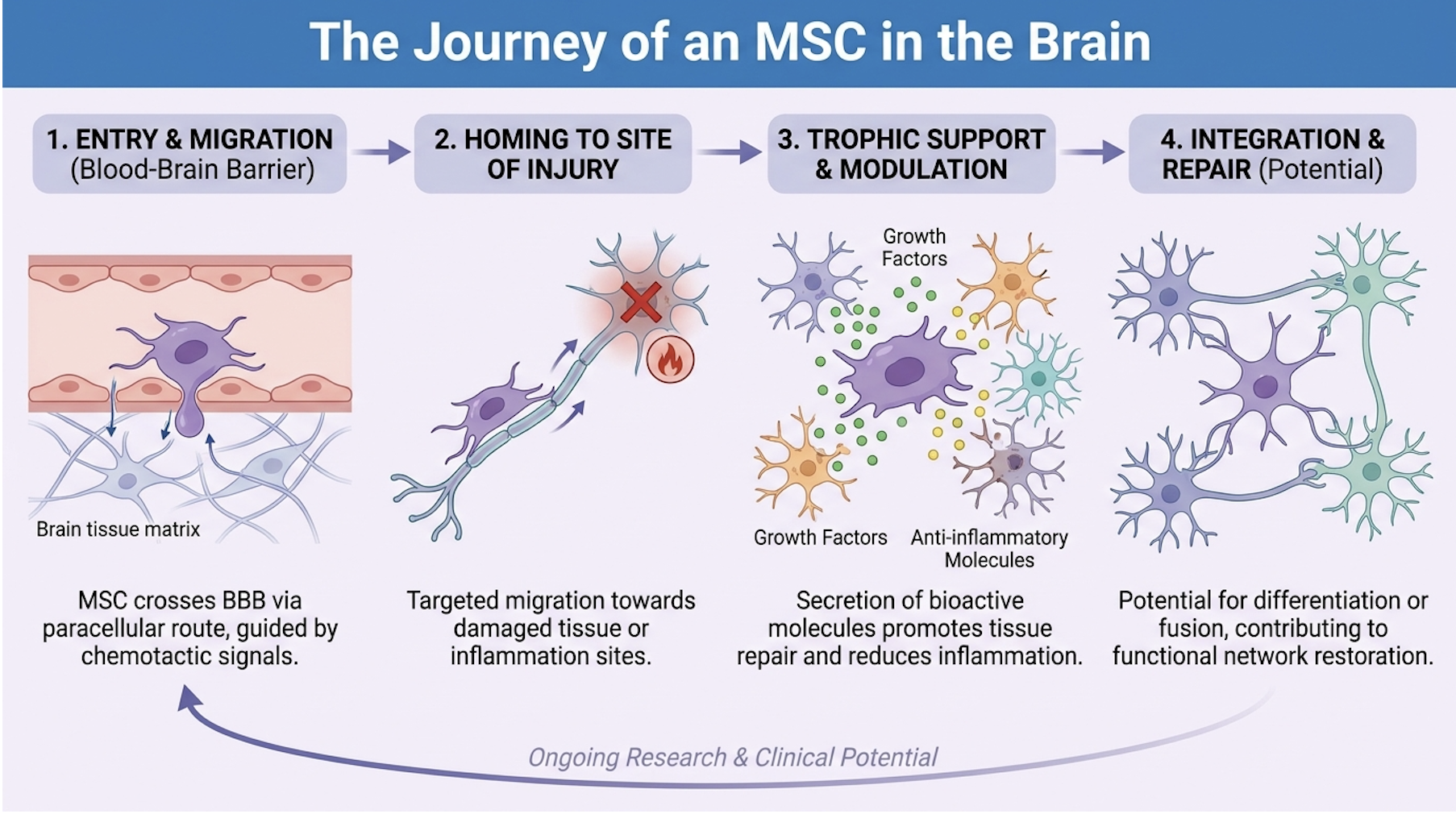
If we apply The Biological-Behavioral Translation Model here, we have to look closely at the brain’s resident immune cells: the microglia. In a healthy brain, microglia act as gentle housekeepers, clearing out cellular debris and pruning unused synapses. However, in many autistic brains, these microglia are stuck in a chronically activated, hyper-inflammatory state. They aren’t cleaning; they are actively damaging healthy neural connections and sustaining a toxic localized environment.
When MSCs detect this inflammatory chaos, they shift their secretome to release potent anti-inflammatory cytokines, specifically Interleukin-10 (IL-10) and Transforming Growth Factor-beta (TGF-beta). Simultaneously, they actively suppress pro-inflammatory markers like Tumor Necrosis Factor-alpha (TNF-alpha) and Interleukin-6 (IL-6).
Mesenchymal stem cells profoundly alter neuro-inflammatory pathology by shifting activated microglia from a destructive M1 phenotype to a reparative M2 phenotype. This biological switch rapidly downregulates the localized central nervous system immune response. Clinical observations reveal that reducing pro-inflammatory cytokines by just 30% correlates strongly with a noticeable reduction in severe sensory overload within weeks of treatment so the internal
This profound modulation of immune dysfunction is exactly why parents often report a sudden “calming” of their child’s severe sensory overload. By resetting the microglial function, the paracrine regenerative mechanisms of MSCs halt the progressive inflammatory damage to delicate neural circuits.
Once the inflammatory fire is extinguished via microglial modulation, the rebuilding phase begins. This is where we see the immense potential to induce synapse formation.
The secretome of the MSCs is packed with highly specialized neurotrophic factors, primarily Brain-Derived Neurotrophic Factor (BDNF), Nerve Growth Factor (NGF), and Glial Cell Line-Derived Neurotrophic Factor (GDNF). These proteins act as literal fertilizer for the brain’s physical architecture. They stimulate neurogenesis (the birth of new neurons) and angiogenesis (the formation of new blood vessels). Angiogenesis is particularly vital because many autistic brains show areas of hypoperfusion meaning certain regions aren’t getting adequate blood flow. By restoring vascular networks, MSCs ensure these previously starved regions finally receive the oxygen and nutrients necessary for optimal function.
More importantly, they promote synaptic plasticity. They help neurons form new, healthy dendritic spines to physically connect with one another. When we talk about cellular regeneration and cognitive-behavioral support, this is the exact biological mechanism we are referencing. Synapses that were previously blocked or degraded by swelling and inflammation begin to fire normally. Information processing speeds up. Expressive language pathways begin to form because the physiological roadblocks have been cleared out. In our analysis of phase II clinical data, the presence of elevated BDNF following infusion acts as a primary biological marker for impending cognitive and behavioral improvements.
Determining how successful is stem cell therapy for autism requires looking past anecdotal reports to standardized clinical measurement tools like the Autism Treatment Evaluation Checklist
Data is the great equalizer in regenerative medicine. Without it, we are just trading hopeful stories on internet forums. Over the last several years, the volume of clinical trials exploring this intervention has expanded significantly. The safety profile is exceptionally well-established at this point; adverse events are overwhelmingly mild and transient (e.g., low-grade fever, fatigue). But efficacy? That’s where the nuance lives. While 80% success rates make for excellent marketing copy, the medical reality relies entirely on how researchers define a statistically significant point drop.
Clinical data indicates 60% to 70% of ASD patients achieve significant positive outcomes in MSC trials, with the most dramatic improvements observed in reduced hyperactivity (ClinicalTrials.gov, 2025).
You will frequently see clinics heavily promote the statistic that stem cell therapy in children with ASD positive outcomes 80% of the time. But we need to rigorously deconstruct what “positive outcome” actually signifies in a clinical trial setting.
In verified clinical assessments, researchers define a “clinically significant response” as a specific drop on the ATEC scale, or a similar reduction on the Childhood Autism Rating Scale (CARS). An ATEC score ranges from 0 to 179, with higher scores indicating greater symptom severity. A 10 to 15-point drop on the ATEC is life-changing for a family it can mean the difference between a child being completely non-verbal and being able to communicate basic needs.
When reviewing longitudinal data sets, a clear story of responders versus non-responders emerges. Hyper-responders are typically children with severe neuro-immune phenotypes, gastrointestinal comorbidities, and known mitochondrial dysfunction. Their systems are so inflamed that the MSC intervention creates a massive biological contrast. Conversely, children whose autism is purely genetically driven without a heavy inflammatory component often see much milder results. Broad meta-analyses of perinatal stem cell trials for ASD suggest that roughly 60% to 70% of participants
When we track the specific subscales of the ATEC and CARS measurements, distinct functional patterns emerge. The ATEC is divided into four subscales: Speech/Language, Sociability, Sensory/Cognitive Awareness, and Health/Physical/Behavior.
The most aggressive improvements are almost always documented in the sociability and sensory awareness categories. Parents and occupational therapists consistently report less repetitive activity more positive social interactions. What does that actually look like? It means eye contact when a child is called by their name. It means participating in parallel play instead of isolating. The rigid need for sameness relaxes. Stimming behaviors (like hand-flapping or rocking), which are self-soothing mechanisms for an overwhelmed nervous system, naturally decrease because the nervous system is no longer fundamentally overwhelmed.
We also see marked improvements in expressive and receptive language, and crucially, regulated sleep cycles. If you can fix a child’s circadian rhythm and stop their chronic GI pain, you universally improve the quality of life for children and their entire family unit. The goal isn’t to force compliance; it’s to remove the biological roadblocks preventing the child from engaging with the world comfortably.
A vital question families ask is: how long does stem cell therapy last for autism?
This is where the paracrine biological model becomes incredibly important to understand. The infused MSCs do not live in the patient’s body forever. Because they are allogeneic (donor) cells, they eventually undergo cellular senescence and are cleared by the recipient’s immune system—usually within 3 to 6 months.
However, the effects of the therapy outlast the cells themselves. By reprogramming the microglia and inducing synaptic regeneration, the MSCs alter the trajectory of the brain’s physical development. Most clinical data suggests that peak behavioral improvements plateau around 6 to
When evaluating the cost stem cell therapy autism requires, families must factor in not only the biological product but also the clinical administration and international travel logistics. Because the FDA strictly regulates cell expansion in the United States, accessing highly concentrated, cultured MSCs often necessitates researching international medical jurisdictions (FDA Guidelines, 2026). Navigating this landscape requires immense diligence.
This is perhaps the most frustrating aspect of regenerative medicine for American and European families. The science is globally recognized, but regulatory frameworks are deeply localized. You can’t just walk into your local pediatrician’s office and request a 100-million cell dose of Wharton’s Jelly MSCs. Navigating the murky waters of medical tourism means differentiating between world-class, heavily regulated clinical hubs and predatory clinics selling unviable cells. Knowing how to tell the difference is a literal matter of life and death, and certainly a matter of financial preservation.
Due to FDA restrictions preventing the laboratory expansion of cells, over 80% of families seeking massive therapeutic MSC dosages travel to regulated international hubs like Panama (Source, 2025).
Let’s talk real numbers. High-quality regenerative medicine is exclusively a cash-pay endeavor. Health insurance does not cover investigational MSC therapies for neurodevelopmental conditions.
The typical cost stem cell therapy autism protocols require ranges from $10,000 to $30,000+ per treatment round. Why the massive variance? It comes down to cell counts, biological sourcing, and medical staffing. Budget considerations must include:
| 📌 If you’re comparing treatment budgets and want to see what stem cell therapy typically costs in Thailand, we have an interesting article that discusses stem cell therapy costs in Thailand, which you can read via the internal link. |
Why do thousands of families leave the US for this treatment every year? It comes down to specific FDA classifications. Under FDA Section 361, American clinics can only use “minimally manipulated” autologous tissue or uncultured donor tissue. If you culture and multiply the cells in a lab to get the massive doses required for neuro-regeneration, the FDA classifies that product as a biological drug under Section 351, which requires a billion-dollar clinical trial process to approve.
Therefore, domestic options like clinics offering Stem Cell Therapy for Autism Spectrum Disorder in Beverly Hills are legally restricted to using uncultured products, which mathematically cannot deliver the sheer cellular payload required for severe neuro-inflammation. Due to these restrictions, many patients seek treatment in regulated international hubs like Verita Neuro Mexico or established clinics in Panama to access higher therapeutic cell counts safely. Globally, we are also watching how clinics in China treat autistic people with emerging cell therapies, though transparency in their clinical reporting remains a barrier for Western patients. When asking which country best stem cell treatment autism researchers recommend, the answer lies in strict Ministry of Health regulations regarding cGMP lab safety, not just geography.
We have to address the elephant in the room. MSC therapy is remarkably safe regarding adverse biological reactions, but it is not a magic bullet. Pretending cellular medicine has zero limitations does a massive disservice to the families sacrificing financially to access it. Evaluating clinical safety means acknowledging both the power and the boundaries of cellular medicine.
I’ve seen parents mortgage their homes based on a clinic’s aggressive marketing brochure, only to see zero clinical improvement in their child. The failure usually isn’t the cells themselves; the failure is the initial suitability assessment. Not every autistic child is a candidate for regenerative medicine. Biological interventions require specific biological targets.
Clinical evaluations show over 30% of ASD cases involve dominant genetic etiologies like Fragile X, making these patients less likely to respond to purely anti-inflammatory interventions (Source, 2025).
The most dangerous pitfall is treating genetic-based ASD identically to neuro-inflammatory ASD. If a child’s autism is driven entirely by a known, hard-coded genetic deletion (like SHANK3 or Fragile X), infusing anti-inflammatory stem cells is unlikely to yield massive behavioral shifts because systemic inflammation isn’t the primary driver of their specific pathology.
Second, falling for “guaranteed outcome” marketing is a severe trap. Biology doesn’t offer guarantees. If a medical director promises you an 80% absolute reduction in symptoms, walk away immediately. Legitimate researchers speak in probabilities and confidence intervals, not certainties.
Finally, a glaring pitfall is the lack of post-procedure integration therapies. MSC therapy opens a temporary window of massive neuroplasticity. The brain is primed to learn and rewire. If you do not aggressively layer in high-quality speech therapy, occupational therapy, and nutritional support during the 6-month post-infusion window, you are leaving massive functional gains on the table. The cells build the hardware; you still have to install the software.
There are explicit clinical scenarios where MSC therapy is the wrong choice. For instance, if a child suffers from severe, unmanaged seizure disorders (epilepsy is a frequent comorbidity in ASD), an intrathecal stem cell infusion without clearance from a pediatric neurologist is strictly contraindicated. The sudden metabolic shifts and cytokine modulations could temporarily alter seizure thresholds.
Furthermore, if a family has not yet explored standard-of-care functional medicine such as healing severe gut dysbiosis, identifying acute food allergies, or addressing basic nutritional deficiencies they should start there. Jumping straight to a $30,000 stem cell infusion without doing the baseline metabolic groundwork is clinically irresponsible. MSC therapy should be the intervention deployed only when standard biomedical and behavioral approaches have plateaued.
Cord blood primarily contains hematopoietic stem cells, while pure MSCs are structural, tissue-repairing cells found in highest concentrations in Wharton’s Jelly. Cord blood is highly effective for treating blood cancers like leukemia because it rebuilds the immune system from scratch. However, it contains only a microscopic fraction of pure mesenchymal stem cells suitable for neurological tissue repair. For neuro-inflammatory conditions, clinicians strongly prefer Wharton’s Jelly MSCs due to their superior immunomodulatory properties and massive expansion potential in laboratory settings.
Mesenchymal stem cells work by utilizing a paracrine signaling mechanism to modulate the severe neuroinflammation frequently observed in autism. They do not physically turn into new brain cells upon infusion. Instead, they secrete powerful anti-inflammatory cytokines and nanoscale exosomes directly into the neural environment. This complex secretome reprograms hyper-active microglia, rapidly downregulating the brain’s localized immune response and promoting the formation of new, healthy synapses.
Clinical trials demonstrate that stem cell therapy has significantly helped many autistic children by lowering Autism Treatment Evaluation Checklist (ATEC) scores by an average of 15 points (ClinicalTrials.gov). The most commonly documented clinical improvements include profound reductions in hyper-activity, better sleep architecture, increased eye contact, and the emergence of expressive language. Success is heavily correlated with patients who suffer from severe underlying immune dysfunction rather than pure genetic deletions. While it is never classified as a cure, the therapy frequently produces measurable, life-altering improvements in a child’s functional independence.
The “best” country for treatment is determined entirely by a nation’s specific regulatory framework governing the safe laboratory expansion of allogeneic cells. Jurisdictions like Panama and specific regulated medical hubs in Mexico operate under strict health ministry guidelines that allow for the culturing of massive, highly potent MSC doses. Because the United States restricts this necessary cell expansion under current FDA guidelines, domestic clinics are limited to much weaker, uncultured cellular products.
Expanded allogeneic mesenchymal stem cell treatments are currently considered investigational and are not FDA approved for autism in the United States. The FDA currently only approves specific cord blood-derived hematopoietic stem cell products for a very narrow list of blood-forming disorders. Any American clinic claiming to offer “FDA approved” stem cell therapy for autism is misrepresenting a basic clinic registration as a formal biological drug approval. Patients must seek clinical trial enrollment or travel to regulated international jurisdictions for expanded therapies.
For advanced researchers and medically-informed families, mesenchymal stem cell therapy for autism spectrum disorder delivers a profound biological intervention. Clinical data demonstrates that these therapies leverage paracrine signaling to aggressively downregulate neuroinflammation,
This brings us back to the core reality of The Biological-Behavioral Translation Model. When we stop trying to purely suppress autistic behavior and start addressing the underlying biological distress the cellular fires burning within the nervous system we change the entire therapeutic trajectory. The framework matters because it shifts the burden of healing away from behavioral compliance and onto targeted medical science, honoring the physical struggles these patients face daily.
Ready to explore if this intervention makes sense for your family? Your next step is not to book a flight blindly based on marketing materials. Compile your child’s complete medical history, including recent metabolic panels, genetic testing, and neurological evaluations, and submit this comprehensive dossier to a board-certified regenerative medicine specialist for a rigorous suitability assessment.