

Parkinson’s disease primarily impacts the brain’s ability to control movement, leading to symptoms such as tremors, muscle stiffness, slowed movements, and difficulties with balance and coordination.
Current treatments for Parkinson’s disease focus mainly on managing symptoms. However, these treatments do not repair the damaged neurons or stop the progression of the disease.
Because of these limitations, researchers and clinicians are exploring regenerative medicine as a potential approach to address the underlying causes of Parkinson’s disease. One promising strategy involves the use of stem cells, particularly umbilical cord–derived mesenchymal stem cells (UC-MSCs). This innovative therapy aims to repair damaged brain tissue, support existing neurons, and potentially restore dopamine production.
In Parkinson’s disease research, stem cells are being investigated for their potential to support neuronal regeneration and protect the brain from further damage.
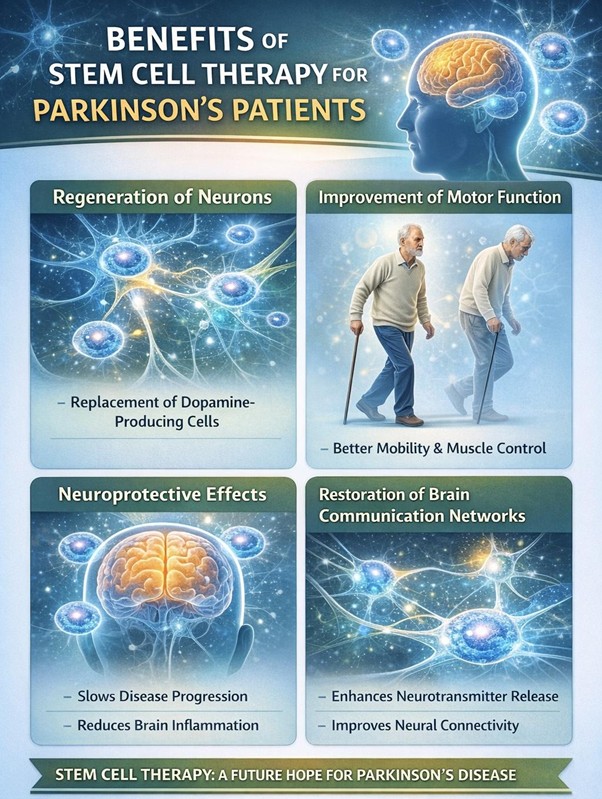
Regeneration of Neurons
One of the most important goals of stem cell therapy for Parkinson’s disease is the regeneration of neurons. Stem cells possess the capacity to transform into various specialized cell types within the body. When introduced into appropriate environments, they may differentiate into neuron-like cells capable of supporting brain function.
In the context of Parkinson’s disease, stem cell therapy aims to replace or support the neurons that produce dopamine. If new dopamine-producing cells can be generated or supported within the brain, they may help restore the chemical balance necessary for normal movement.
Stem cells may contribute to neuronal repair by stimulating surrounding brain cells to regenerate and restore neural function. This process, known as neurogenesis, could potentially help compensate for the loss of dopamine-producing neurons.
Improvement of Motor Function
Motor symptoms are among the most noticeable and challenging aspects of Parkinson’s disease. Tremors, stiffness, slow movement, and balance difficulties can significantly affect a person’s ability to perform daily activities.
Stem cell therapy may help improve motor function by restoring or supporting dopamine production in the brain. As dopamine levels improve, the communication between brain regions responsible for movement may become more efficient. This improvement could lead to better muscle control, smoother movement, and greater mobility.
While results vary among individuals, early clinical observations suggest that some patients experience improvements in coordination, reduced tremors, and enhanced physical functioning following regenerative treatments.
Neuroprotective Effects
Another important aspect of stem cell therapy is neuroprotection. In addition to replacing damaged neurons, stem cells can release biological molecules that help protect existing brain cells from further degeneration.
These protective substances include growth factors and anti-inflammatory proteins that support neuron survival and reduce harmful inflammation within the brain. Chronic inflammation is believed to contribute to the progression of neurodegenerative diseases, including Parkinson’s disease.
By creating a more supportive environment for neuronal health, stem cells may help slow the ongoing loss of dopamine-producing cells. Protecting the remaining neurons is an essential goal in managing Parkinson’s disease because it may help delay the worsening of symptoms.
Restoration of Brain Communication Networks
Parkinson’s disease does not only affect individual neurons; it also disrupts the complex communication networks within the brain that control movement. When dopamine levels decline, signals between different brain regions become less coordinated, which contributes to motor difficulties.
Stem cell therapy may help restore these communication pathways. Newly introduced or stimulated neurons may integrate into existing neural circuits and help reestablish connections between brain regions involved in movement control. Rebuilding these networks could enhance the brain’s ability to process movement-related signals and improve overall motor coordination.
Potential Benefits Beyond Motor Symptoms
While Parkinson’s disease is best known for its effects on movement, it can also cause non-motor symptoms that significantly affect quality of life. These may include mood changes, sleep disturbances, fatigue, and cognitive difficulties.
Dopamine plays a role not only in movement but also in emotional regulation and certain aspects of thinking and memory. By supporting dopamine-producing neurons, stem cell therapy may potentially help improve some of these non-motor symptoms as well.
For example, some patients report improvements in mood, reduced anxiety, and better cognitive clarity following treatments that support brain health. These potential benefits highlight the broad role that dopamine and neuronal health play in overall well-being.
Thailand’s Role in Advancing Stem Cell Therapy
Thailand has become an important center for regenerative medicine and stem cell research. Medical institutions across the country are increasingly involved in studying and developing advanced cellular therapies for various conditions, including neurological disorders.
Many clinics and medical centers operate laboratories that follow internationally recognized manufacturing standards, including Good Manufacturing Practice (GMP) guidelines. These strict standards ensure that stem cells are processed, cultured, and stored in controlled environments that maintain their quality and safety.
Patients seeking treatment in Thailand often receive comprehensive medical evaluations before undergoing stem cell therapy. Treatment plans are typically tailored to each individual’s medical condition, disease stage, and overall health status. Follow-up monitoring and supportive therapies may also be included to optimize treatment outcomes.
In addition to its advanced medical facilities, Thailand is known for its well-developed medical tourism infrastructure. This makes regenerative therapies more accessible to international patients who are exploring innovative treatment options.
Conclusion
Stem cell therapy represents a promising direction in the search for better treatments for Parkinson’s disease. By supporting neuronal regeneration, protecting existing brain cells, and potentially restoring dopamine production, this regenerative approach addresses key biological processes involved in the condition.
Unlike conventional treatments that primarily focus on managing symptoms, stem cell therapy aims to repair and support the underlying structures of the brain. The potential benefits of regenerative medicine offer new hope for individuals living with Parkinson’s disease.
With growing expertise in cellular therapies and strong clinical standards, Thailand is becoming an increasingly recognized destination for advanced stem cell treatments. As scientific understanding continues to evolve, regenerative therapies may play an important role in improving mobility, independence, and overall quality of life for people affected by Parkinson’s disease.