

Dermatology has advanced significantly over the past few decades as scientists continue to discover innovative ways to repair and rejuvenate the skin. While conventional skincare treatments often focus on external improvements—modern regenerative medicine introduces a new perspective: restoring skin health from within. One of the most promising developments in this field involves the use of umbilical cord–derived mesenchymal stem cells (UC-MSCs). These regenerative cells are increasingly being studied and applied in dermatology for their ability to support tissue repair and skin renewal.
The Importance of Regenerative Medicine in Dermatology
Regenerative dermatology aims to shift the focus from surface-level correction to cellular restoration. Instead of only improving how the skin looks externally, regenerative therapies attempt to stimulate the body’s natural healing mechanisms. This is where stem cells offer unique potential.
In dermatological therapies, stem cells are appreciated for several key capabilities. They release growth factors that encourage collagen and elastin production, which are essential for maintaining firm and resilient skin. They also help regulate inflammatory responses, support tissue repair at the cellular level, and improve hydration and elasticity over time. These combined effects make them highly relevant for addressing both aesthetic concerns and certain chronic skin conditions.
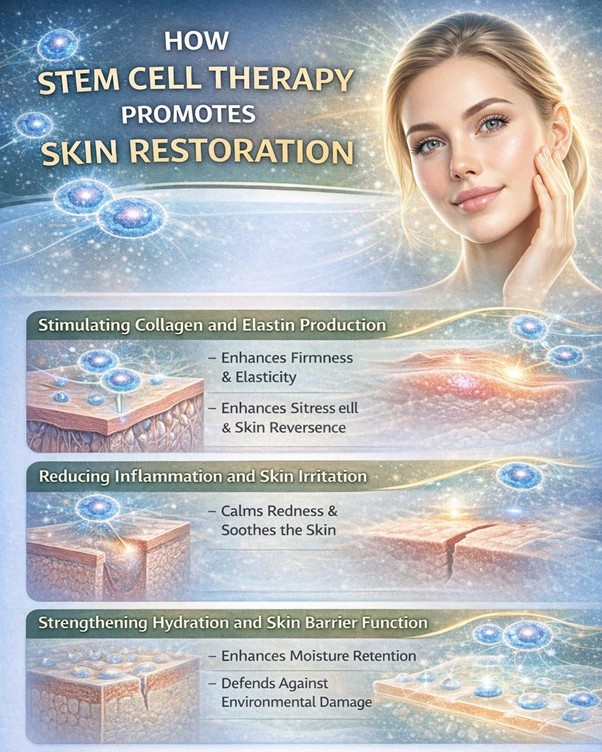
How Stem Cell Therapy Promotes Skin Restoration
Several processes contribute to the rejuvenating effects observed in regenerative dermatology.
Stimulating Collagen and Elastin Production: Collagen and elastin are two structural proteins responsible for the strength and flexibility of the skin. As individuals age, the production of these proteins gradually declines. This reduction contributes to sagging, wrinkles, and loss of firmness.
Stem cells release signaling molecules that activate fibroblasts, the specialized cells responsible for producing collagen and elastin within the skin. When fibroblasts become more active, the skin’s structural framework can gradually strengthen. Over time, this process may result in smoother texture, improved firmness, and enhanced skin resilience.
Reducing Inflammation and Skin Irritation: Inflammation plays a major role in both skin aging and many dermatological disorders. Chronic inflammatory responses can accelerate tissue damage and contribute to redness, irritation, and sensitivity.
Stem cells possess strong immunomodulatory properties, meaning they can help regulate inflammatory reactions in the body. By calming excessive inflammation, these cells may promote a more balanced skin environment. This effect is particularly relevant for individuals experiencing inflammatory conditions such as eczema, rosacea, or certain types of dermatitis.
Encouraging Tissue Repair and Scar Improvement: Skin injuries or damage—whether caused by acne, burns, or environmental exposure—can sometimes lead to permanent scarring or uneven texture. The regenerative signals released by stem cells support the skin’s ability to repair itself more effectively.
Through stimulation of cellular renewal and improved tissue remodeling, regenerative therapies may help soften the appearance of scars and promote smoother skin texture. Many individuals explore stem cell treatments specifically for persistent acne scarring or long-standing skin damage that has not responded well to conventional treatments.
Strengthening Hydration and Skin Barrier Function: A healthy skin barrier plays a critical role in maintaining hydration and protecting the body from harmful external substances. When the skin barrier becomes weakened, moisture loss increases and the skin may appear dry, dull, or sensitive.
The growth factors produced by stem cells support the strengthening of the skin’s protective barrier. This can help the skin retain moisture more effectively and improve overall hydration levels. As a result, the skin often appears more supple, balanced, and revitalized.
Dermatological Uses of Stem Cell Therapy in Thailand
Medical centers specializing in regenerative medicine across Thailand incorporate stem cell technology into a variety of dermatological treatments. These therapies may involve the use of stem cell–derived topical formulations, minimally invasive procedures that deliver regenerative factors into the skin, or integrated skin health programs designed to promote long-term rejuvenation.
Common concerns addressed through regenerative dermatology include visible signs of aging, reduced skin elasticity, uneven pigmentation, acne scars, dehydrated or dull skin, and certain inflammatory skin conditions. The goal of these treatments is not simply to conceal imperfections but to restore cellular balance and encourage healthier skin function.
Because regenerative therapies work gradually, improvements often appear natural and progressive rather than immediate or dramatic.
Why Thailand Leads in Regenerative Dermatology
Thailand has become a significant center for regenerative skin therapies due to its continued investment in medical research, technology, and specialist training. Many healthcare institutions in the country operate advanced laboratories capable of preparing and studying stem cell–based treatments under carefully controlled conditions.
Several factors contribute to Thailand’s reputation in this field. Modern laboratory facilities follow strict quality control procedures to ensure the safety and consistency of stem cell preparations. Dermatologists and regenerative medicine specialists are also experienced in combining advanced scientific knowledge with cosmetic dermatology practices.
In addition, many clinics emphasize a holistic approach to skin care. Treatments may be complemented by personalized skincare plans, nutritional guidance, and detailed skin analysis to optimize long-term results. This comprehensive approach supports both aesthetic improvement and overall skin health.
Thailand’s international reputation in medical tourism has also played a role in attracting individuals interested in advanced dermatological treatments. Patients often travel to the country seeking innovative procedures supported by modern technology and experienced practitioners.
Conclusion
The use of stem cells represents an important step forward in the evolution of dermatology. By focusing on cellular repair, inflammation control, and tissue regeneration, regenerative dermatology offers a scientific approach to improving skin health from within.
Thailand has embraced these advancements and continues to develop innovative skin therapies that combine research, medical expertise, and modern technology. Through the application of stem cell–based treatments, dermatological care is moving beyond temporary cosmetic fixes toward long-term restoration of skin vitality.
As regenerative medicine continues to progress, these therapies may play an increasingly important role in helping individuals achieve healthier, stronger, and more youthful-looking skin through biologically driven solutions.