

Regenerative medicine is rapidly transforming the field of ophthalmology, offering new possibilities for treating eye conditions that were once thought to cause permanent vision loss. Among the most promising innovations is stem cell therapy, which focuses on repairing damaged tissues and restoring function rather than simply managing symptoms. Many eye diseases are difficult to treat because these tissues have limited natural healing ability. Stem cells have the potential to support healing within various parts of the eye, offering new therapeutic opportunities for individuals affected by degenerative, inherited, or injury-related vision disorders.
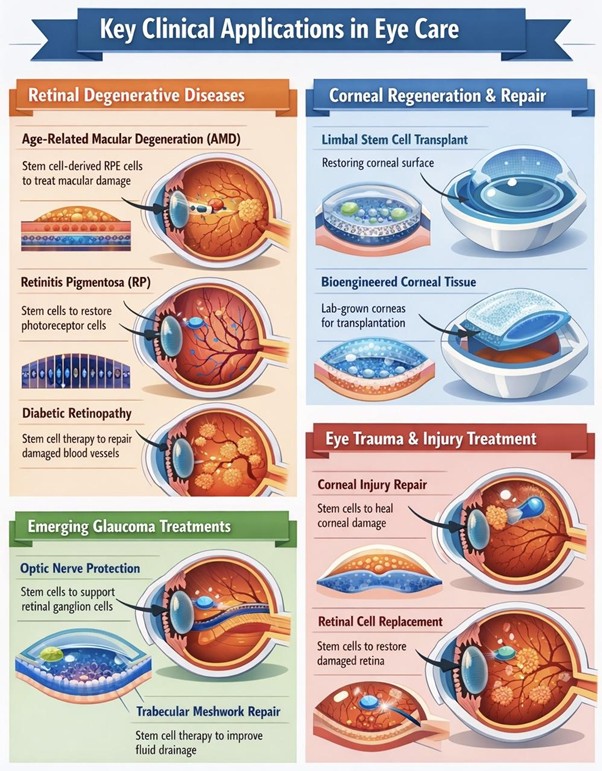
Key Clinical Applications in Eye Care
- Retinal Degenerative Diseases
The retina is essential for vision because it converts light into signals that the brain interprets as images. Damage to retinal cells can therefore lead to severe or permanent visual impairment.
Age-Related Macular Degeneration (AMD): AMD is one of the primary conditions responsible for significant vision loss among older adults. The disease gradually damages the macula, a small area of the retina responsible for sharp central vision. Degeneration of the retinal pigment epithelium (RPE) plays a major role in this condition. Researchers are investigating the use of stem cell–derived RPE cells as a replacement for damaged tissue. Early clinical studies suggest that transplanted cells may help slow degeneration and potentially improve certain aspects of visual perception.
Retinitis Pigmentosa (RP): Retinitis pigmentosa is a genetic disorder characterized by progressive loss of photoreceptor cells in the retina. As these cells deteriorate, individuals experience night blindness, narrowing of peripheral vision, and eventually significant vision loss. Experimental stem cell treatments aim to replace or support these photoreceptors. Laboratory research and early clinical trials have demonstrated encouraging results, including stabilization of retinal structure and modest improvements in visual function.
Diabetic Retinopathy: Long-standing diabetes can damage the small blood vessels within the retina, leading to swelling, bleeding, and impaired vision. Stem cell therapy may assist by repairing injured microvascular networks, reducing inflammation, and supporting the survival of retinal cells. These regenerative effects could help preserve vision and reduce the risk of advanced complications.
- Corneal Regeneration and Repair
The cornea is the clear outer layer of the eye that allows light to enter and contributes significantly to visual clarity. Injury, infection, or disease affecting the cornea can disrupt its transparency and compromise eyesight.
Limbal Stem Cell Deficiency (LSCD): The limbus, located at the edge of the cornea, contains specialized stem cells responsible for maintaining and renewing the corneal surface. Damage to these cells—caused by burns, chemical injuries, infections, or autoimmune disorders—can lead to scarring and vision loss. Transplantation of healthy limbal stem cells, either from the patient or from a donor, has shown success in restoring corneal clarity and improving visual outcomes.
Bioengineered Corneal Tissue: Advances in stem cell technology have also enabled the development of laboratory-grown corneal tissue. These engineered tissues can be used in transplantation procedures, reducing dependence on donor corneas. In addition to expanding treatment availability, bioengineered corneas may lower the risk of rejection and provide new solutions for patients with severe corneal diseases.
- Emerging Potential in Glaucoma Treatment
Glaucoma refers to a group of eye disorders that harm the optic nerve, frequently linked to elevated pressure within the eye
Neuroprotection and Optic Nerve Support: Certain types of stem cells release protective molecules that help preserve retinal ganglion cells—the nerve cells responsible for transmitting visual information from the retina to the brain. By protecting these cells and encouraging nerve repair, stem cell therapy may help slow disease progression.
Trabecular Meshwork Regeneration: The trabecular meshwork is a drainage system that allows fluid to leave the eye and maintain normal pressure levels. Dysfunction in this structure can lead to increased intraocular pressure, a key risk factor for glaucoma. Regenerating or repairing this tissue with stem cells could potentially improve fluid outflow and help control eye pressure.
- Treatment for Eye Trauma and Injury
Injuries to the eye caused by accidents, chemical exposure, or radiation can damage delicate ocular tissues and significantly impair vision.
Corneal Injuries: Severe corneal injuries can result in scarring or cloudiness that interferes with light entering the eye. Stem cell-based treatments may stimulate regeneration of the corneal epithelium and deeper stromal layers, helping restore transparency and improve visual clarity.
Traumatic Retinal Damage: Events such as blunt trauma or retinal detachment can destroy retinal cells. Researchers are exploring whether transplanted stem cells can replace lost cells or support the remaining retinal tissue, potentially contributing to partial recovery of visual function.
How Stem Cell Therapy Works in Ophthalmology
Integration and Tissue Regeneration
Transplanted stem cells interact with surrounding structures. Ideally, they integrate into existing tissue and begin supporting the repair of damaged areas, contributing to improved visual performance.
Release of Regenerative Factors
Stem cells also produce a range of biologically active molecules, including growth factors, cytokines, and anti-inflammatory compounds. These substances help protect surviving cells, promote new blood vessel formation, reduce inflammation, and activate the body’s natural healing mechanisms.
Immune System Modulation
Stem cells are particularly known for their ability to regulate immune responses. By reducing excessive inflammation and controlling immune activity, these cells can protect delicate ocular tissues and create a more favorable environment for healing.
Conclusion
Stem cell therapy represents a significant advancement in the treatment of eye diseases, offering regenerative solutions for conditions that previously resulted in permanent vision loss. By replacing damaged cells, supporting tissue repair, reducing inflammation, and protecting existing structures, stem cells provide both restorative and protective benefits. In Thailand, the exploration of stem cell–based therapies has contributed to growing interest in regenerative ophthalmology.
Stem cell–based approaches may transform the future of eye care. These therapies hold the potential to restore visual function, slow disease progression, and enhance quality of life for individuals affected by retinal disorders, corneal damage, glaucoma, and ocular injuries.