

Joint pain caused by cartilage damage is one of the most common musculoskeletal problems worldwide. Traditionally, medical treatments for joint problems have focused on reducing symptoms rather than repairing the underlying damage.
In recent years, regenerative medicine has introduced new strategies aimed at repairing damaged tissues rather than simply controlling symptoms. One of the most promising innovations is therapy using umbilical cord–derived mesenchymal stem cells (UC-MSCs). These specialized cells possess regenerative and anti-inflammatory properties that may support cartilage repair and improve joint function. Unlike conventional treatments that mainly target pain reduction, stem cell therapy works by stimulating the body’s natural healing mechanisms. By delivering regenerative cells directly into the affected joint, the therapy aims to create an environment that supports tissue repair, reduces inflammation, and encourages healthier joint function.
How Stem Cell Therapy Supports Cartilage Repair
- Comprehensive Medical Evaluation
Before treatment begins, patients undergo a detailed medical assessment performed by specialists in orthopedics or regenerative medicine. This evaluation often includes a physical examination, imaging tests such as magnetic resonance imaging (MRI) or X-rays, and a review of the patient’s medical history. These assessments help determine the severity and location of cartilage damage and whether the individual is an appropriate candidate for stem cell therapy.
- Laboratory Preparation of Stem Cells
Once treatment is recommended, the stem cells are prepared in specialized laboratories that follow strict safety and quality standards. In these facilities, the cells are processed, purified, and tested to ensure they meet clinical requirements. Because stem cell therapy uses cells derived from donated umbilical cord tissue, patients do not need to undergo cell harvesting procedures from their own bodies.
- Precise Injection into the Affected Joint
After preparation, the stem cells are delivered directly into the affected joint through a targeted injection. Common treatment areas include the knee, hip, shoulder, and ankle joints. Physicians often use imaging guidance such as ultrasound or fluoroscopy to ensure accurate placement of the cells at the damaged site.
Once injected, the stem cells begin interacting with the surrounding joint tissues through several biological mechanisms. They release growth factors that may stimulate local cells involved in cartilage maintenance. They also produce anti-inflammatory molecules that help calm joint inflammation, which is a major contributor to pain and stiffness. In addition, stem cells can encourage nearby cells to produce extracellular matrix components that support cartilage structure and resilience.
Together, these actions help create a more favorable environment for tissue repair and improved joint function.
Recovery and Rehabilitation After Treatment
Following stem cell therapy, patients usually receive personalized post-treatment instructions designed to support the regenerative process. Although the procedure itself is minimally invasive and performed on an outpatient basis, proper aftercare plays an important role in achieving optimal results.
Patients are often advised to limit intense physical activity for several weeks to allow the joint to recover. Gradual rehabilitation programs, including physical therapy, may be recommended to restore muscle strength, flexibility, and joint stability. Regular follow-up visits enable physicians to monitor progress and adjust rehabilitation plans as needed.
Because tissue regeneration takes time, improvements are typically gradual rather than immediate. Many individuals report reduced pain and better mobility within one to three months after treatment. Continued improvement may occur over several additional months as the joint environment becomes healthier and tissue repair progresses.
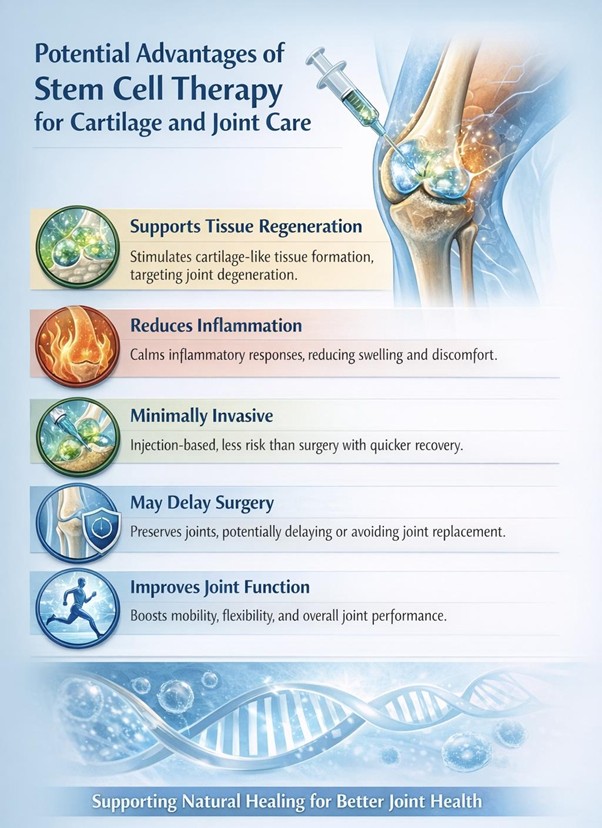
Potential Advantages of Stem Cell Therapy for Cartilage and Joint Care
Stem cell therapy offers several potential benefits when compared with traditional approaches to joint care.
One important advantage is its ability to support tissue regeneration. Rather than only addressing pain symptoms, stem cells may help stimulate the formation of cartilage-like tissue, targeting the underlying cause of joint degeneration.
The therapy also helps reduce inflammation, which is often responsible for swelling, discomfort, and reduced mobility in damaged joints. By calming inflammatory responses, stem cells may improve overall joint comfort and function.
Another key benefit is that the treatment is minimally invasive. Because stem cells are delivered through injections rather than surgical procedures, patients typically experience less risk, shorter recovery times, and minimal downtime.
For some individuals, regenerative therapy may also delay or reduce the need for joint replacement surgery. By improving joint conditions at an earlier stage, stem cell therapy may help preserve natural joint structures for longer periods.
Finally, stem cells may contribute to improved joint performance by creating a healthier environment within the joint. This can enhance flexibility, stability, and overall mobility, allowing patients to return more comfortably to daily activities.
Thailand’s Growing Role in Regenerative Joint Care
Thailand has emerged as a regional leader in regenerative medicine, including stem cell therapies for orthopedic conditions. Modern hospitals and specialized clinics offer advanced treatment programs supported by experienced medical professionals and well-equipped laboratories.
Many facilities follow internationally recognized standards for stem cell processing and patient safety. These standards help ensure that stem cells are prepared under controlled conditions and thoroughly tested before clinical use.
In addition to high-quality medical care, Thailand provides relatively accessible treatment options for both domestic and international patients. Shorter waiting times, personalized treatment plans, and integrated rehabilitation programs have contributed to the country’s growing reputation in regenerative healthcare.
Conclusion
Stem cell therapy represents an exciting development in the treatment of cartilage damage and joint degeneration. By activating the body’s natural repair processes, this regenerative approach focuses on restoring tissue health rather than simply managing symptoms. The therapy may reduce inflammation, support cartilage repair, and improve joint function through a minimally invasive procedure.
For individuals experiencing joint problems due to sports injuries, early osteoarthritis, or age-related wear, stem cell therapy offers a promising alternative to conventional treatments. As scientific research and clinical experience continue to expand, regenerative medicine may play an increasingly important role in preserving joint health and improving long-term mobility.