

Crohn’s disease is a chronic inflammatory disorder that affects the digestive system. It can develop in any section of the gastrointestinal tract, beginning in the mouth and extending to the rectum. Conventional management of Crohn’s disease focuses primarily on controlling inflammation and minimizing symptoms.
One promising area of investigation involves the use of umbilical cord–derived mesenchymal stem cells, commonly known as UC-MSC stem cells. Unlike traditional treatments that mainly aim to suppress immune activity, this form of therapy focuses on restoring balance within the immune system and encouraging the repair of damaged tissues. By supporting the body’s own healing processes, stem cell therapy may offer a more comprehensive approach to managing Crohn’s disease.
Immune System Regulation
Stem cells help moderate the activity of aggressive immune cells such as T-cells that play a key role in driving inflammatory reactions. Stem cells also reduce the production of pro-inflammatory cytokines—chemical messengers that amplify inflammation and tissue damage.
By calming these excessive immune responses, stem cells may help reduce ongoing intestinal inflammation. As inflammation decreases, patients may experience fewer flare-ups and improved digestive comfort. This immunomodulatory effect is one of the central mechanisms through which stem cell therapy may support individuals living with Crohn’s disease.
Repairing the Intestinal Lining
Stem cells have the ability to encourage tissue regeneration in damaged areas. Rather than directly transforming into intestinal cells, they primarily stimulate surrounding cells to repair themselves. Through the release of regenerative signals, stem cells promote the restoration of the mucosal layer and support the healing of ulcers within the intestinal wall.
Strengthening the intestinal barrier has several potential benefits. A healthier lining helps prevent harmful substances from leaking into surrounding tissues, improves digestion, and allows the body to absorb nutrients more effectively. Over time, this restoration of tissue integrity may contribute to more stable disease control.
Release of Regenerative Factors
Beyond their immune-regulating abilities, mesenchymal stem cells are known for producing a variety of biologically active substances. These include growth factors, anti-inflammatory proteins, cytokines, and extracellular vesicles that influence the surrounding cellular environment.
These factors work together to support tissue recovery in several ways. Stem cells encourage the formation of new blood vessels that supply oxygen and nutrients to damaged tissues. Stem cells also promote remodeling of injured areas and guide immune cells toward a healing-focused state rather than an inflammatory one. By improving the local biological environment, stem cells help create conditions that favor long-term repair rather than continued injury.
This ability to coordinate multiple healing processes simultaneously is one reason regenerative medicine is gaining attention as a potential strategy for complex inflammatory diseases such as Crohn’s disease.
Potential Benefits for Individuals with Crohn’s Disease
Research and early clinical observations suggest several possible advantages of stem cell therapy for people living with Crohn’s disease.
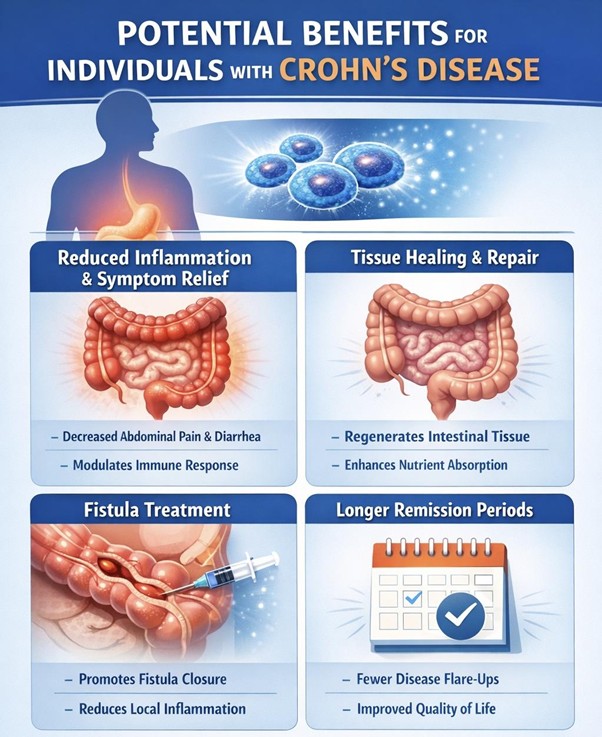
One potential outcome is reduced inflammation and improved symptom control. By regulating immune activity, stem cells may help decrease abdominal pain, diarrhea, and digestive discomfort associated with active disease.
Another possible benefit is structural healing within the digestive tract. Regenerative signals released by stem cells may support the repair of damaged intestinal tissues and strengthen the protective mucosal barrier. Improved tissue health can enhance nutrient absorption and contribute to better overall digestive function.
Stem cell therapy may also play a role in managing complications such as fistulas—abnormal connections that form between sections of the intestine or between the intestine and surrounding tissues. Local injection of stem cells around fistulas has shown encouraging results in promoting closure and reducing inflammation in difficult-to-treat cases. Because the therapy targets both immune imbalance and tissue injury, some patients may experience longer periods without significant symptoms.
Evidence from Clinical Studies
A growing number of studies have investigated stem cell therapy as a treatment for Crohn’s disease. One of the most widely studied applications involves complex perianal fistulas, which are among the most challenging complications of the condition. In several clinical trials, stem cell injections have demonstrated encouraging healing rates and improvements in patient outcomes.
Safety findings from these studies have generally been reassuring. Most patients tolerate the therapy well, and reported side effects are usually mild. Temporary fatigue, mild fever, or localized discomfort at the injection site may occur in some cases. Serious adverse reactions are uncommon, partly because mesenchymal stem cells possess natural immunomodulatory properties that reduce the likelihood of rejection.
Researchers have also documented improvements in inflammatory markers, symptom severity, and quality-of-life measurements following treatment. Current findings suggest that regenerative therapies may become an important complement to existing Crohn’s disease treatments.
Thailand’s Expanding Role in Regenerative Medicine
Thailand has emerged as an increasingly prominent center for regenerative medicine, including stem cell therapy. Medical institutions in major cities such as Bangkok and Chiang Mai have developed specialized programs dedicated to cellular therapies and advanced research.
Many of these facilities operate laboratories that follow internationally recognized production standards, including Good Manufacturing Practice (GMP) protocols. These guidelines help ensure that stem cells are cultured, processed, and stored in carefully controlled environments that preserve their safety and effectiveness.
Patients seeking treatment in Thailand often benefit from comprehensive care programs. These typically involve detailed diagnostic evaluations, individualized treatment strategies, and ongoing follow-up assessments to monitor progress. The country’s well-developed medical tourism infrastructure also makes advanced therapies more accessible to international patients.
Conclusion
Umbilical cord–derived mesenchymal stem cell therapy represents a promising development in the management of Crohn’s disease. By helping regulate immune activity, encouraging repair of the intestinal lining, and supporting the body’s natural healing processes, this regenerative approach addresses several key factors involved in disease progression.
As scientific research continues to advance, stem cell therapy may offer new possibilities for individuals who have not achieved adequate relief through conventional treatments. With growing expertise and expanding medical infrastructure, Thailand has become an important destination for patients seeking innovative regenerative therapies aimed at improving digestive health and overall quality of life.